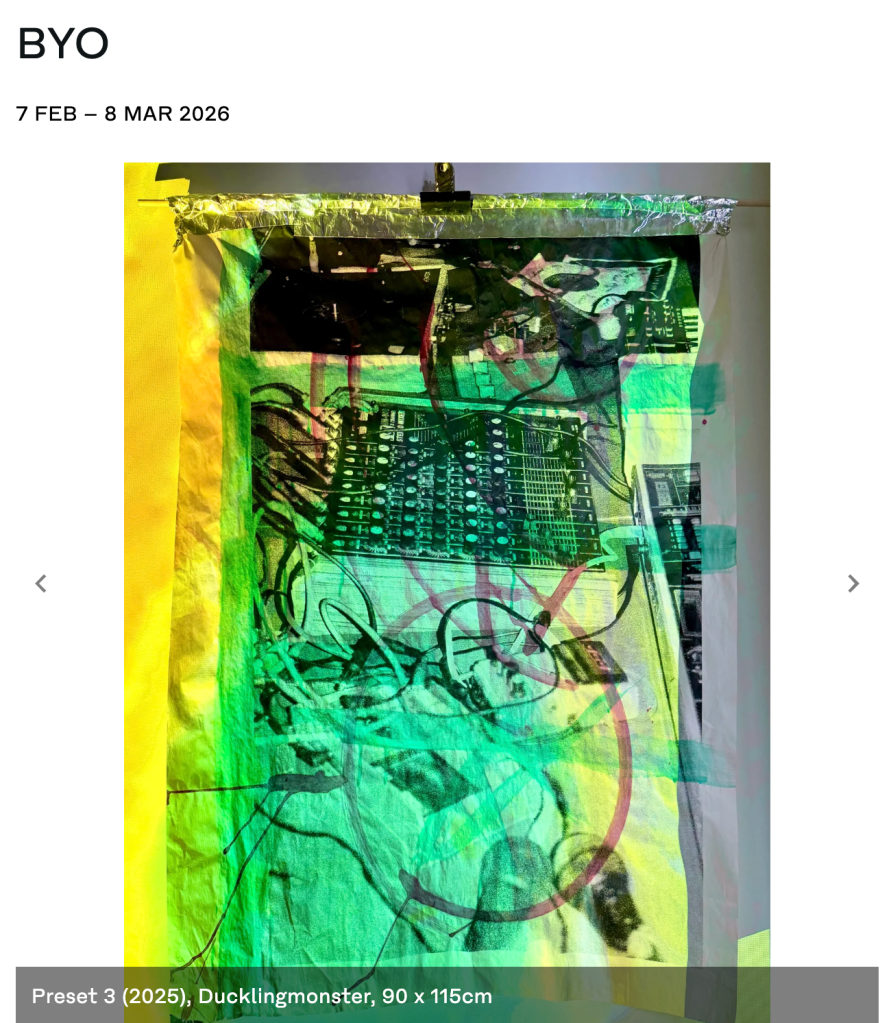
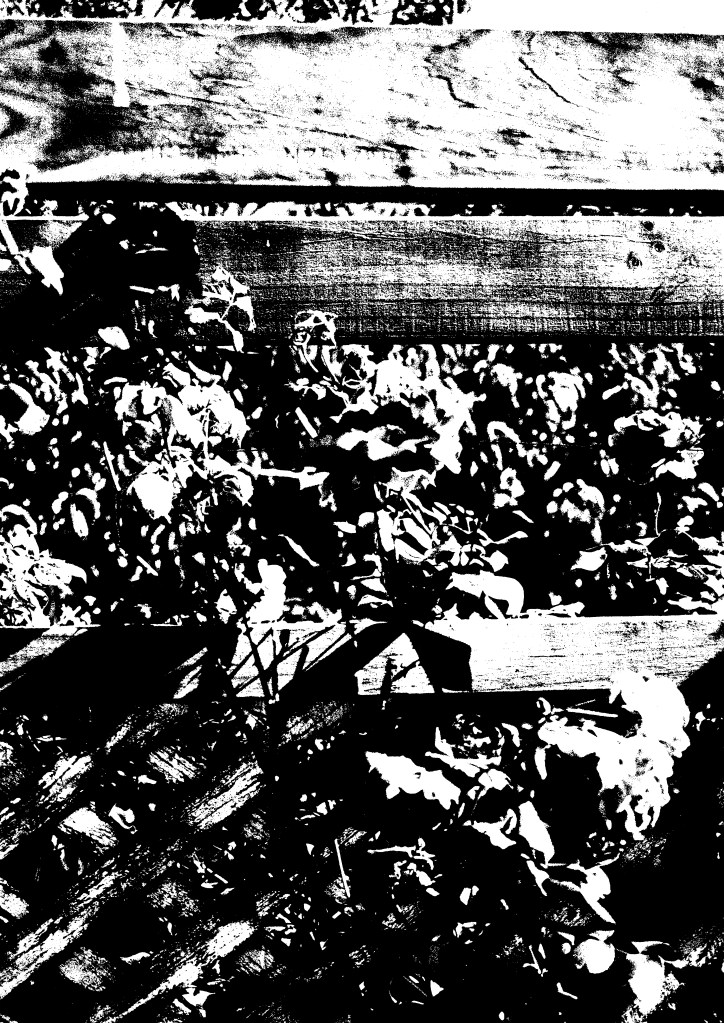
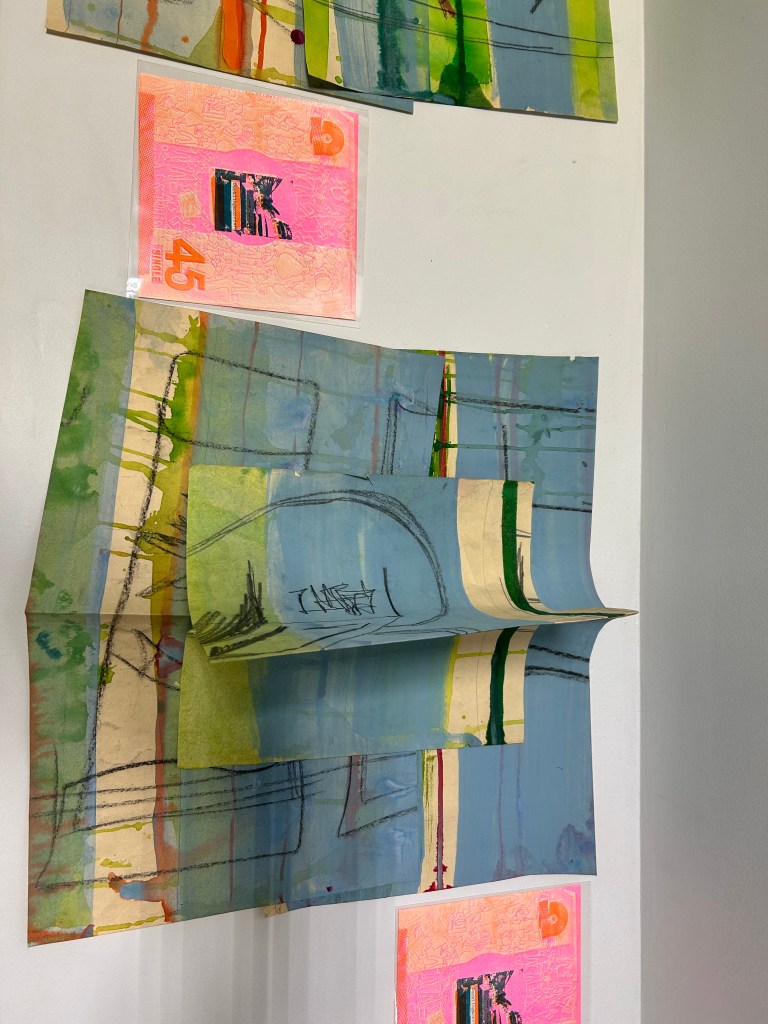
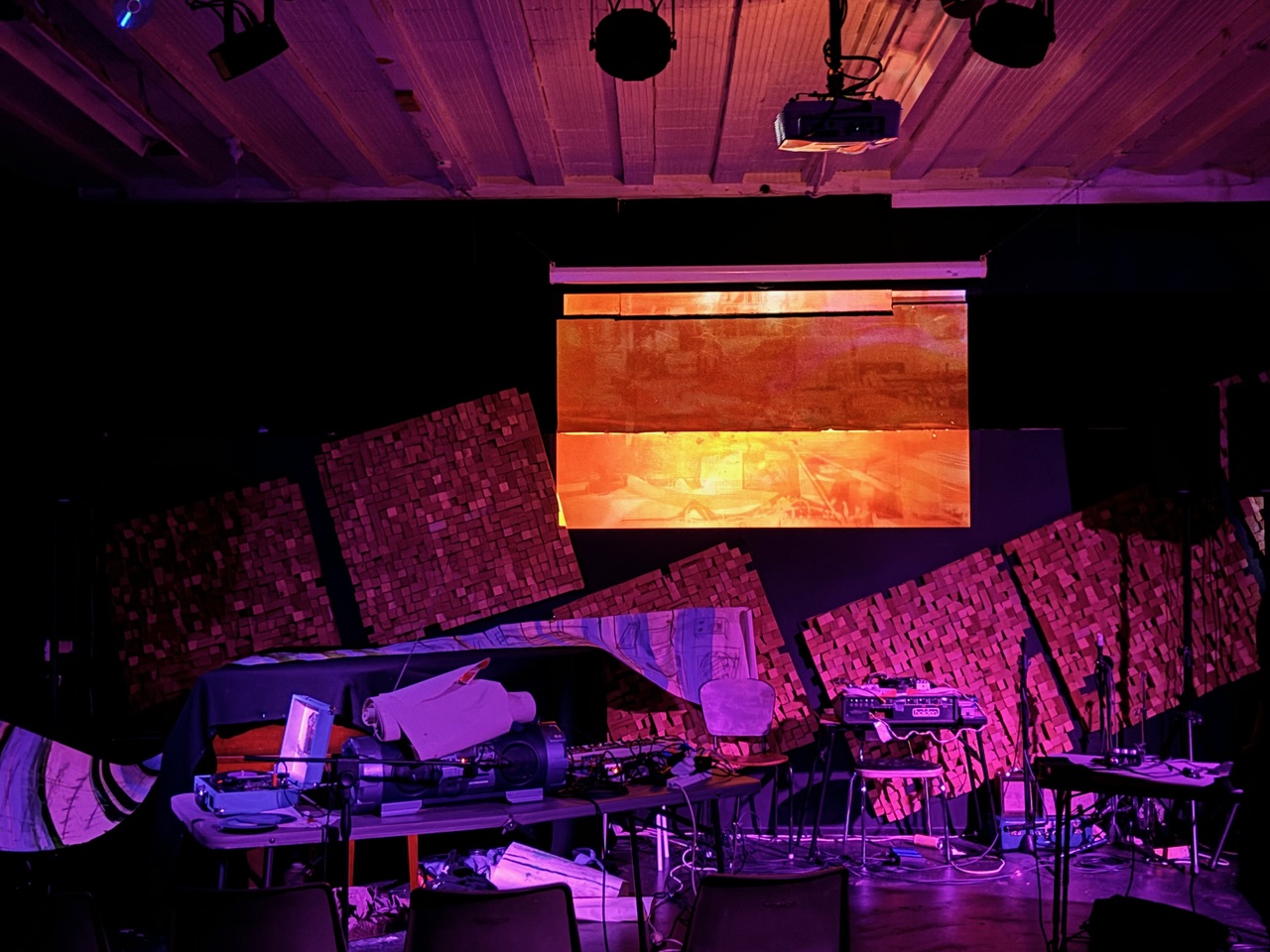
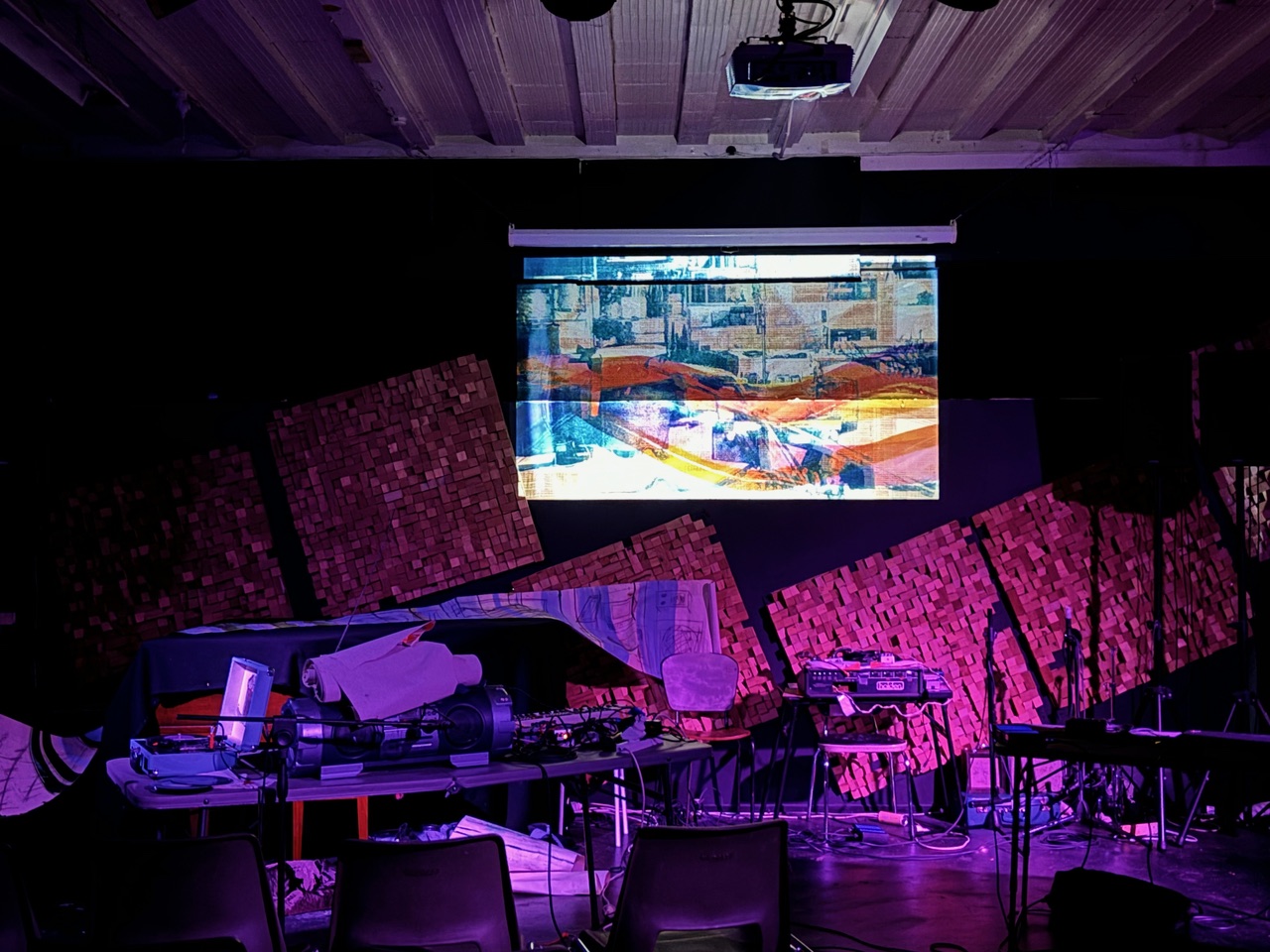
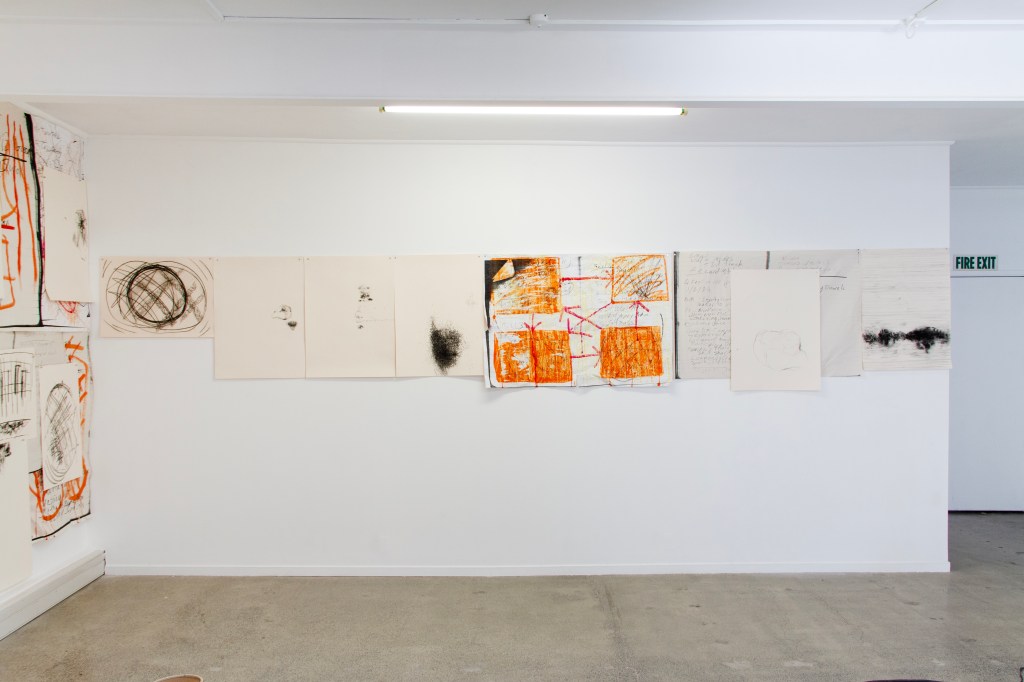
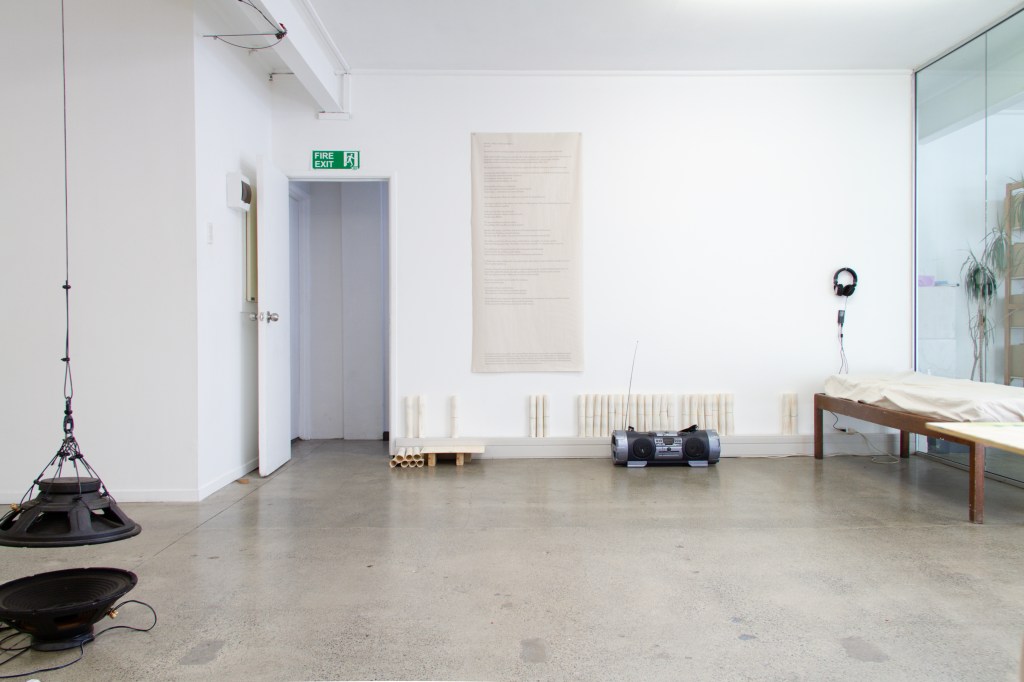
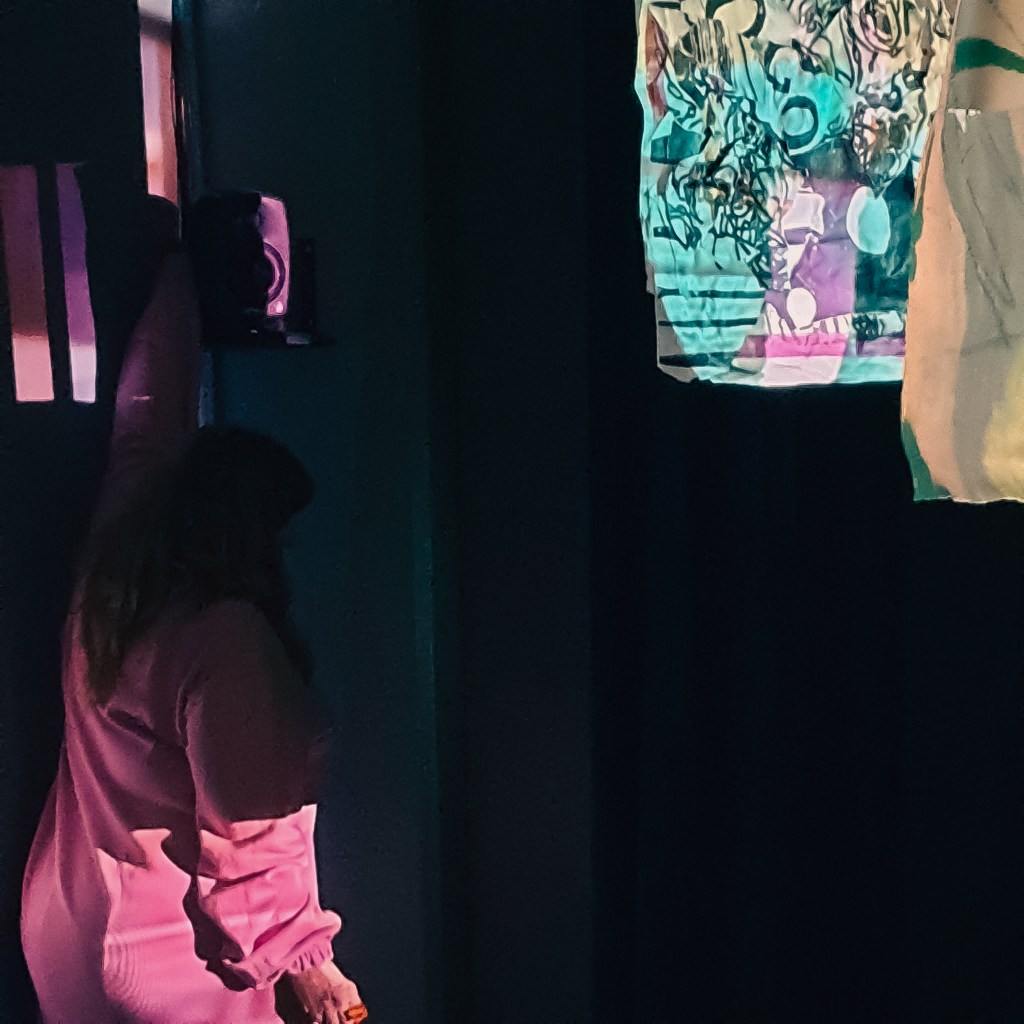
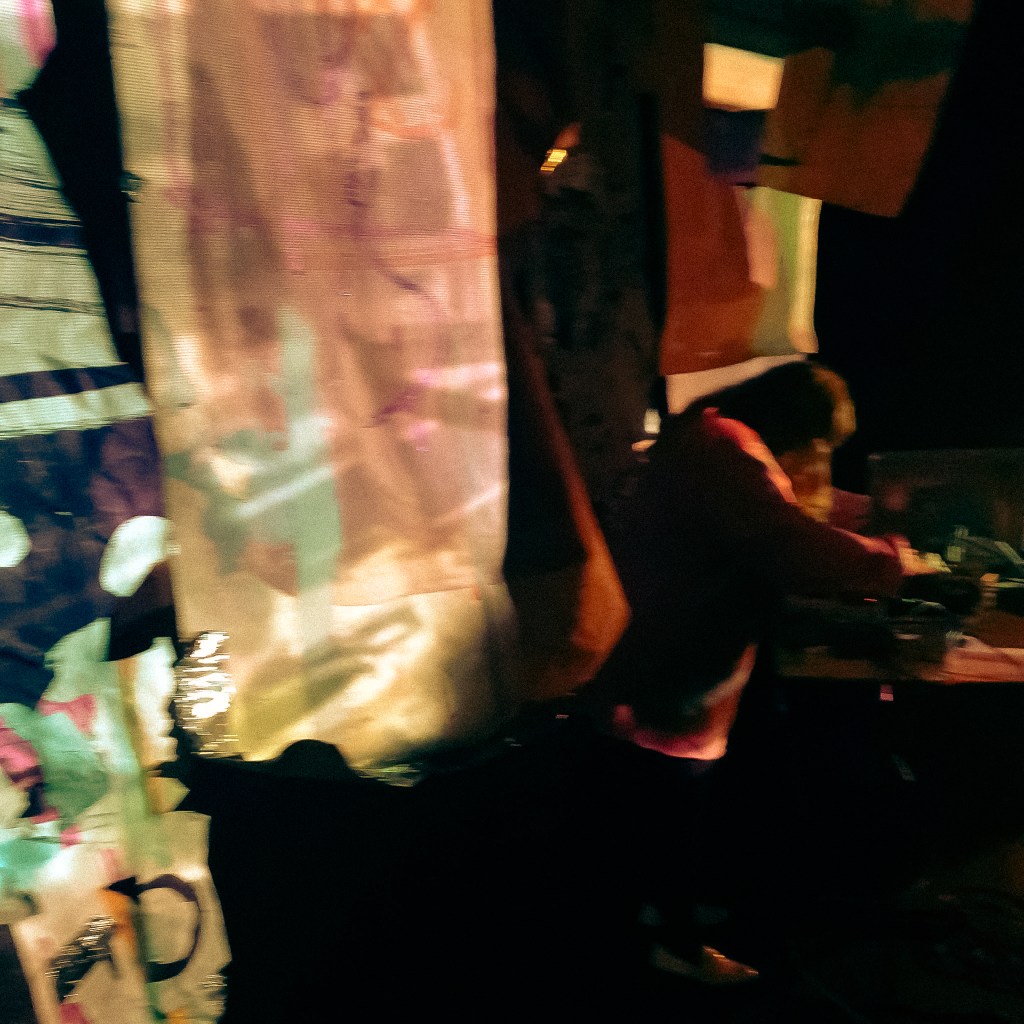
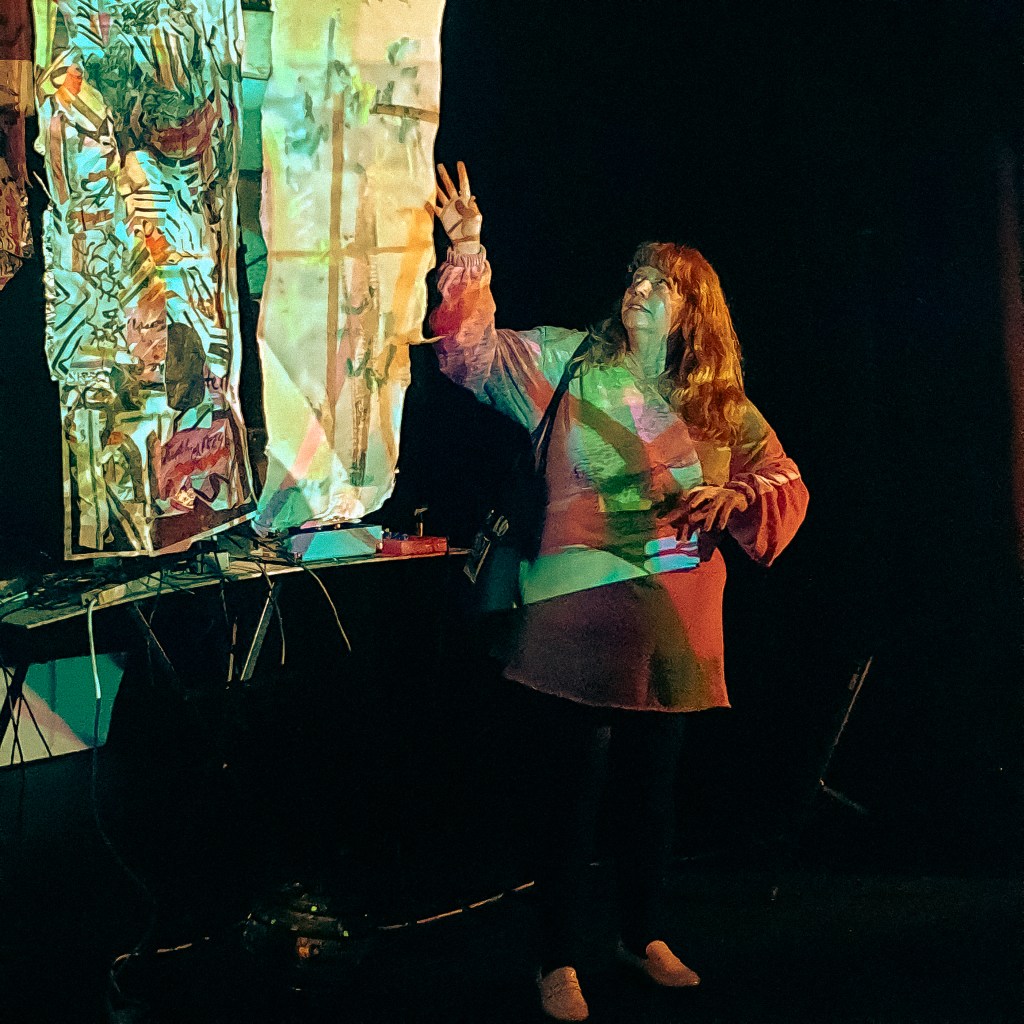
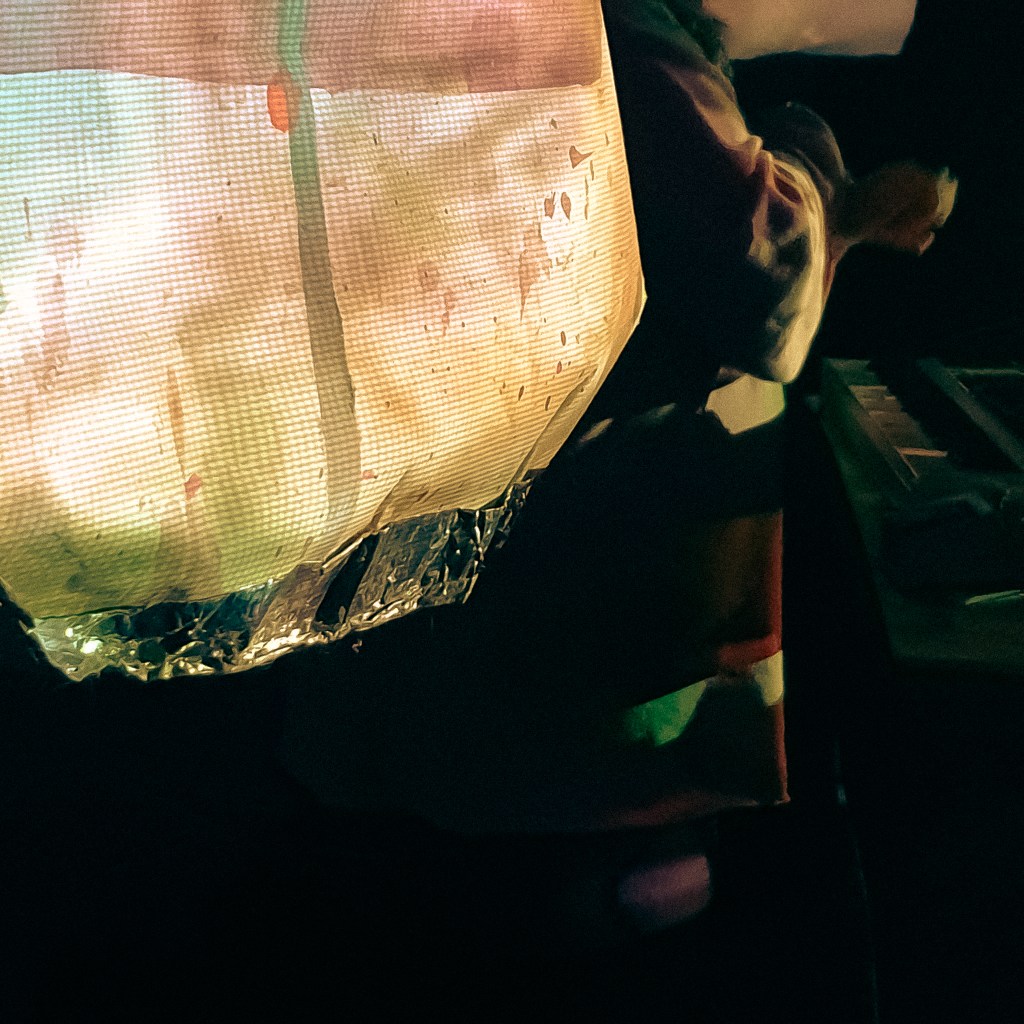
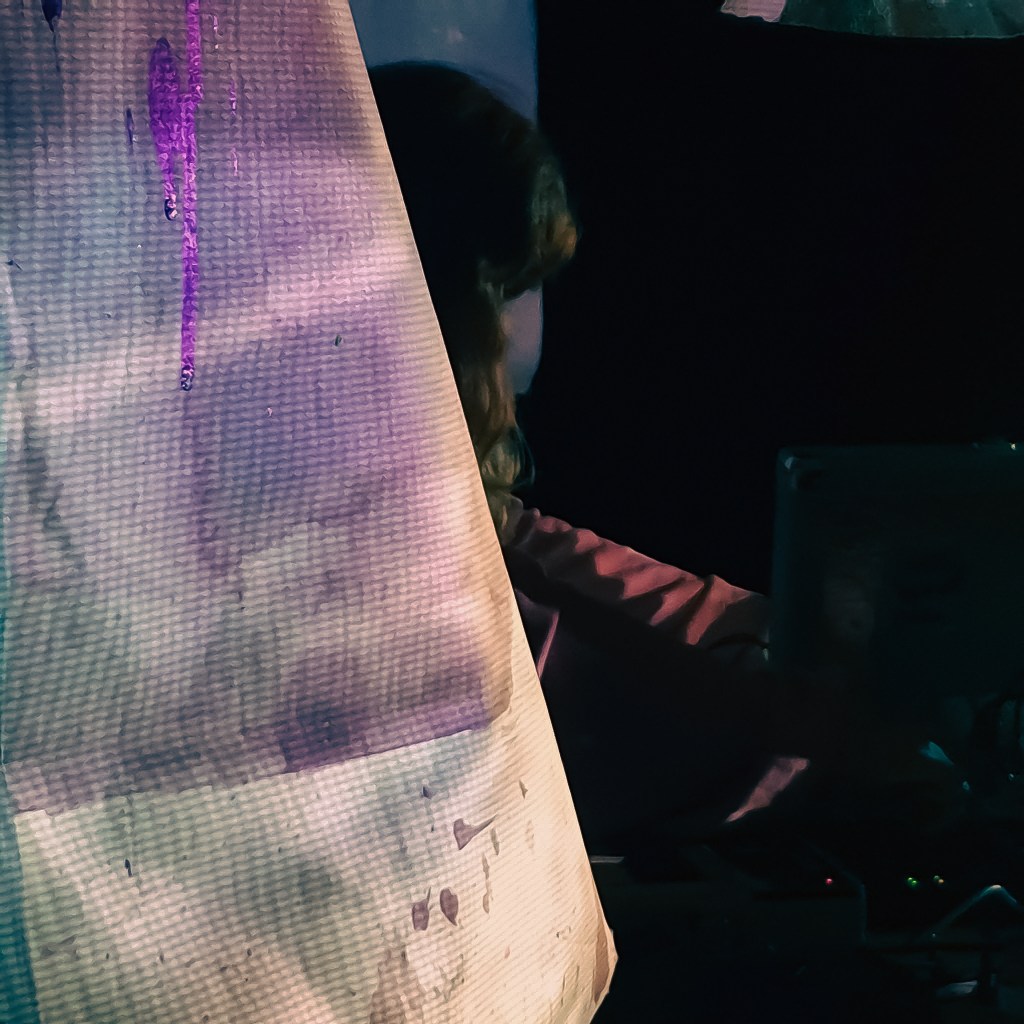
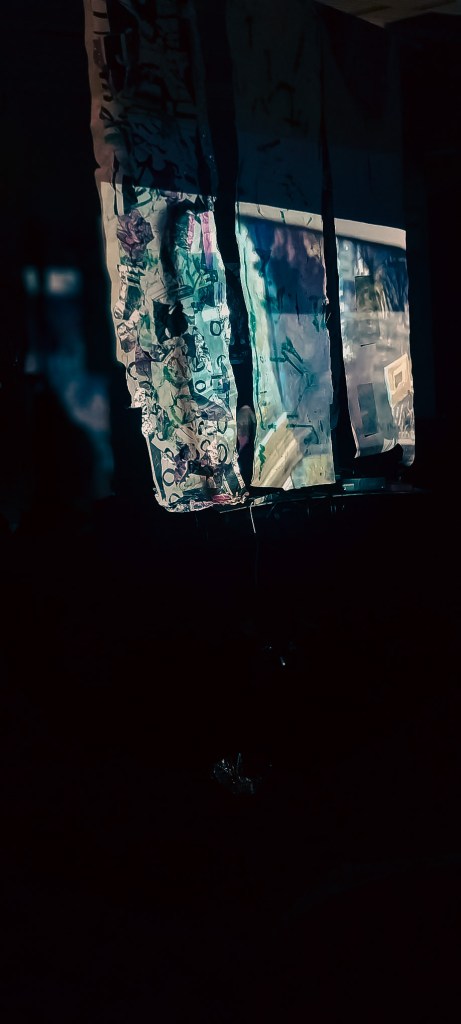
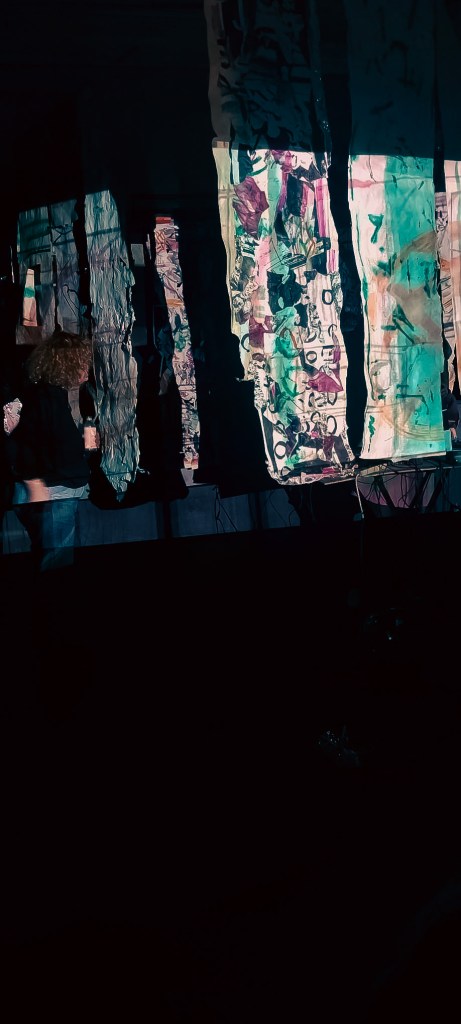
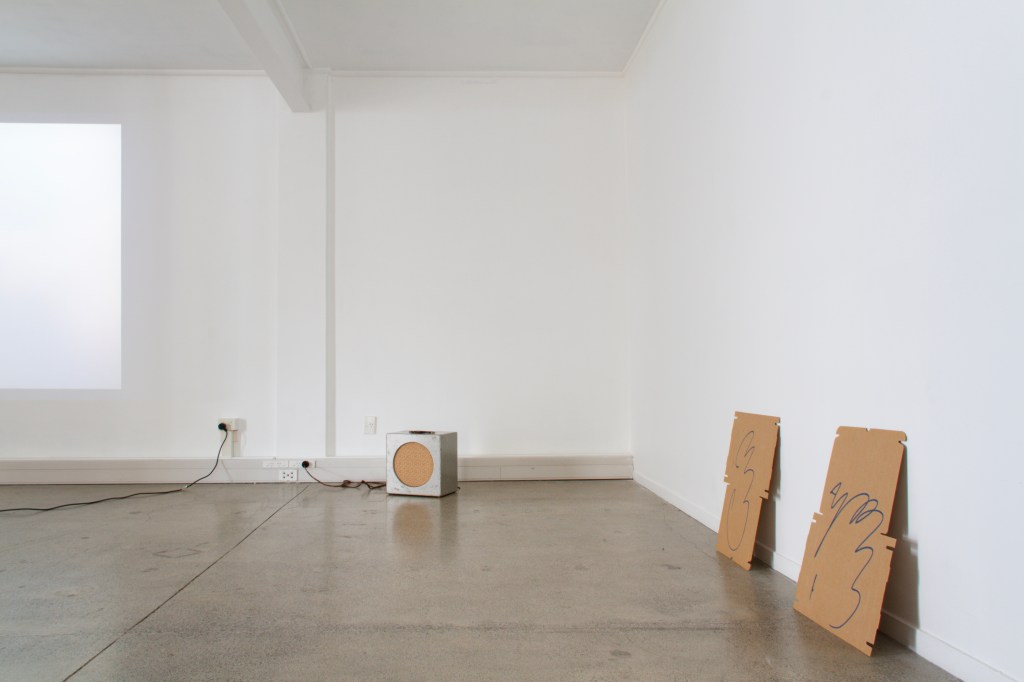
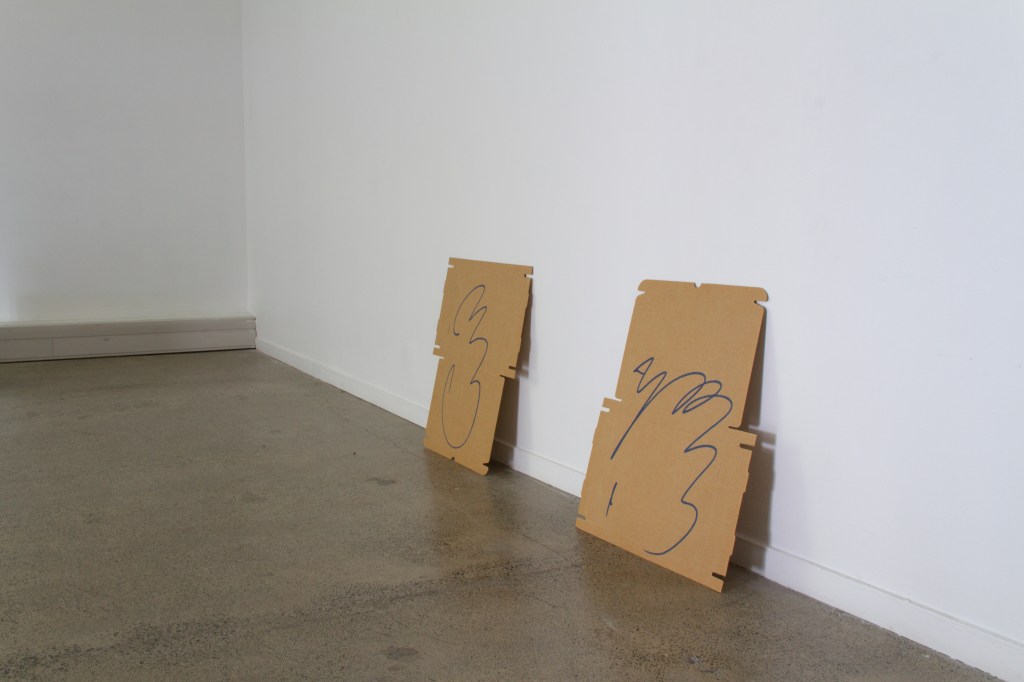
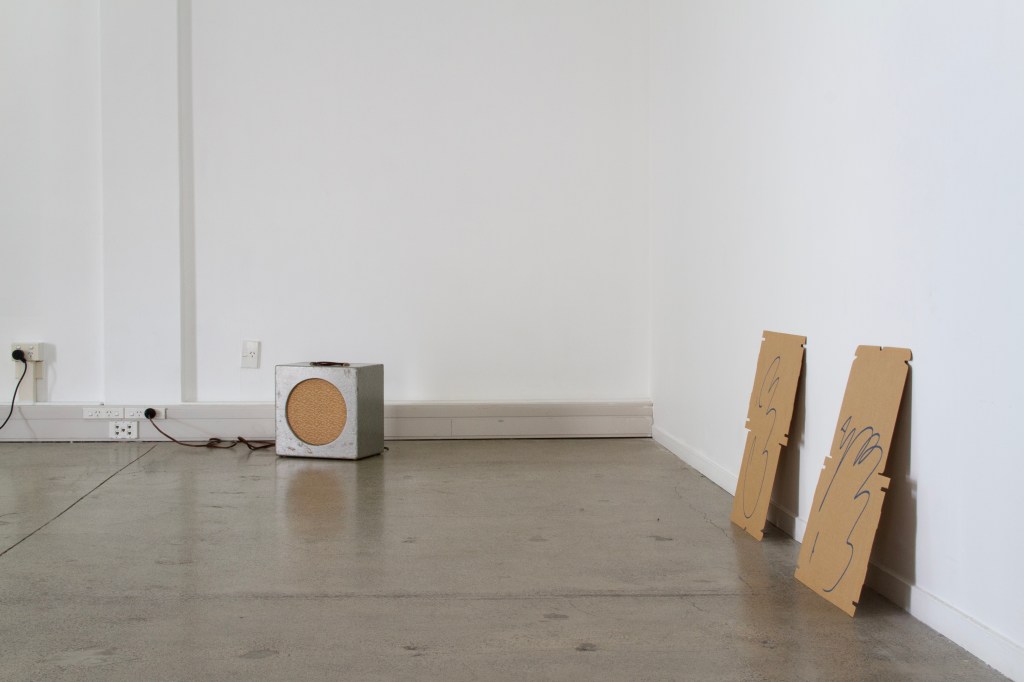
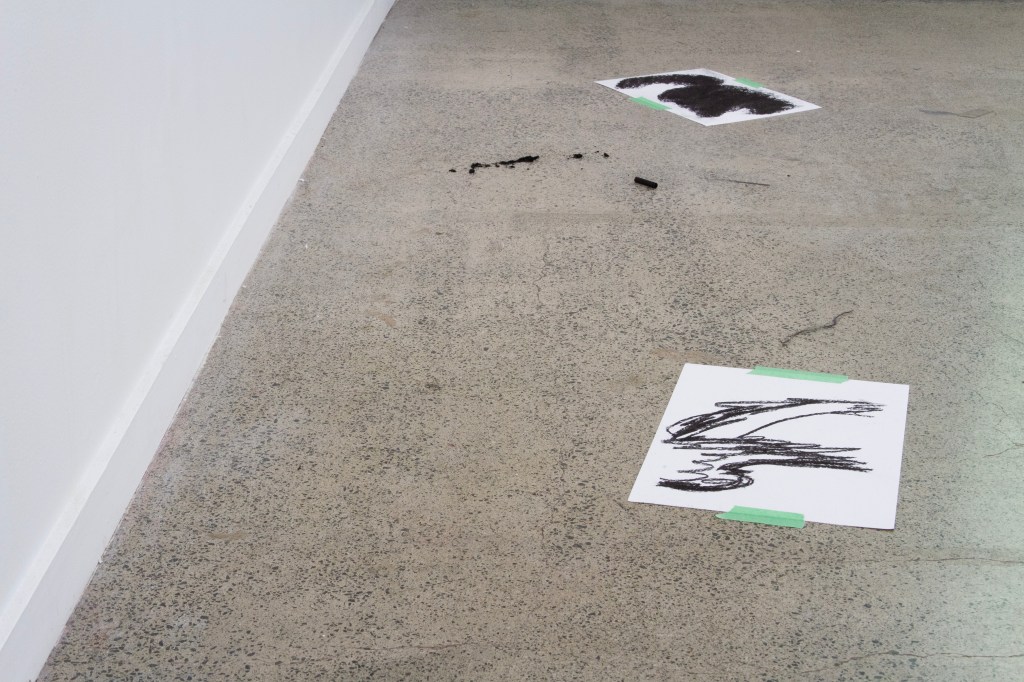
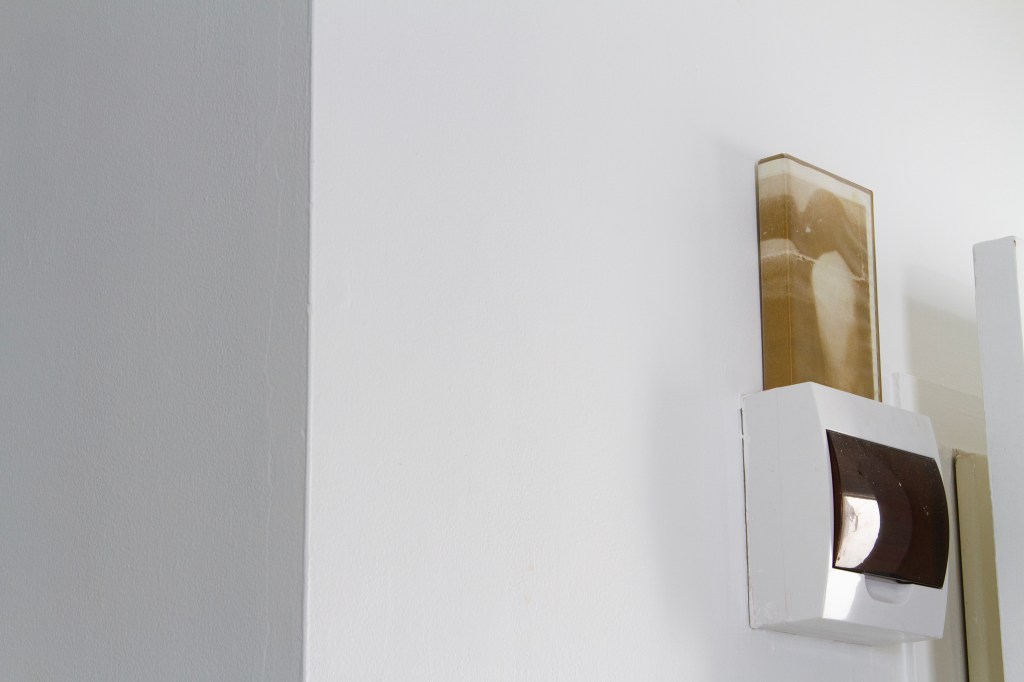
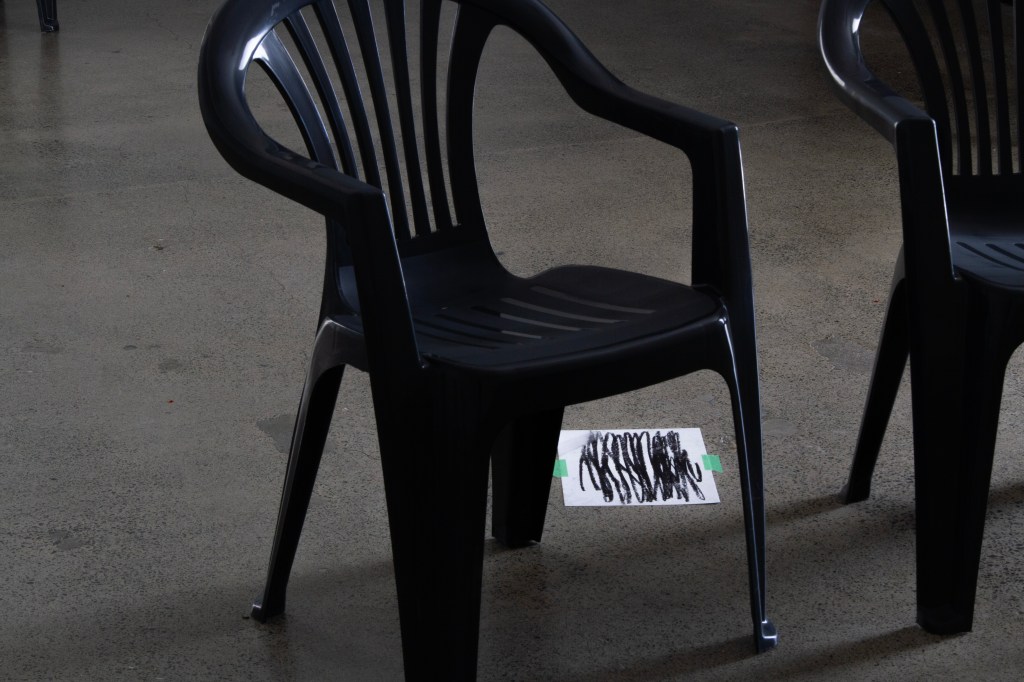
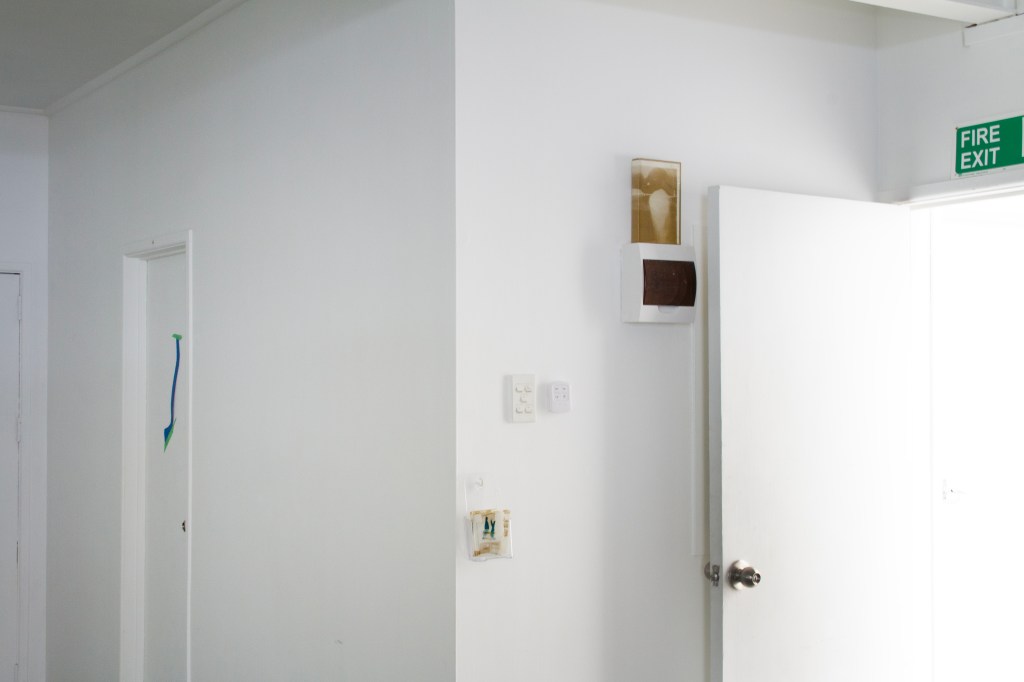
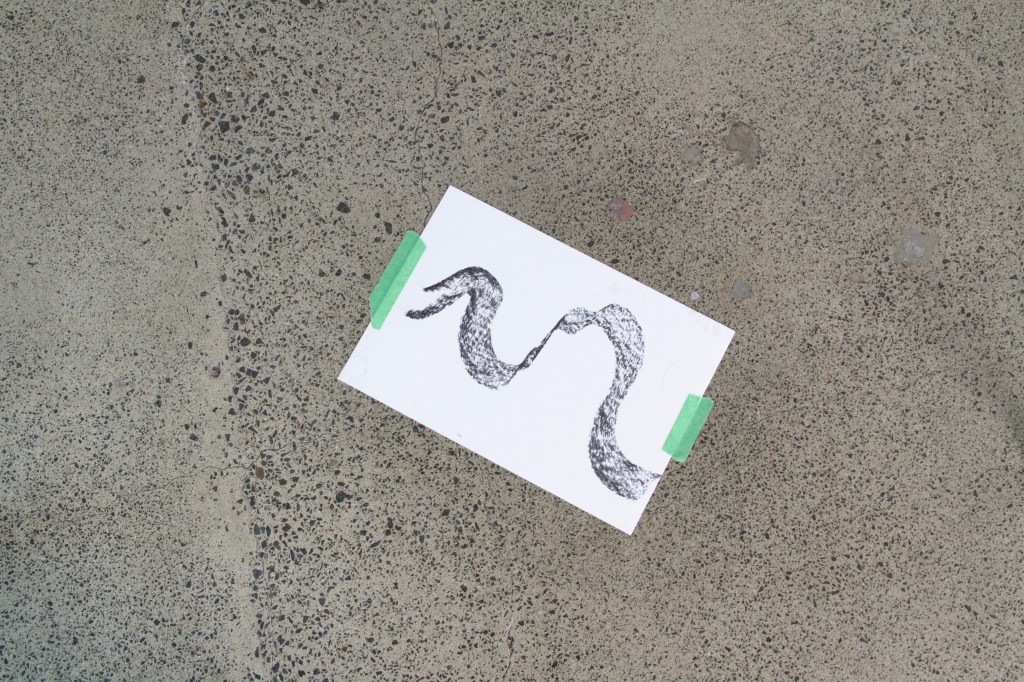
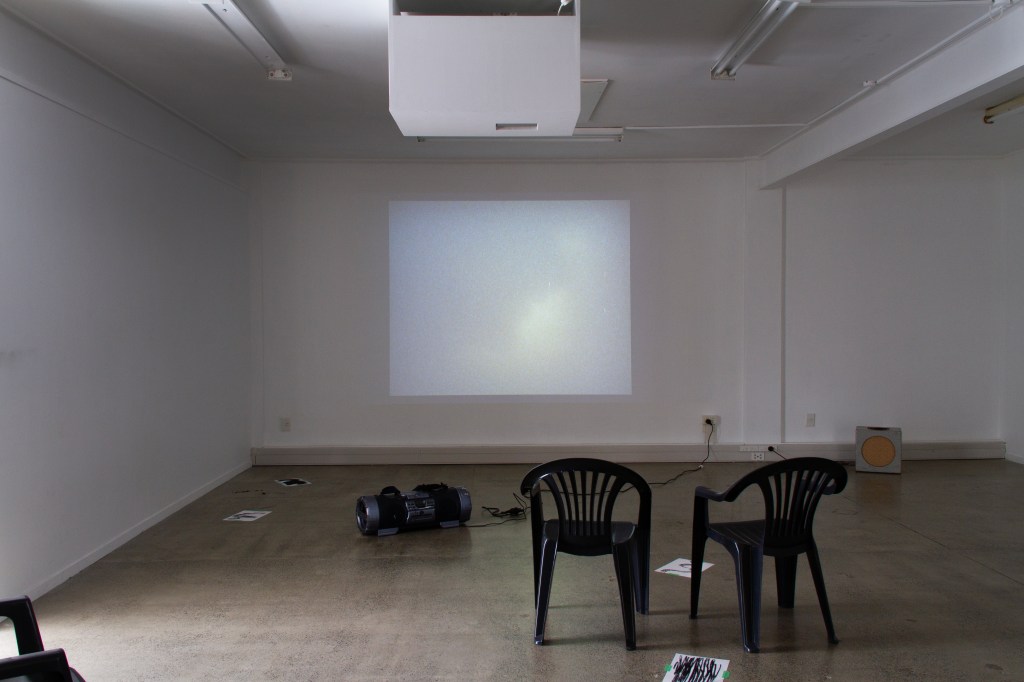
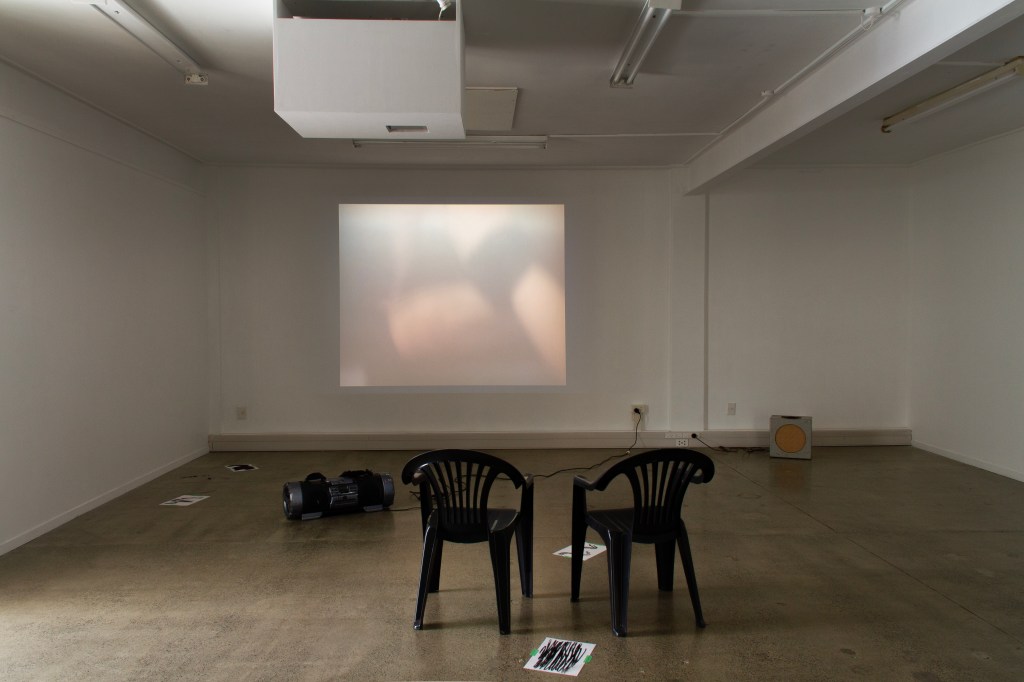
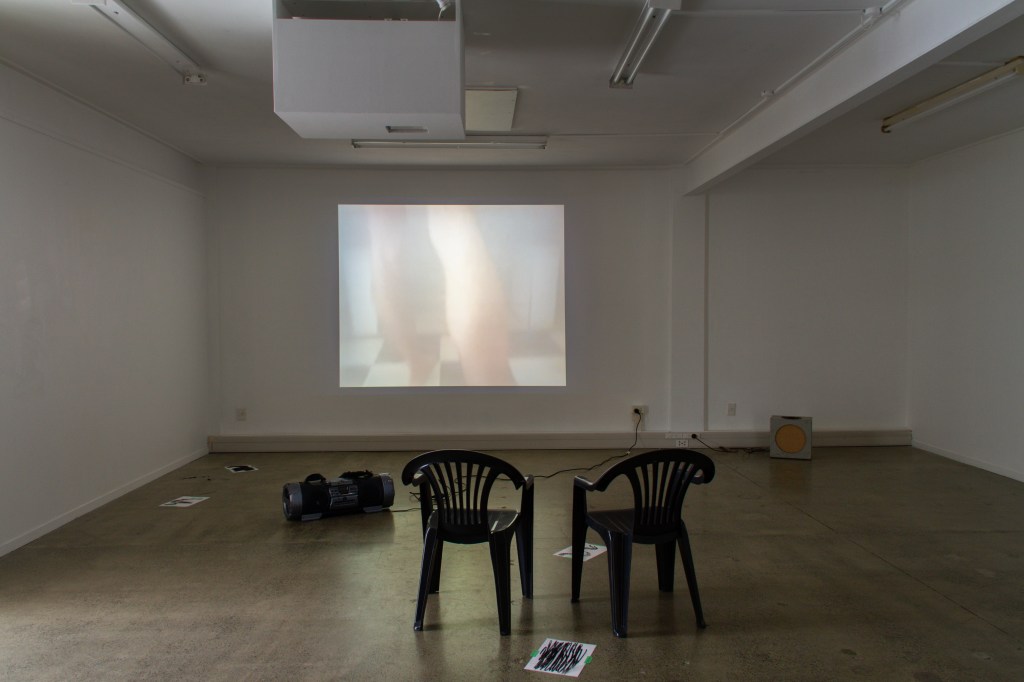
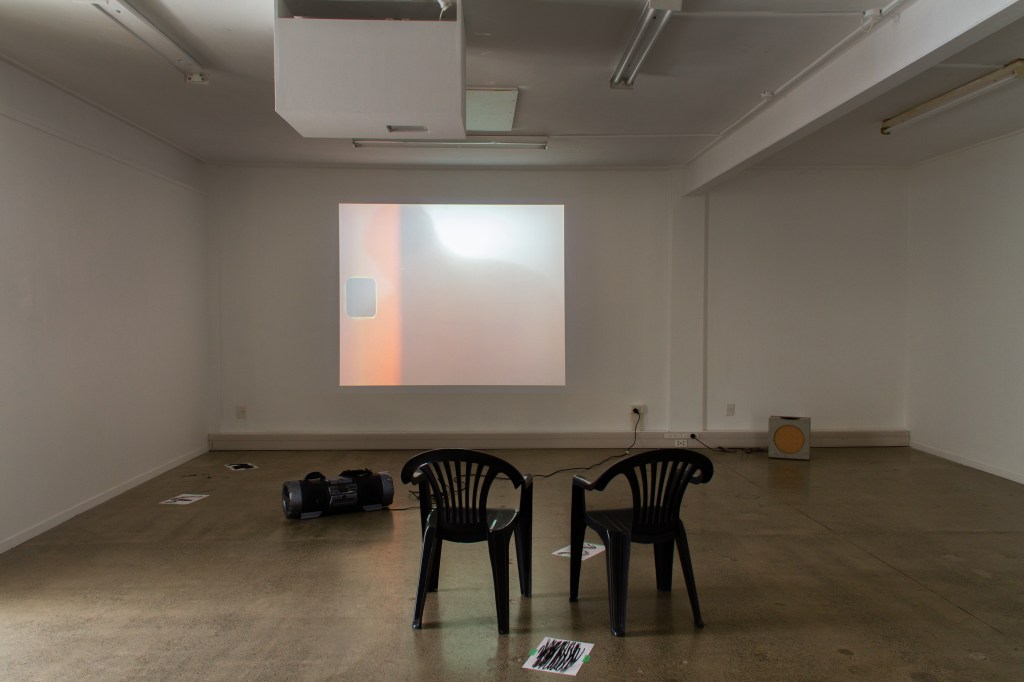
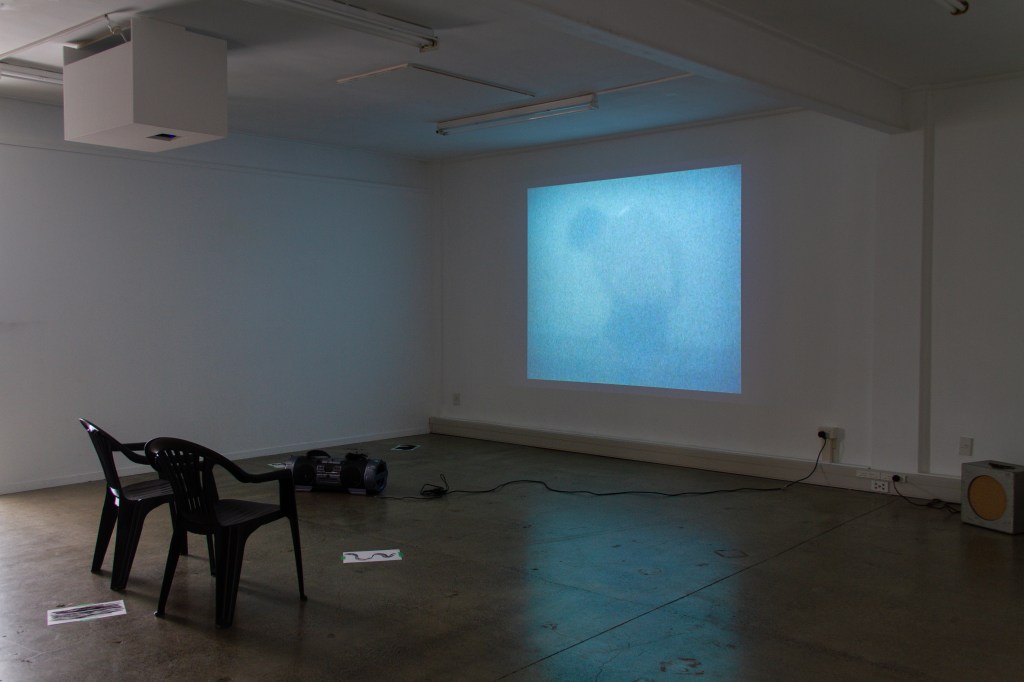
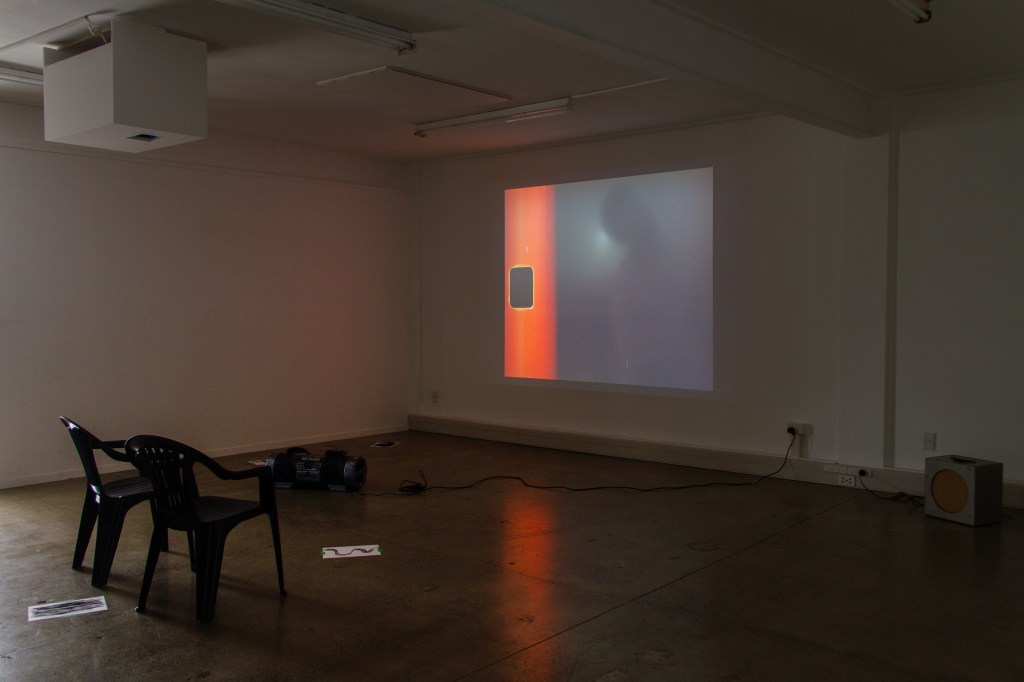
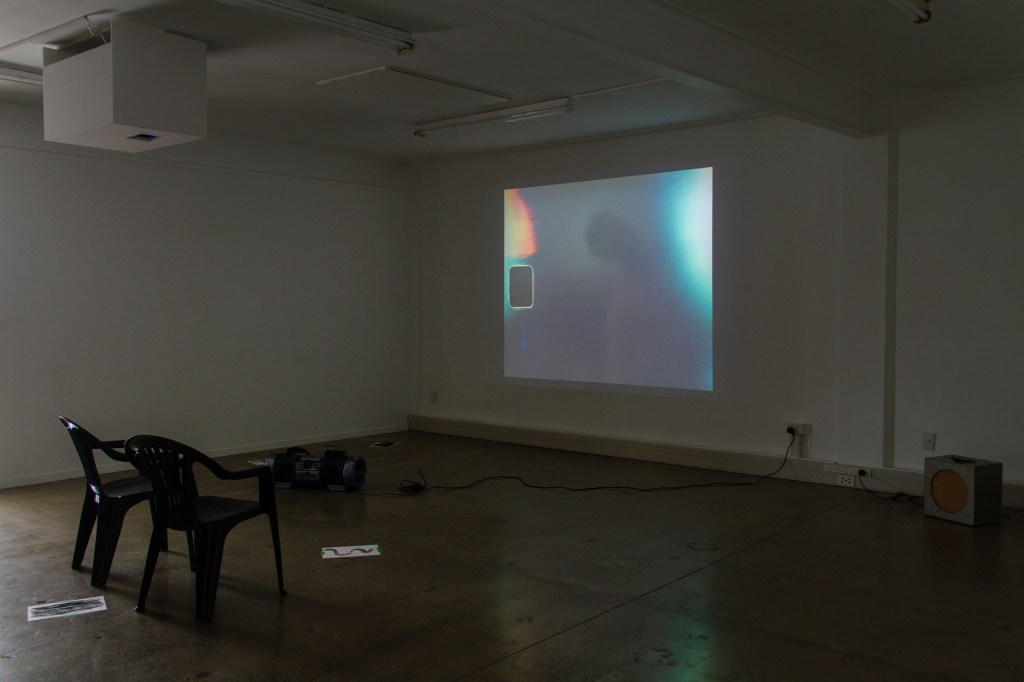
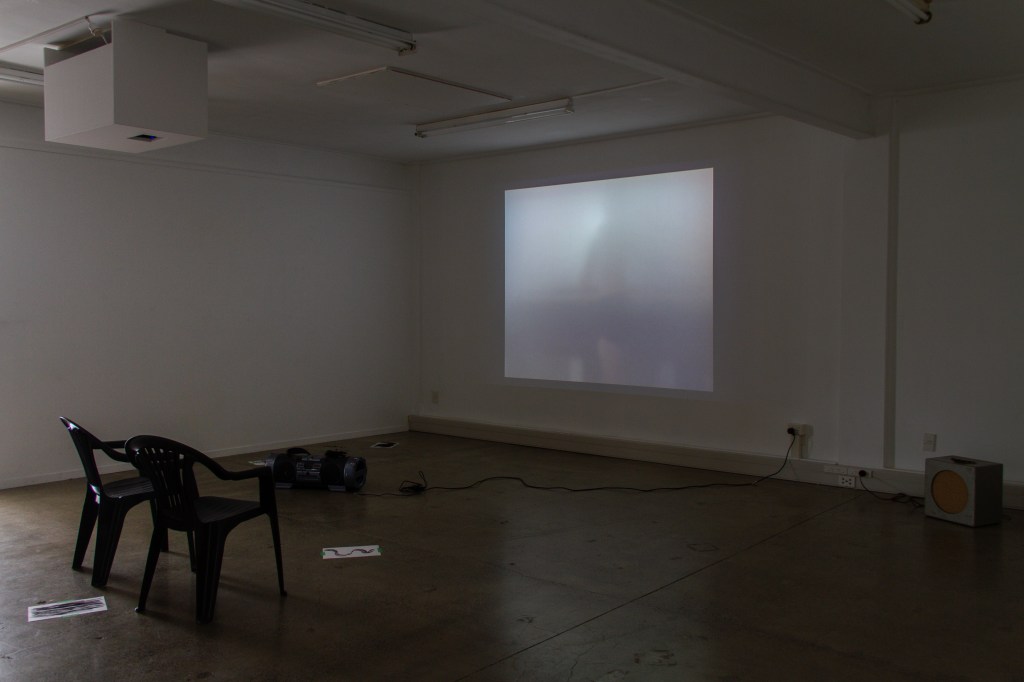
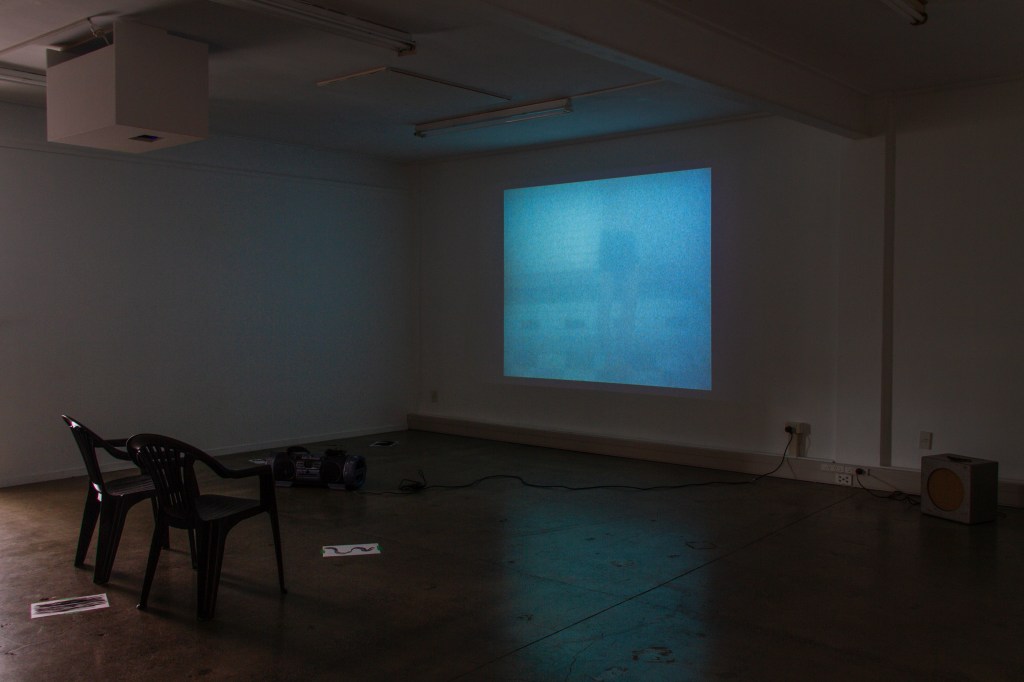
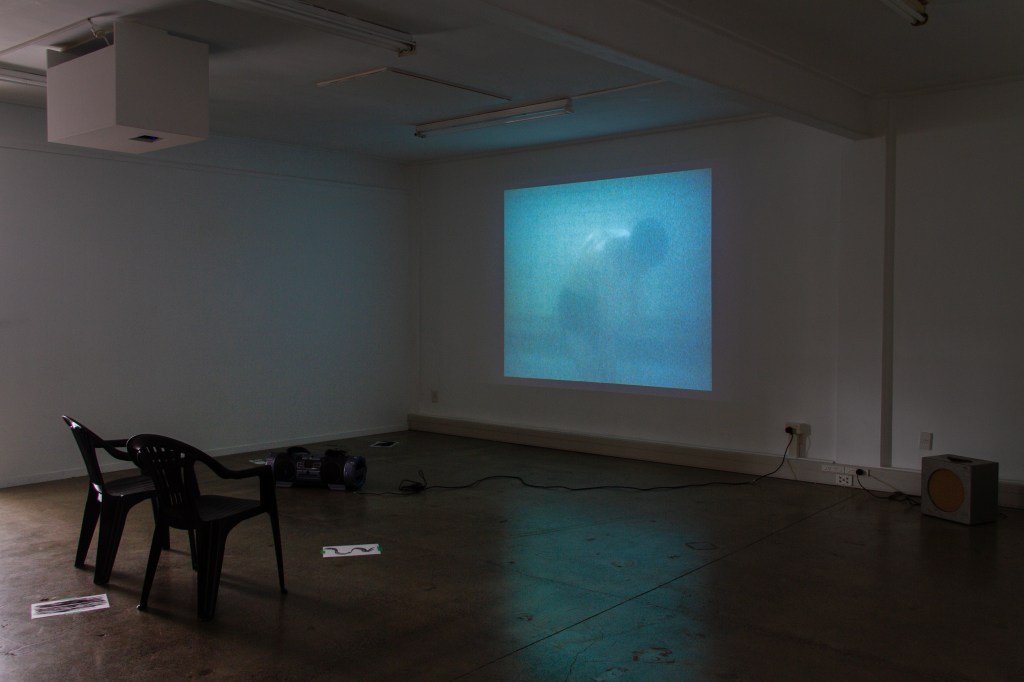
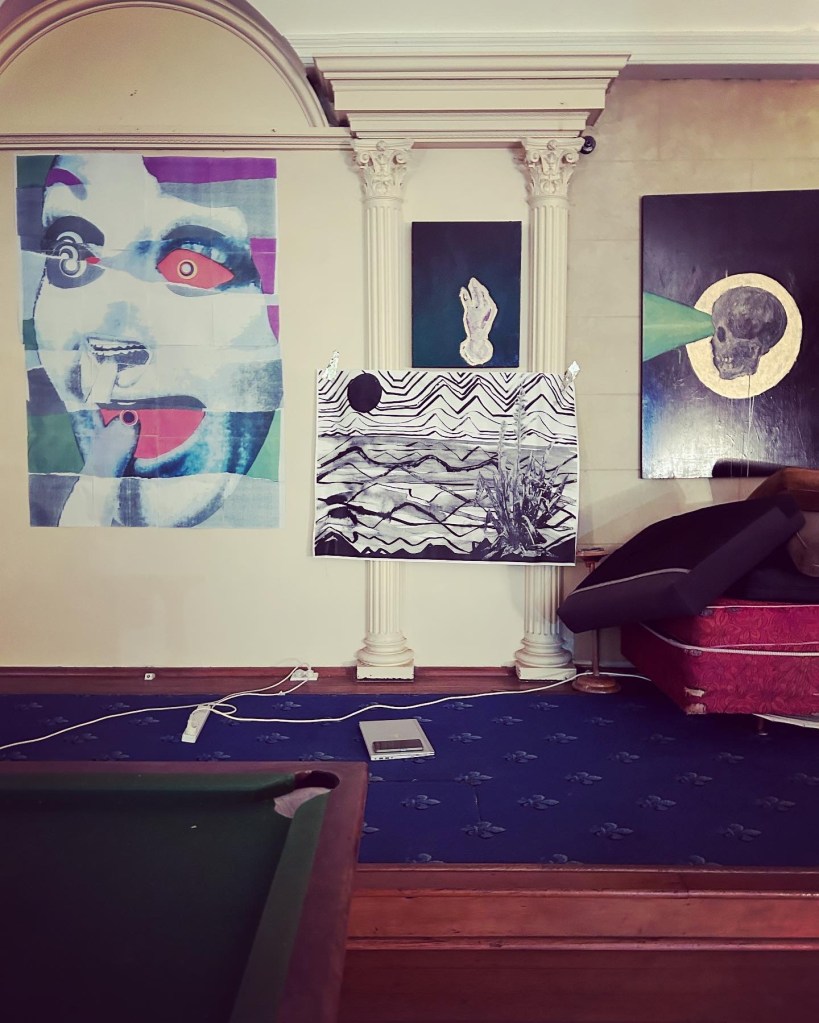
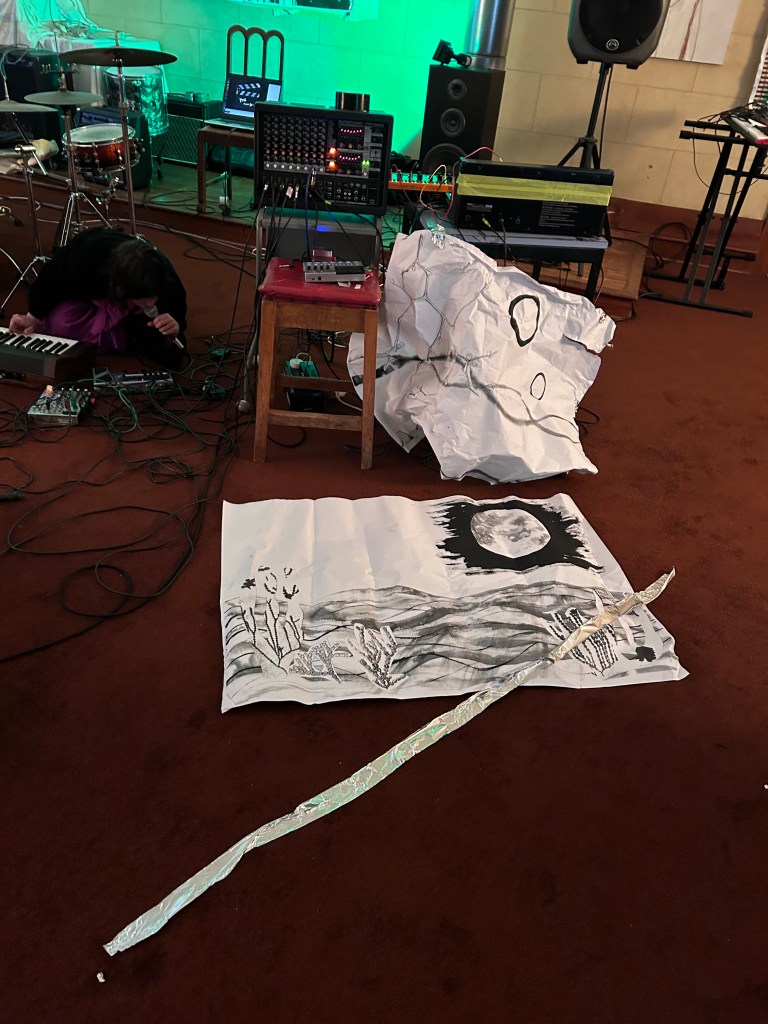
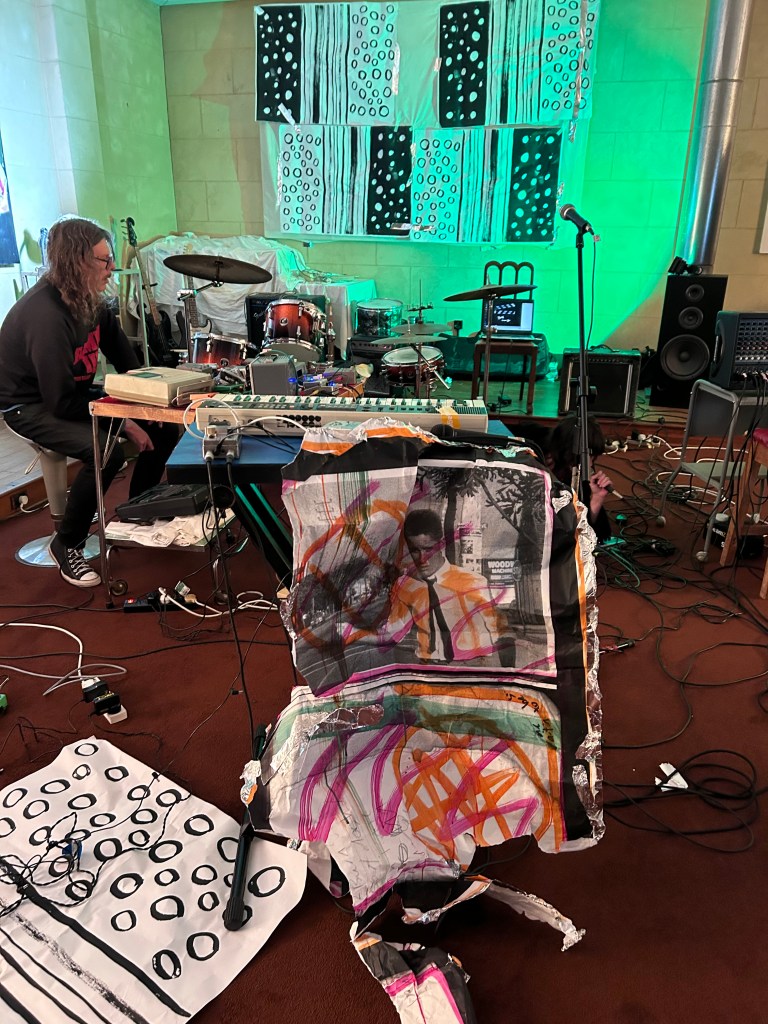
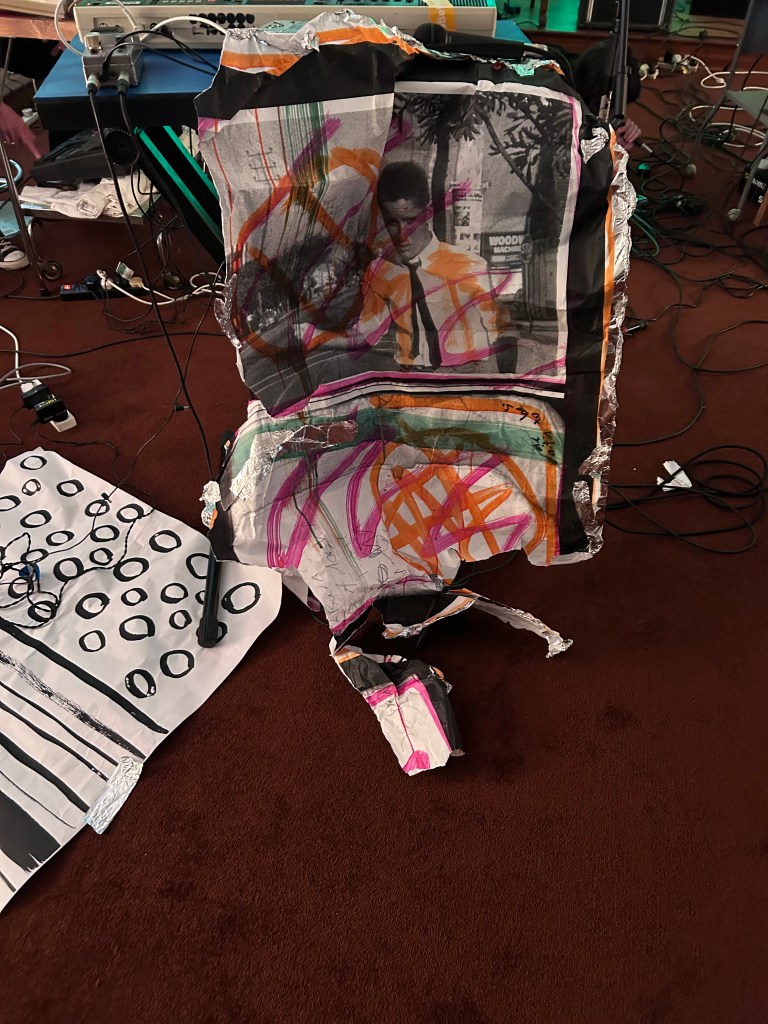
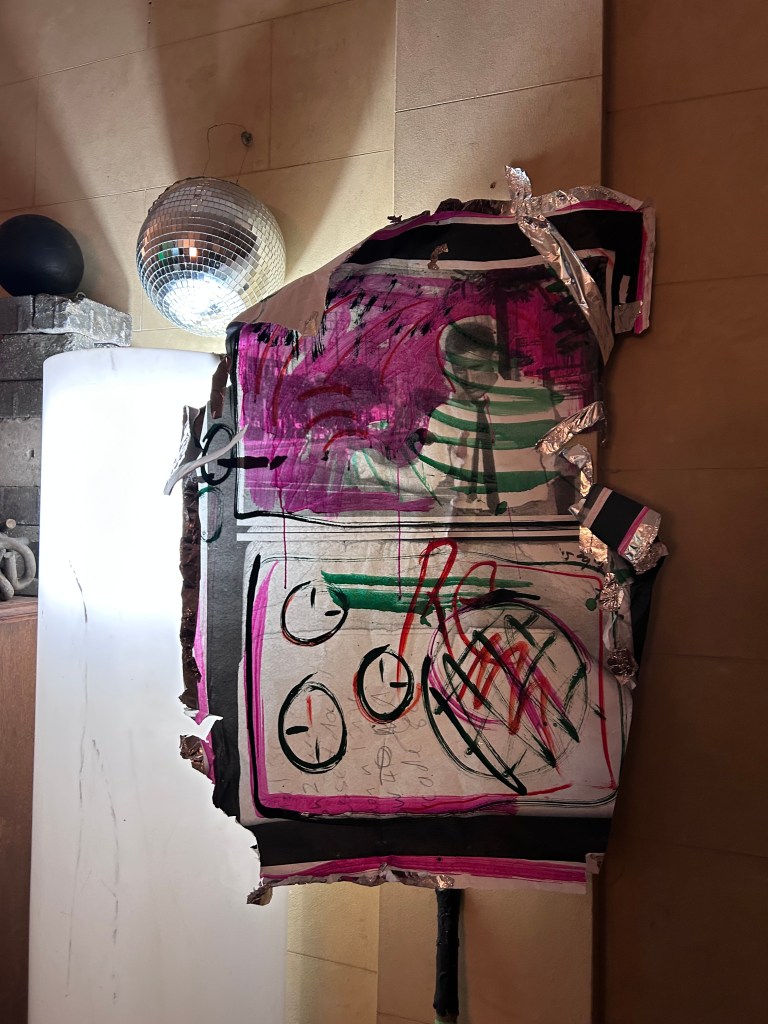
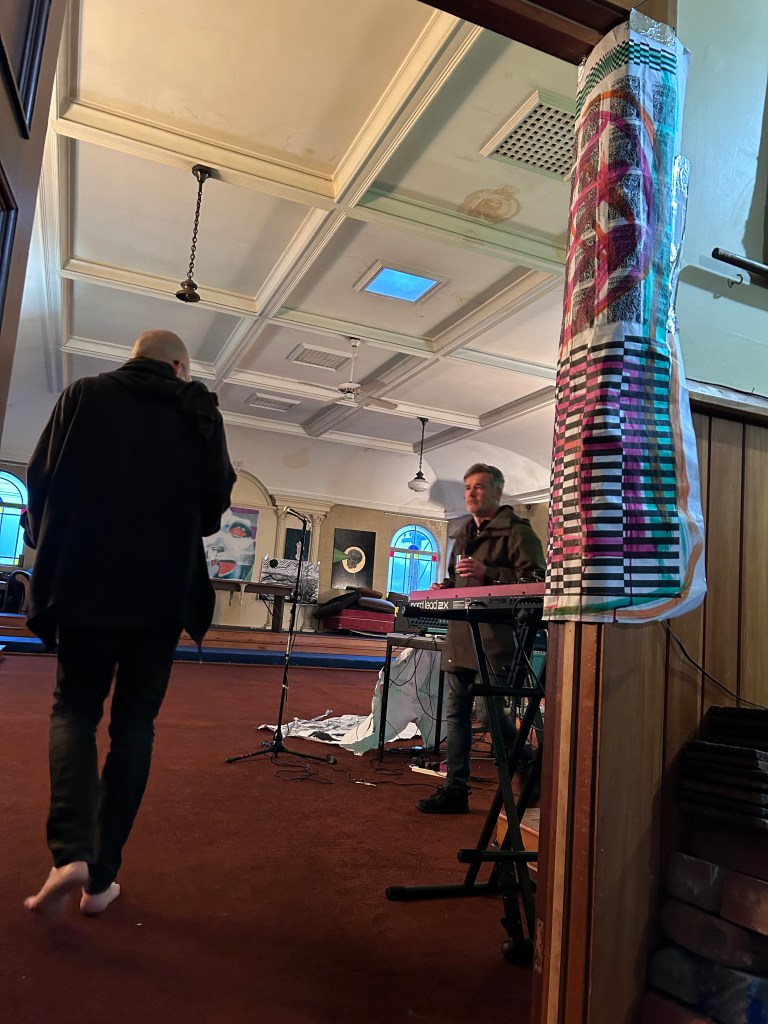
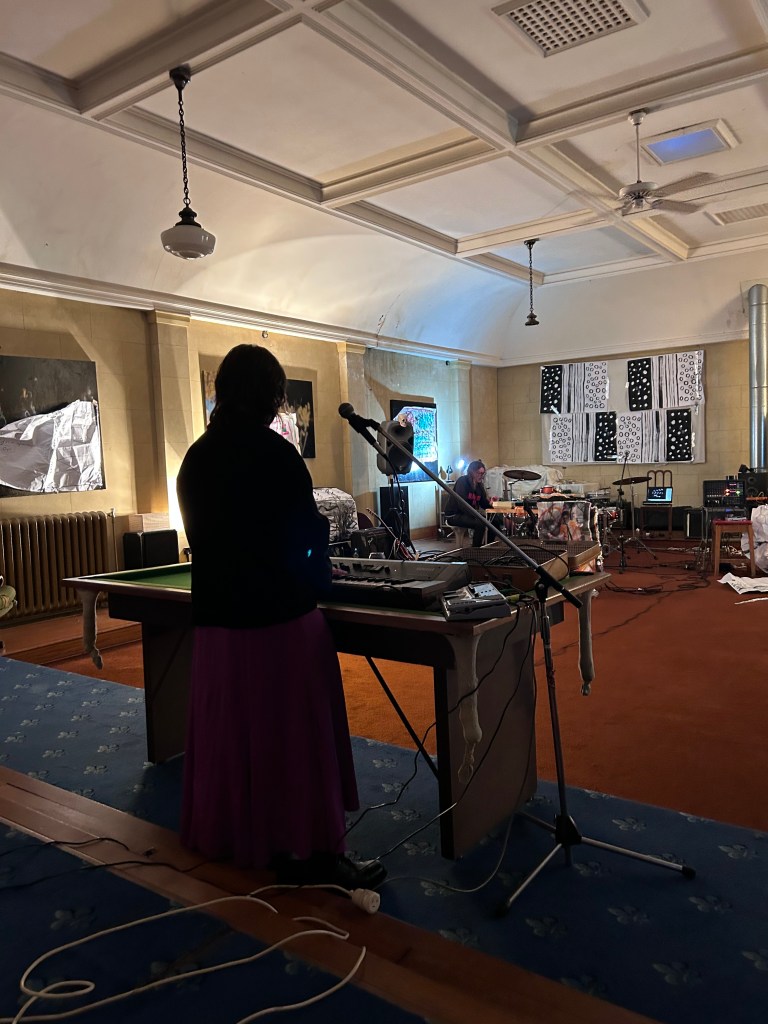
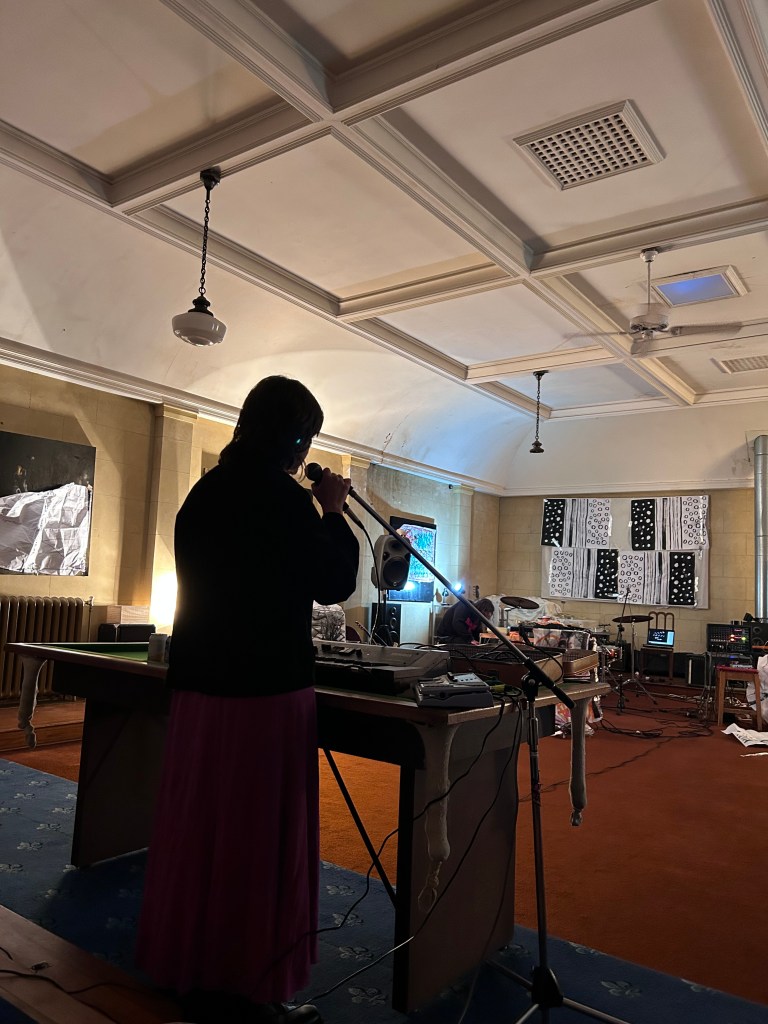
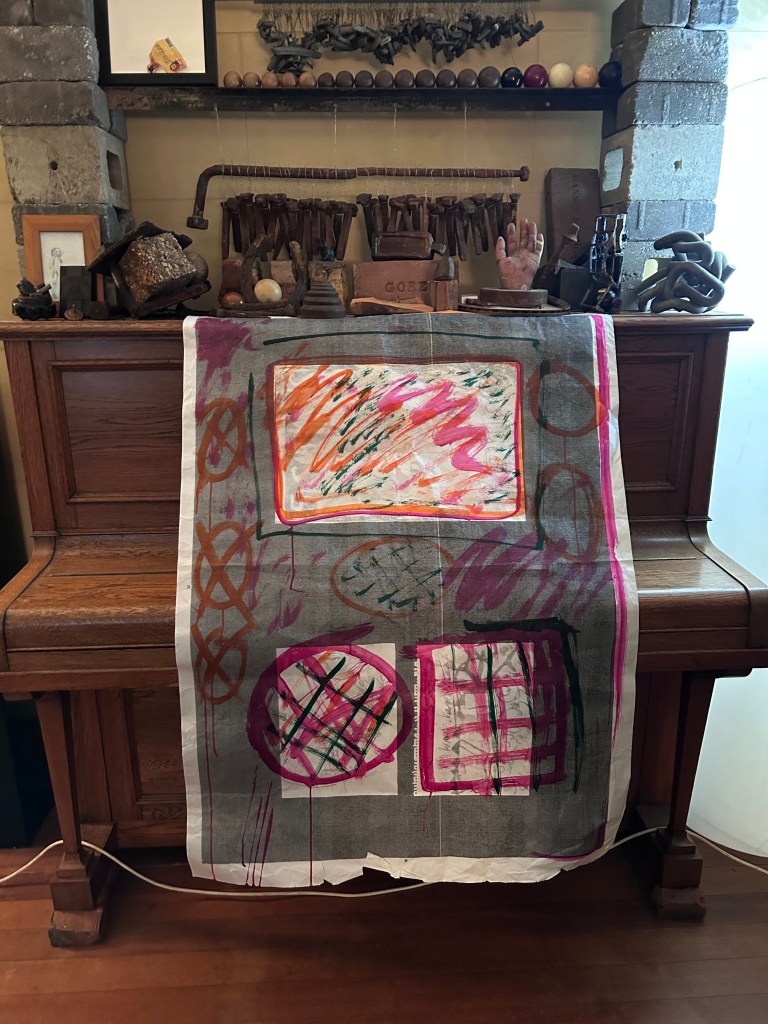
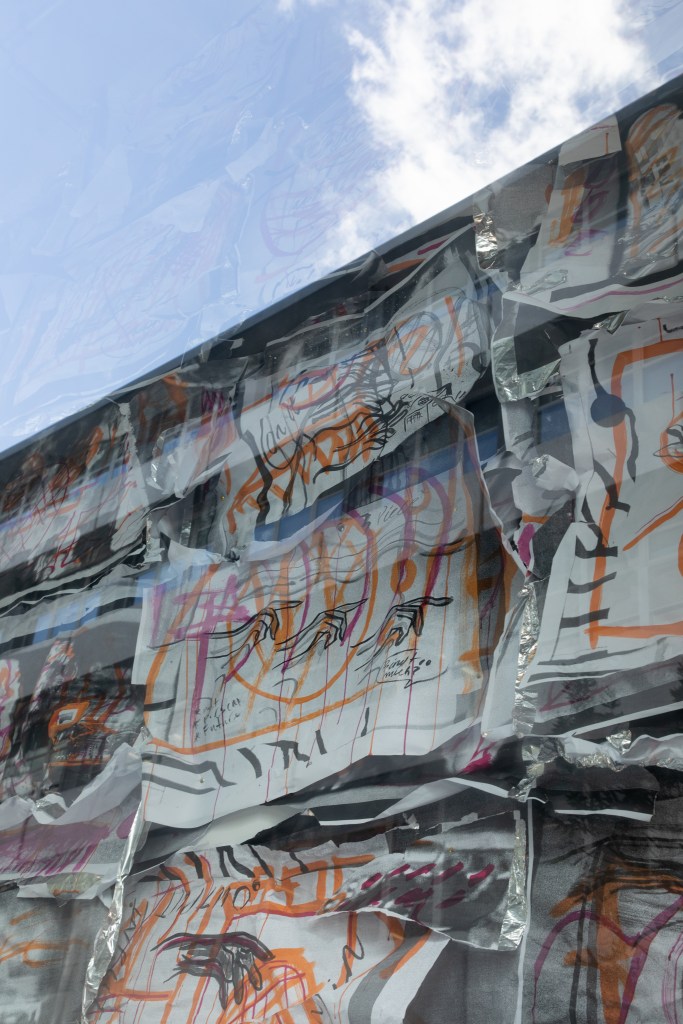
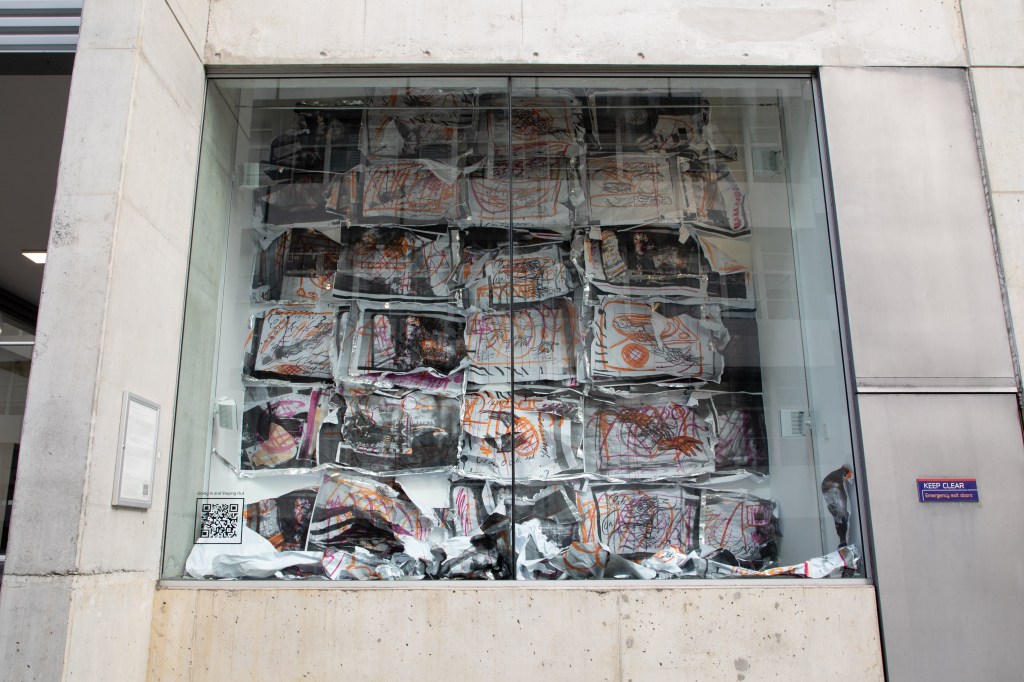
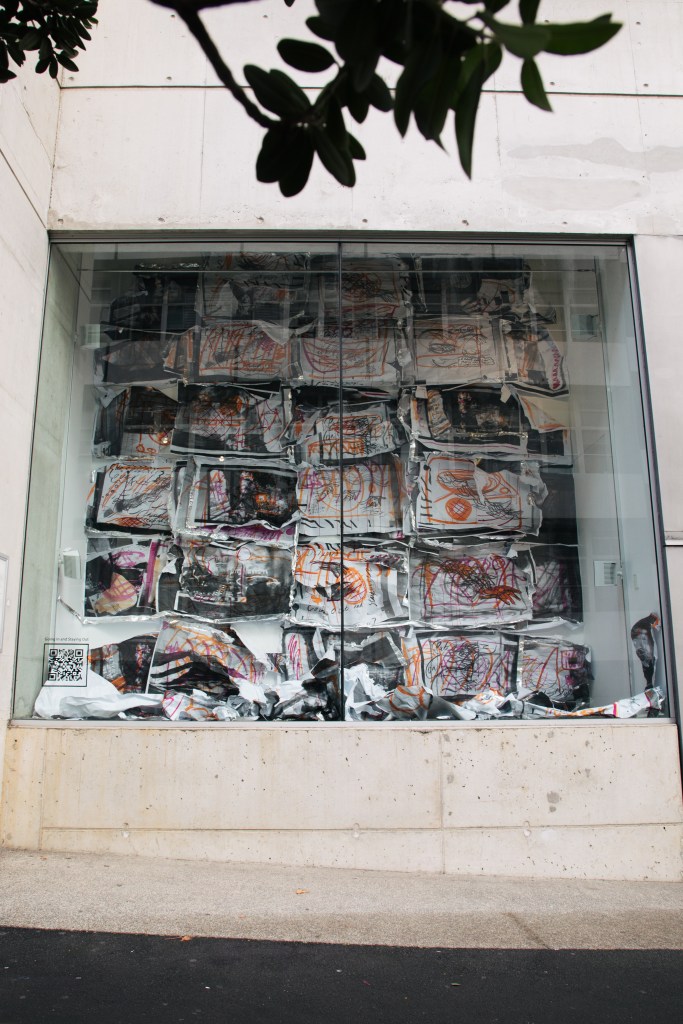
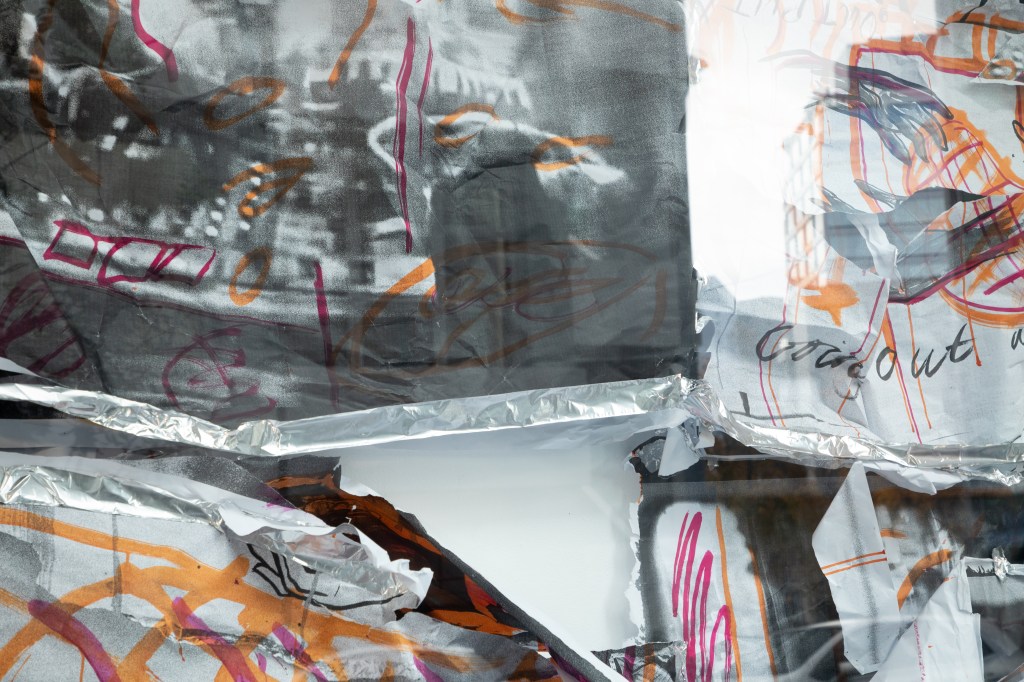
Opening next Saturday, 7 February at 4pm, 𝑩𝒀𝑶 is our first exhibition of the year—a group presentation featuring new works by Gitanjali Bhatt, Ducklingmonster, and Freya Burnett.
Titled after the familiar acronym, the exhibition considers how video work takes shape through the device within which it is presented. Attentive to the position and presence of the device, the works explore how video can move beyond ephemera to become sculptural objects in their own right. “https://plomacy.co.nz/
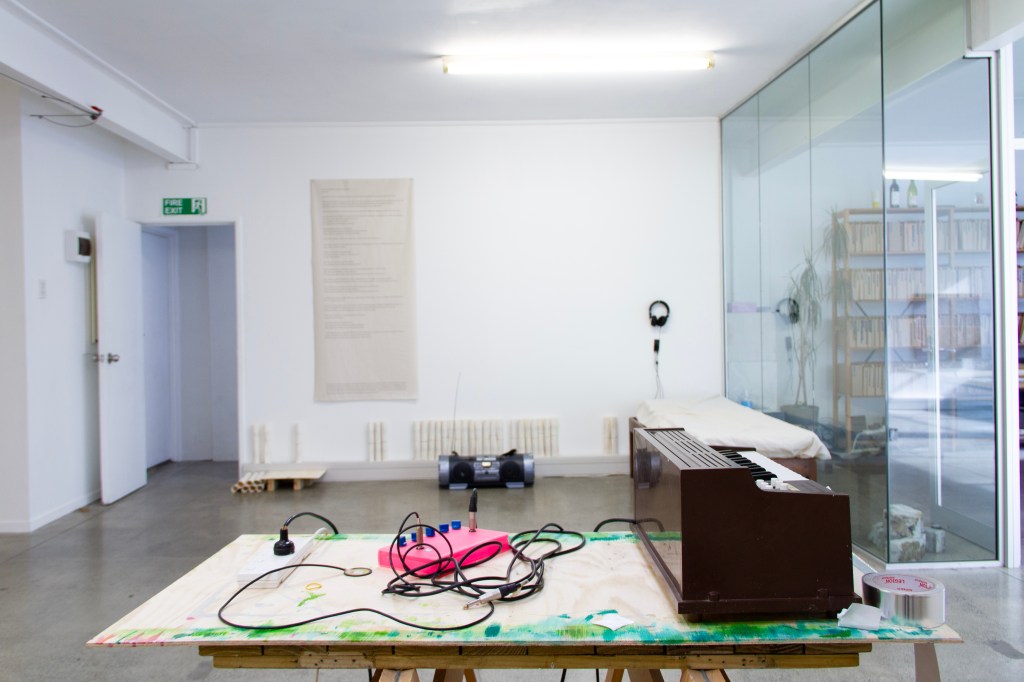
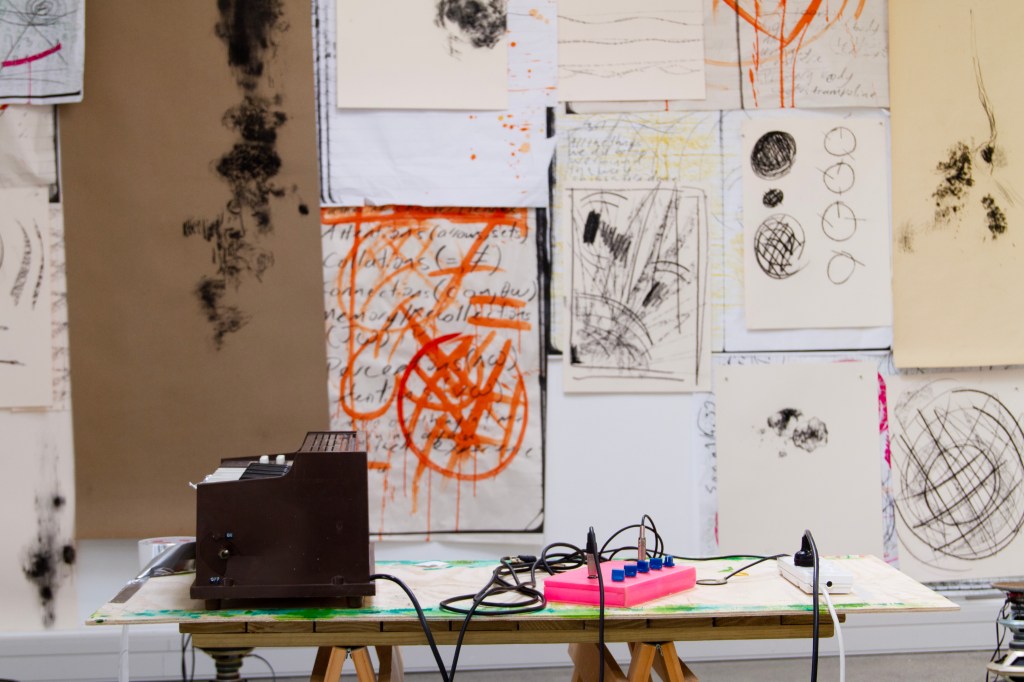
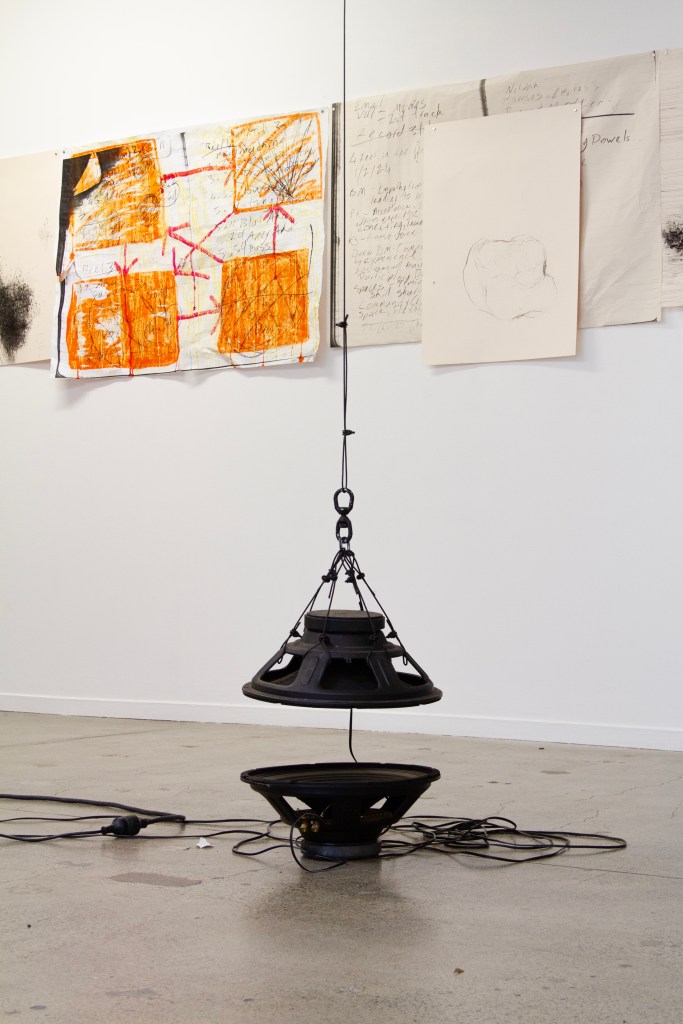
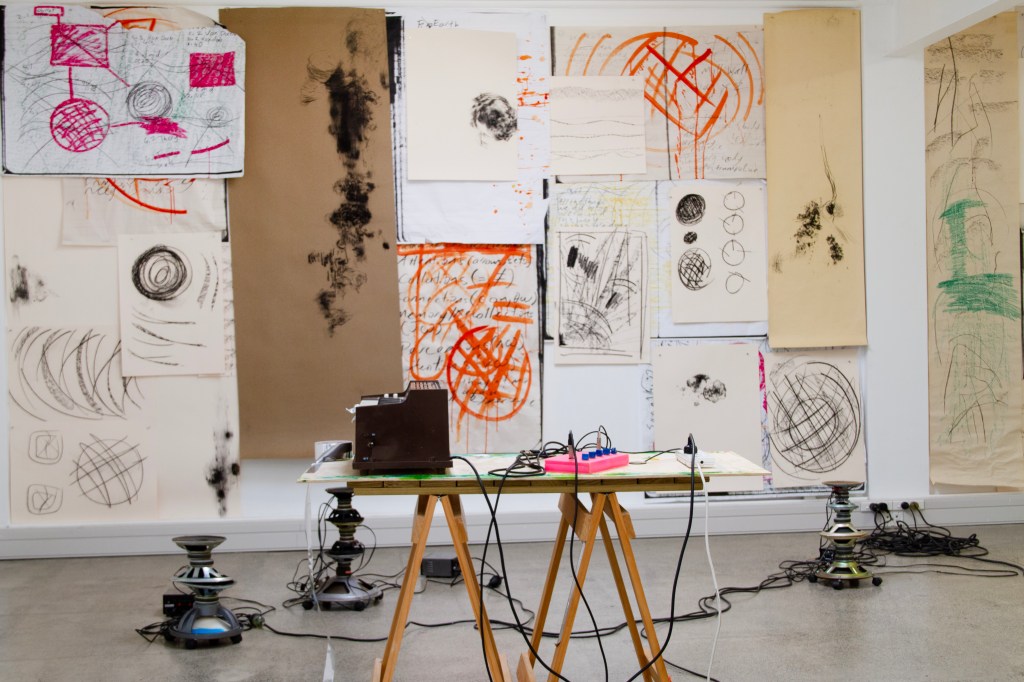
Salomé Voegelin’s Sonic Possible Worlds for a table in an apartment on Karangahape Rd
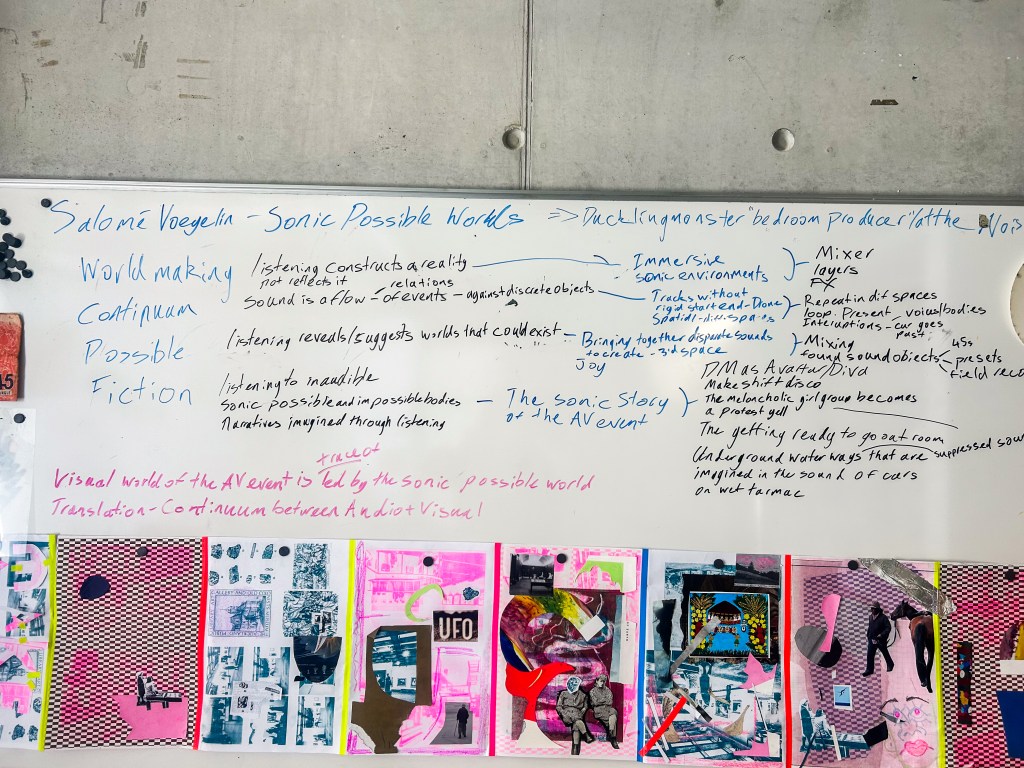
Focusing on the material potential of temporary dwelling in social spaces has led me to look at what I bring to the table. A key material in this research is sound. In Sonic Possible Words through a consideration of sound as material the theorist and sound art practitioner Salomé Voegelin has established a phenomenology of listening in which she considers sound as a way of knowing and experiencing the world. Voegelin engages with philosopher Jean-Luc Nancy’s positioning of listening as a way of being. In the text Listening, Nancy establishes listening as tied to his philosophy of self as resonance.[1] Sound moves beyond the semantic transmission of meaning and resounds with the listener. Listening immerses the hearer in sound; consequently, sound is understood as a contingent subjective material. For Voegelin the resonance of listening, with its openness to a shifting continuum of vibration and relation, builds sonic possible worlds. Through my installation and drawing practice I have been exploring how the sonic possible worlds resound with are a lead to the audio-visual events I share.
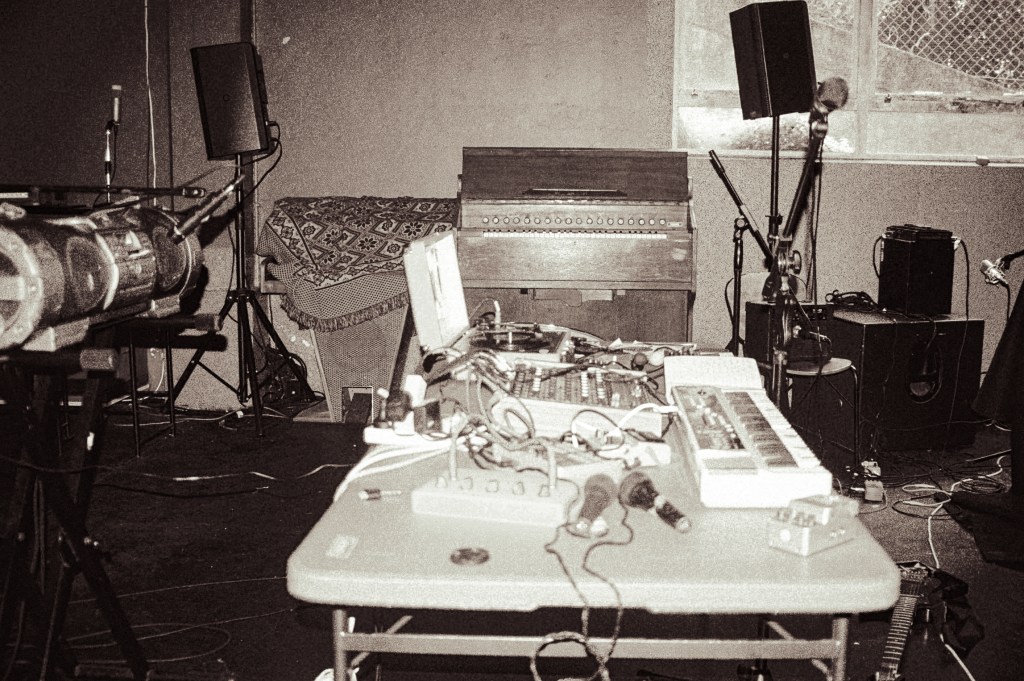
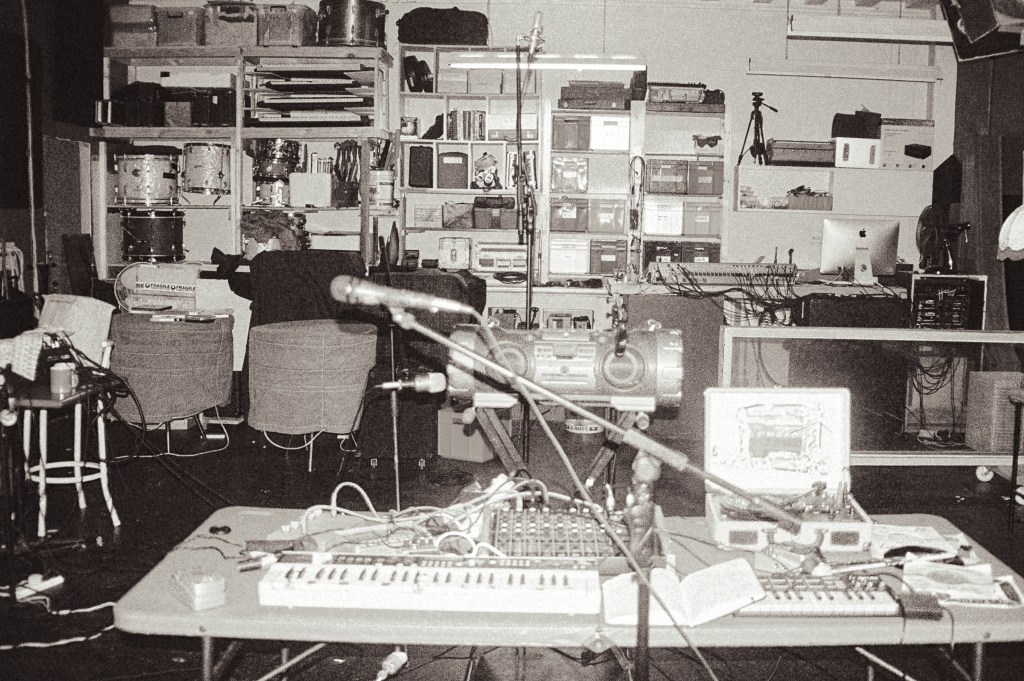
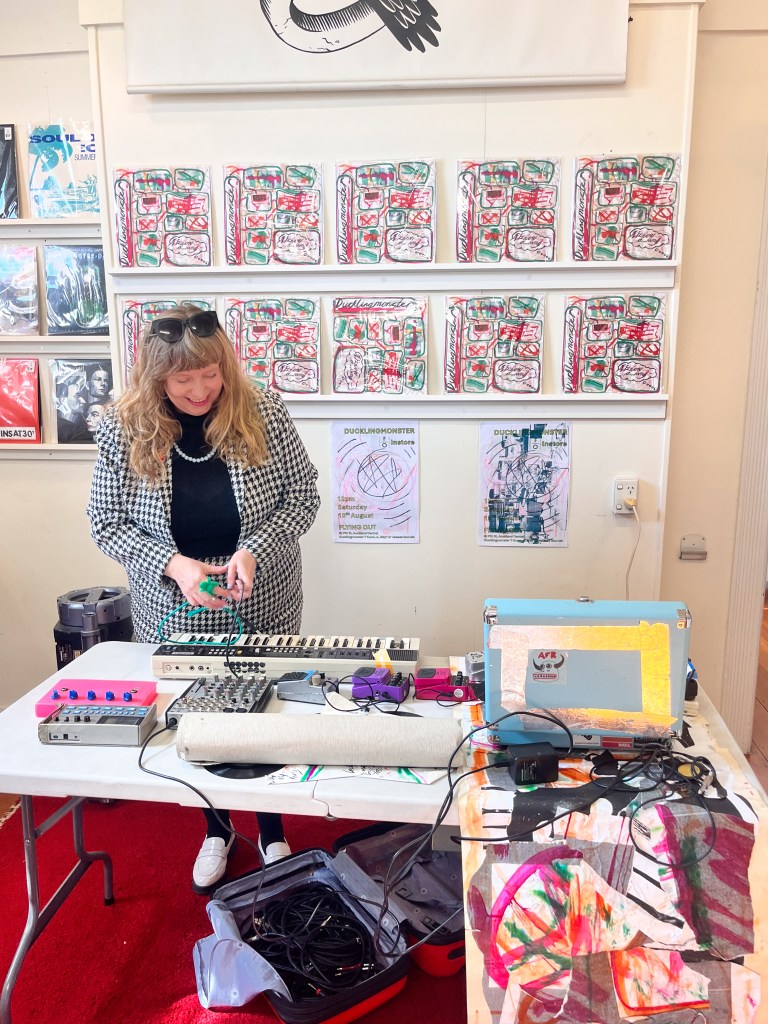
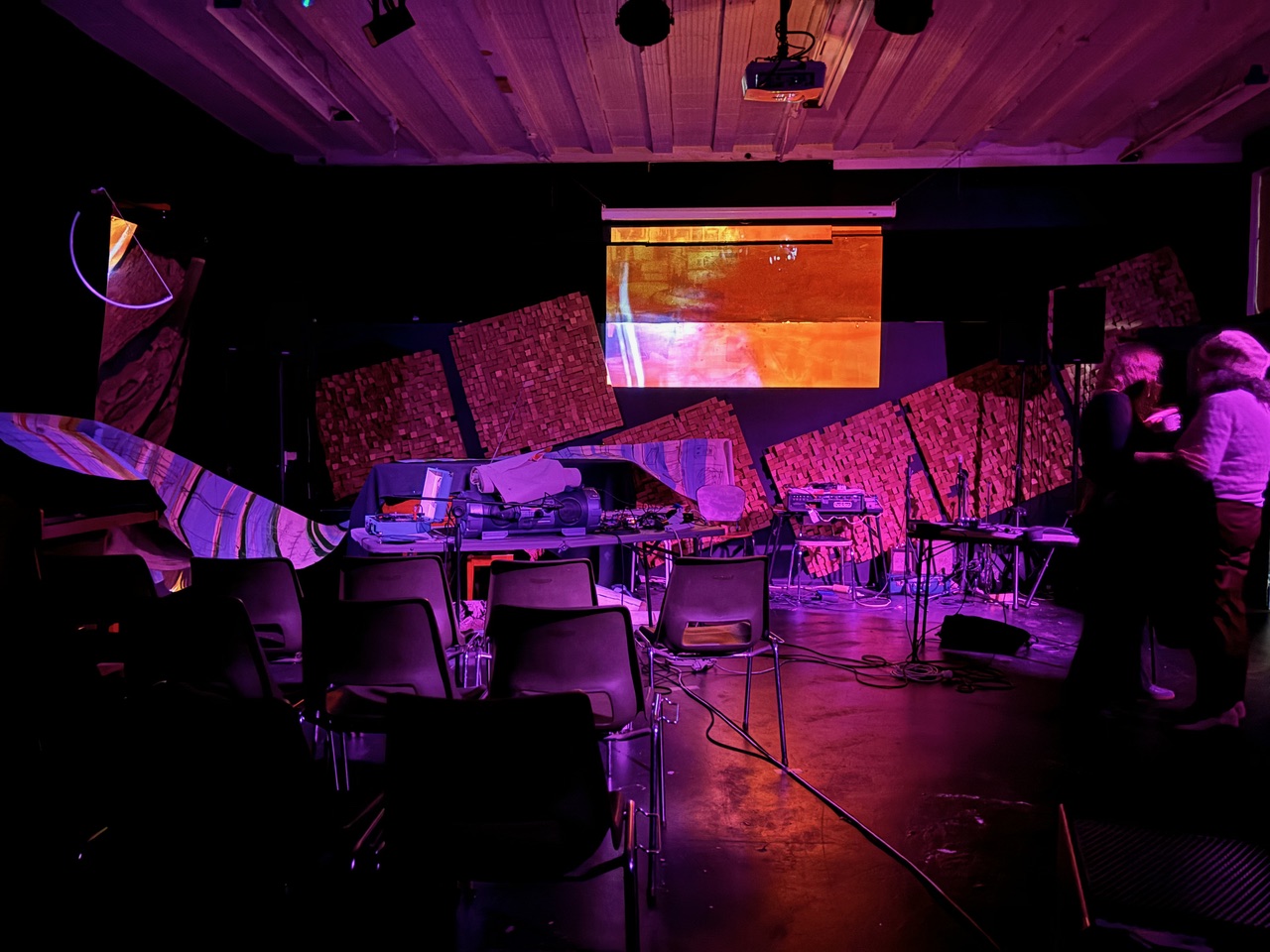
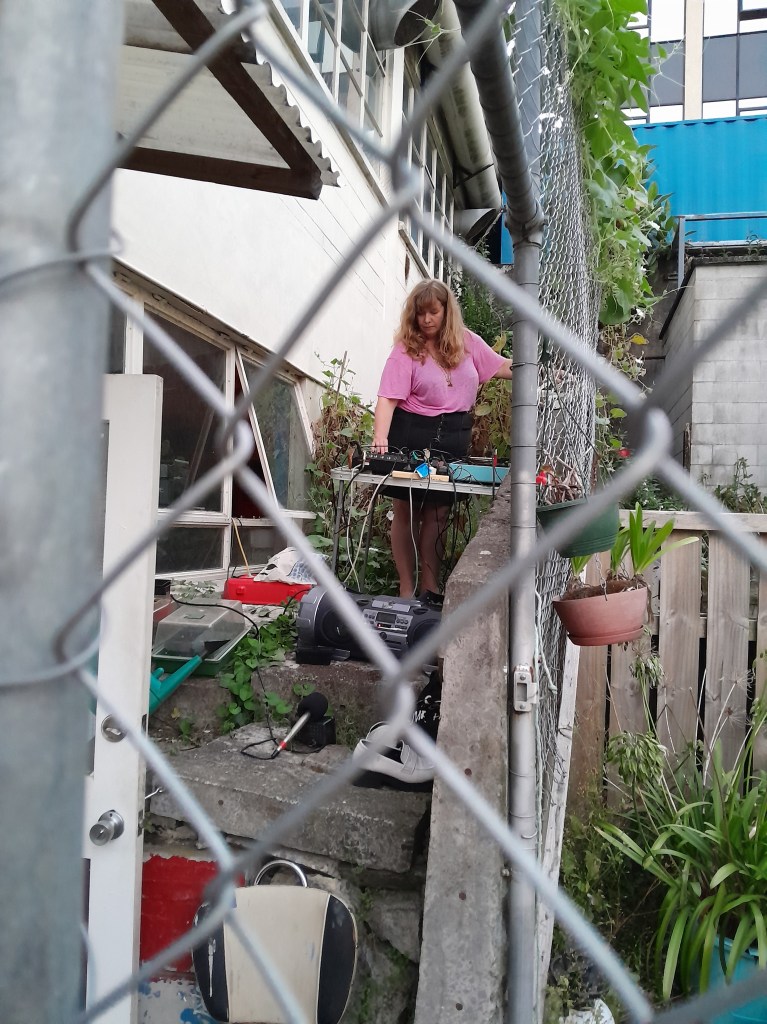
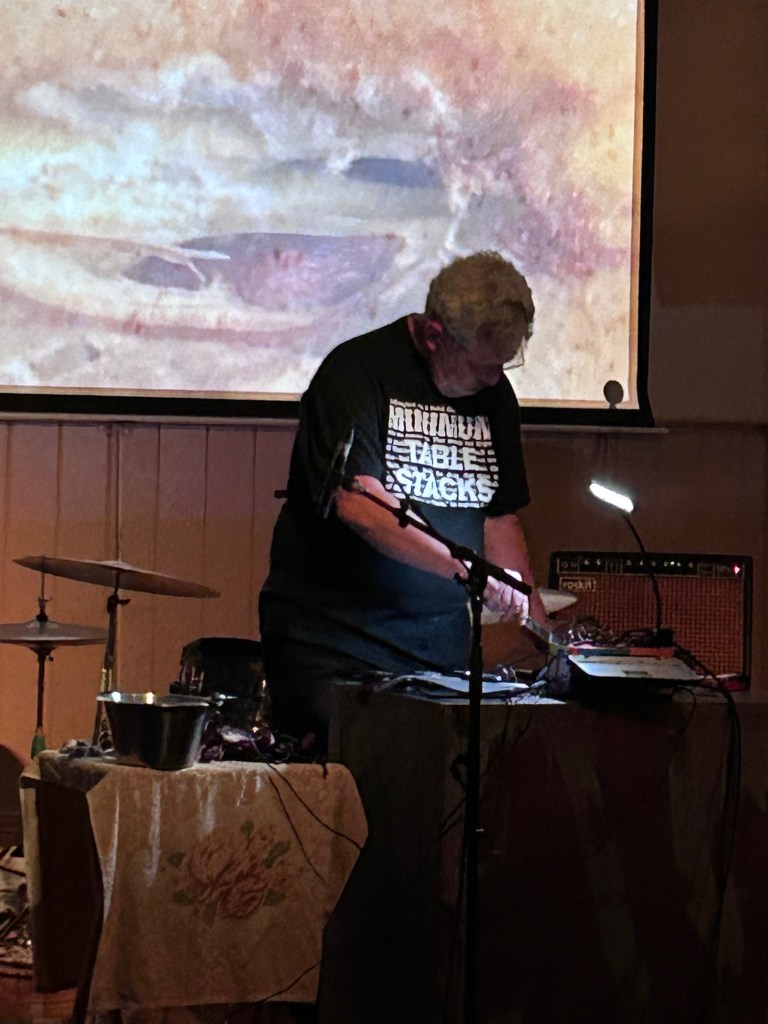
For Voegelin, listening is a way to reveal and suggest worlds that could exist. Through an engagement with listening in my practice, I aim to produce work that disrupts dominant narratives, supports marginalised communities and opens more inclusive spaces for being together. Through the mixing-desk at my noise table, I bring disparate sounds together, the crackle of scratched 7” records, broken beats of a 1982 Dr Rhythm drum machine, field recordings of crashing oceans and Karangahape footpaths, drawn out keyboard drone and vocal textures laid into walls of sonic environments that evoke the forgotten, neglected and overlooked. Collaging sounds that flow into each other reveal lost passages of real and space, a resonance of the strata of inner city Tāmaki can be heard as underground rivers, makeshift discos and friends gathering.
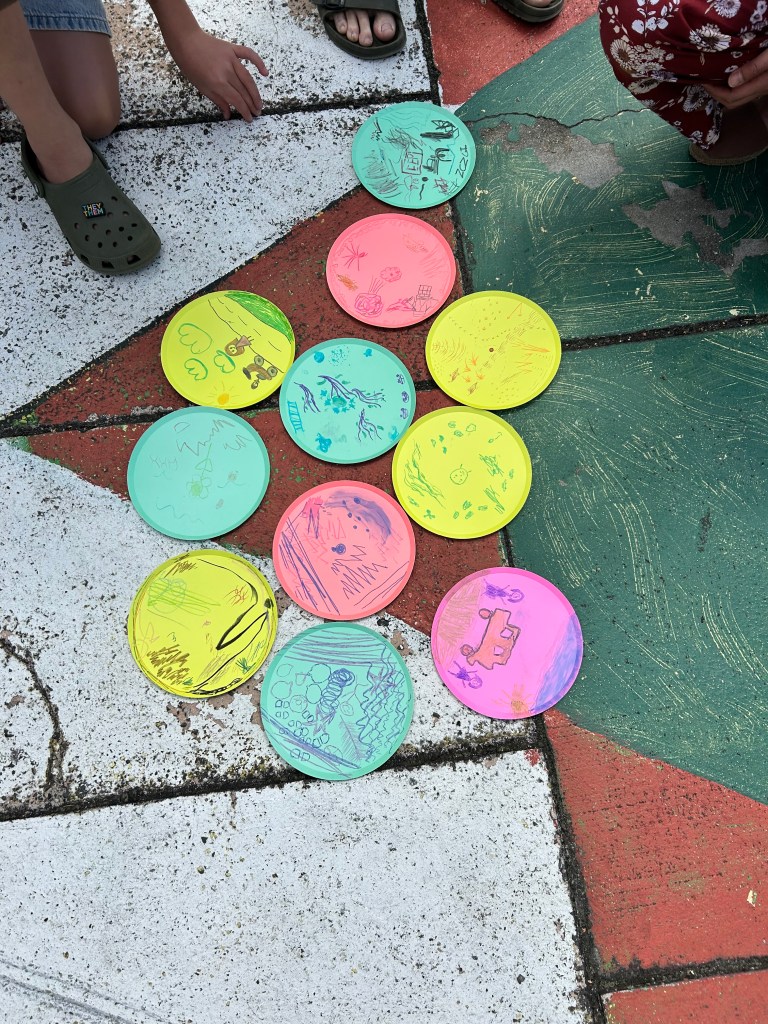
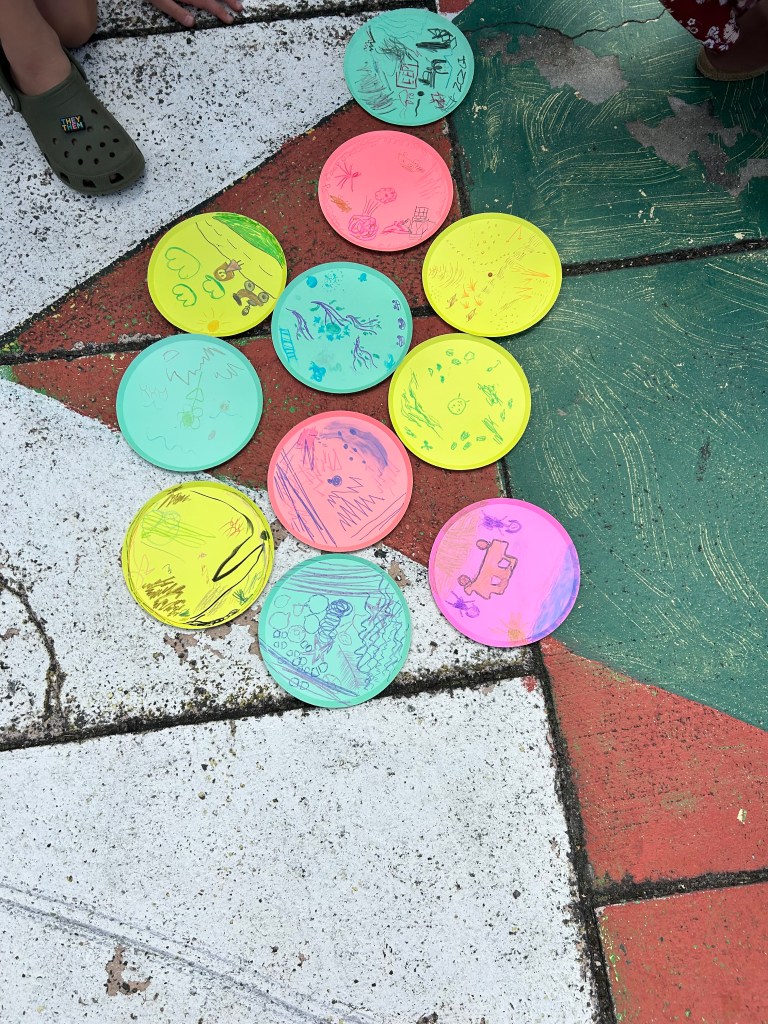
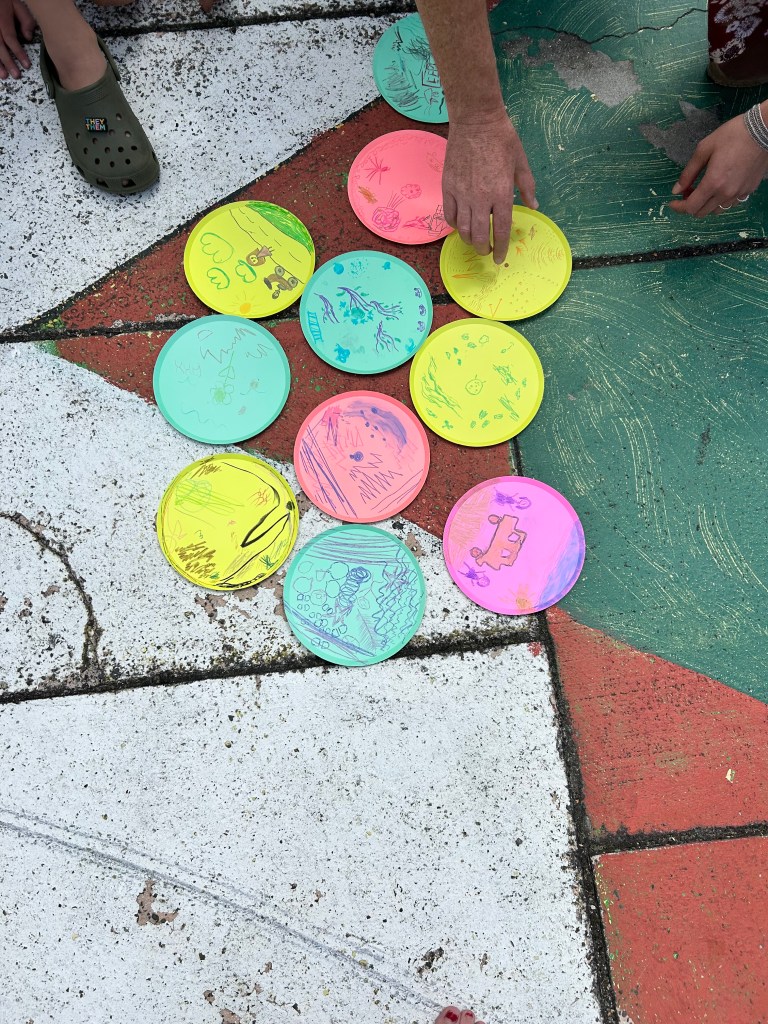
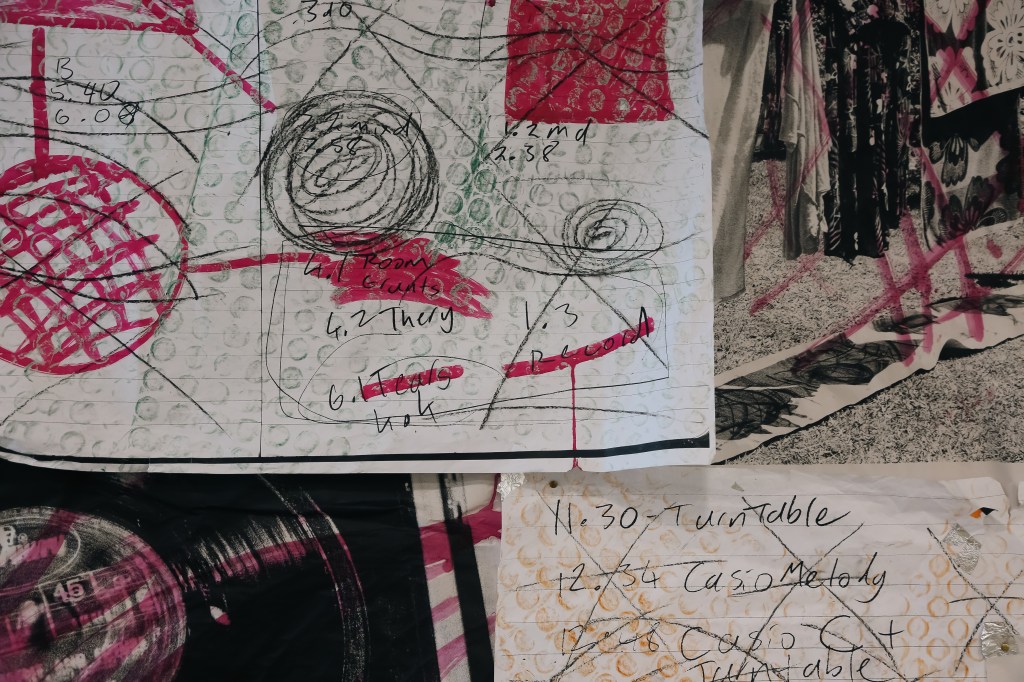
As a tool in my research, I have developed an action of hand-drawn sound mapping that encourages an embodied listening to site.[2] This listening drawing action has grown out of my engagement with the compositional practice of Deep Listening developed by the avant-garde composer Pauline Oliveros, in which the participant is encouraged through a series of exercises to pay attention to their heard world. The circular disc of my hand-drawn sound maps spirals my listening into a storyboard that forms a foundational notation for building compositions in sound and ink drawings.[3] The description of sonic presence in visual space , such as my sound-maps, are referred to by Voegelin as “sonic phonography”. Like the examples of writing about sound given by Voegelin, my sound-map does not produce a reliable recording of sound but of my listening, which, as Voegelin writes, “produces another sound in the imagination of the reader that is not the sound I heard but the sound generated in her action of perception of reading about sound”.[4] Voegelin identifies the difficulty of writing about sound to access the fleeting and ephemeral material of sound. The sound maps are a tool that allows me to articulate the materiality of sound in a way that embraces these unfixed qualities.[5]
My compositions are often built within the actual world of the dining table in the front room of my apartment. This room and table have a plurality of purposes both domestic, the place I dine and gather, and artistically productive, the place I draw, play music, and write. Being attuned to this plurality, I am active in the art historical tradition of the Feminist artist at the kitchen table.[6] This self-conscious positioning opens my actual world to a possible world of feminist artist, this is a creative cognitive strategy that the contemporary artist Miranda July refers to as being the “timeless woman writer at the table”.[7] As July might don the sparkly jumpsuit of a character before scripting that character’s voice, I shift into my persona as Ducklingmonster to enter my sonic world.
The sonic environment of my apartment is a continuous flow of relations and moments beyond the discrete objects I could describe in this place. For Voegelin, to hear this continuum of sound is an action that disrupts power relations through a resistance to boundaries. Here she builds on the work of Twentieth-Century Avant-Garde composers and musical theorists such as Pauline Oliveros and John Cage, who opened the boundaries between “music” and “noise” by suggesting and working with all sound (the gurgling stream, the passing traffic, the silence before the performance, the chance flutter of falling paper) as music when framed by listening. Returning to my noise table, my devices allow me to build compositions that layer, distort, and loop sound without adhering to the rigid starting and ending boundaries. I manipulate the long form drone of a keyboard note without the distinction of musical parts. This flow of sound is later visualised with a brushstroke line of ink shifting in colour and form. An engagement with the artistic philosophy of experimental music, such as that of Cage and Oliveros, has led to my practice of recording my composition with an in-room microphone recording device (as opposed to a direct digital input from my mixer to the recording) that captures both the keyboard drone and the sonic environment of my apartment. While gently manipulating the durational interplay of two notes on my keyboard into a polyphonic drone, a car passes with a subwoofer in the boot, booming out the bassline of the nineties popular music track Gangsta’s Paradise.[8] This interruption throws my listening back to a teenage nostalgia of growing up in this city. I think of the driver, and how they might be experiencing their cruising through the city listening to their favourite songs, and the influence of the audio technology of the boy racer subculture has on the drivers’ listening. Since 2016 the artist Edith Amituana, has paid attention through photography to the boyracer siren scene: an underground subculture of sound making practised by siren crews in cars and on bikes, predominantly young, Pasifika communities in South Auckland, Porirua and the Hutt Valley.[9] AFTLOS (all for the love of sound) is an acronym that the siren scene uses that speaks to the joy of the vehicle and amplified sound that I listen to in the blasted car stereo. The sound of cars passing has a semantic function of locating the recording as close to a busy road, but there is also an opening in hearing these sounds that leads to other, wider societal thoughts. In listening to the car pass, this immersion creates a socio-symbolic presence, a new social relationship within my apartments that was moments before its opposite, being that of the bedroom producer, contemplative, scholarly, and solitary.
Layering field recordings into my compositions introduces the generative element of chance. To be led by chance while composing was an important turning point in Cage’s practice, when through the study of Buddhism and the devotional operator I Ching, he developed Chance Music in compositions such as Music For Changes, which is structured with the 64 hexagrams and tossed coin of I Ching.[10][11] Where Cage introduced chance as a formal structure, using chance operations such as I Ching, in Avant-Garde Classical music, in Voegelin’s rubric of listening to the continuum, I see an organic potential for the using chance. Voegelin proposes that because listening is a flow, it continually encounters chance and transitions. For example, when the car stereo’s sound enters the recording composition, the listening changes, and there is a new opening of thought, for me, the entering of nostalgia and place. The field-recording opening is brought into relation with the played notes, and when listened back at a later time and place, another stream of listening is present, particularly that of duration, the slow of the drone and burst of the car sound.
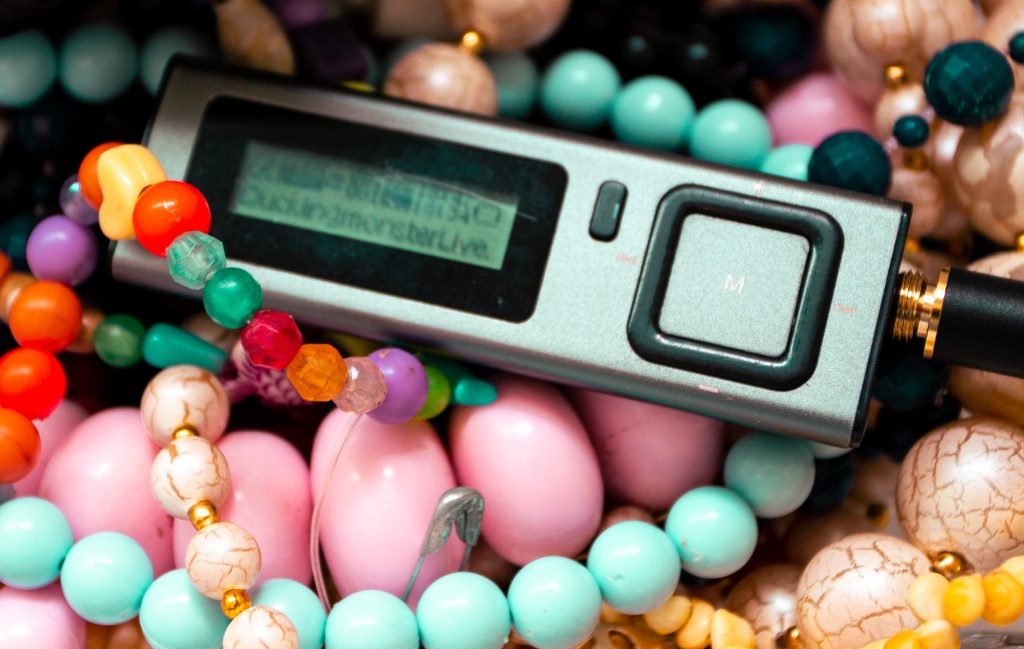
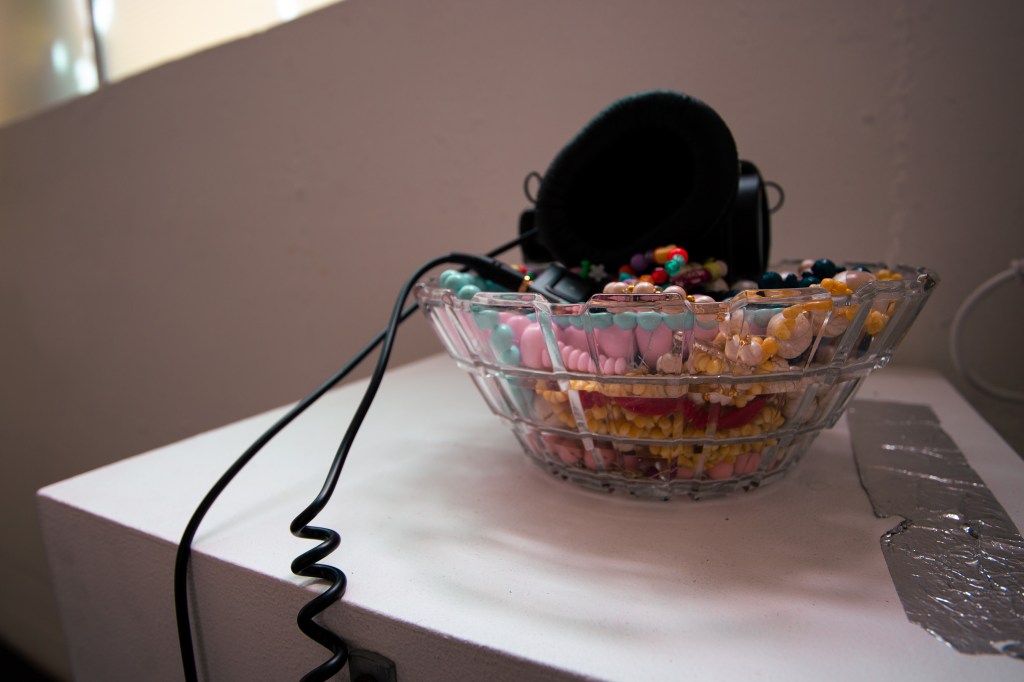
At other times, the field recording can introduce deliberate socio-symbolic sound in relation to my noise table. From 3:30 pm on weekdays, I hear the exuberant human voices of the teenagers walking up to Karangahape Rd from Auckland Girls Grammar. When this raucous choir is recorded along with the crackling samples of 1960s girl group 7” records, the relation of these sounds when listened back to in the context of my installation, I can build a form of sonic storytelling where the melodramatic girl group becomes a feminist rebel yell. In the city, social circadian rhythms continually cue listening. On Thursday through to Saturday from 5 pm, I listen to the social revellers on the street below, interspersed with the popular music, often that of divas, emitted from the drag cabaret club across the road. The field recording of these sounds, along with my playing beats and percussive shuffles of my ready-made instruments, such as the stringed beads in a bowl, builds a listening narrative reminiscent of makeshift discos where friends congregate with friends to listen and perform music in intimate settings. This listening is a form of Voegelin’s possible sonic world-building; narratives imagined through listening to present and imagined bodies. In my practice, the audio-visual event, is led by these sonic possible worlds. When the recording made at my noise table in my apartment is performed and played in the context of the installation event the listening is heightened through the relations to the objects of the installation, such as the comics taking phrases from those girl group 7”s or the bright colours of the inks drawn from the brightness of a night on the town.
In an artist talk Tozer states “I have a material practice, a social practice and a digital practice. And I try to access the ground using these various modes.” She later shares how circular spiralled storyboard, made early in the conception of Erotic Geologies, allowed her to conceptualise the movement between these modes.
[4] Voegelin, Sonic Possible Worlds, Revised Edition, 14.
In this earlier text Voegelin introduces Martin Heidegger’s notion of “das Ding,” the Thing, to articulate the thinging of the thing of sound. The sonic thing that is not the attribute of the visual object but is the object its self.
In conversation with the artist Su Richardson, the Women In Revolt exhibition curator Linsey Young discusses the Women’s Postal Event, also known as Feministo, a collective of feminists who sent each other small artworks often created at kitchen table through the post.
[11] John Cage, Music For Changes, Edition Peters 6256 (book I); 6257 (book II); 6258 (book III); 6259 (book IV) (Henmar Press, 1951).
“This is not a spaceship it is a time machine” Performance 11 July, Audio Foundation
Photo by Riley CochranePhoto by Riley CochranePhoto by Riley Cochrane
Engaged drawing
By this I do not mean the distanced and disinterested contemplation of a world of objects, nor the translation of objects into mental images or representations. I refer rather to the intimate couplingof the movement of the observer’s attention with currents of activity in the environment. To observeis not so much to see what is out there’ as to watch what is going on. Its aim is thus not to represent the observed but to participate with it in the same generative movement
Ingold, Tim, ed. Redrawing Anthropology: Materials, Movements, Lines. Anthropological Studies of Creativity and Perception. London: Routledge Taylor & Francis Group, 2016.
Vista Grids
Tea Trolley Mobile Disco
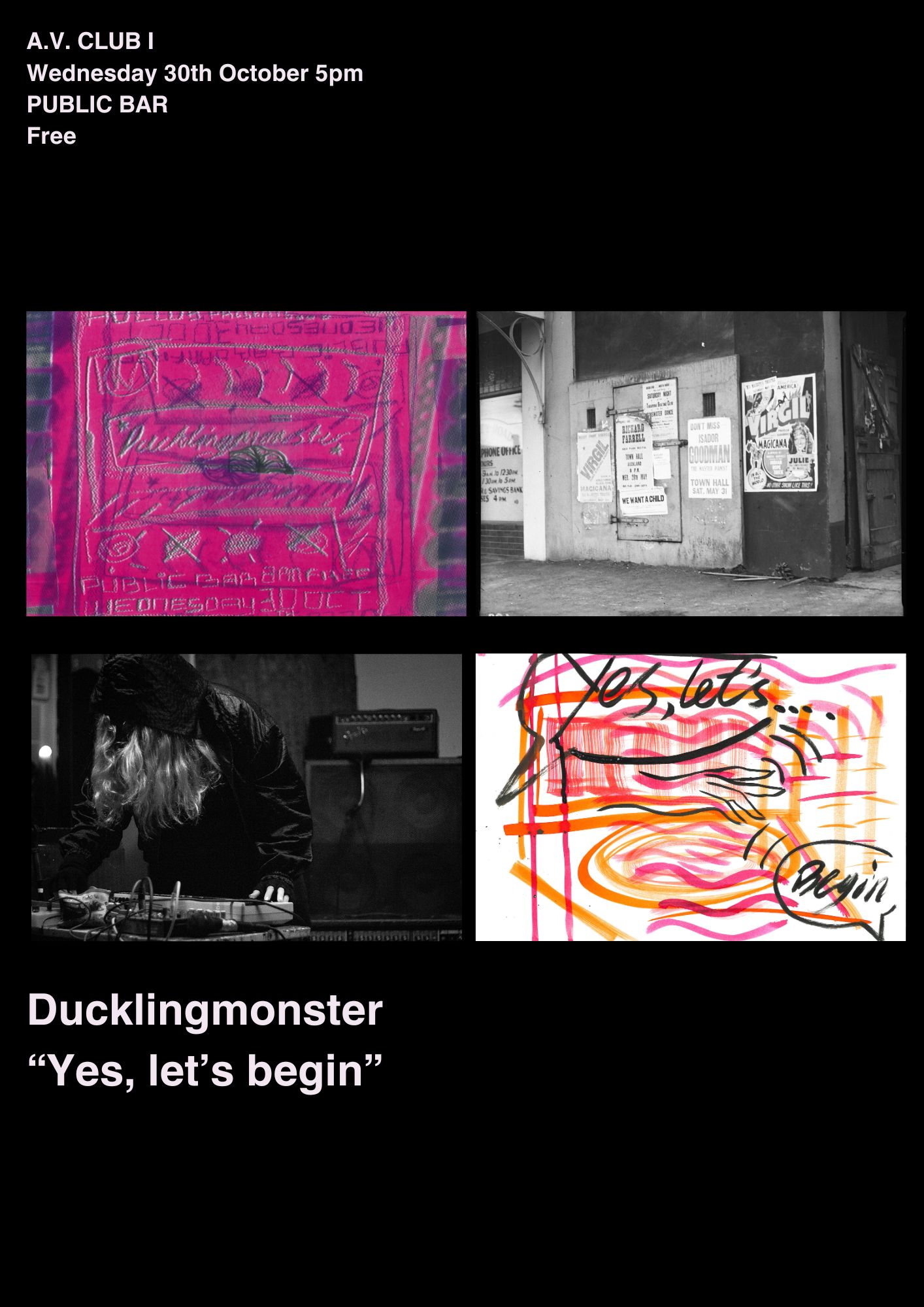
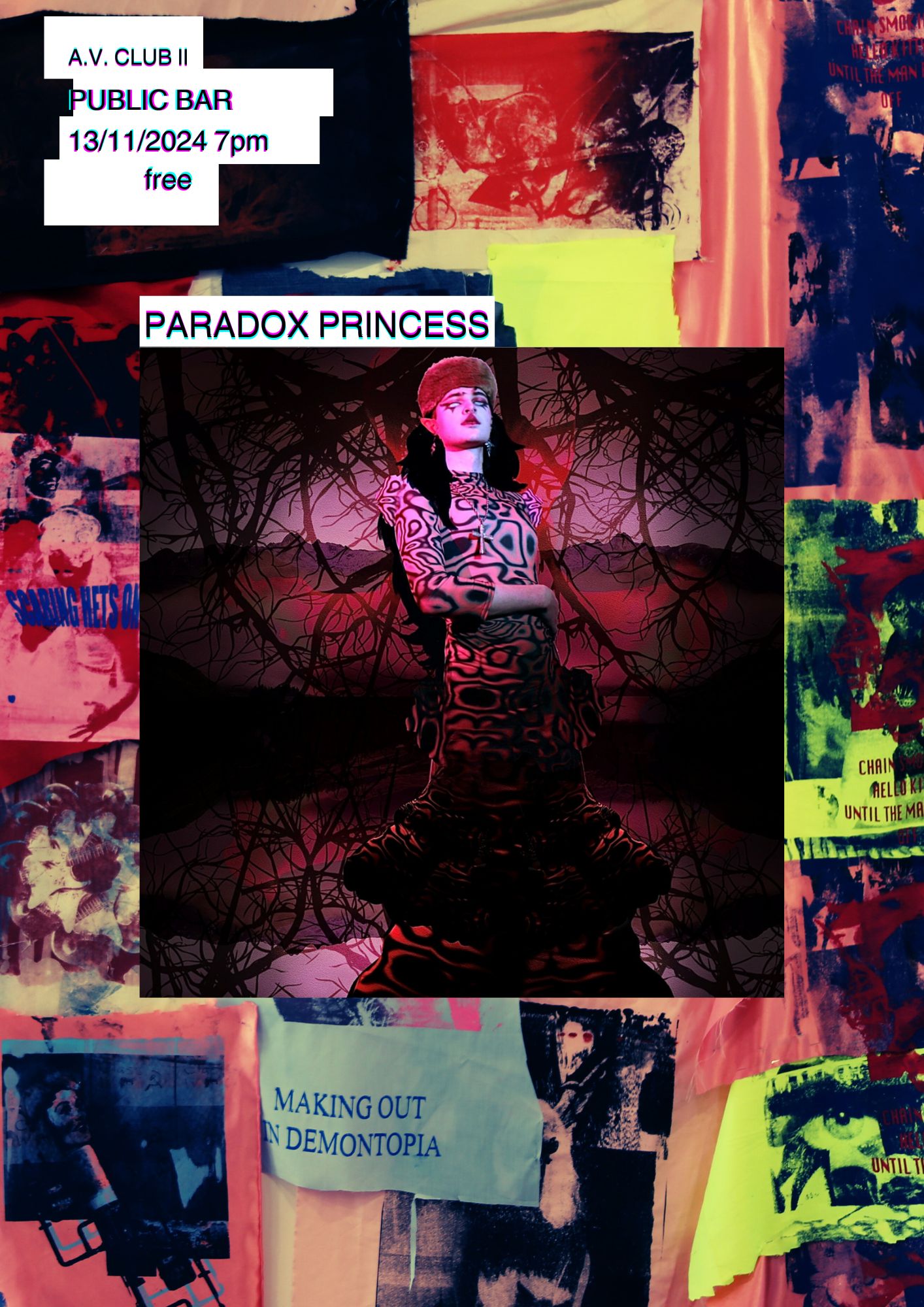
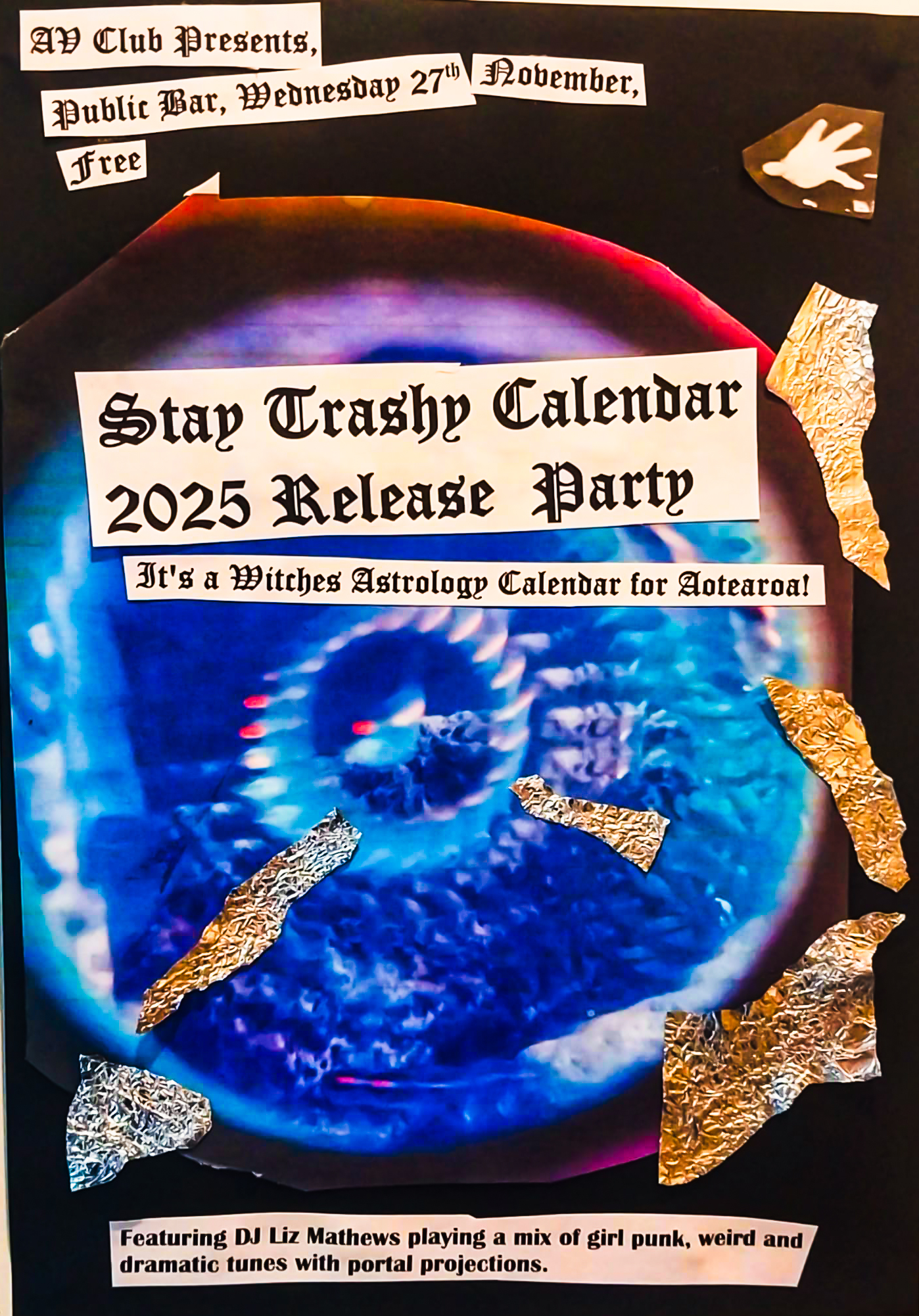
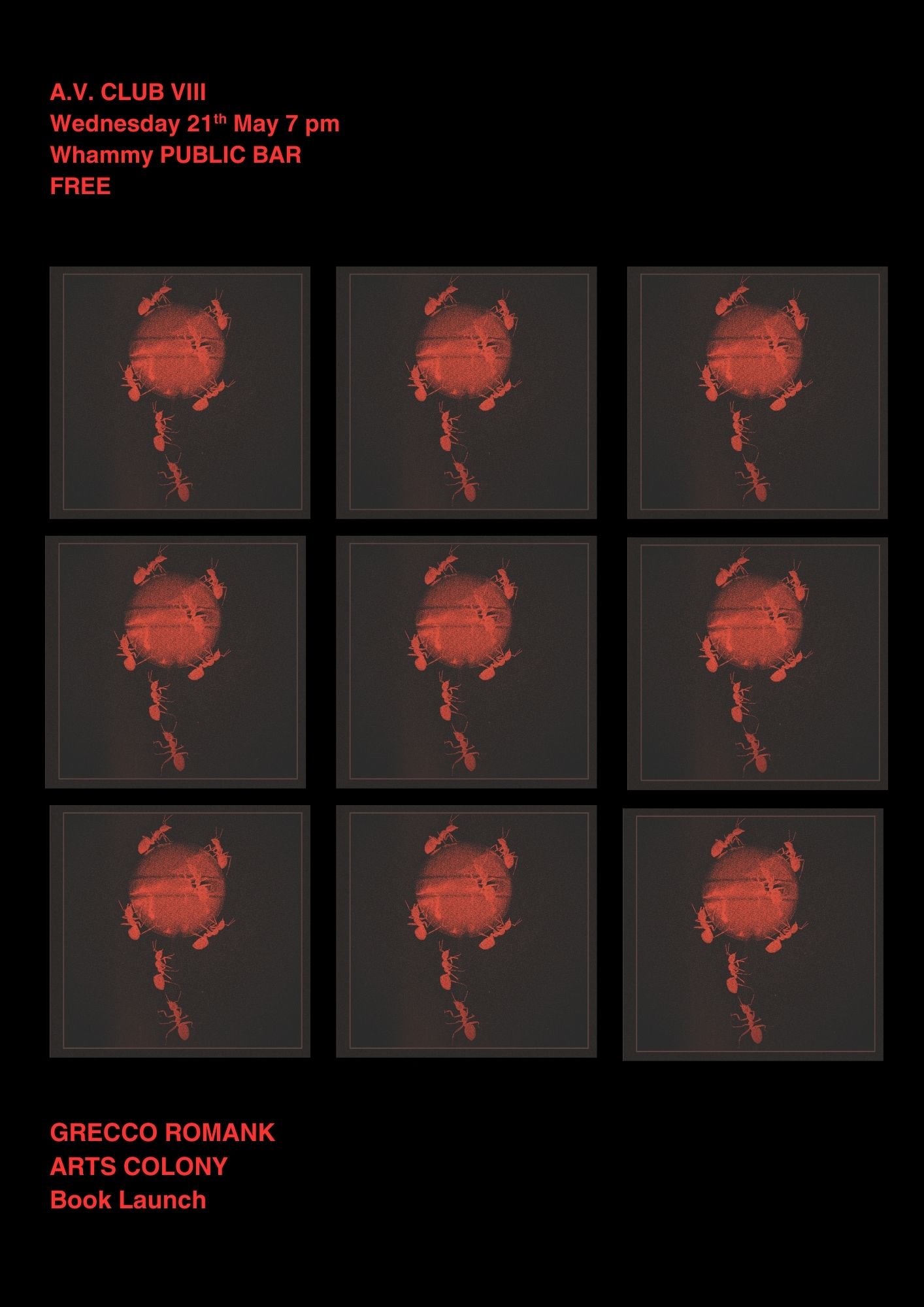
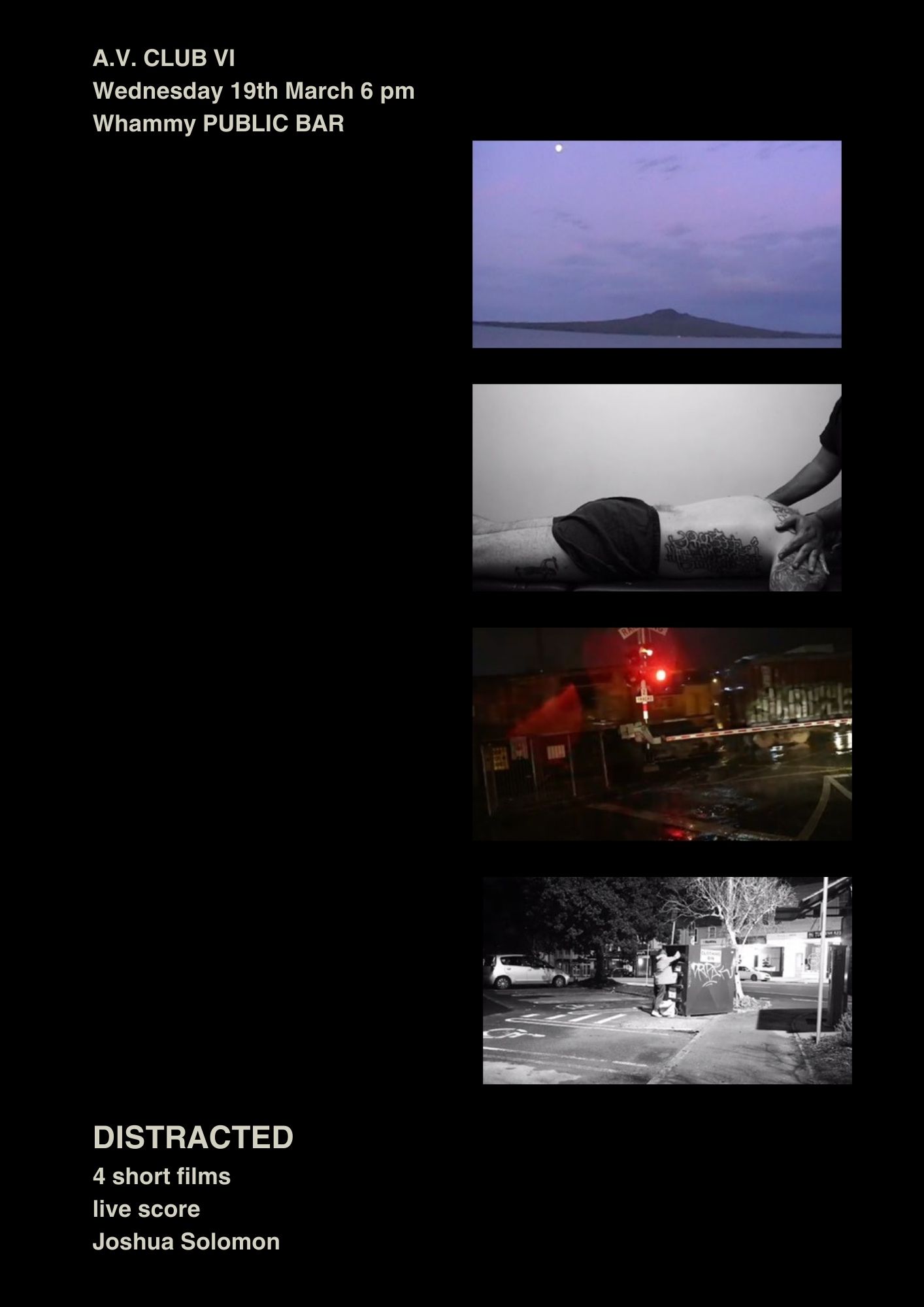
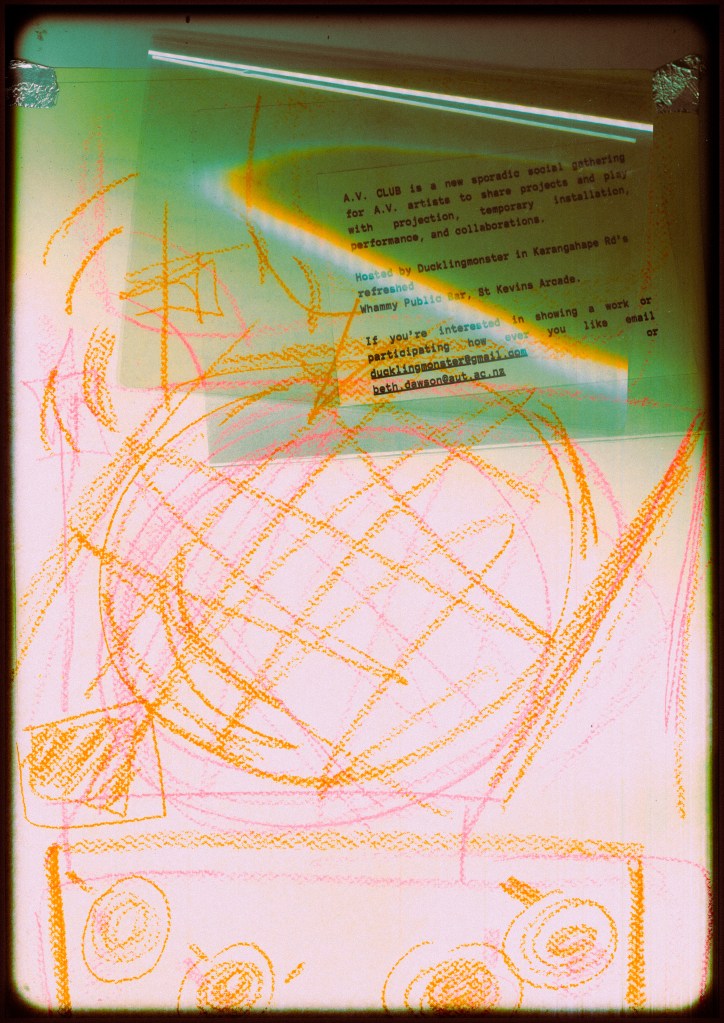
A.V. CLUB
Screen Time
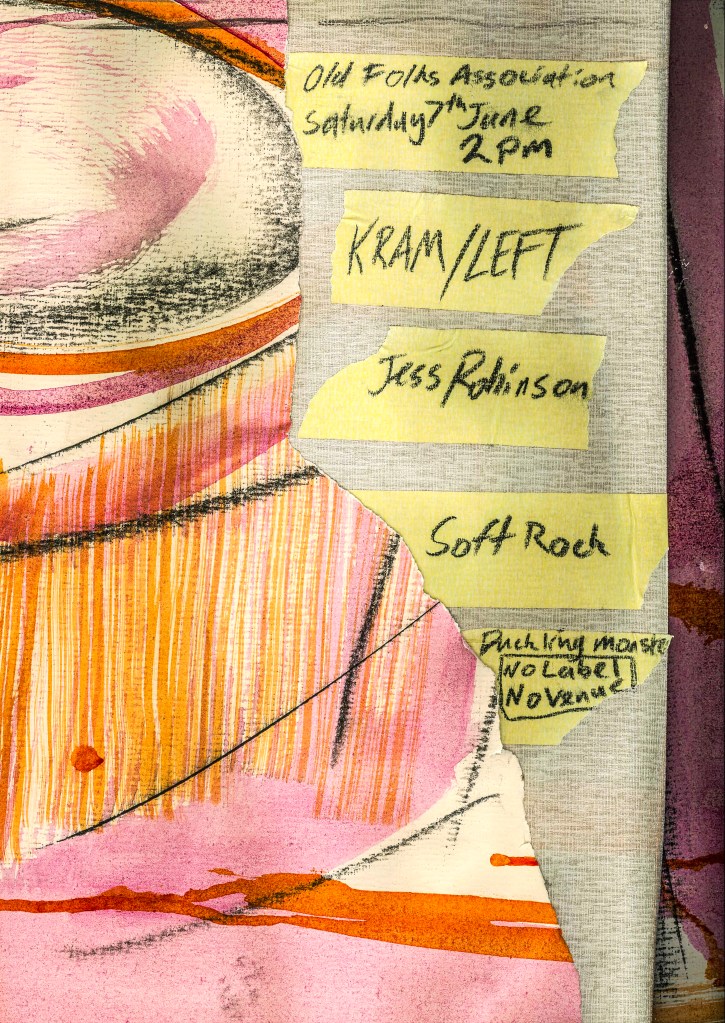
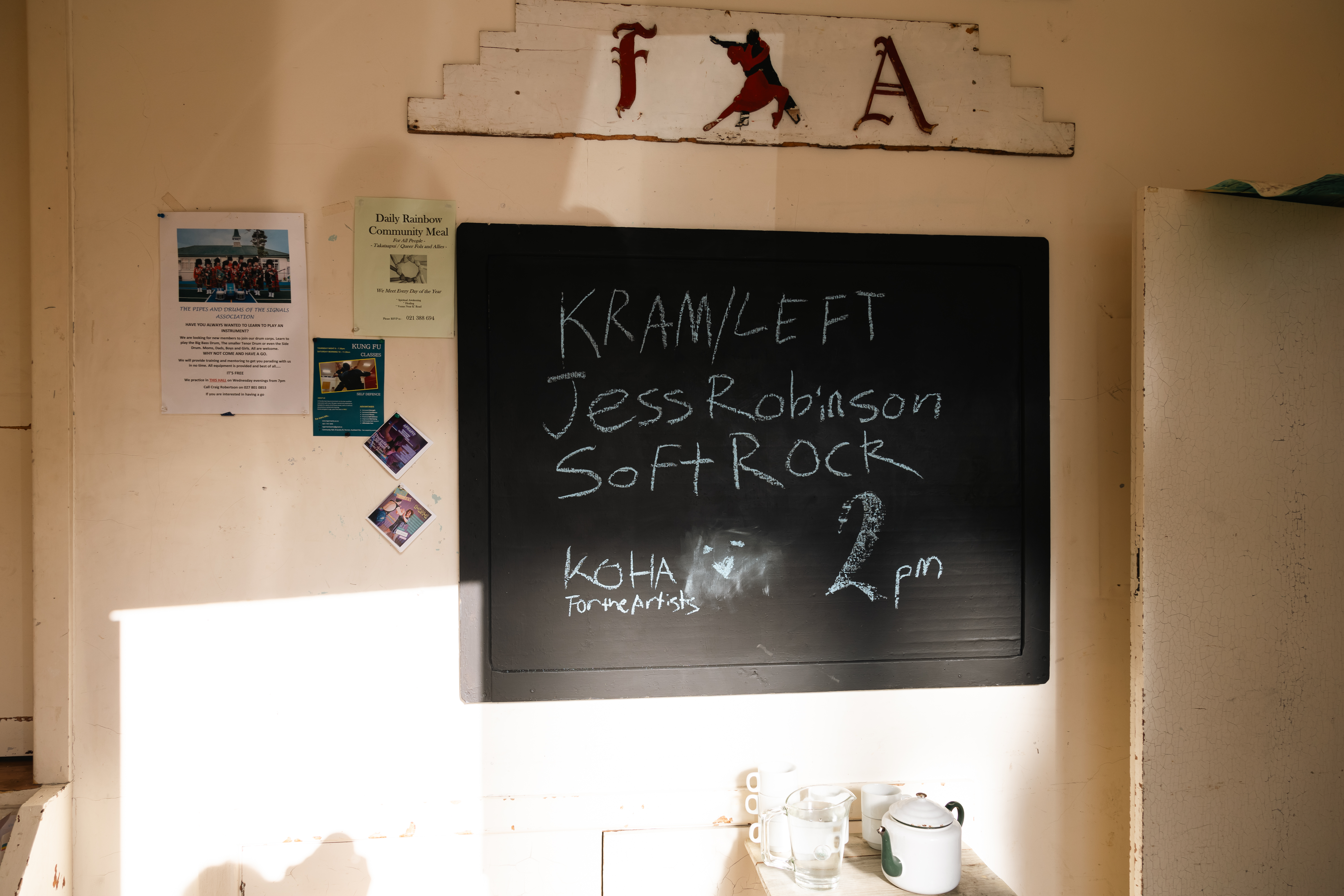
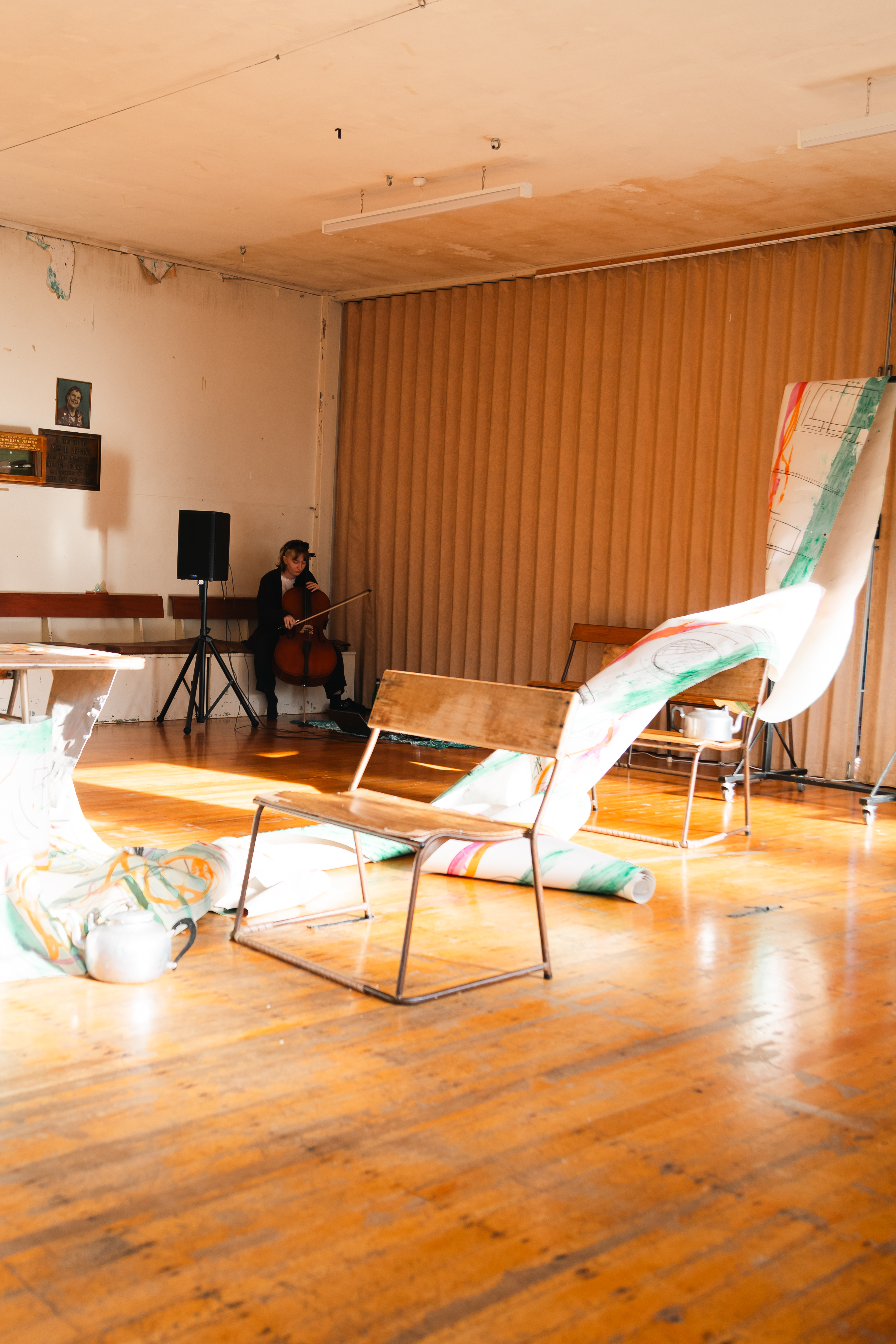
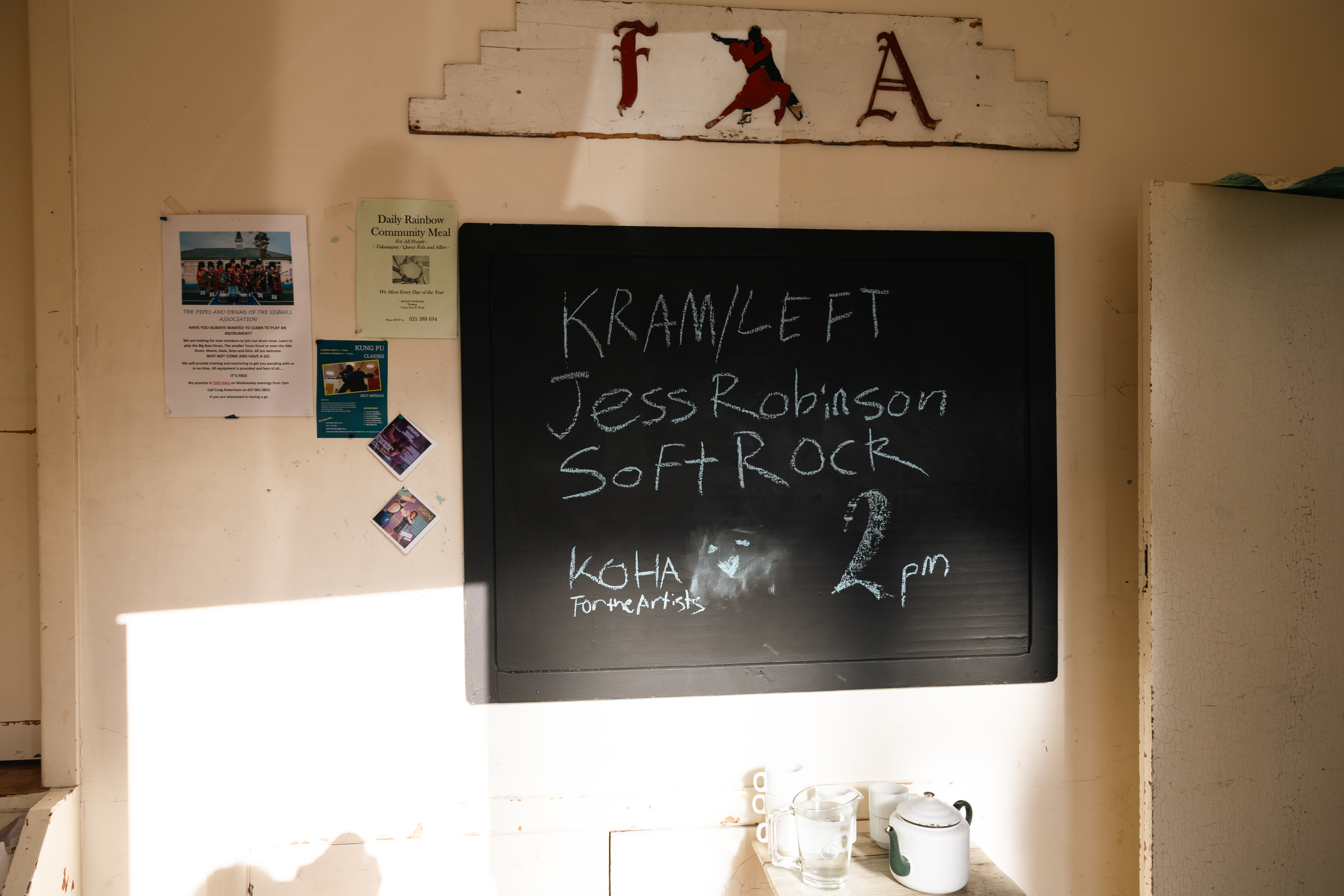
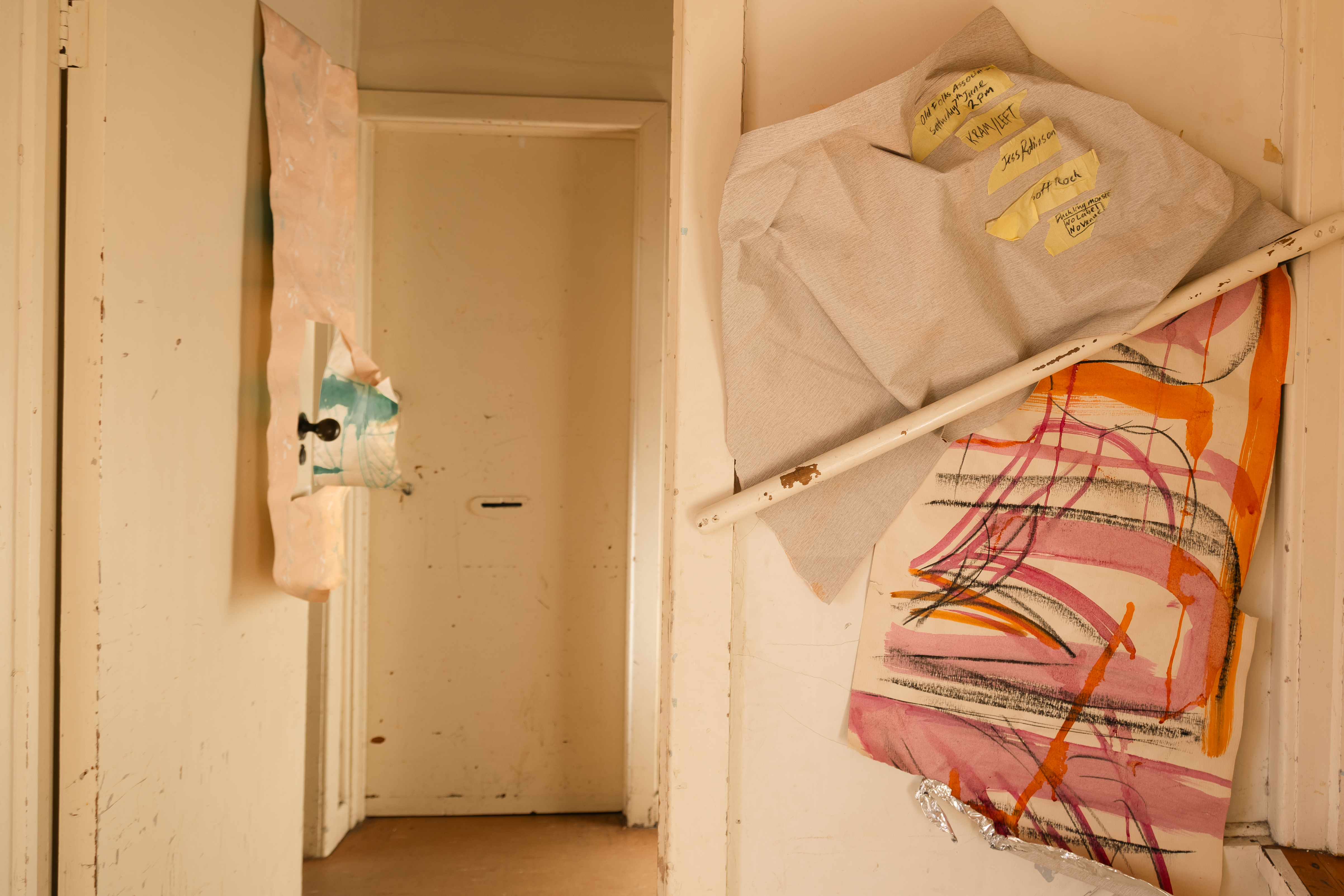
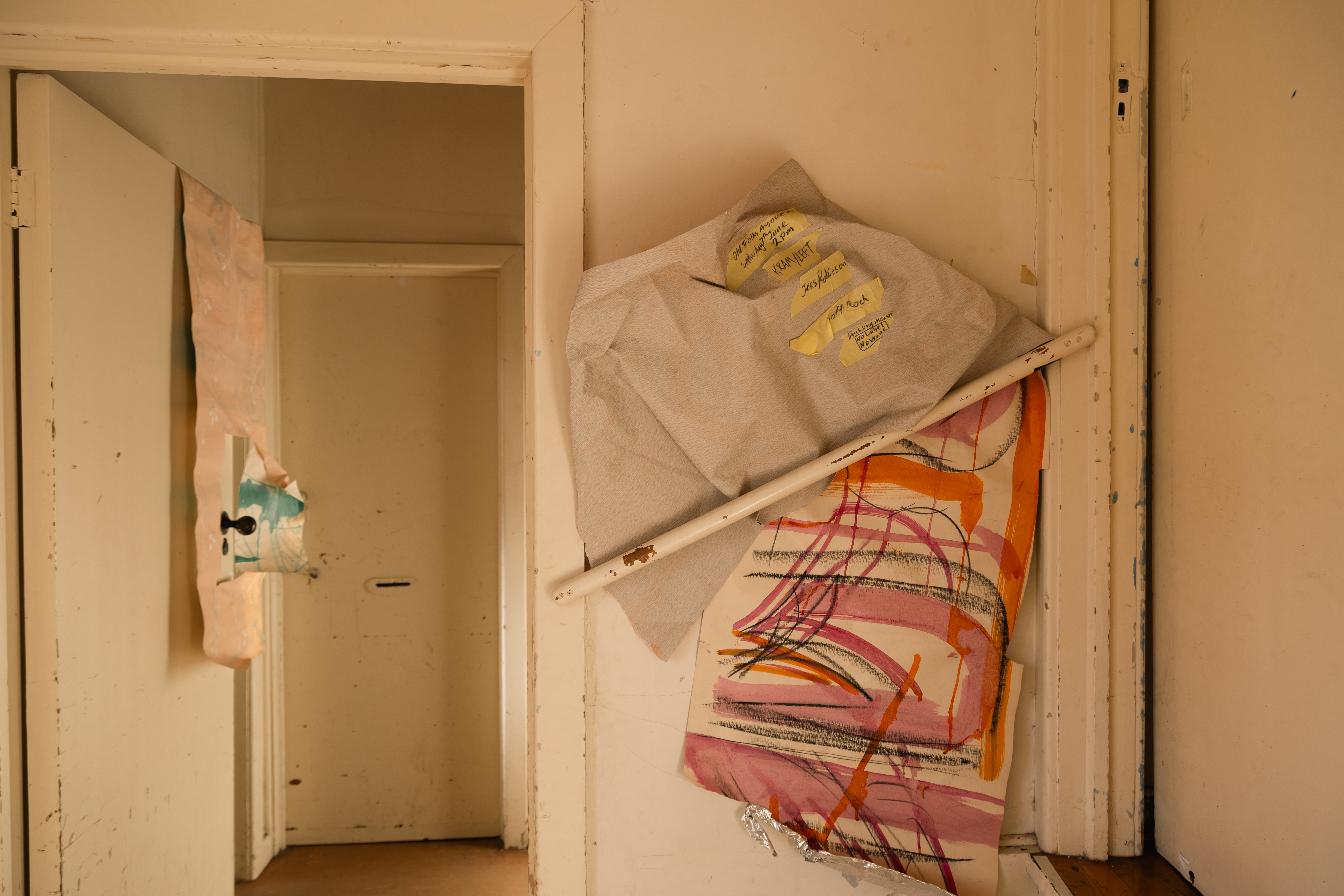
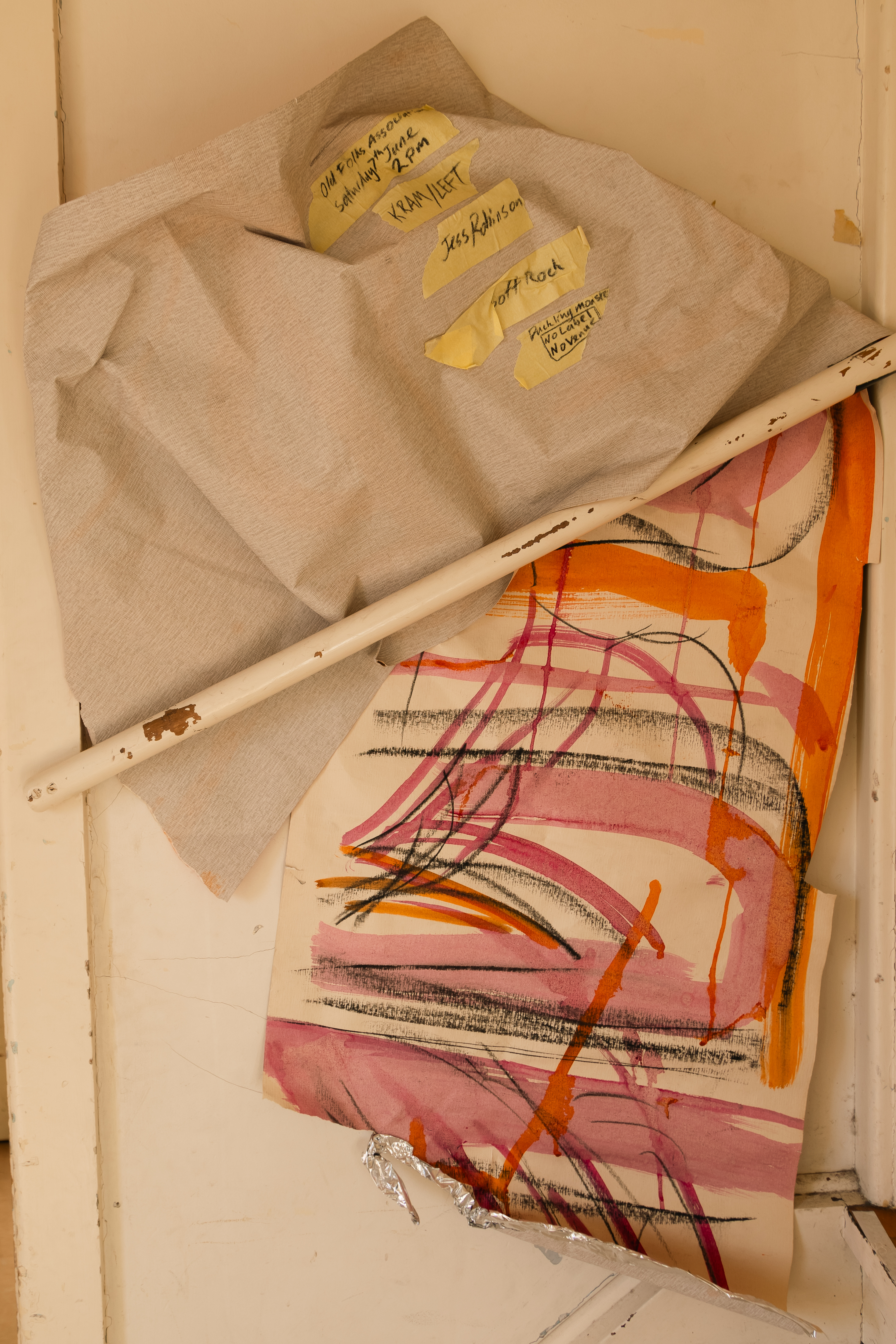
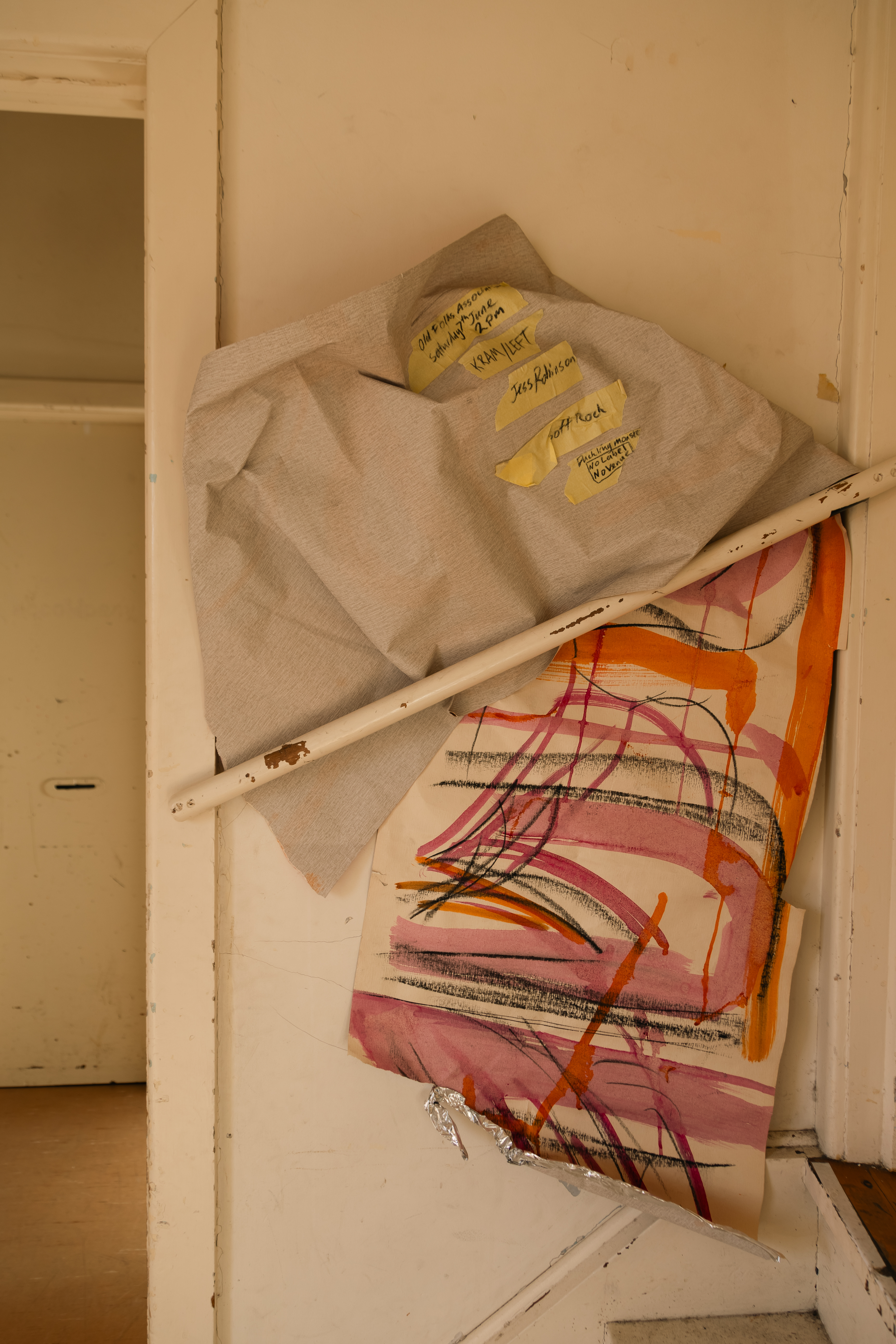
NO VENUES / NO LABEL, Old Folks Association, 07/06/25
Artspace Aotearoa 3 May – 12 July 2025
Intimation of Endless Space Given in a Small Window of Time (approximately 10 minutes)Ethan Braun, Lina Grumm
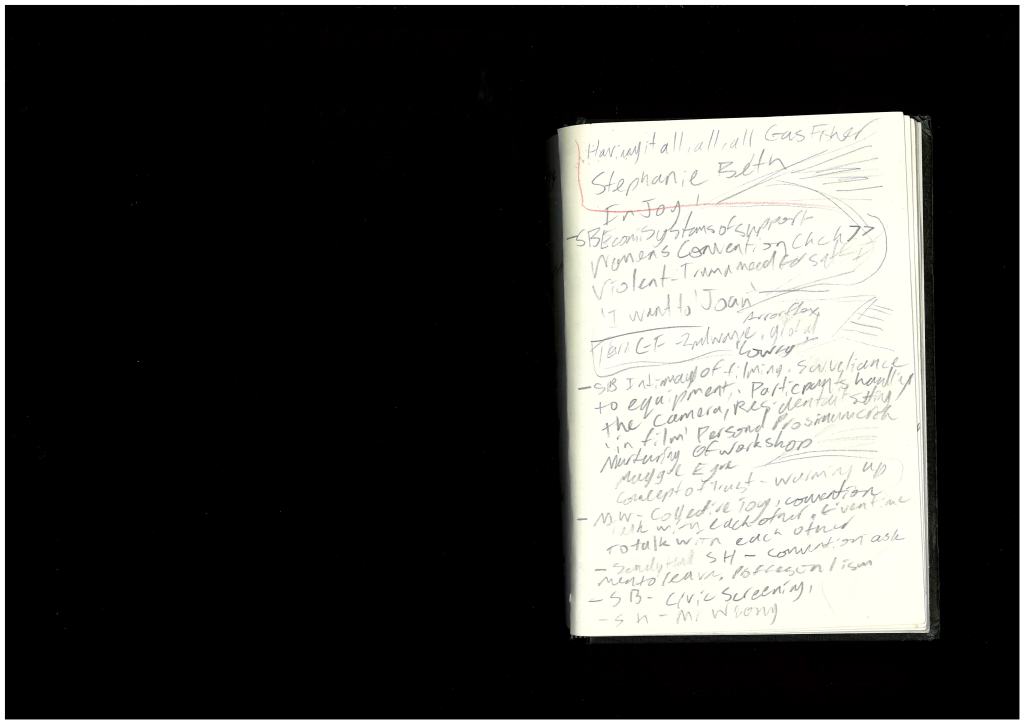
In Joy, Stephanie Beth, (1980)
Gus Fisher Film screening and panel discussion, Saturday 10/5/25
The handbag has been listening. Left in the theatre cinema. The handbag’s private interior of soft folds and pockets, earlike erotic, holds a wireless radio pack connected to a lapel mic clipped onto the bag’s exterior brass clasp. This type of microphone is designed for use in film to discreetly pick up conversation and send it via radio waves to a remote amplifier. Burst of sound as the performer sets their own stage noise-table, exchanging responses with the sound engineer at the sound-desk behind the theatre seats. “Sounds cool, more foldback”.
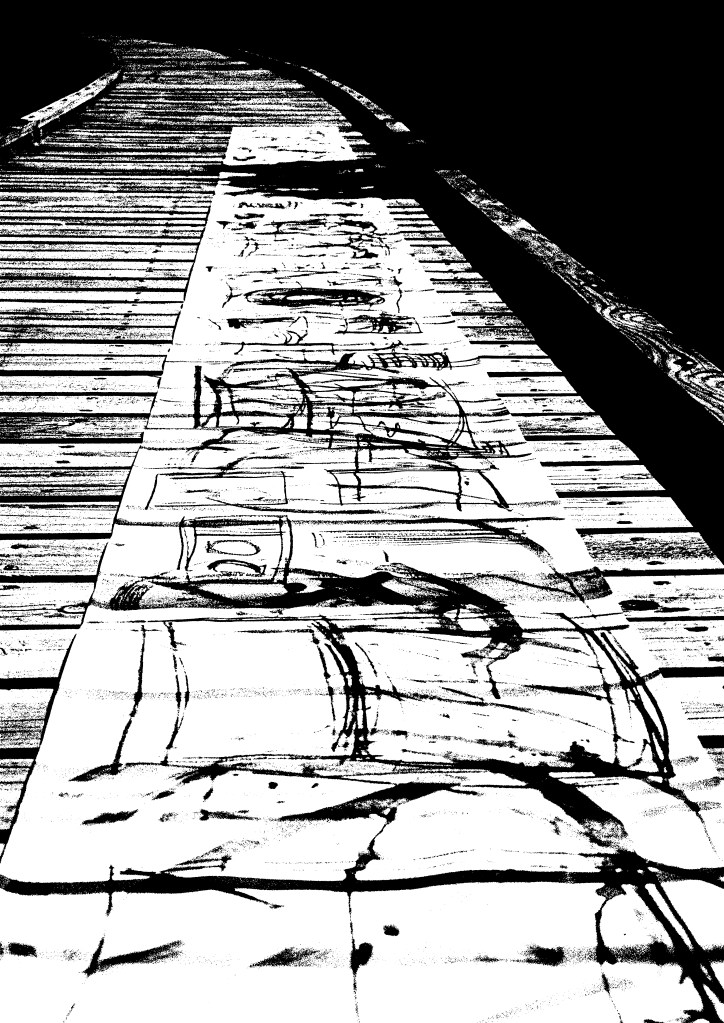
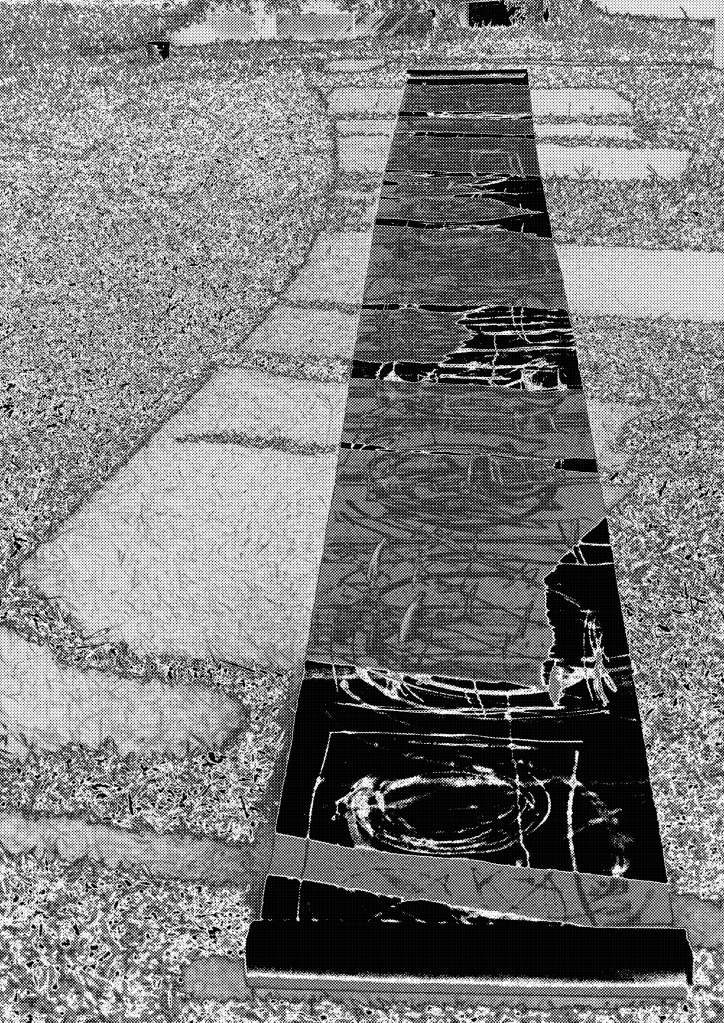
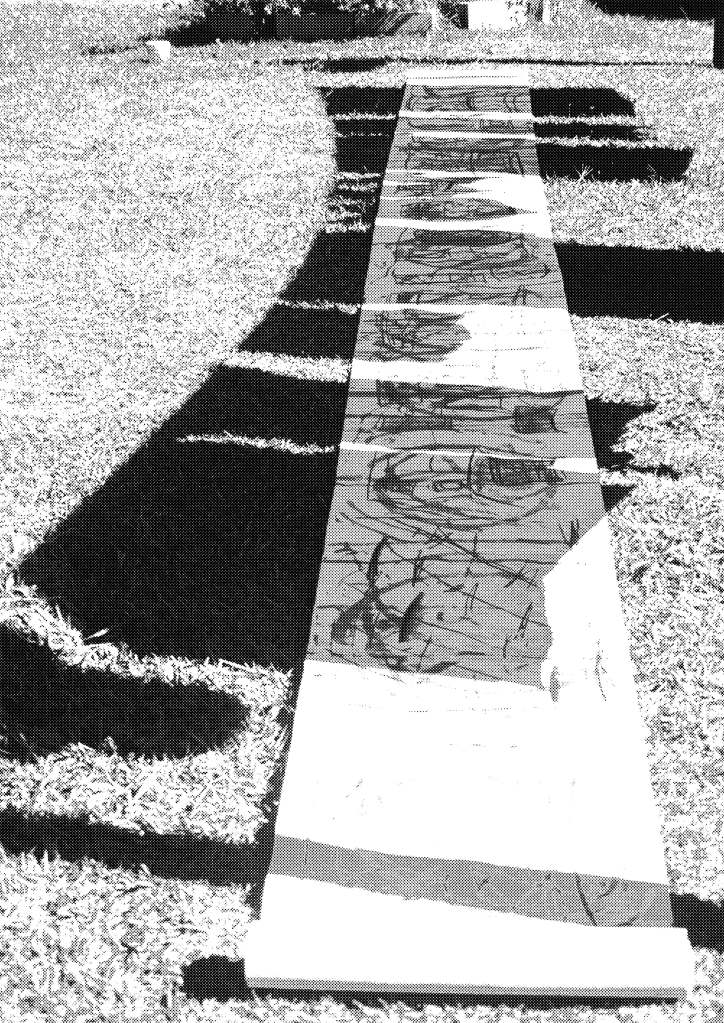
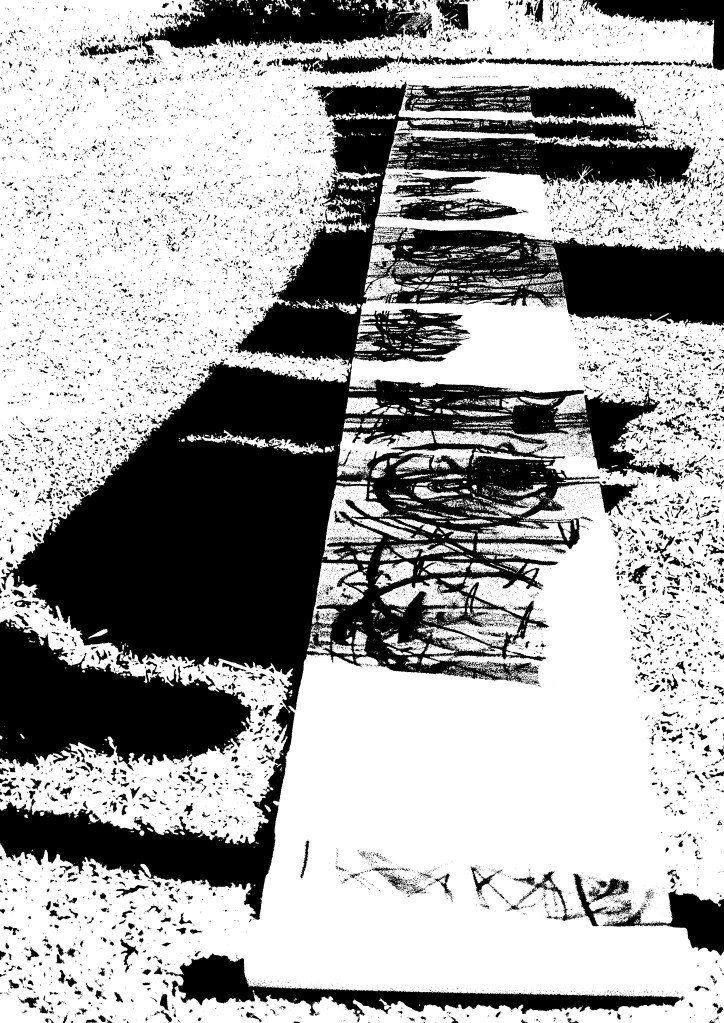
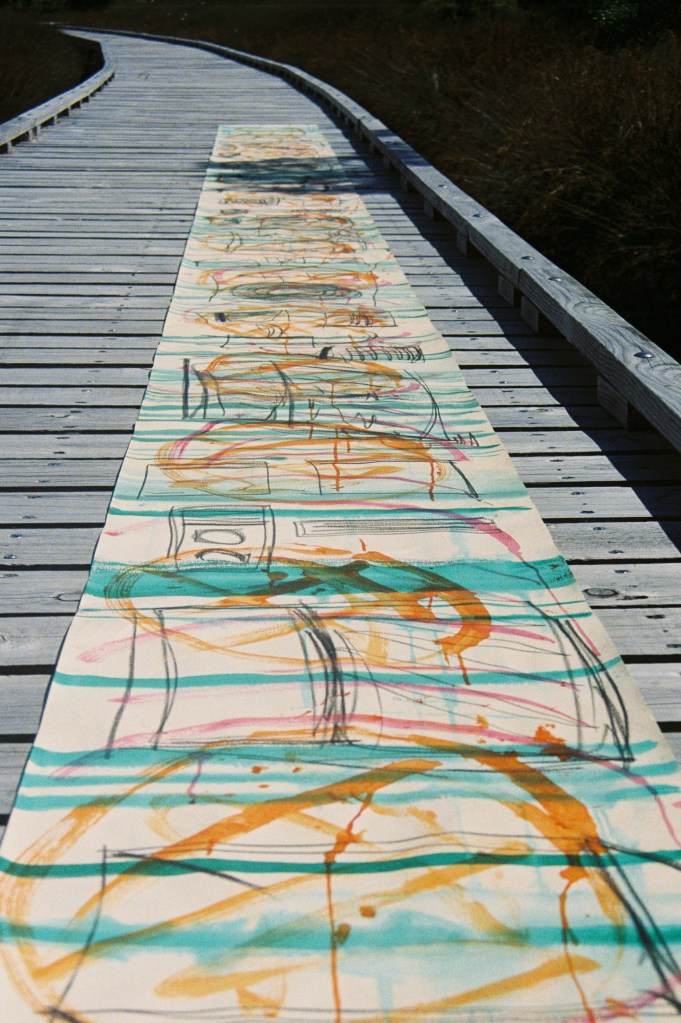
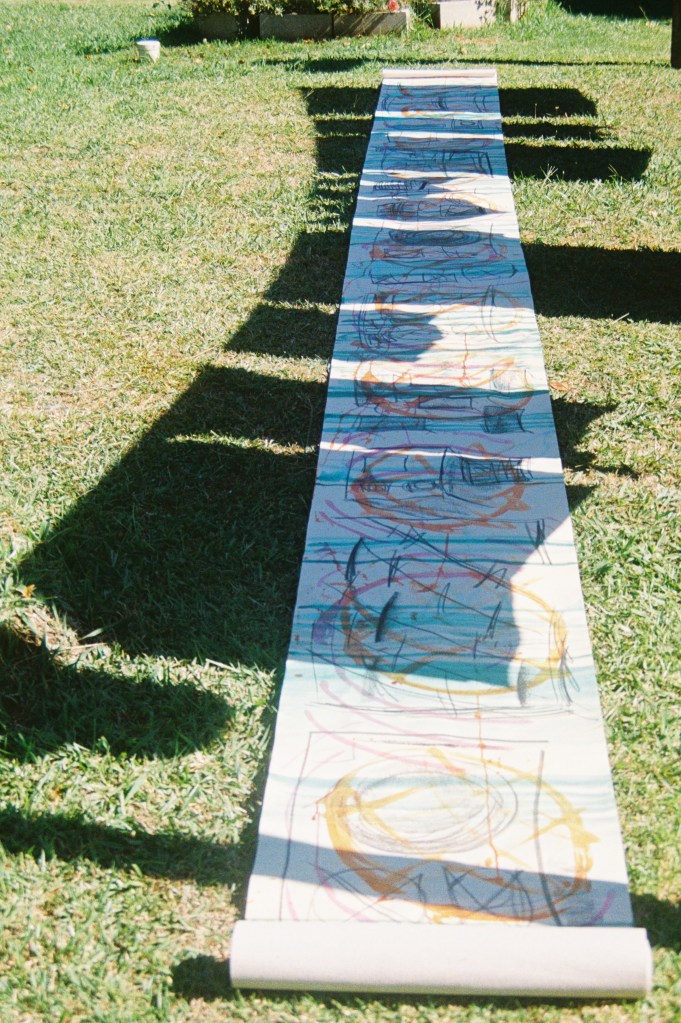
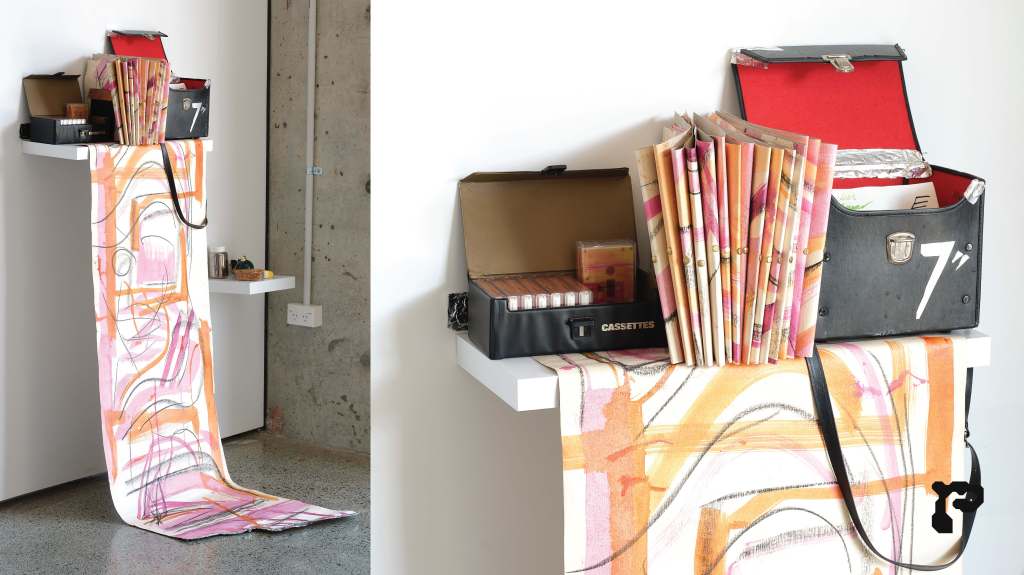
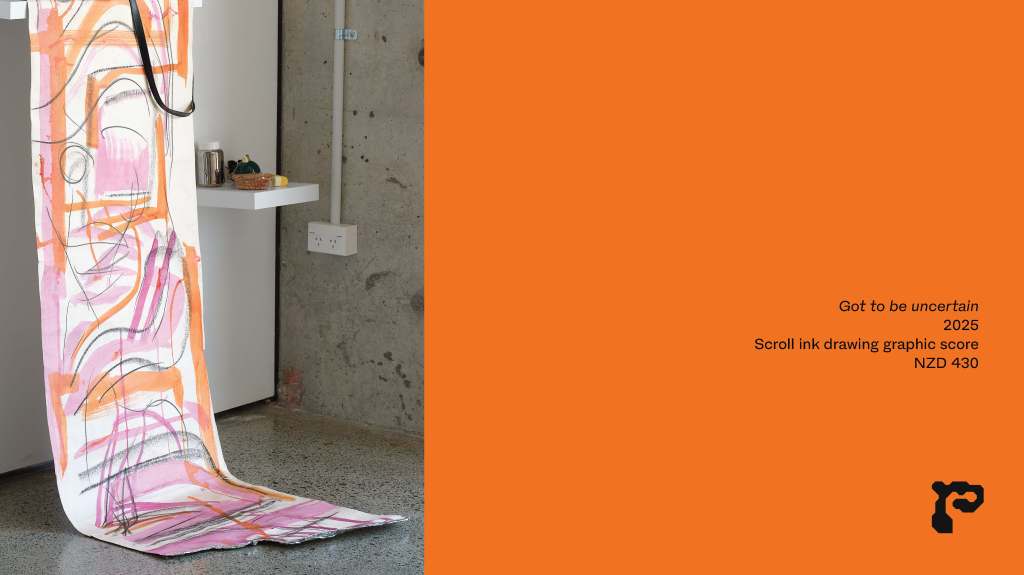
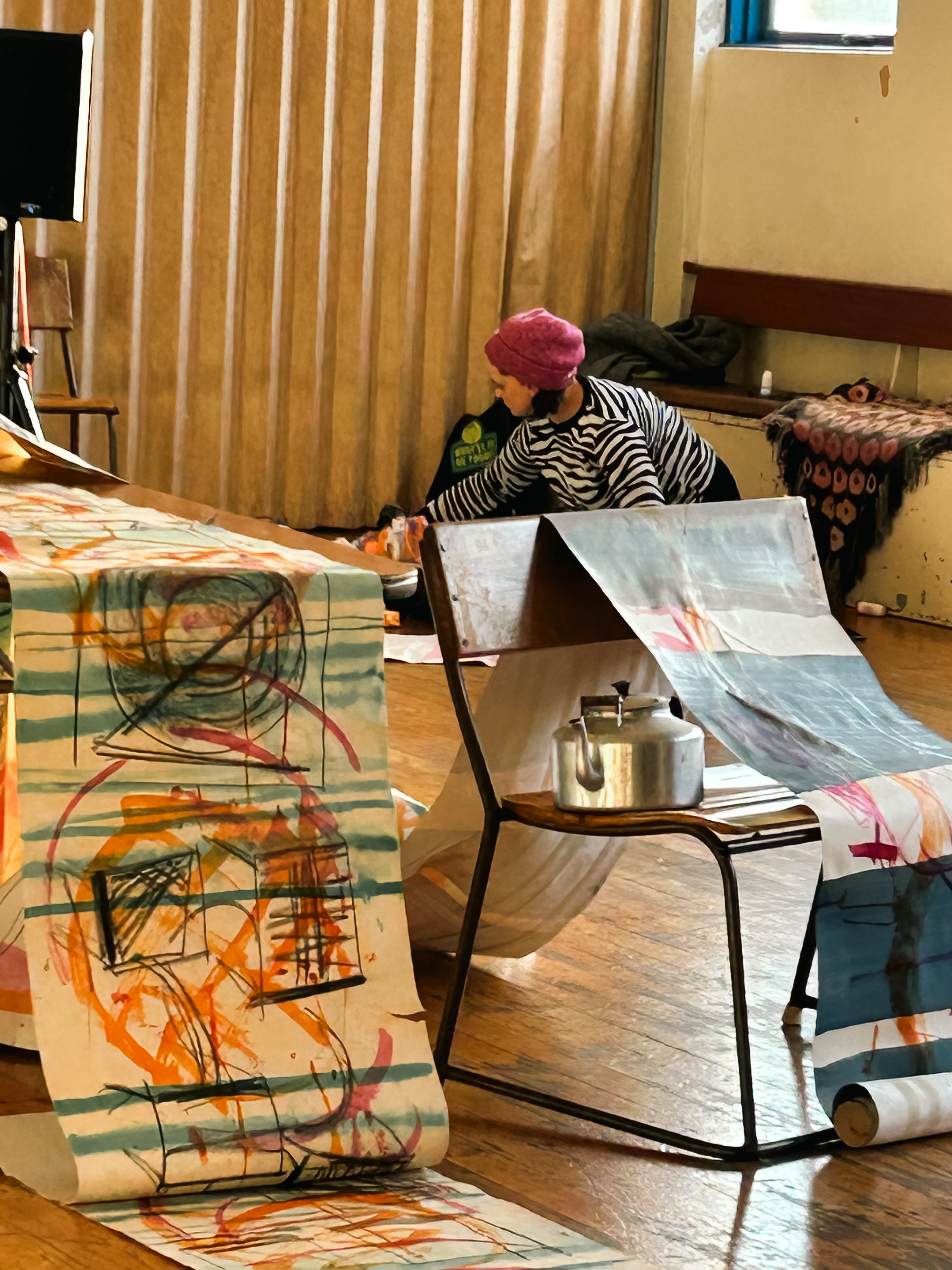
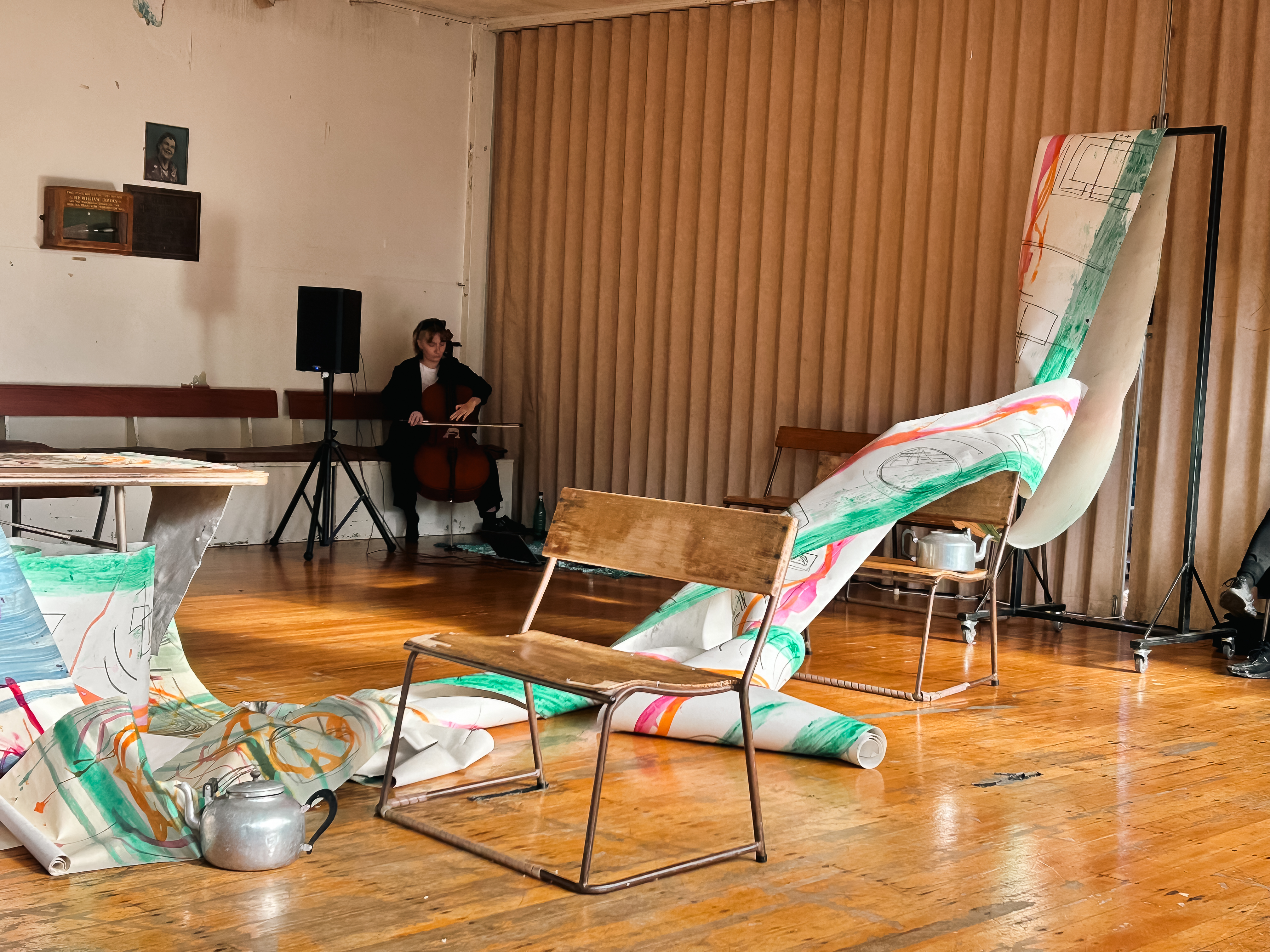
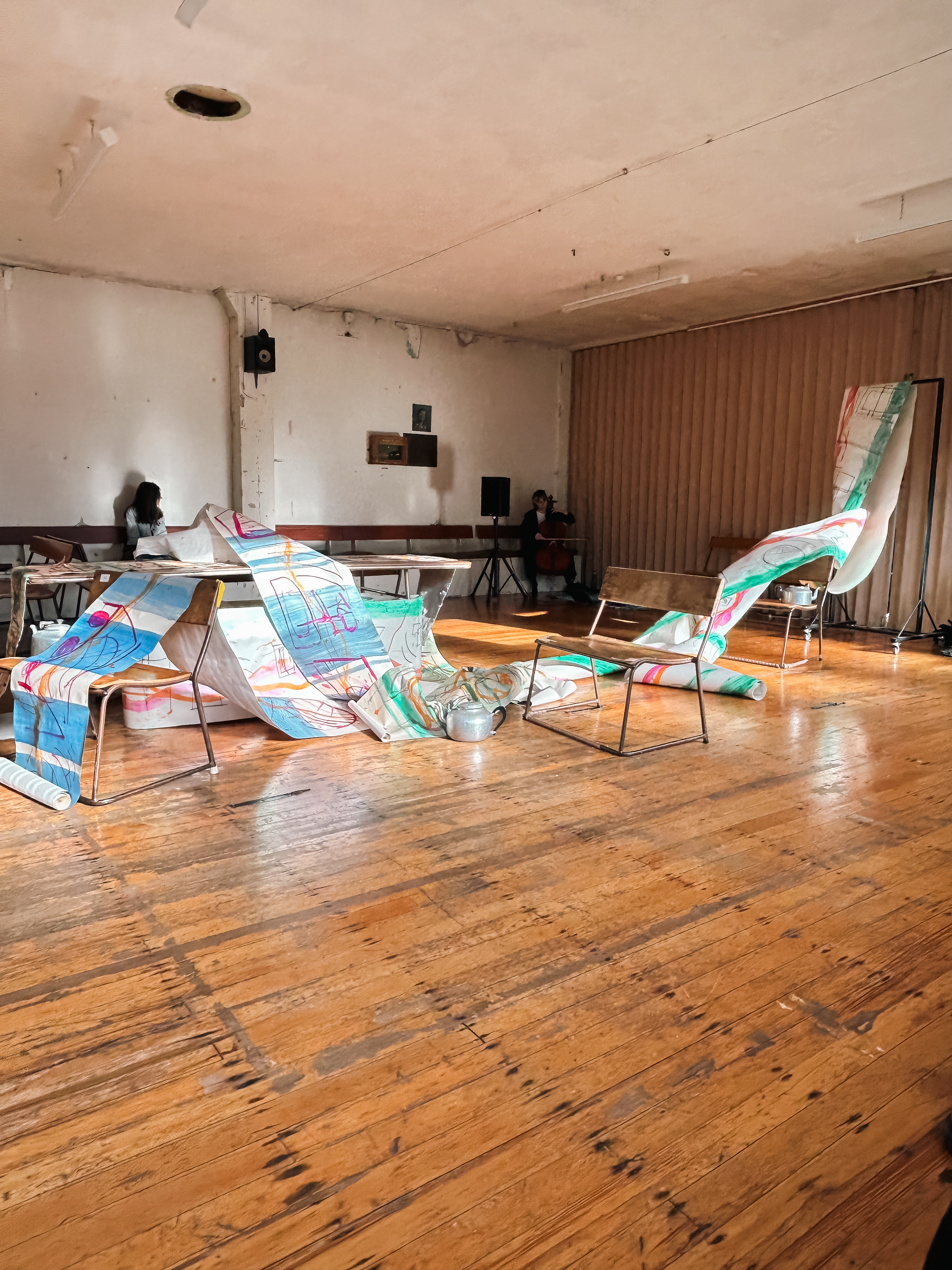
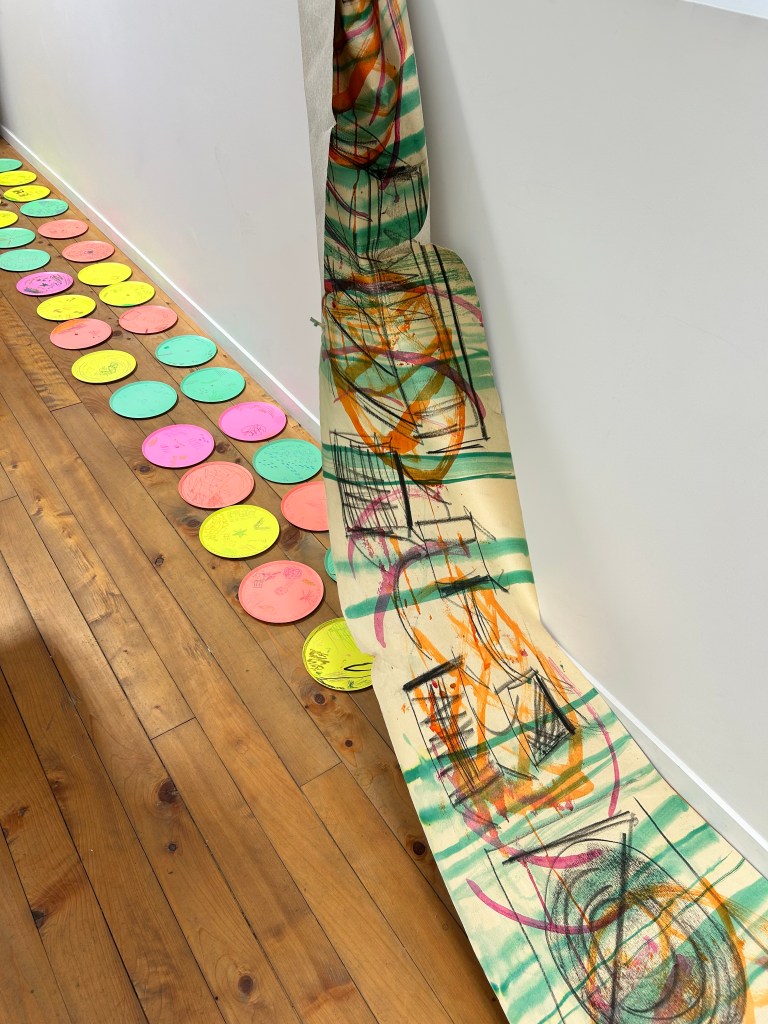
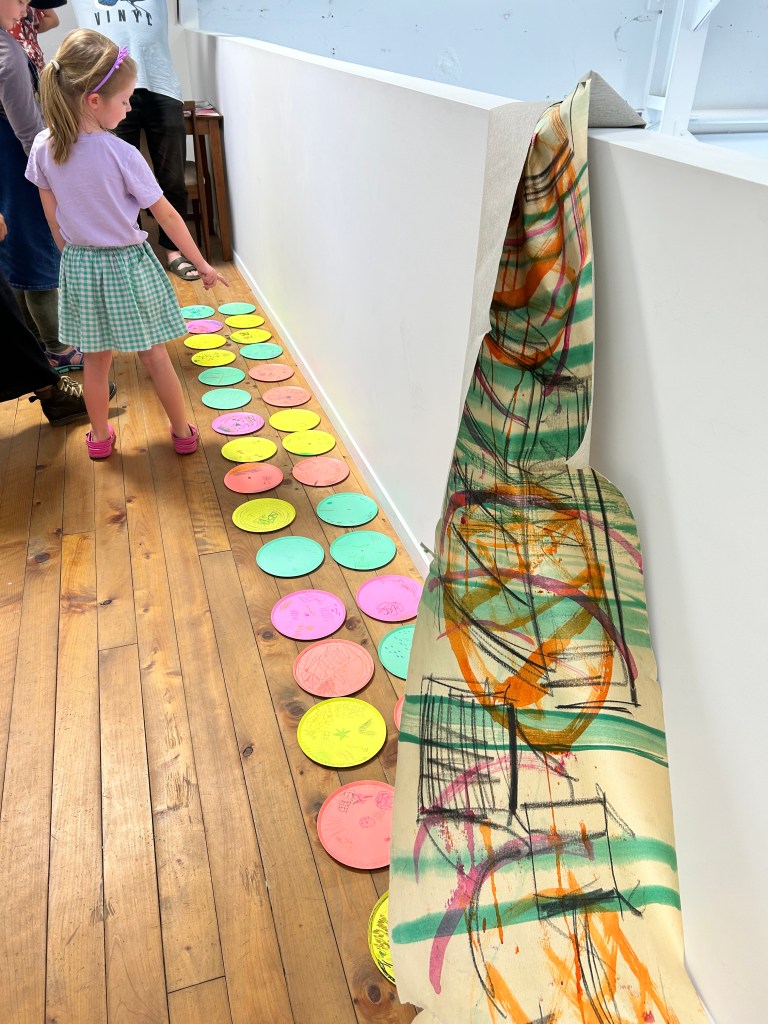
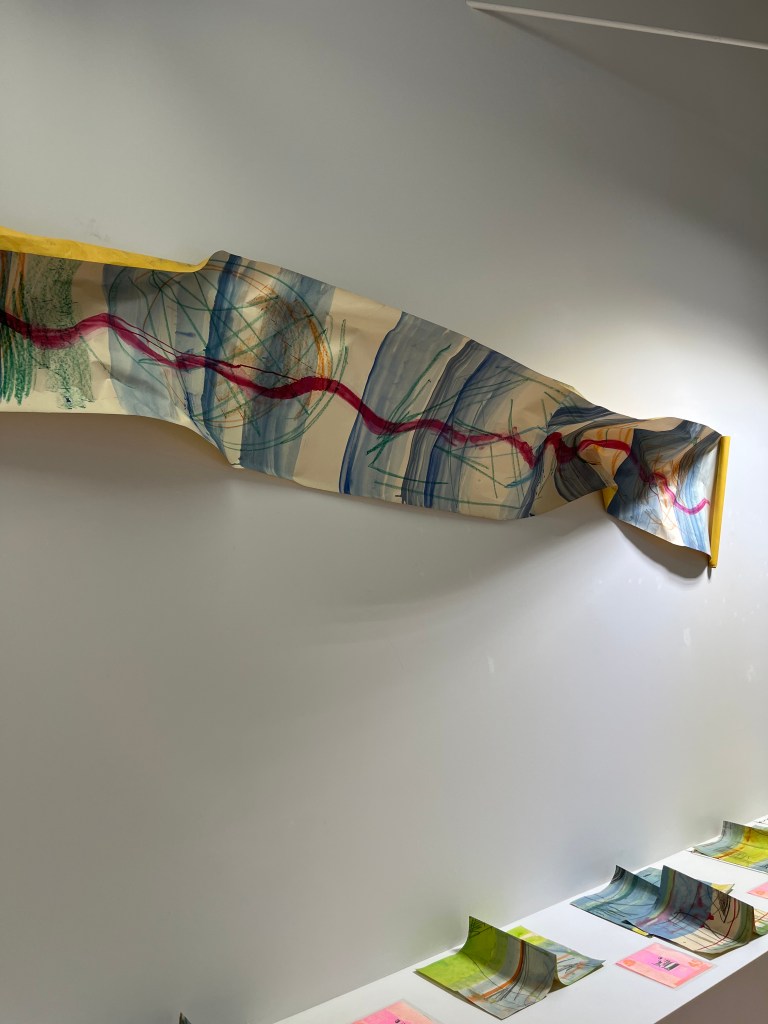
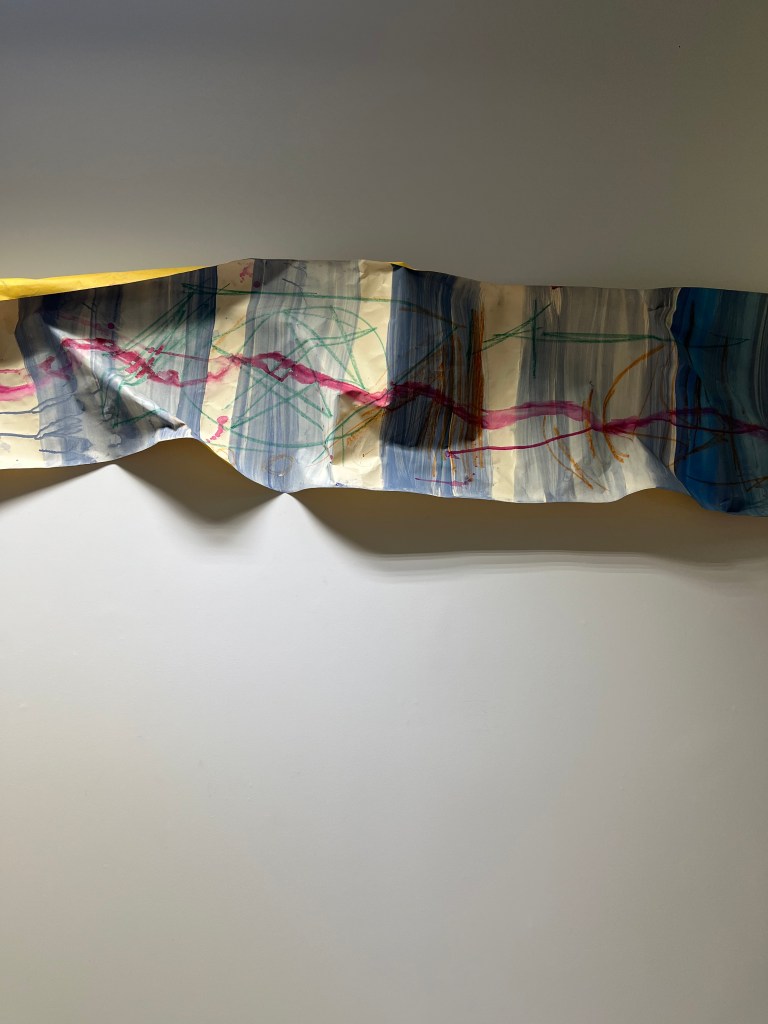
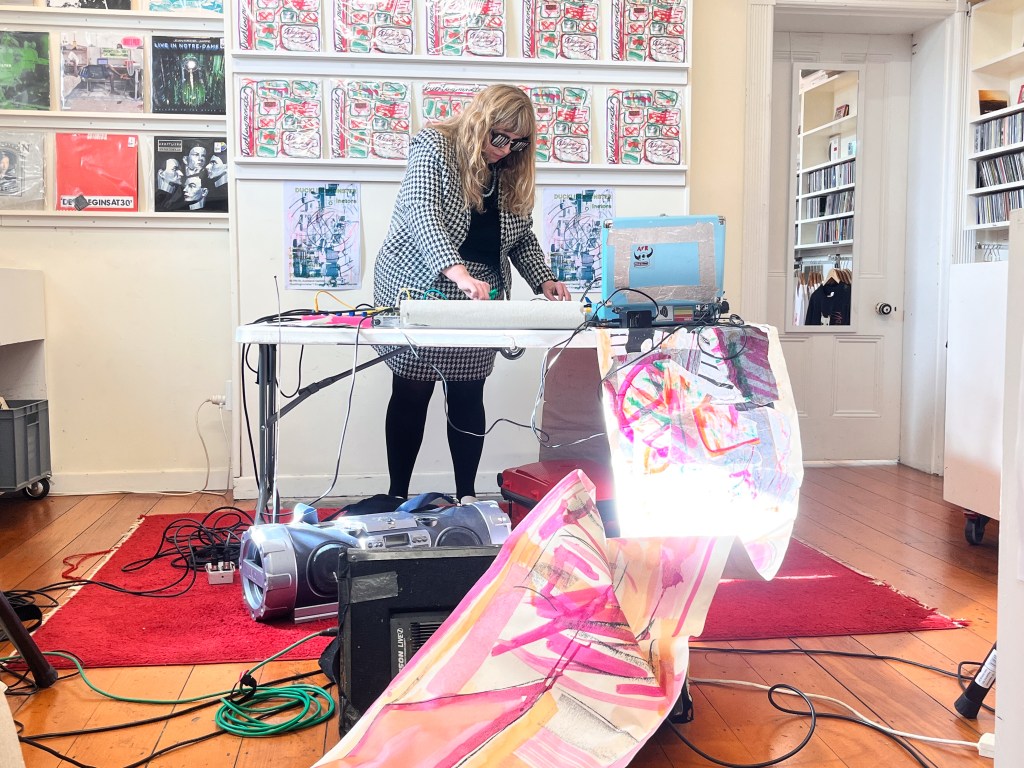
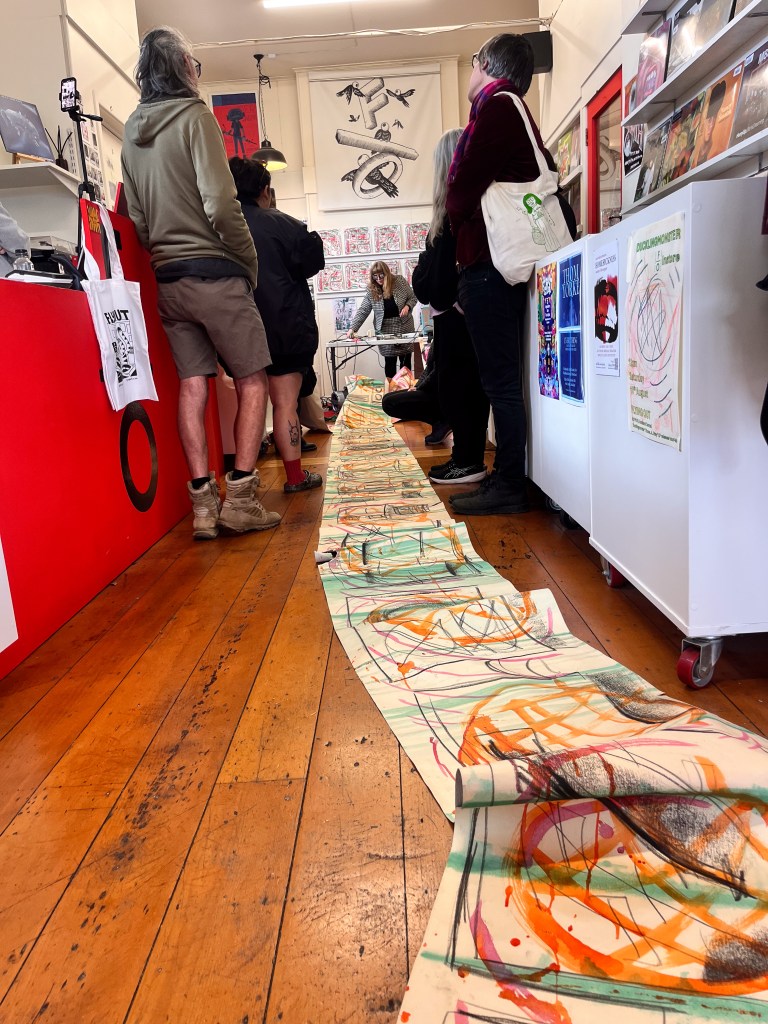
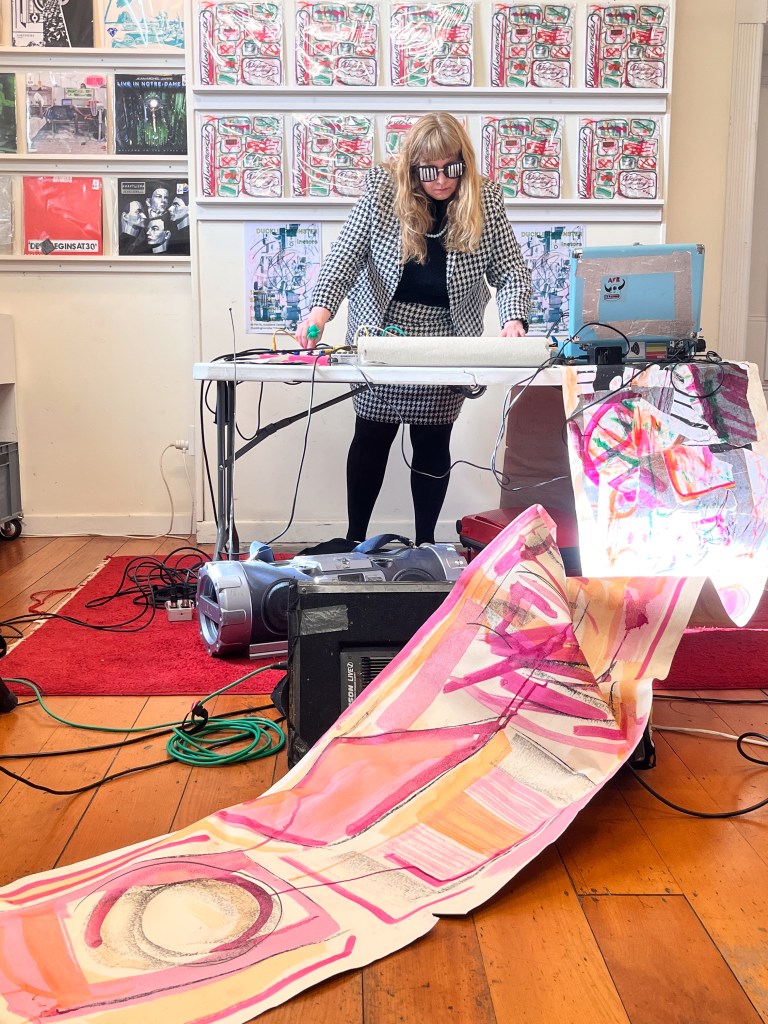
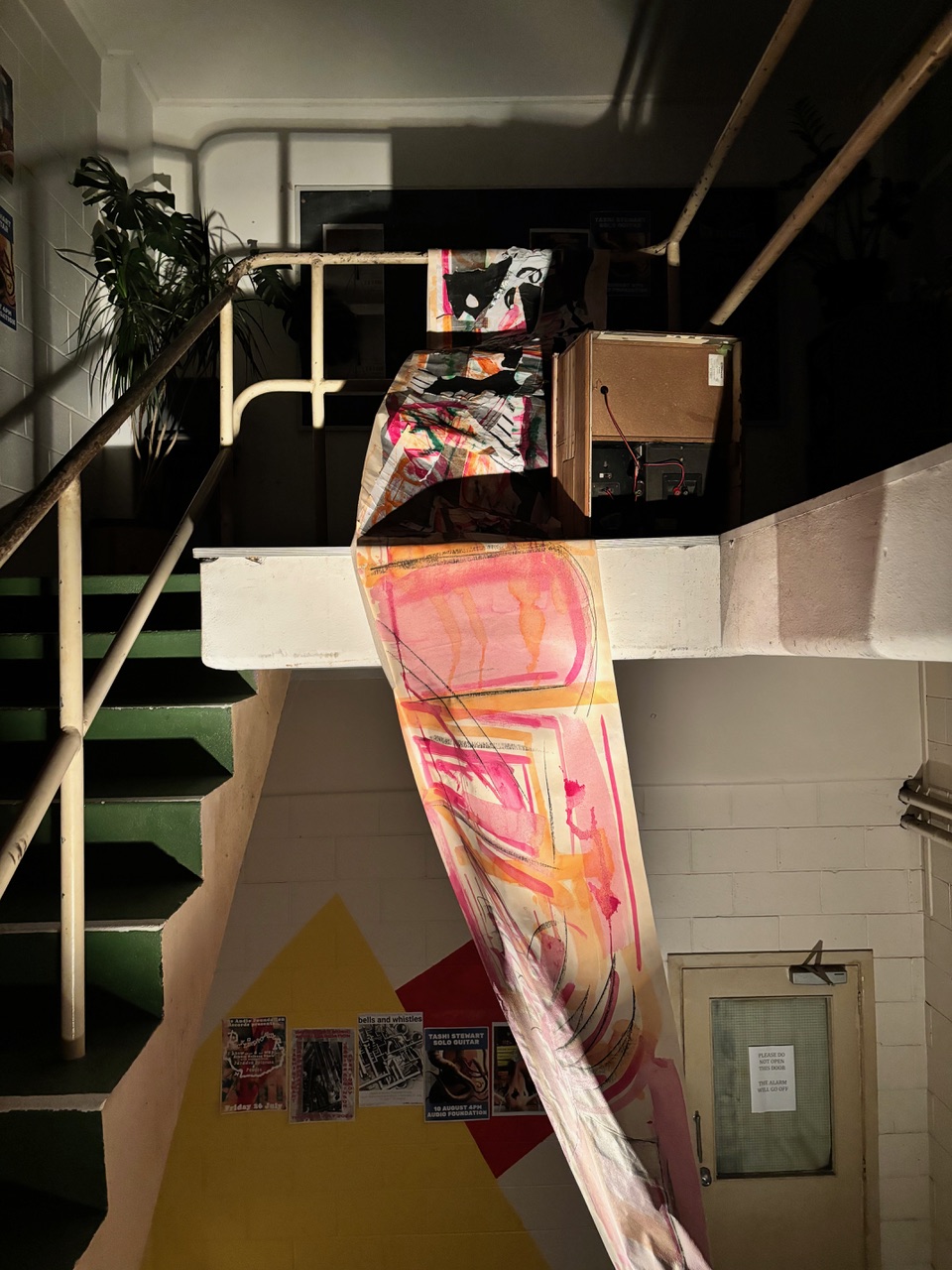
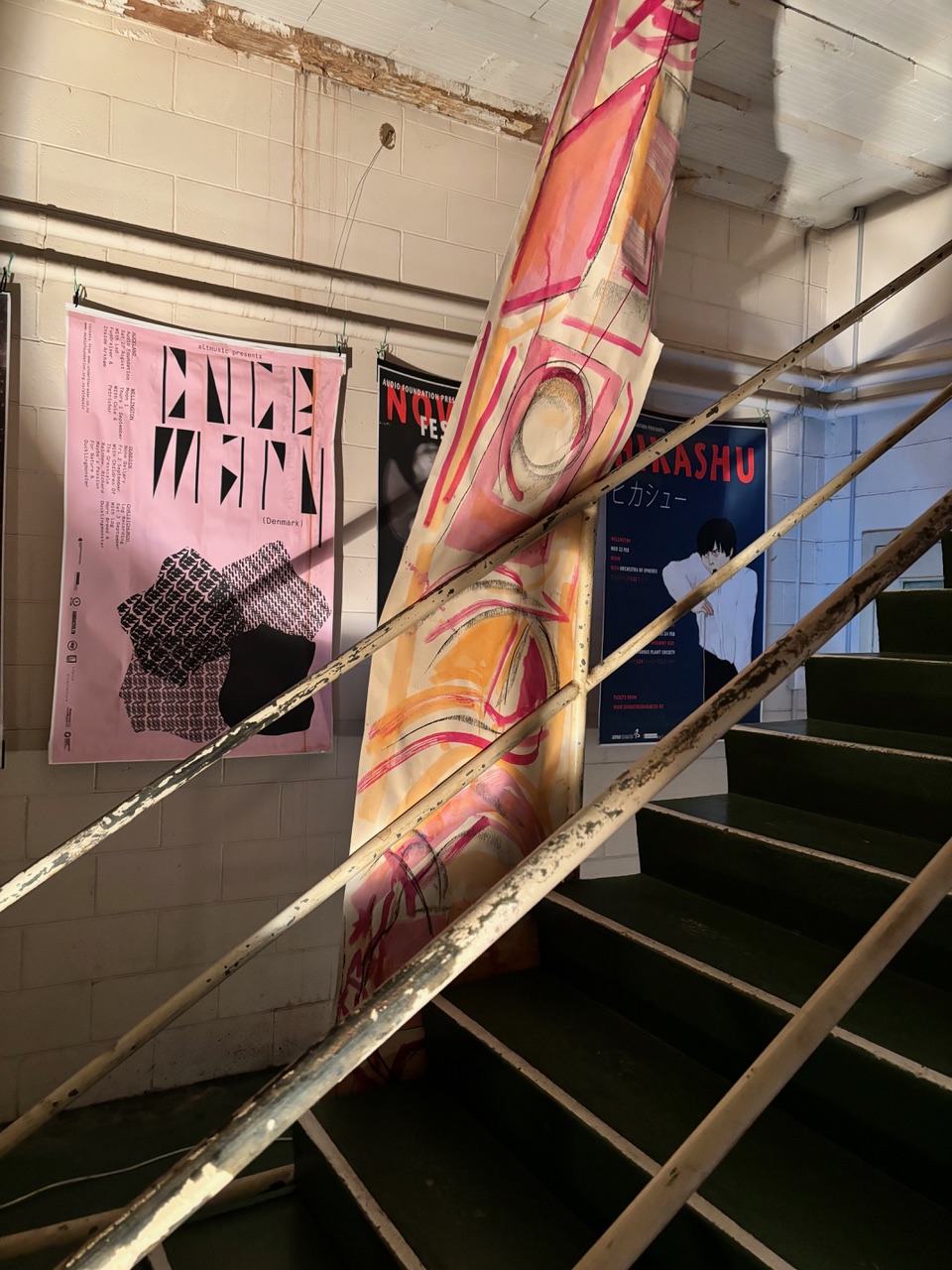
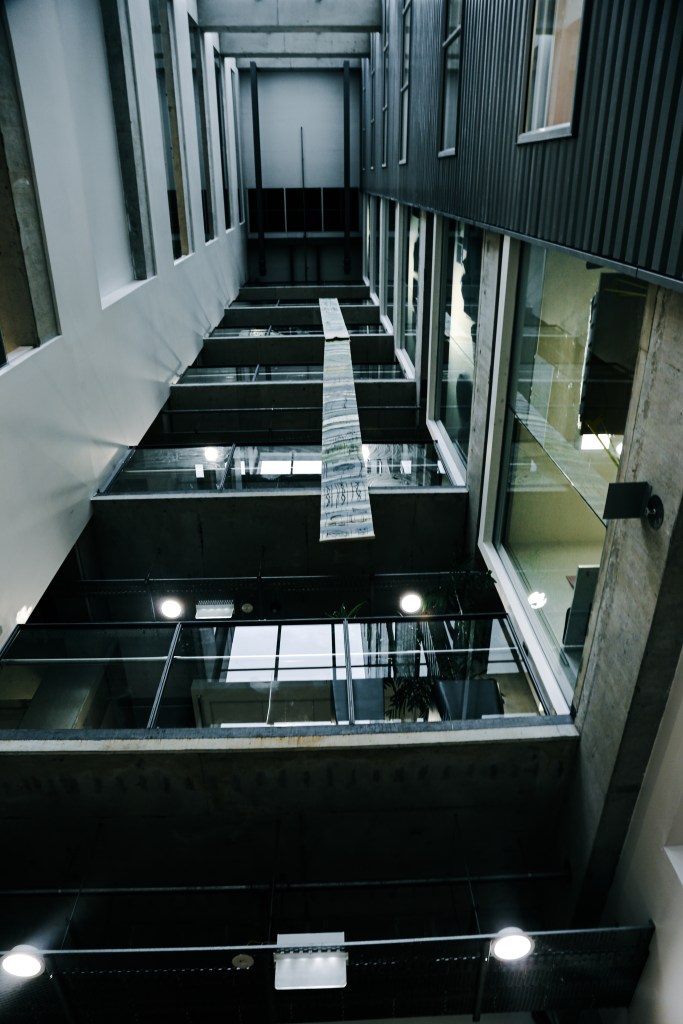
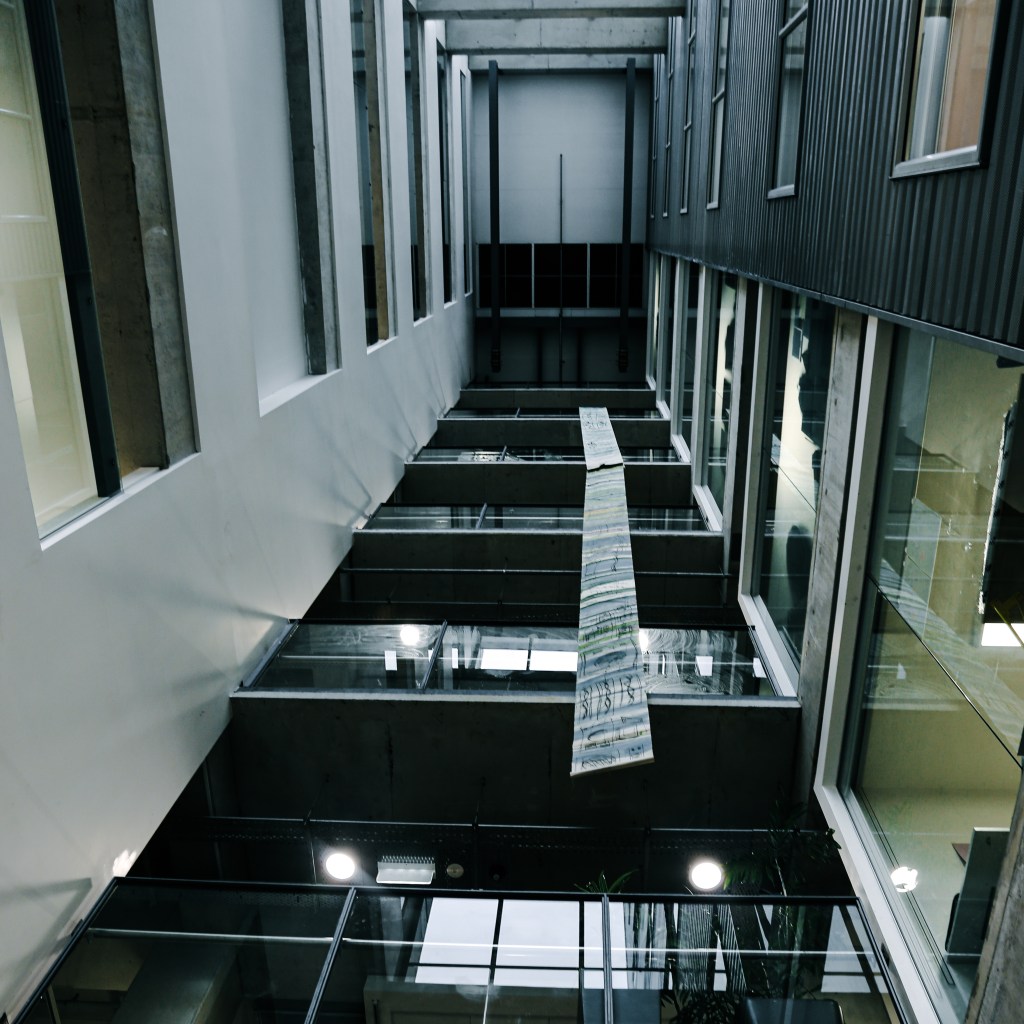
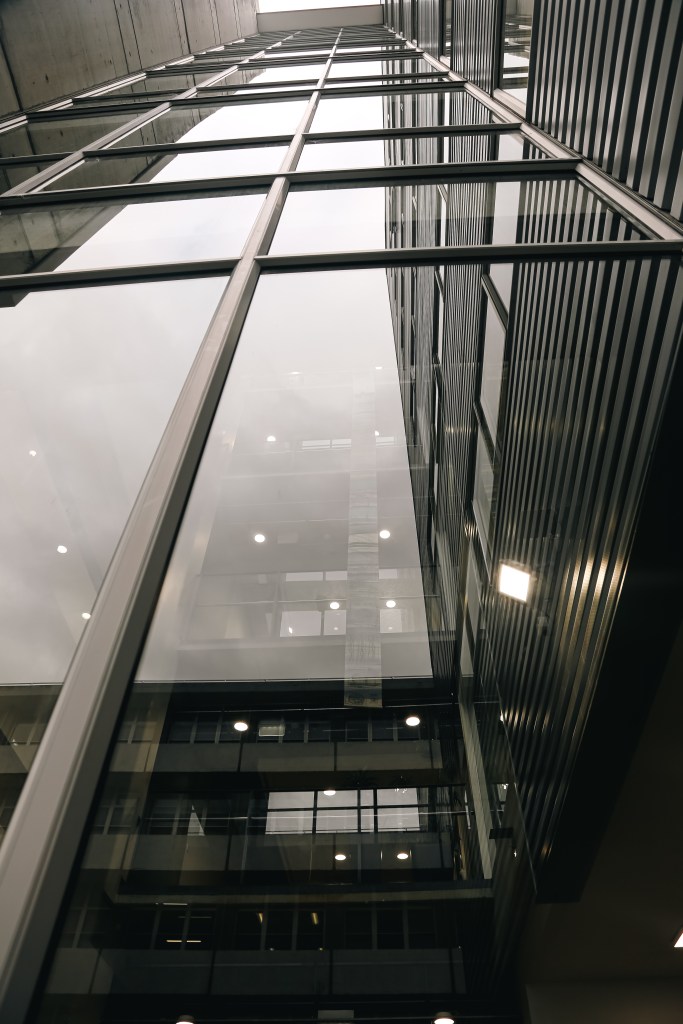
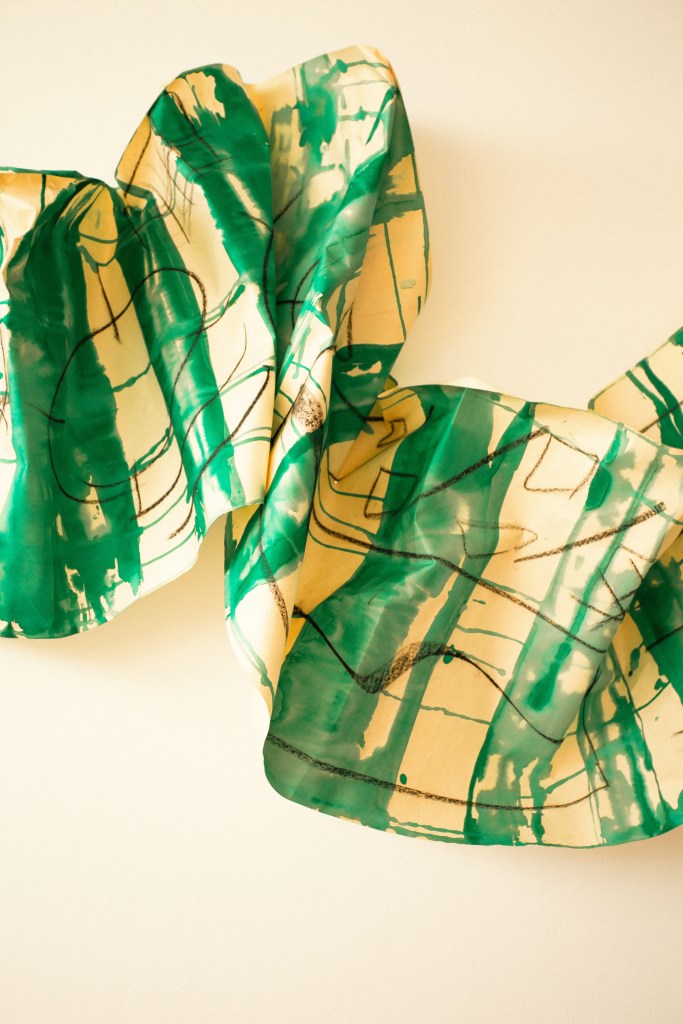
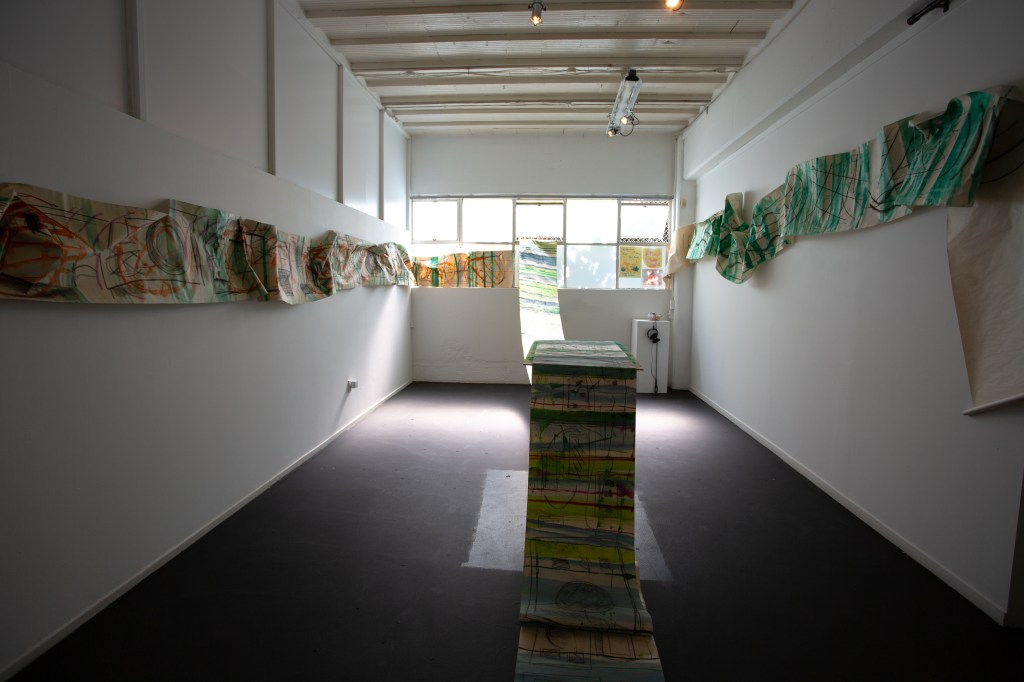
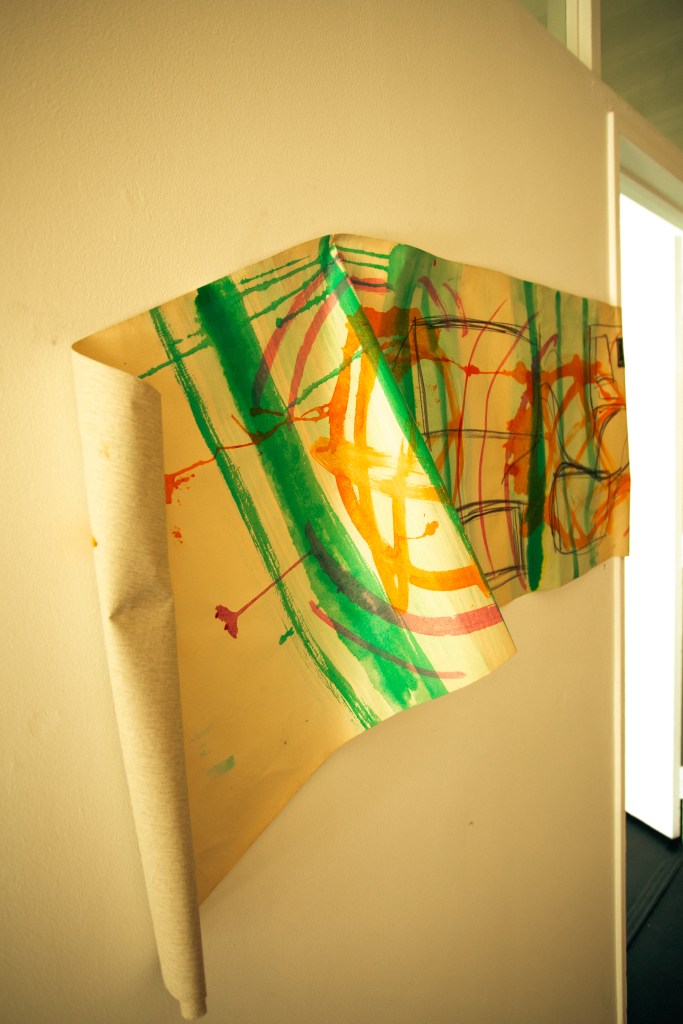
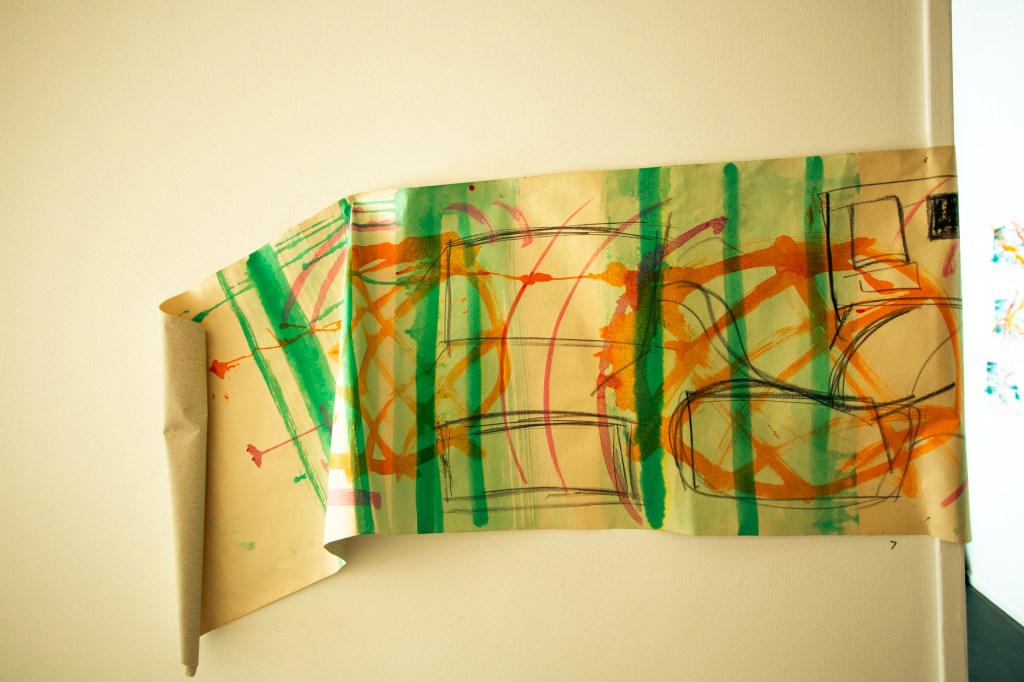
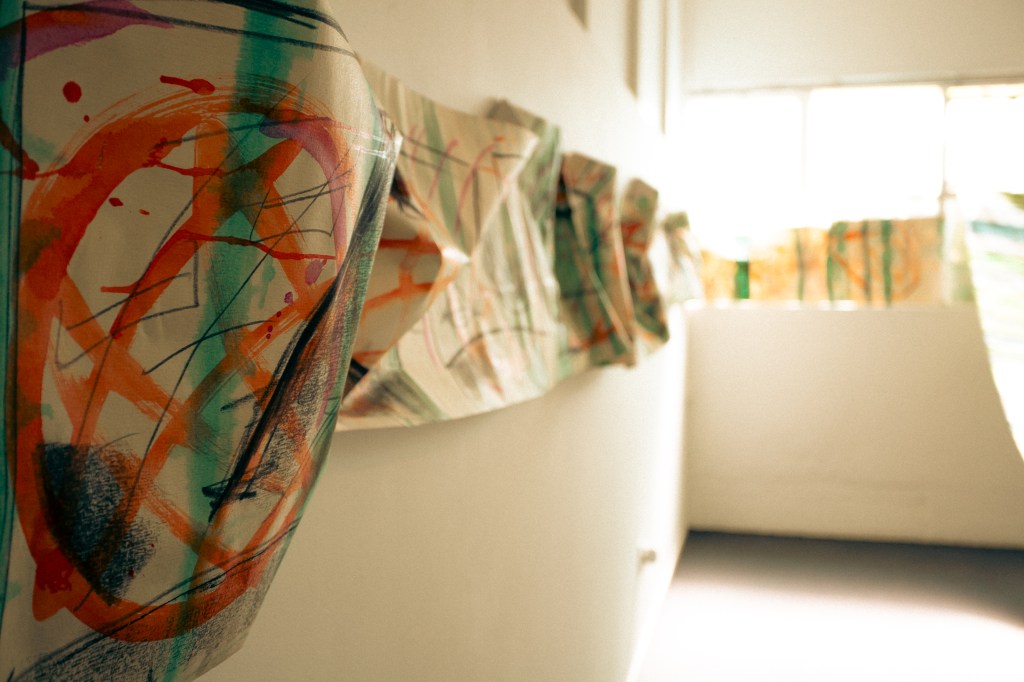
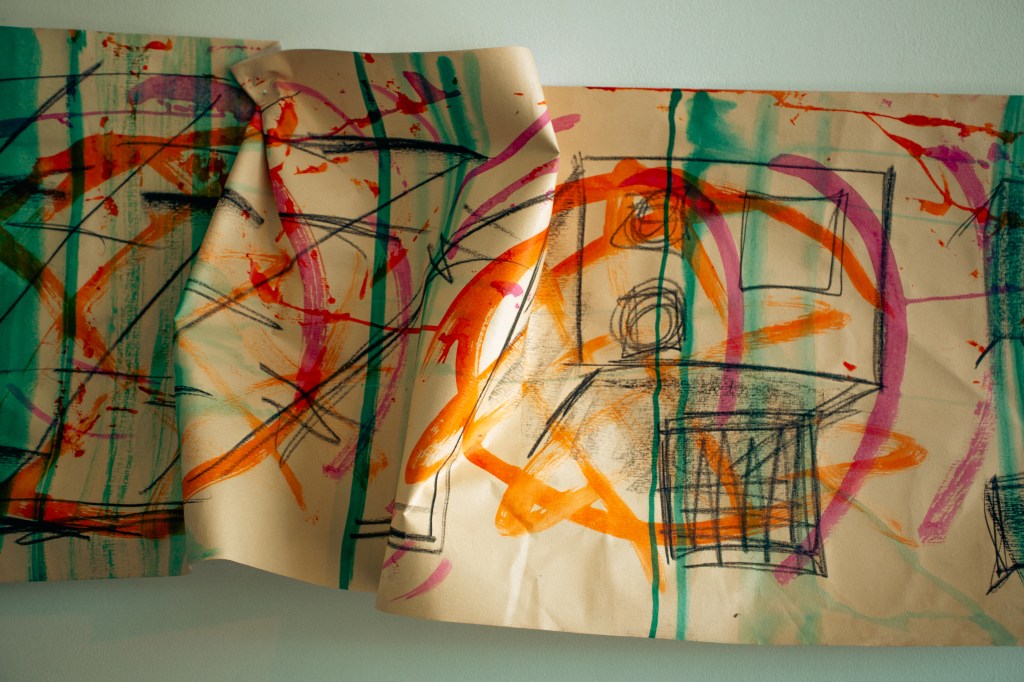
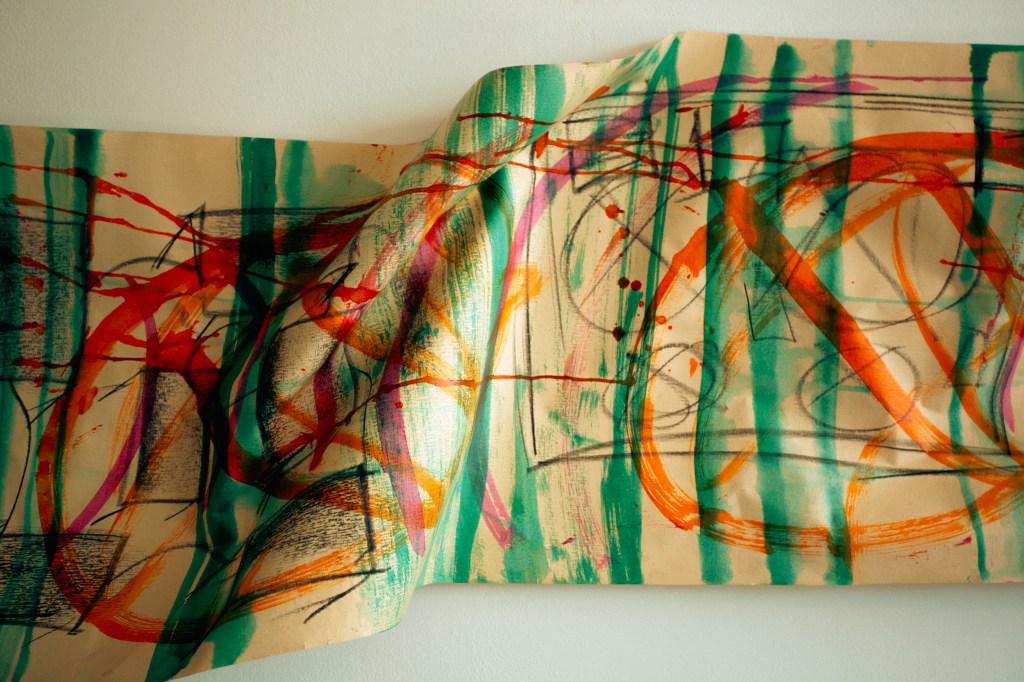
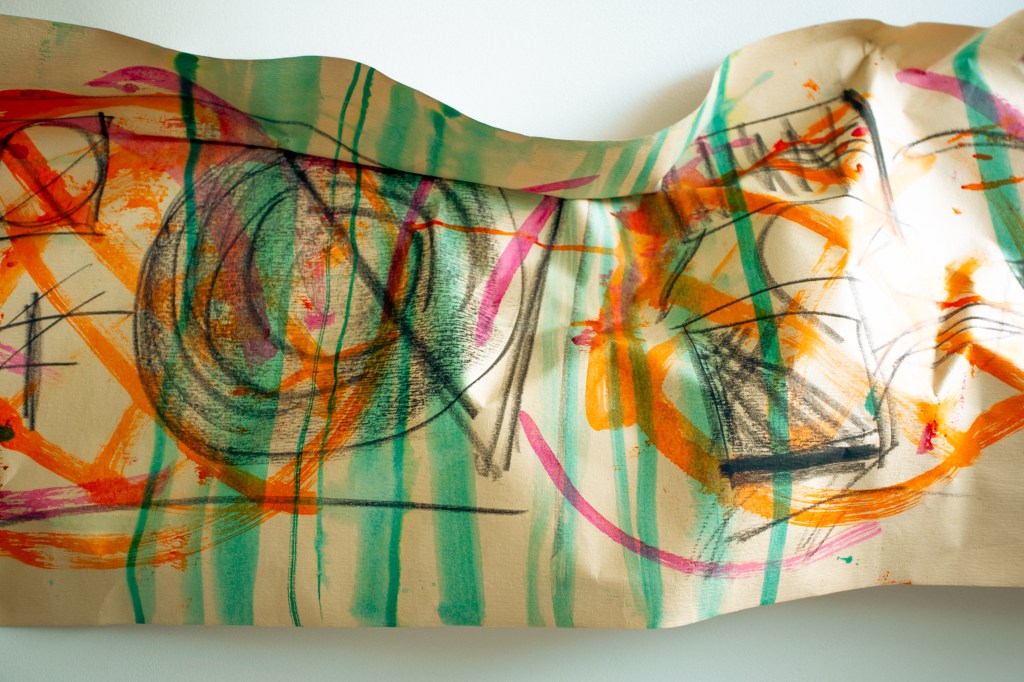
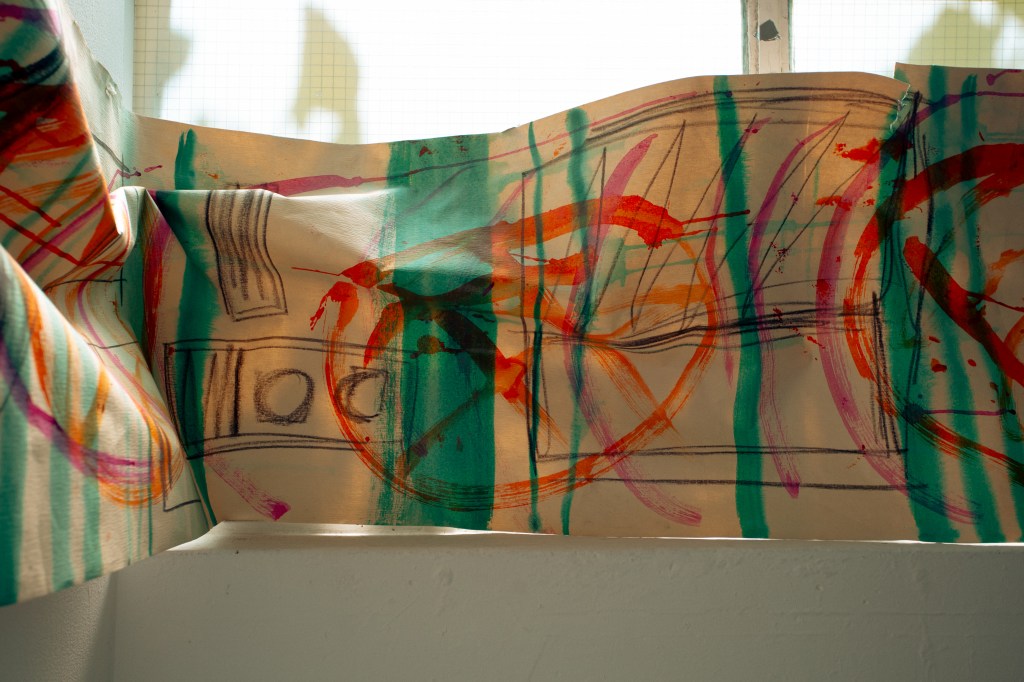
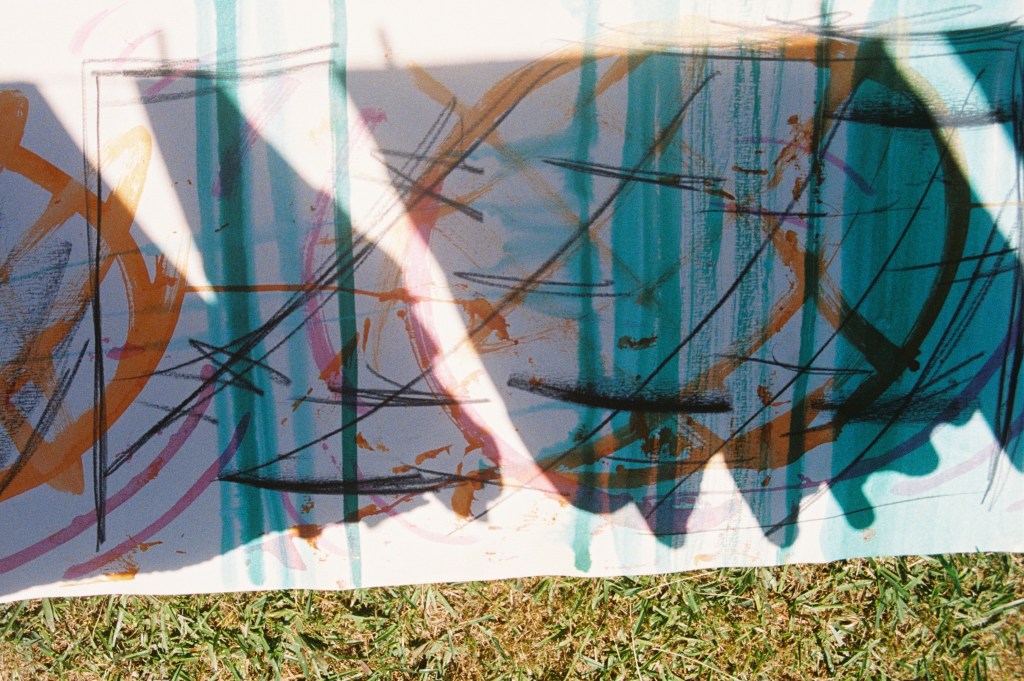
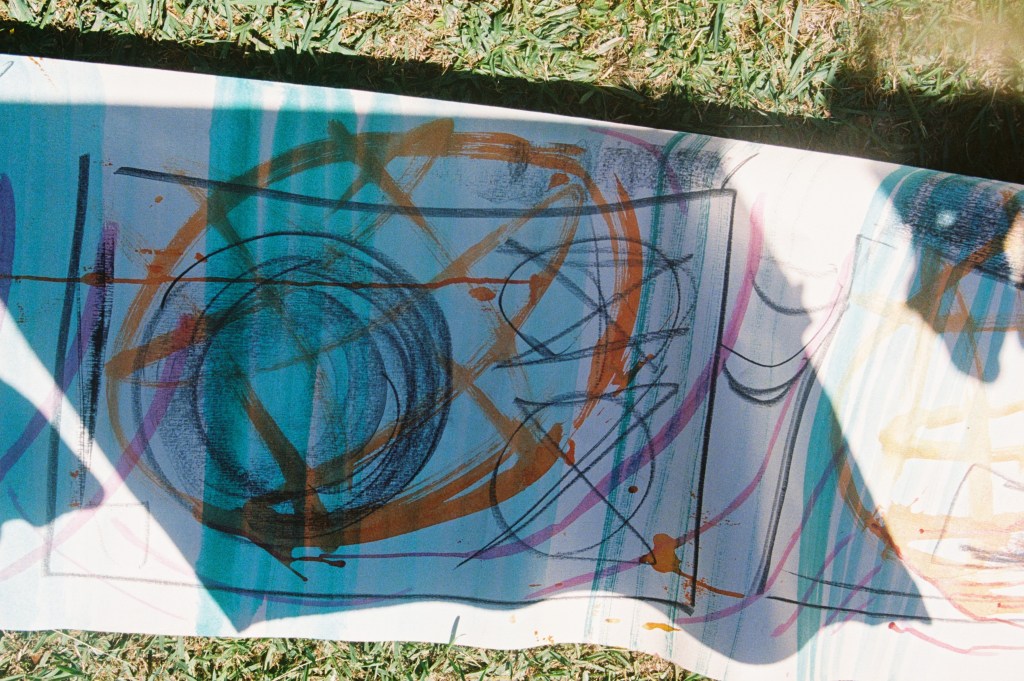
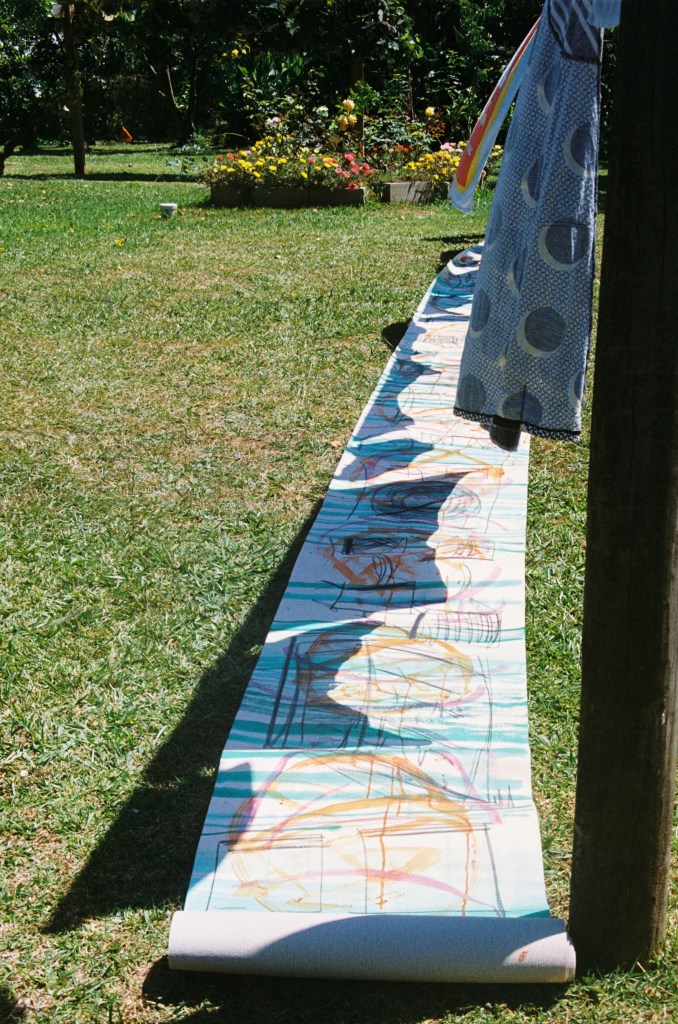
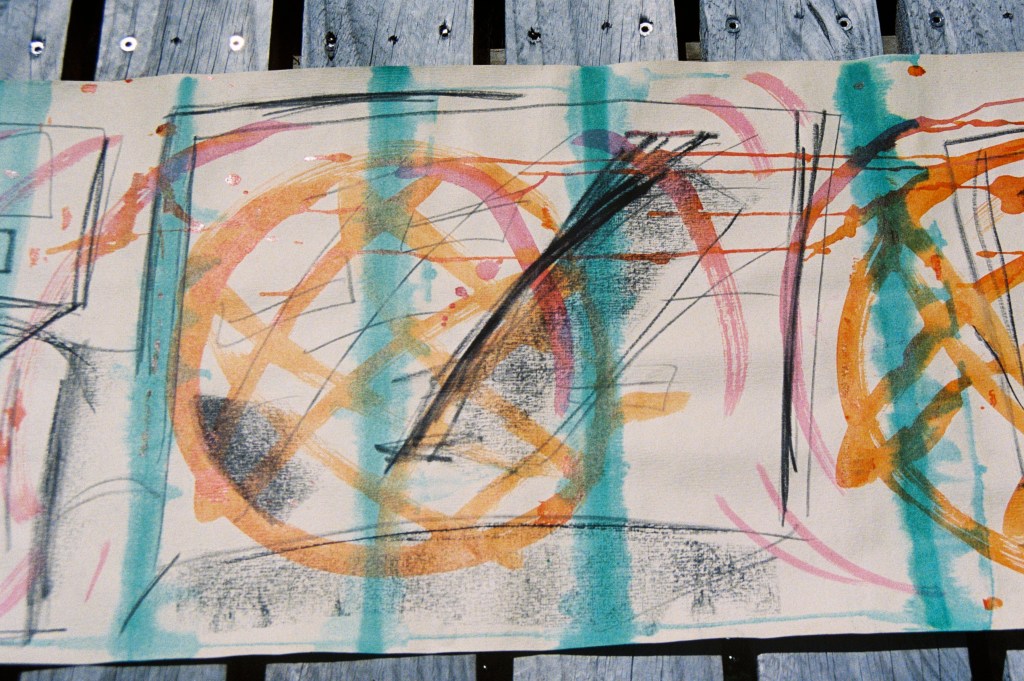
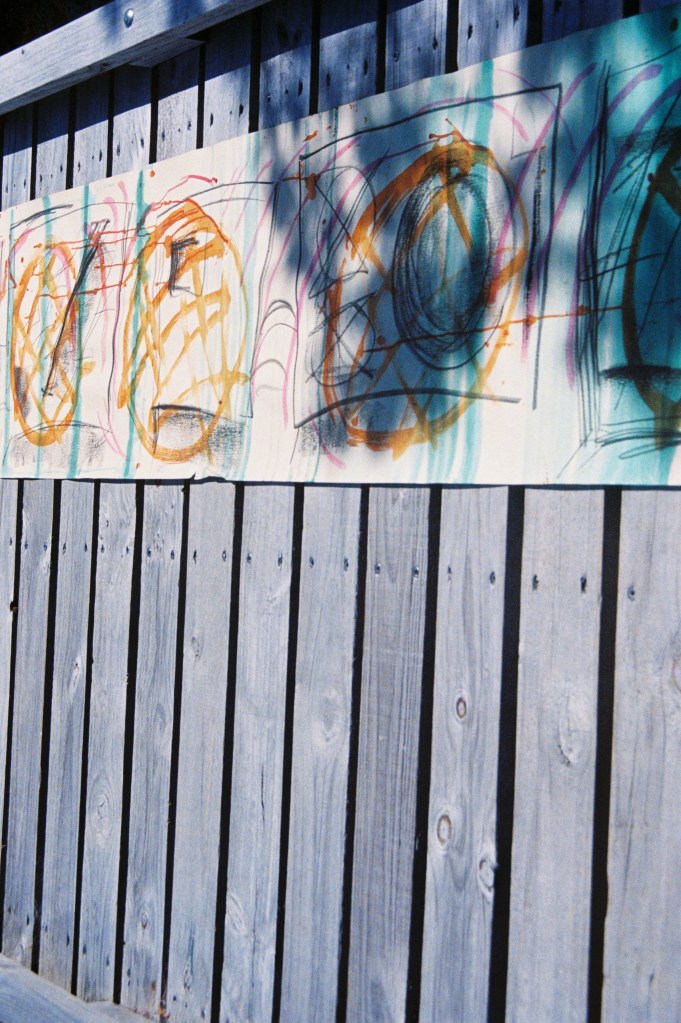
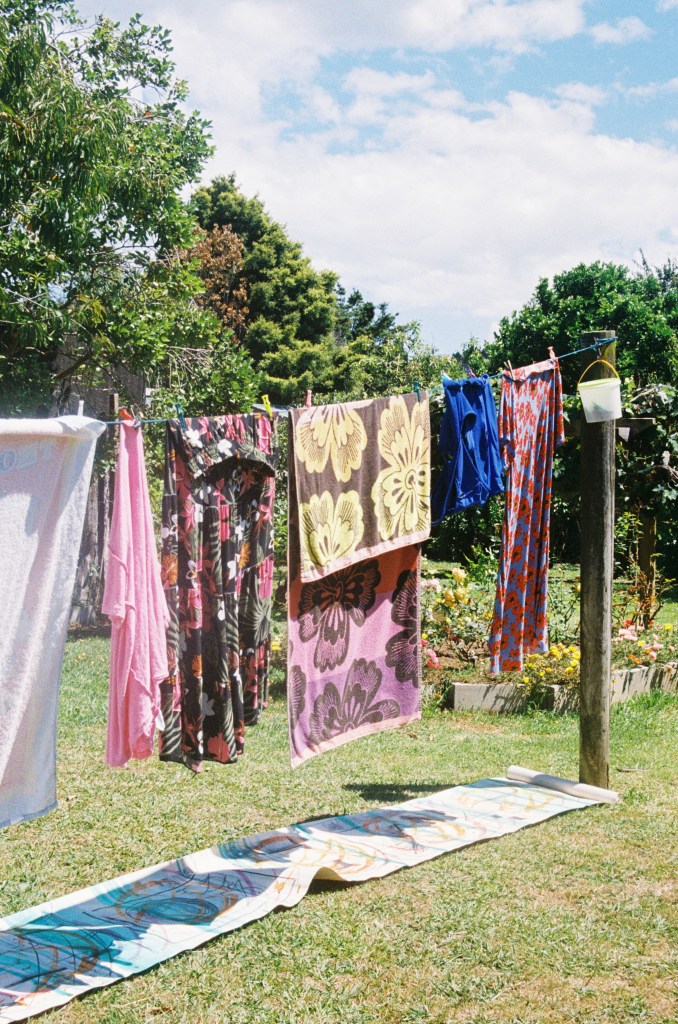
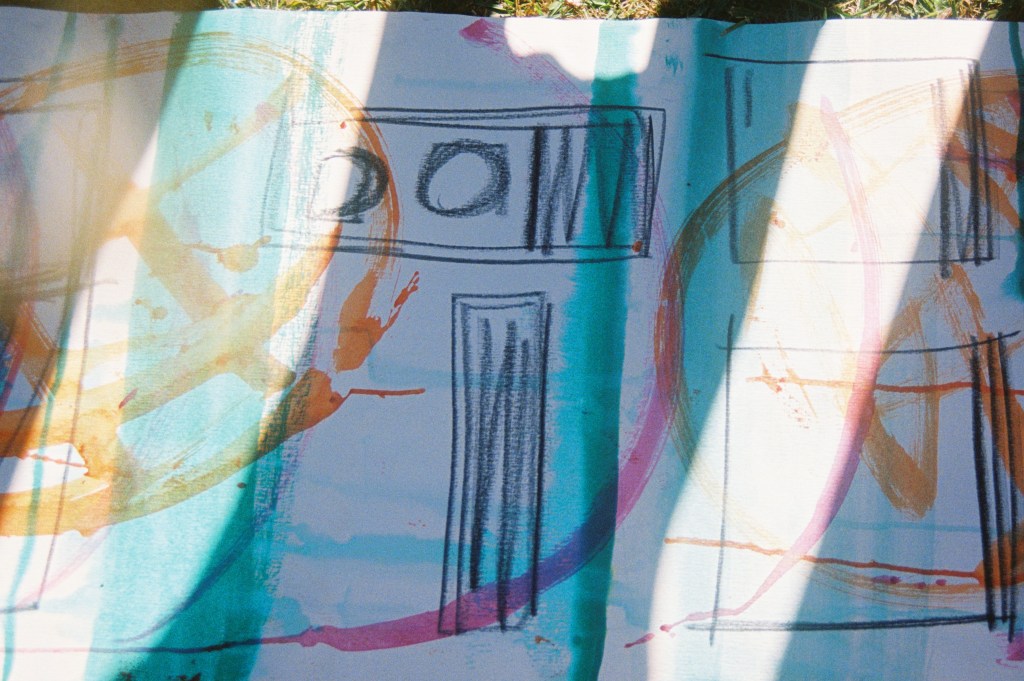
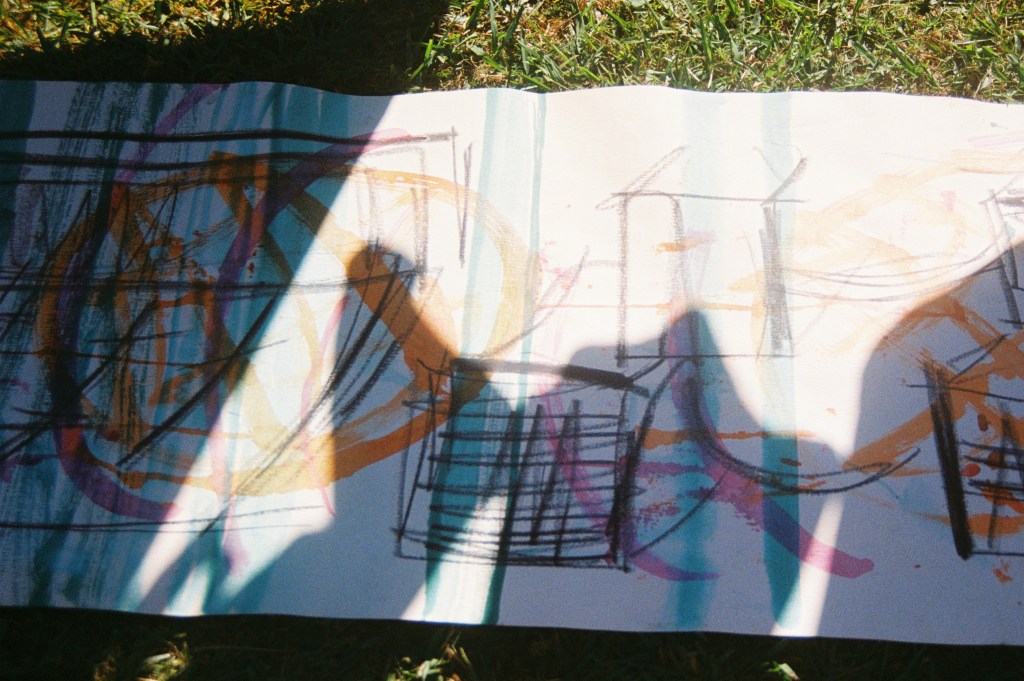
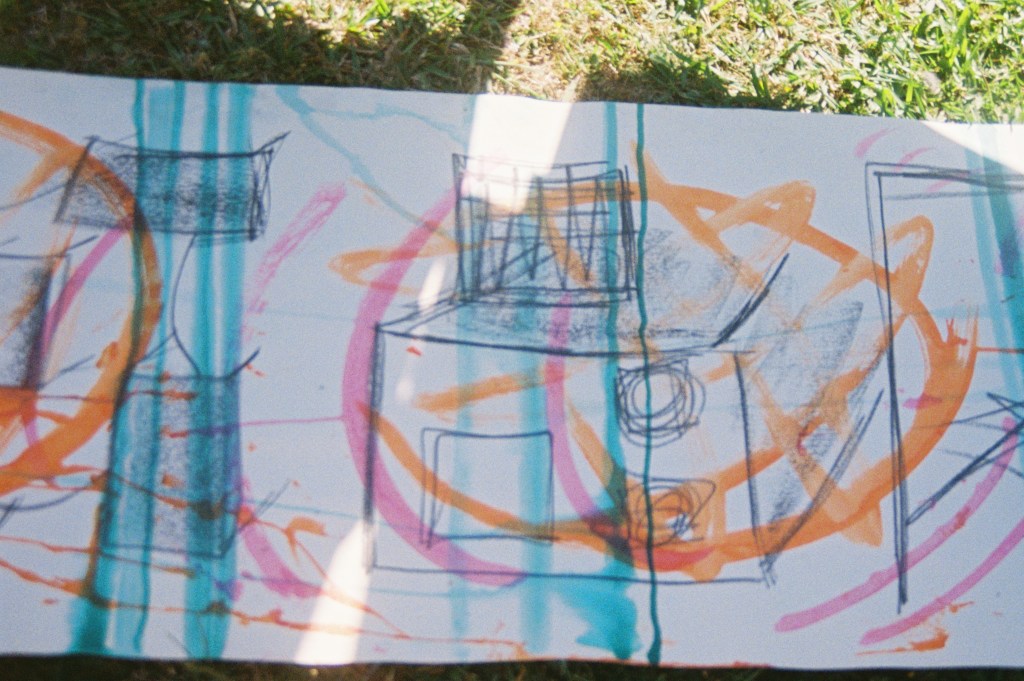
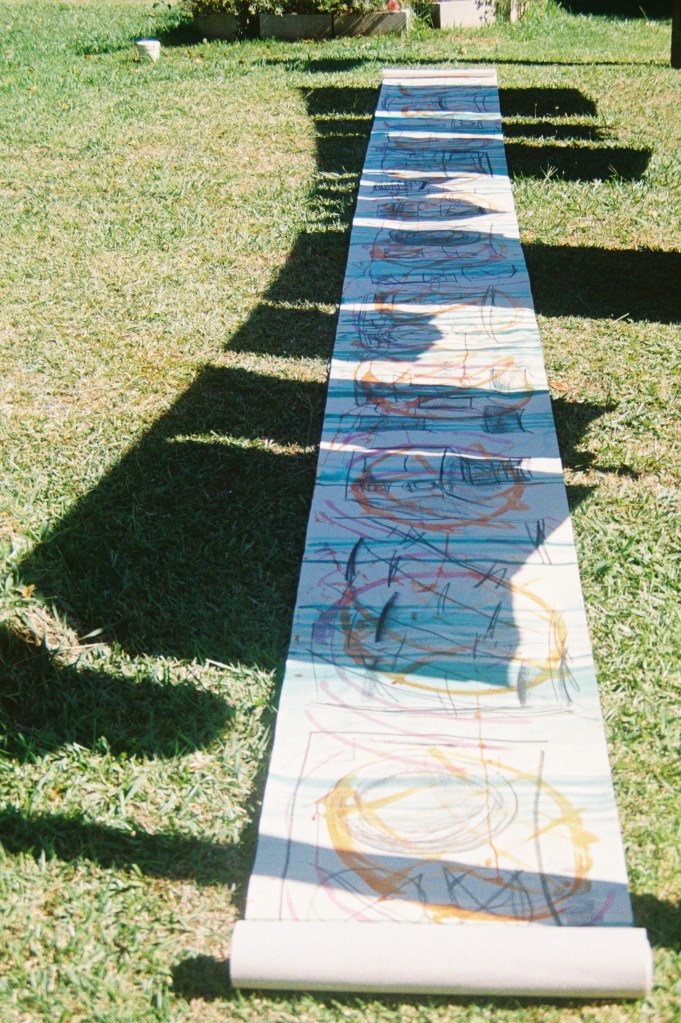
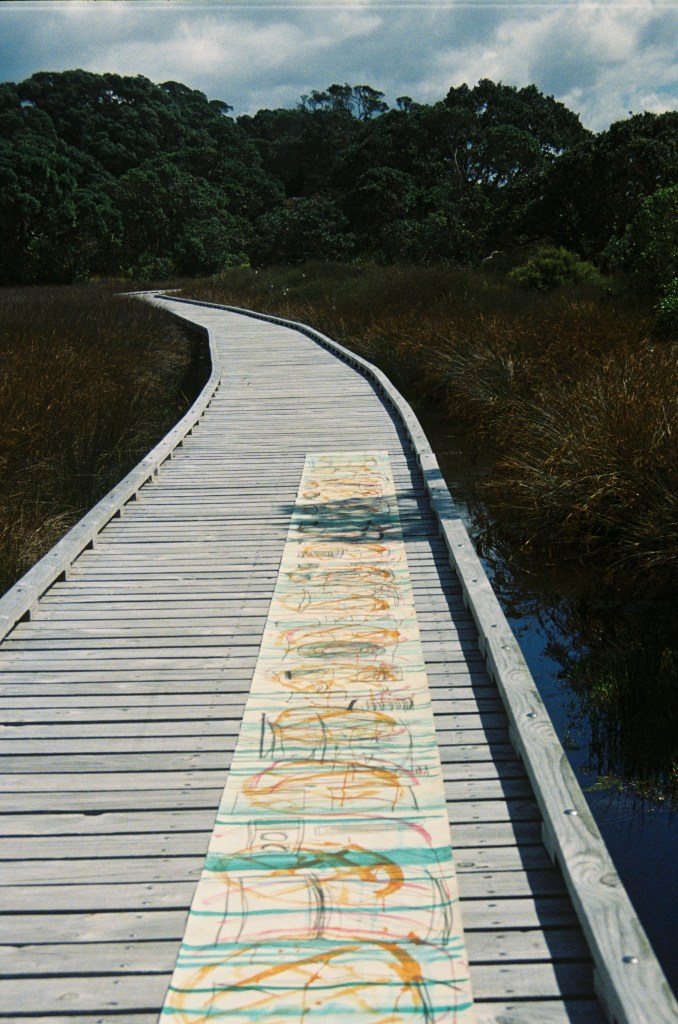
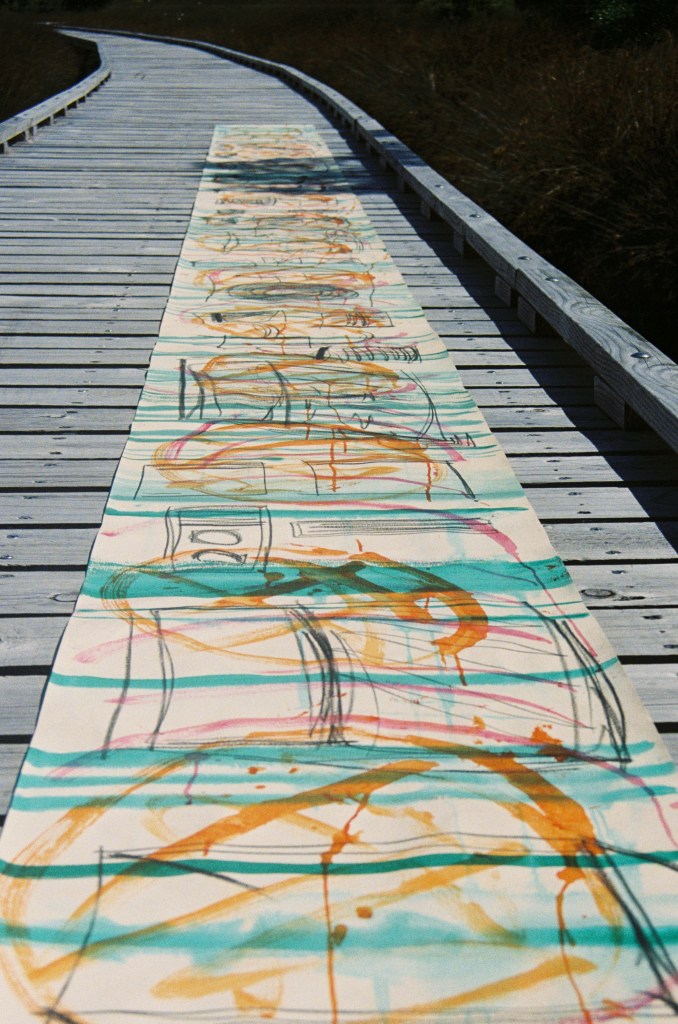
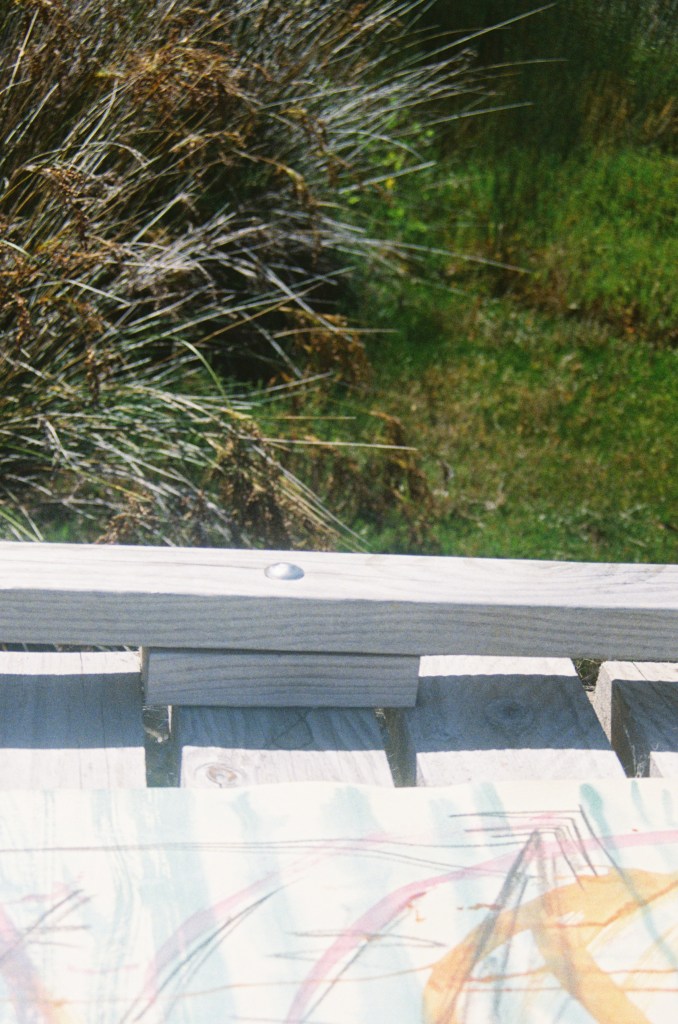
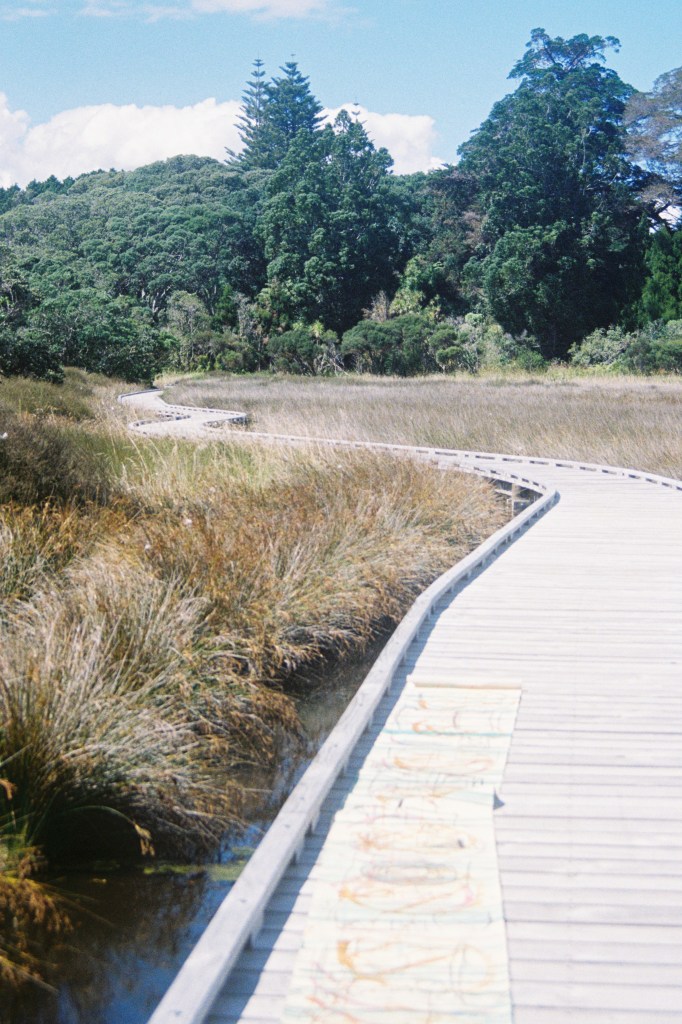
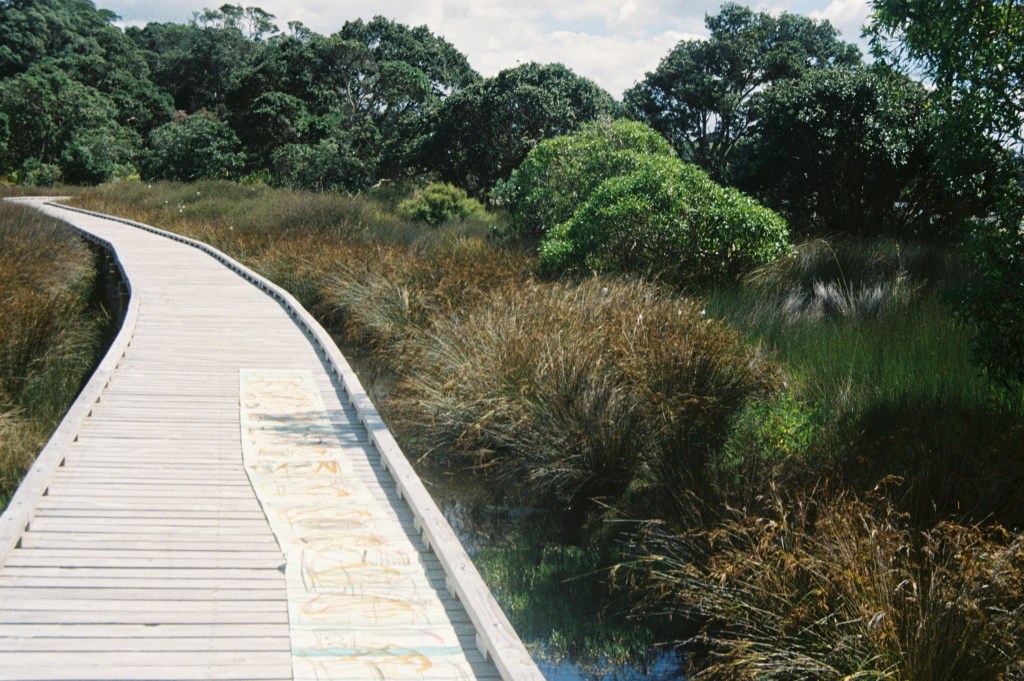
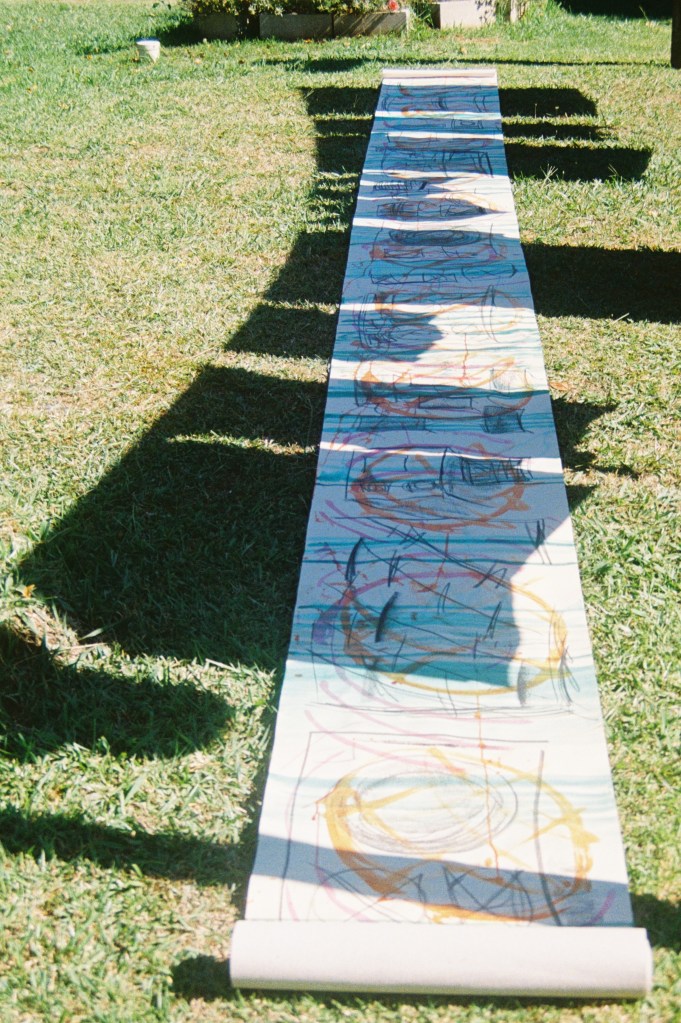
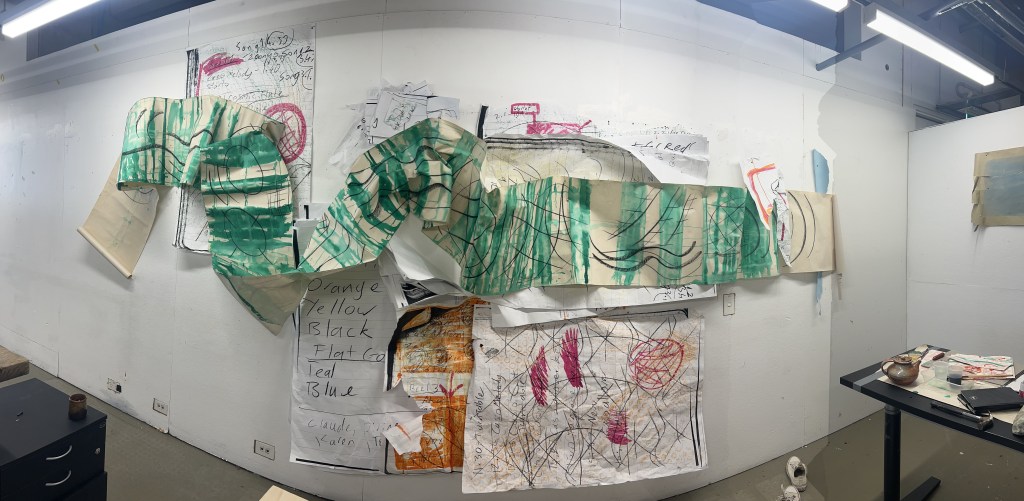
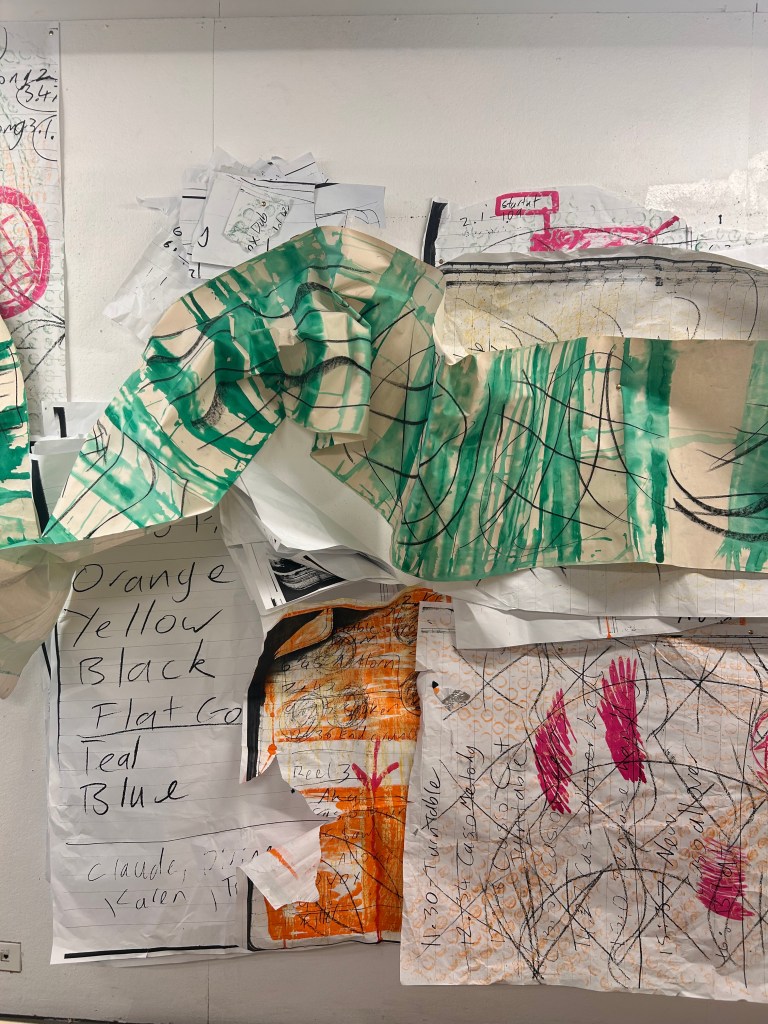
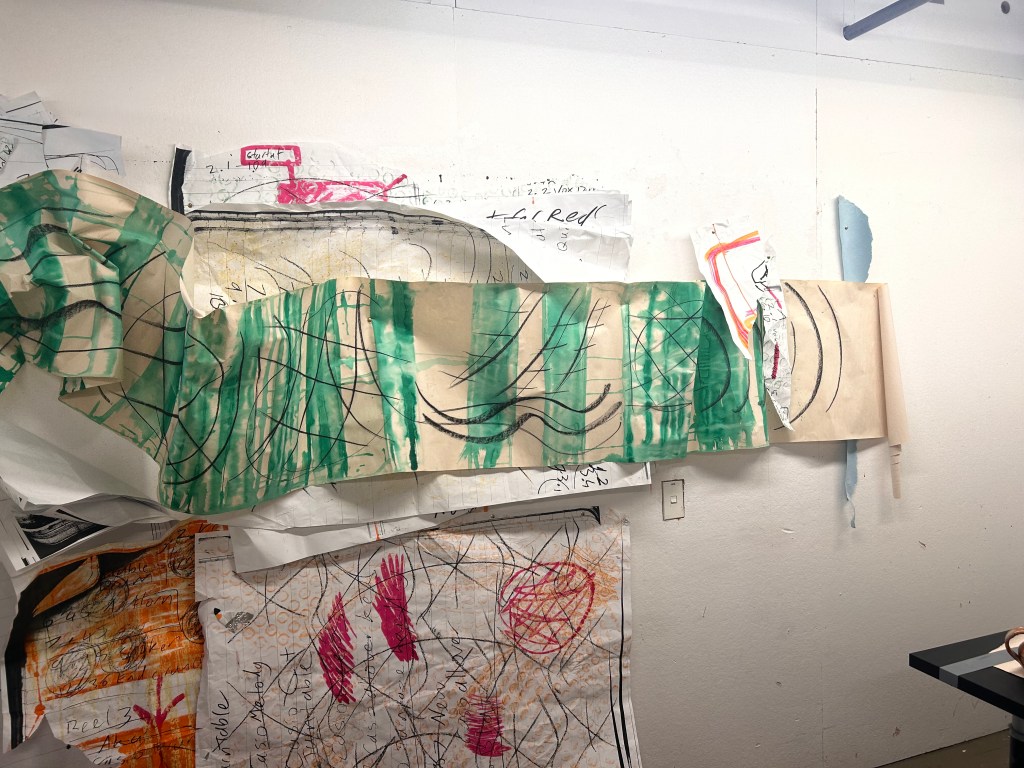
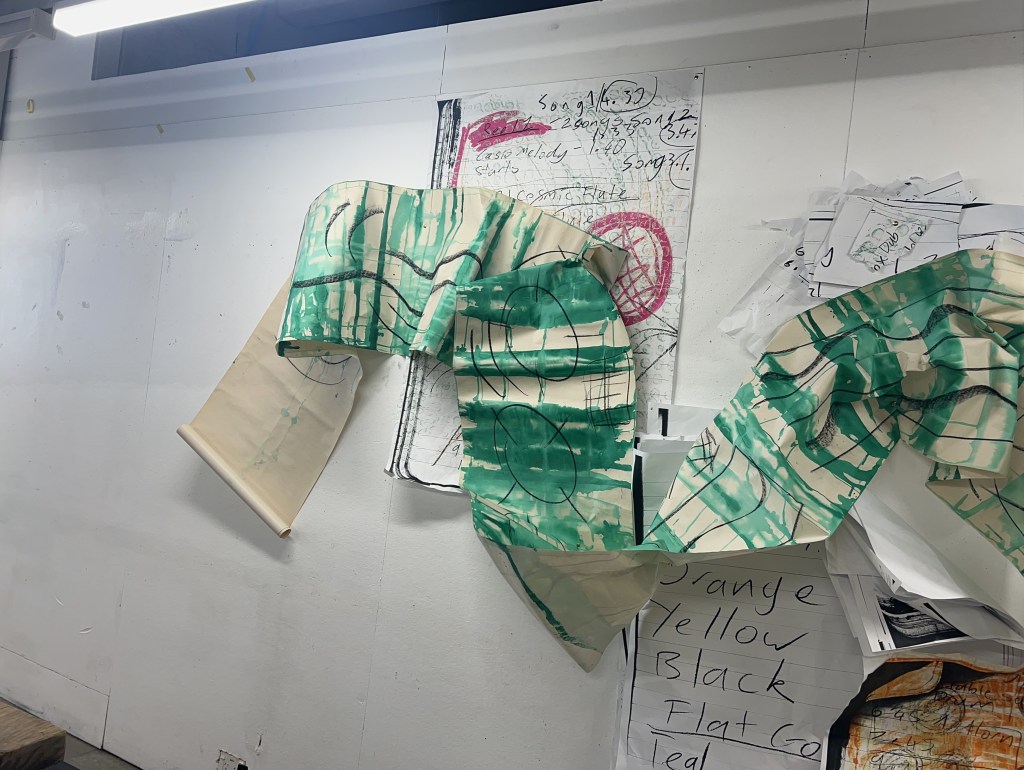
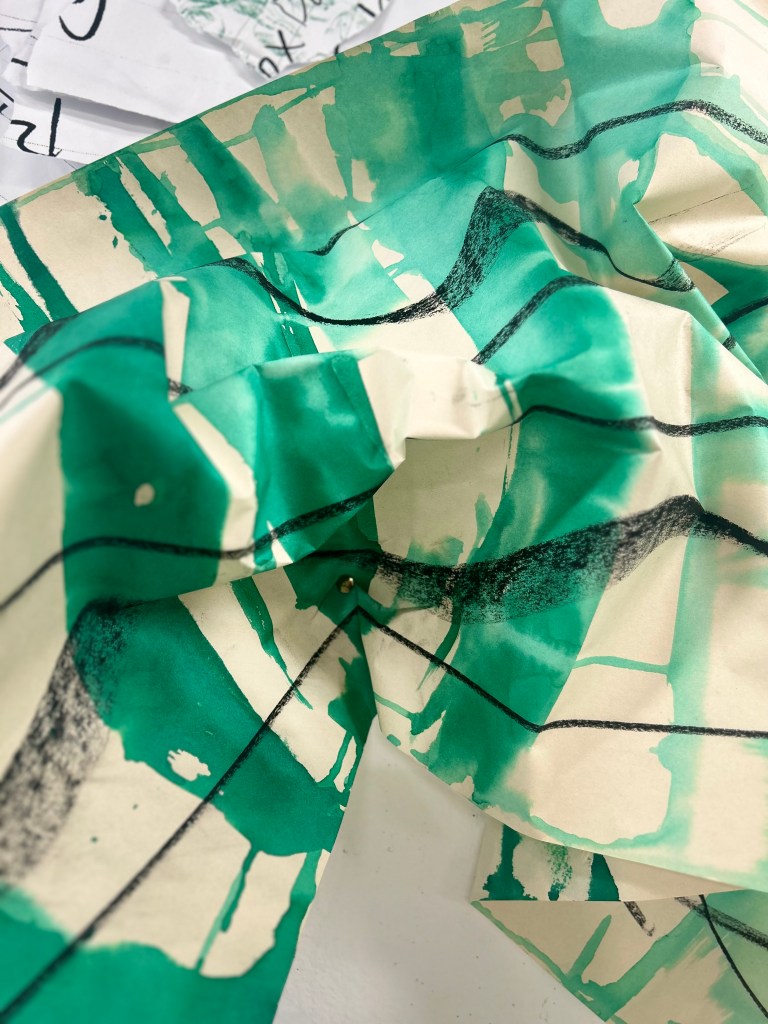
We gather in the lobby. Prepared and dressed up. A scroll of wallpaper painted with waves of pink, green, and orange and glyphs of charcoal wraps in an undulating horizontal direction from the steps to the circle, through to the snack bar, and preshow seating area. At the ticket desk merch table, volunteers draw with Vivids (felt tips) on the wrists of the attendees. Greetings and gathering.
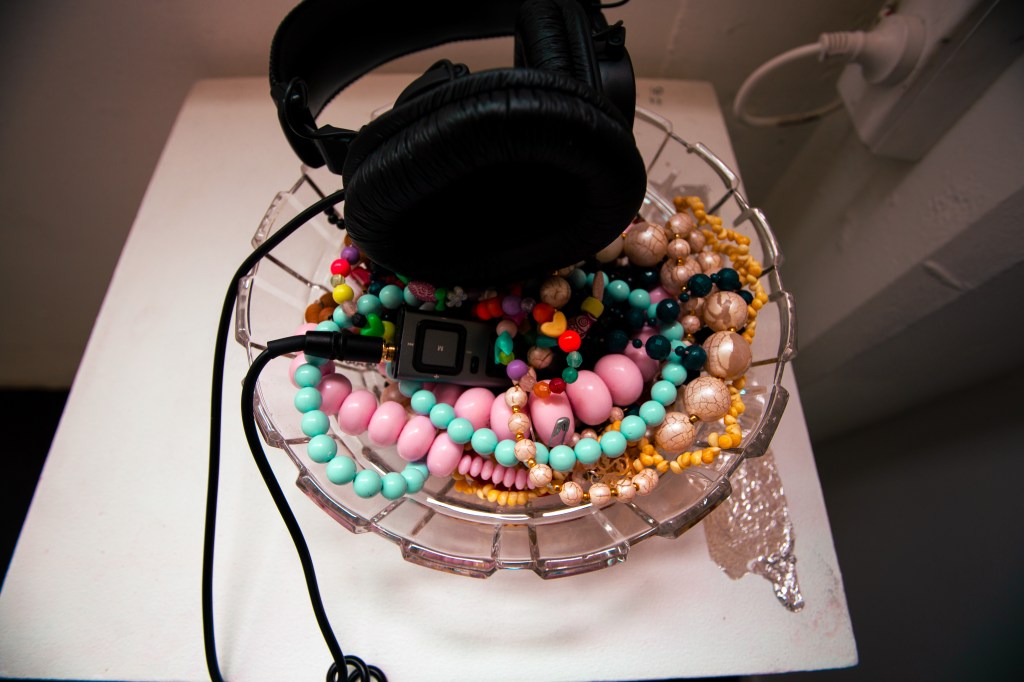
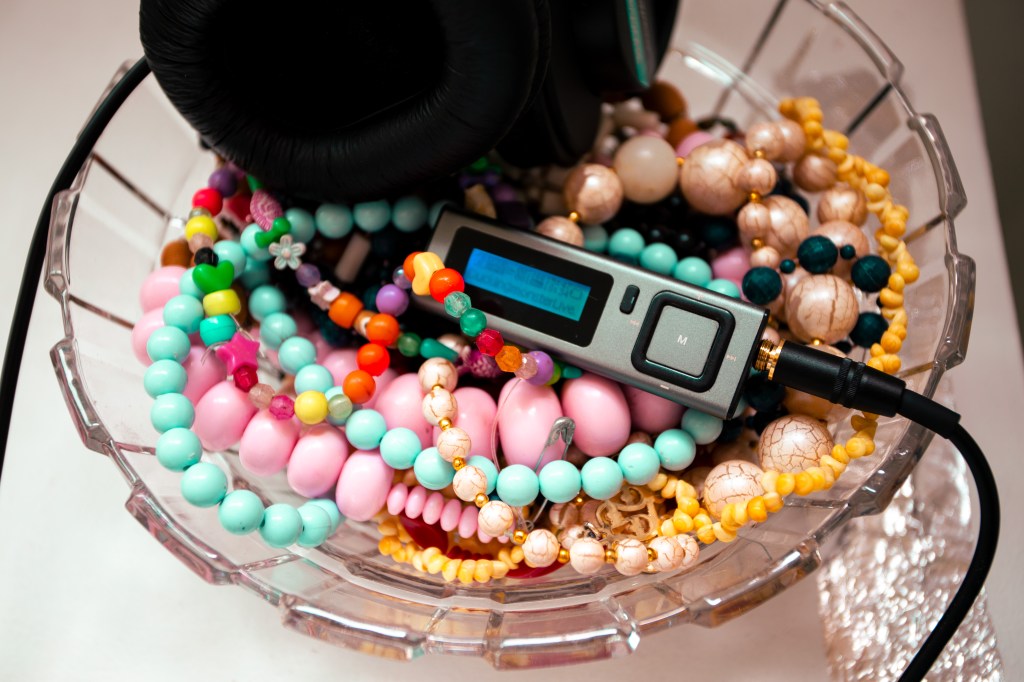
A plinth holds a vanity case next to the comfy couches and row of rehoused 1920s cinema seats. An abundance of plastic beads and little glass nail polish bottles provide a colourful nest for headphones connected to a wireless radio pack. The vanity case has been listening.
Commissioned to produce an artwork as part of the Outlier Festival, “celebrating the diversity of antipodean electronic music”, I considered the festival’s kaupapa of bringing together dancefloors with dedicated listening. I asked what it would be to produce a sound work that was not in my usual mode of performance action. There was a sense of hanging around the main event in this proposition. The festival’s location in the historic Hollywood cinema provided an option of using the lobby space. Much like the kitchen at parties, I knew that this area would house the social, volunteer work front and meeting point throughout the three-day festival. The structure of a series of sonic performances alternating between two stages would provide an ebb and flow of bodies and sound moving through the lobby and the cinema theatre.
I constructed my installation with five physical elements: a comic, a wallpaper scroll, a vanity case, a handbag and a two-way radio system. Each element is easily transportable, having a temporary presence that is cohesive with the three-day festival. I could bring them into the lobby and work with the site’s existing structures. The work could be presented at the festival as a participant that did not impose upon the “main” events of the performances.
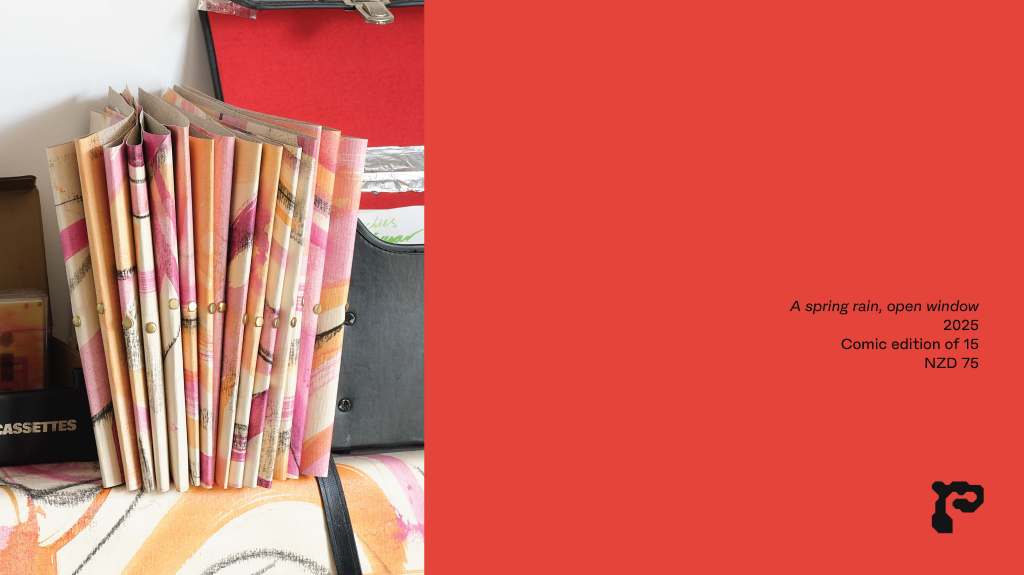
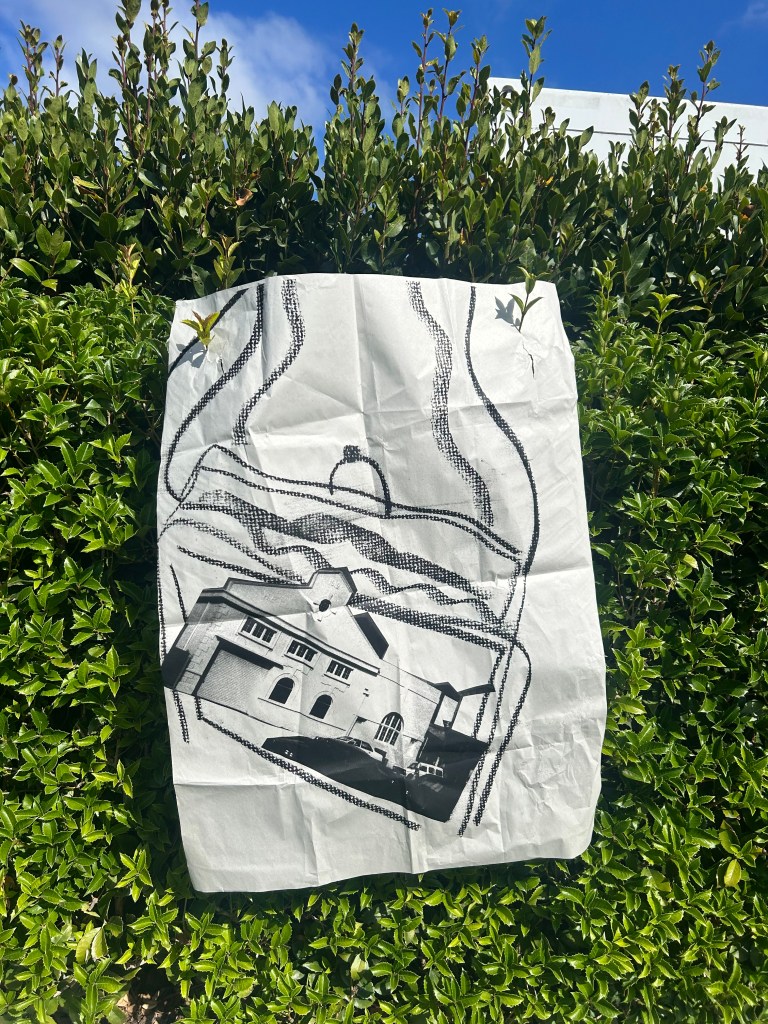
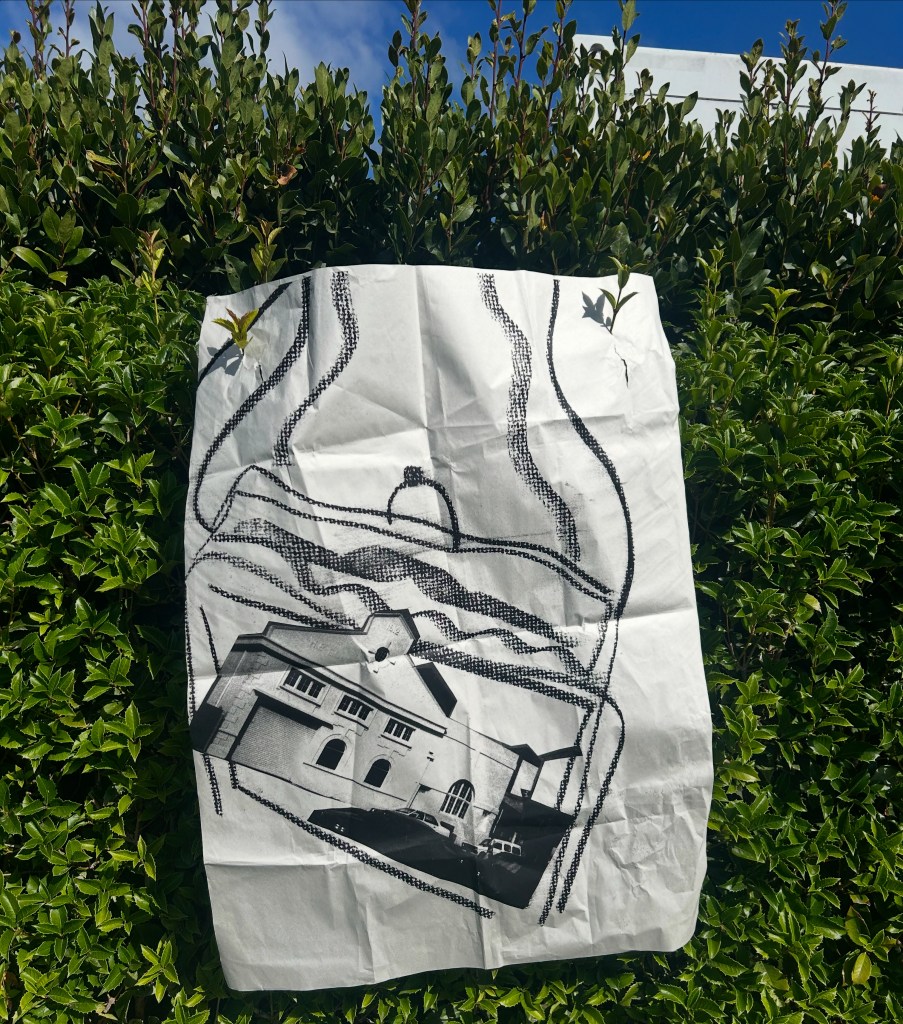
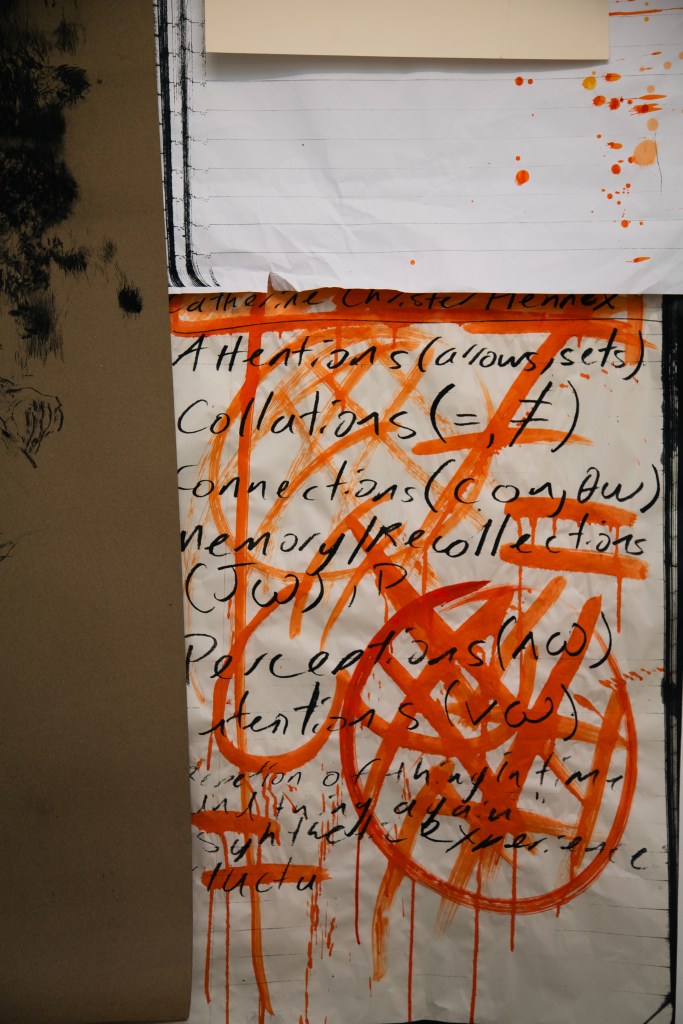
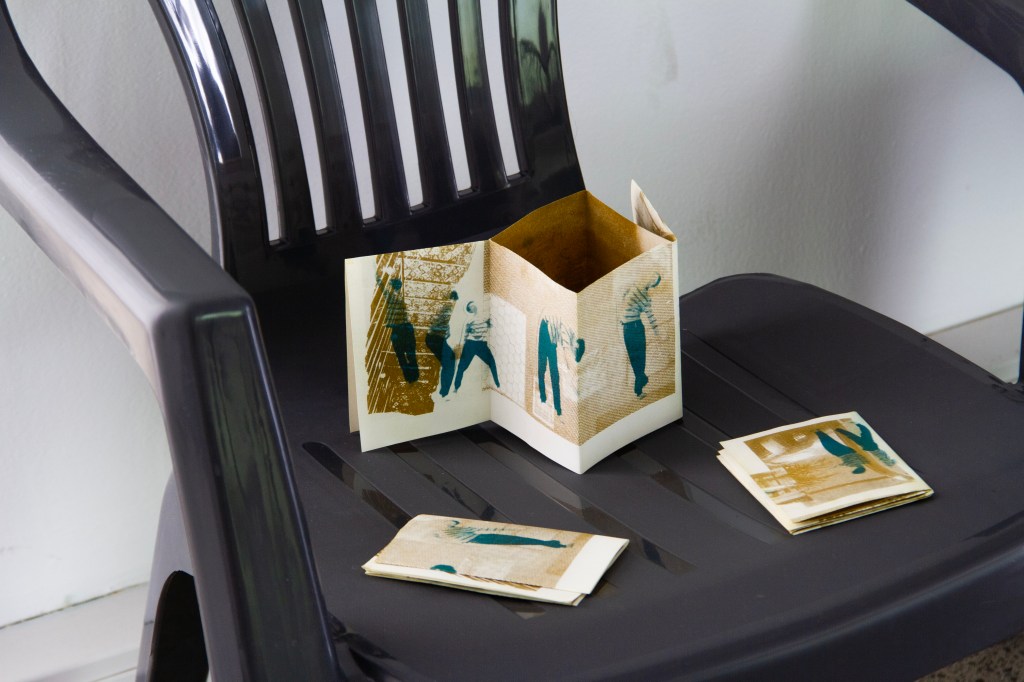
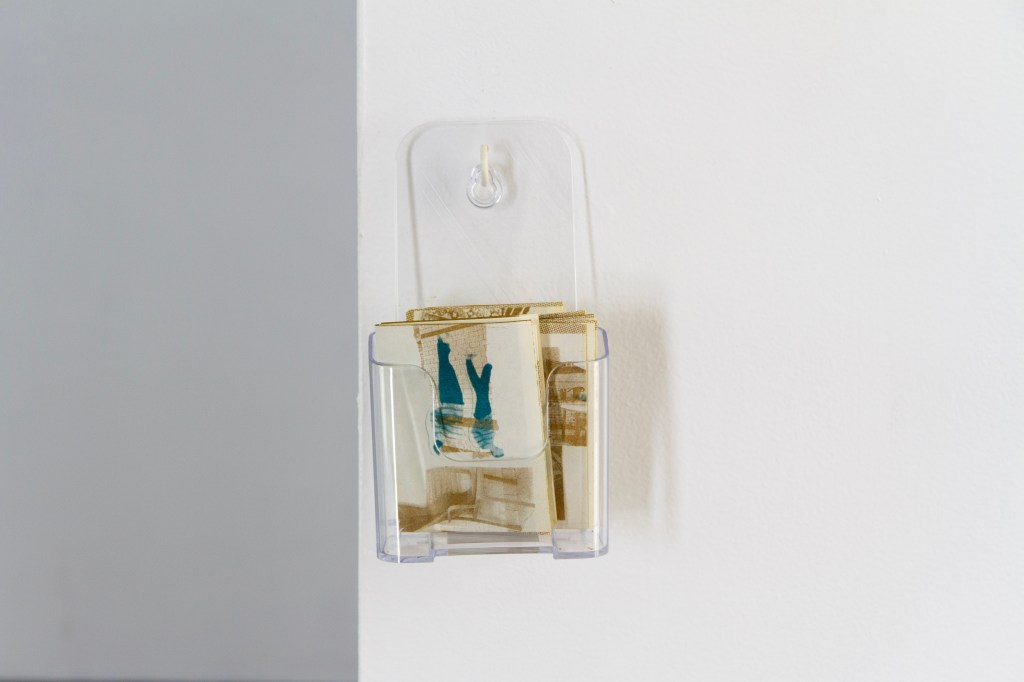
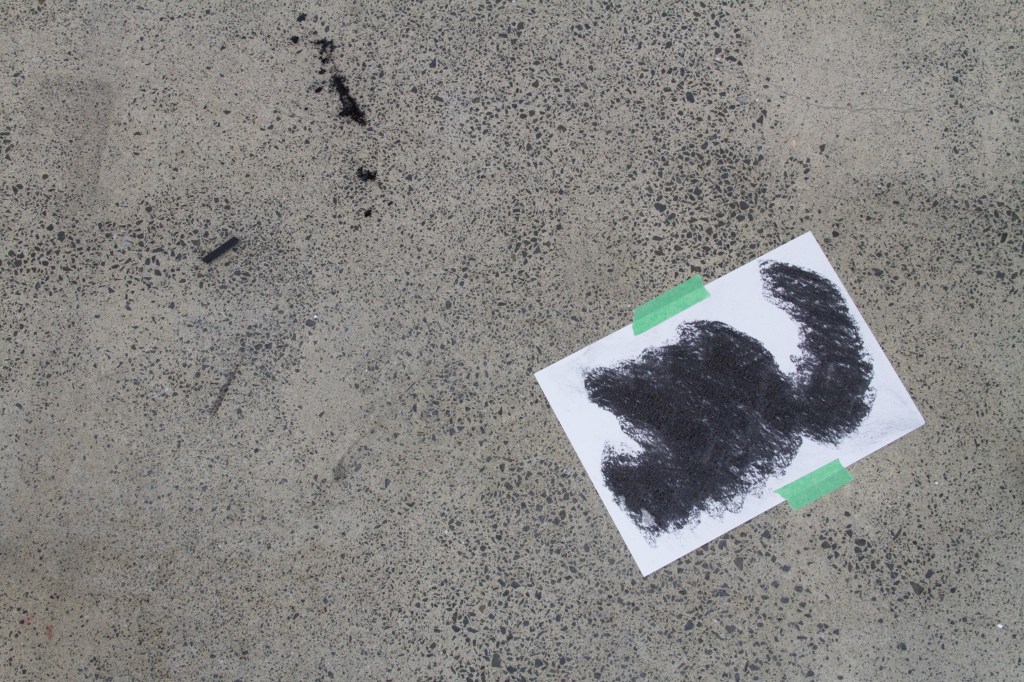
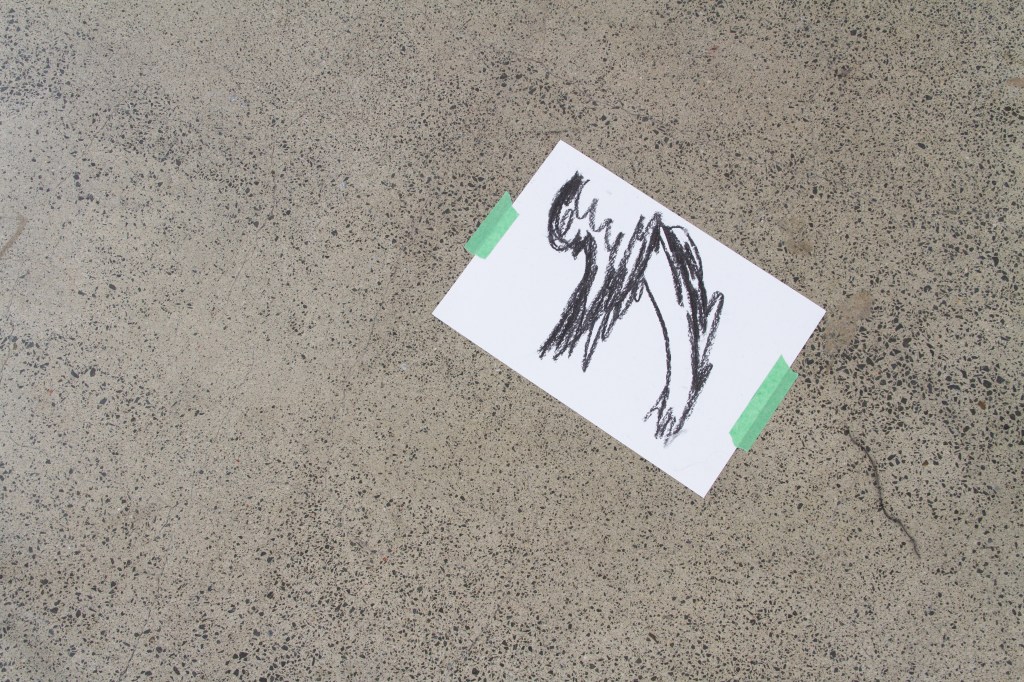
In the lobby context, the comic took the form of a programme or the play sheet of “coming attractions”. Rather than listing or outlining expected events, it contained a series of considerations of listening as experienced at the Hollywood in Avondale and in connection to Karangahape Road home of both my apartment and the Audio Foundation, the festival’s organising body. The comic was offered as an invitation to deep listen, with some of the text being instructional. This publication was printed on lightweight newsprint using risograph layering of four colours: a ground wave of pink and gold, images in orange and text in blue. On a site visit to the Hollywood with the Outlier technical team, I made beeswax crayon frottage drawings. A waveform drawn with the texture of the Hollywood’s brick exterior became the repeated printed throughline of the comics pages. A printed echo of the sound waves moving through inhabited spaces. Pages as rooms. When not hosting noisy festivals, Hollywood has a curated programme of cult, classic and experimental cinema alongside expanded cinema experiences such as the tribute to avant-garde composer Catherine Christer Hennix that Rachel Shearer and I played before the screening of the documentary Sisters With Transistors.
Underground cinemas provide a place of community building….to be continued
I can be patient, I will get my turn
Performance sonic submission to A Time of Waiting: Layne Waerea.
A Time of Waiting: Layne Waerea, Public submissions are now being called for Principles of the Treaty of Waiting Bill 2025
I wish to submit the following two-part response to waiting.
In defence of waiting.
I can be patient.
I will get my turn.

1.	That equitable waiting in the public sphere is recognised and protected within the four pillars of our welfare state: health, education, social security and care.

I believe that the current government’s ideology of privatisation poses a threat to waiting. Waiting in the public sphere is being deliberately eradicated to be replaced by neglect.
Social housing and public infrastructure crumble where the wait for maintenance, preservation and occupation has become demolition by neglect. This government steals the lunch money of tamariki, replacing the anticipated wait for play-lunch and lunchtime, signalled by “the bell”, punctuating school days with a miserable hunger that gnaws into learning. In health we see an increase in wait times and wait lists where waiting with an expectation of care transmutes into neglect and harm.

2.	My second response is sonic. Waiting in improvised music can take the form of listening, responding in turn, pausing, and interruption.

Take out melodica from case

Earlier this year, I waited twelve hours in the public space of the waiting room of Middlemore Hospital A&E with a loved one who was passing in and out of consciousness from the pain of an acutely broken arm.

A poster on the wall stated that such an injury should have a wait time of no more than six hours to be set in a cast, but due to the government’s understaffing of our healthcare system, this wait time was not possible.

Waiting had become harm.

Later that month, I participated in an Auckland Action Against Poverty protest at a government conference/corporate trade show to sell off public assets. I played the following piece of music along with the other activists to noisily interrupt the opening speech by Prime Minister Luxon.

Please join me now in making noise with your bodies
clap, stamp your feet, yell out
to respond, pause and interrupt harm replacing waiting

Melodica free notes while walking through the attendees and outside of the gallery

Walk back into the gallery
Audible deep breath in (chest voice range)
Breath out through low notes (chest voice range) on the melodica.
Repeat until arriving at the podium.

I CAN BE PATIENT
I WILL GET MY TURN
I CAN BE A PATIENT
WE WILL GET OUR TURN
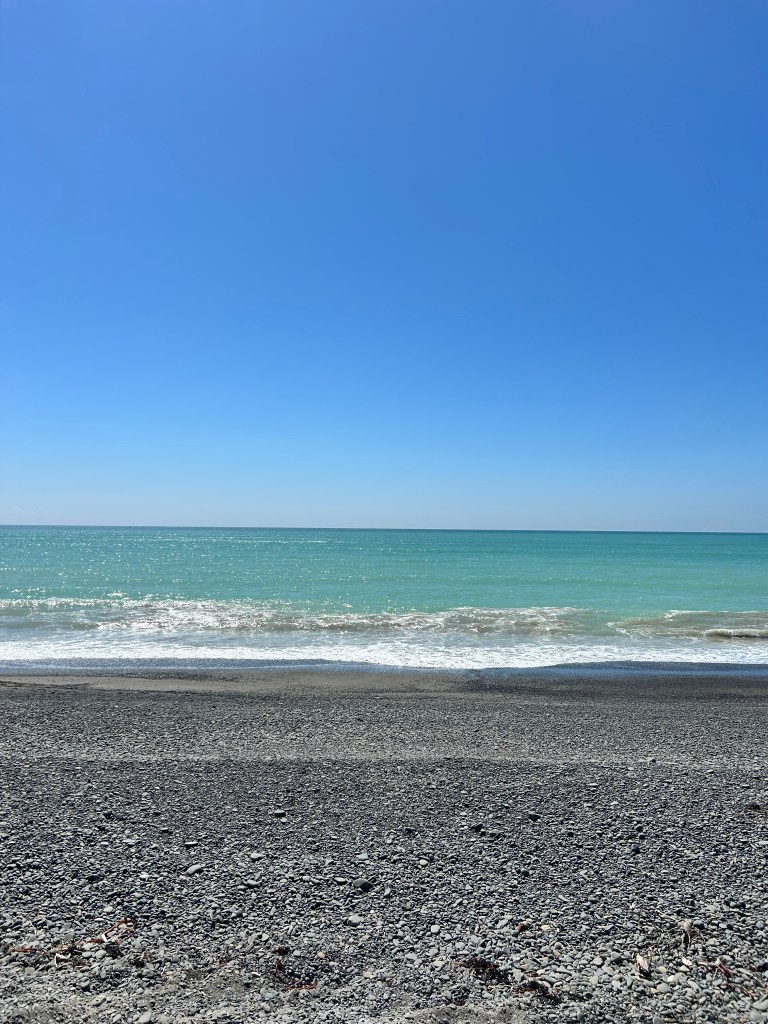
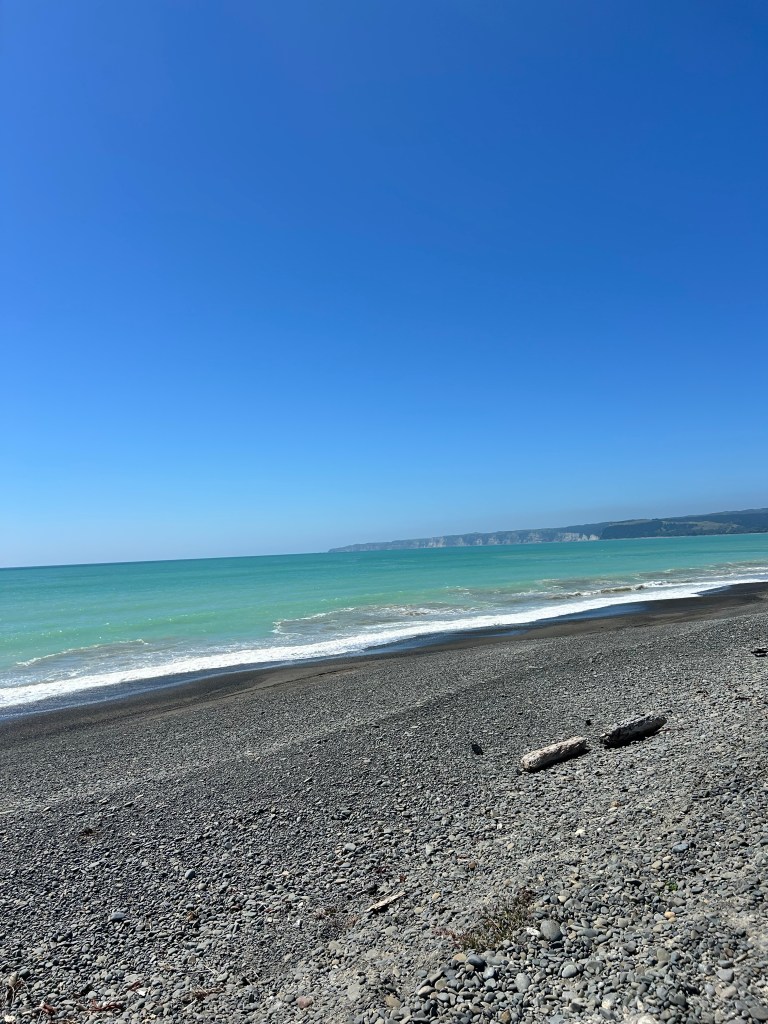
The sun had not yet risen. The sea was indistinguishable from the sky, except that the sea was slightly creased as if a cloth had wrinkles in it.
Gradually as the sky whitened a dark line lay on the horizon dividing the sea from the sky and the grey cloth became barred with thick strokes moving, one after another, beneath the surface, following each other, pursuing each other, perpetually.
― Virginia Woolf, The Waves
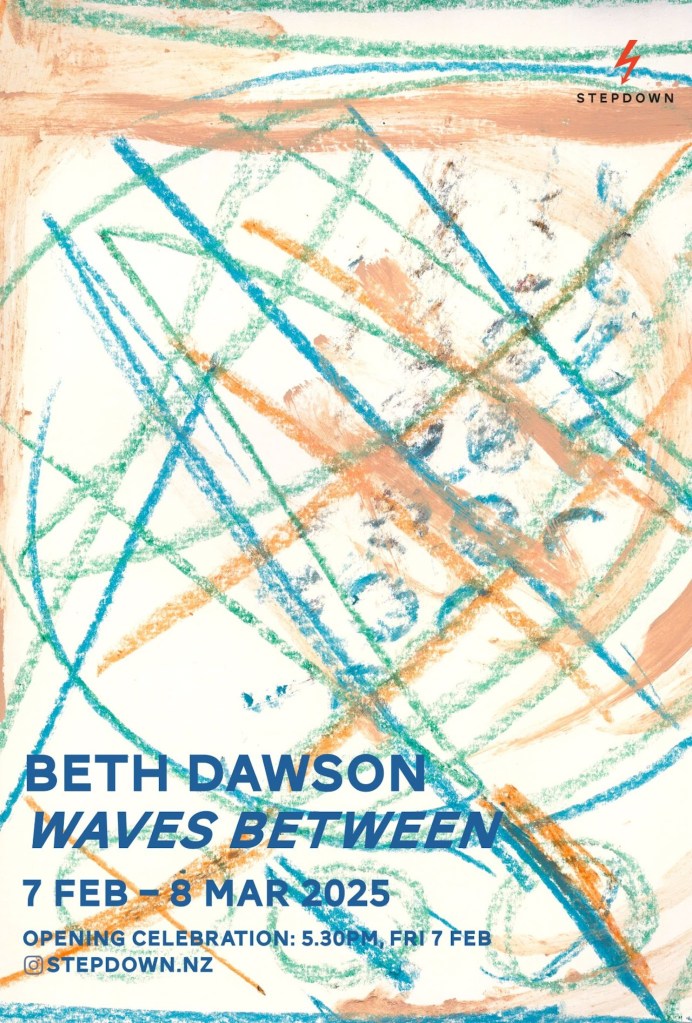
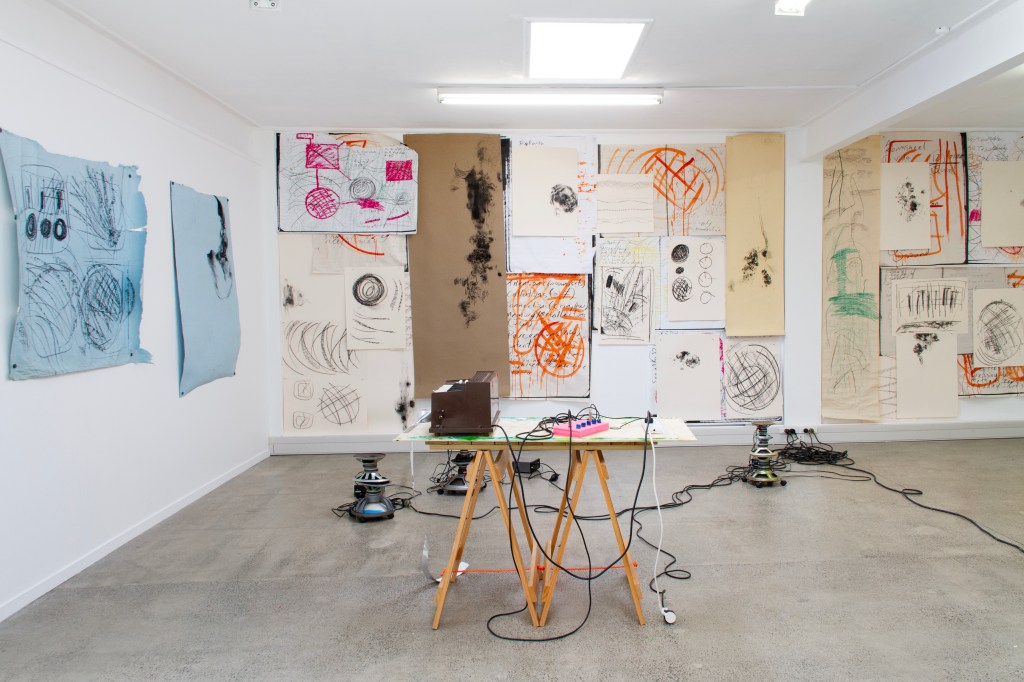
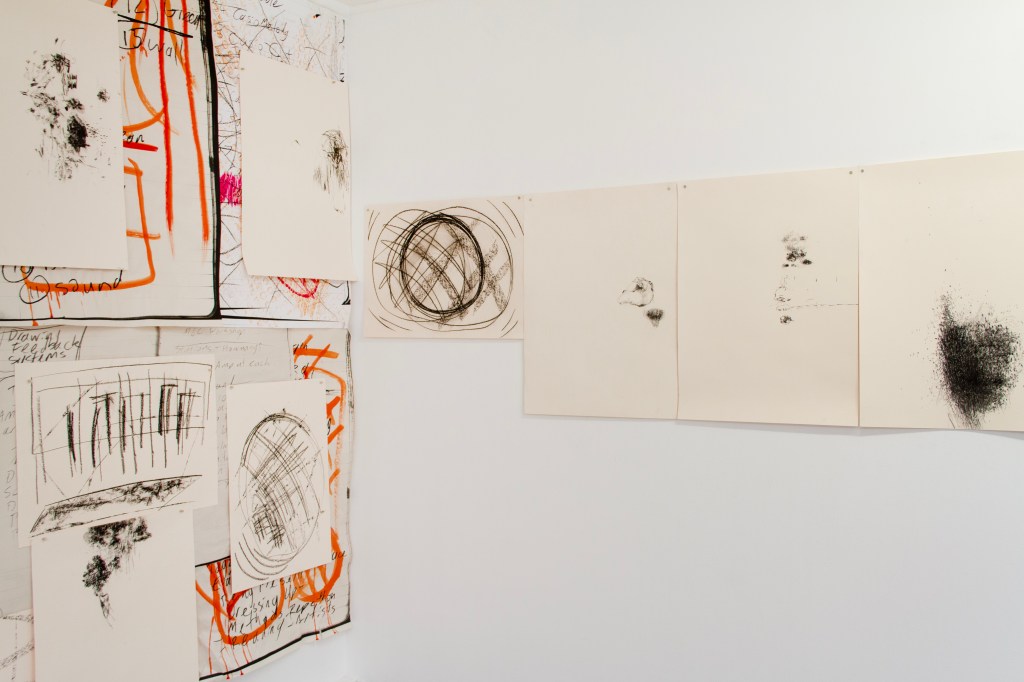
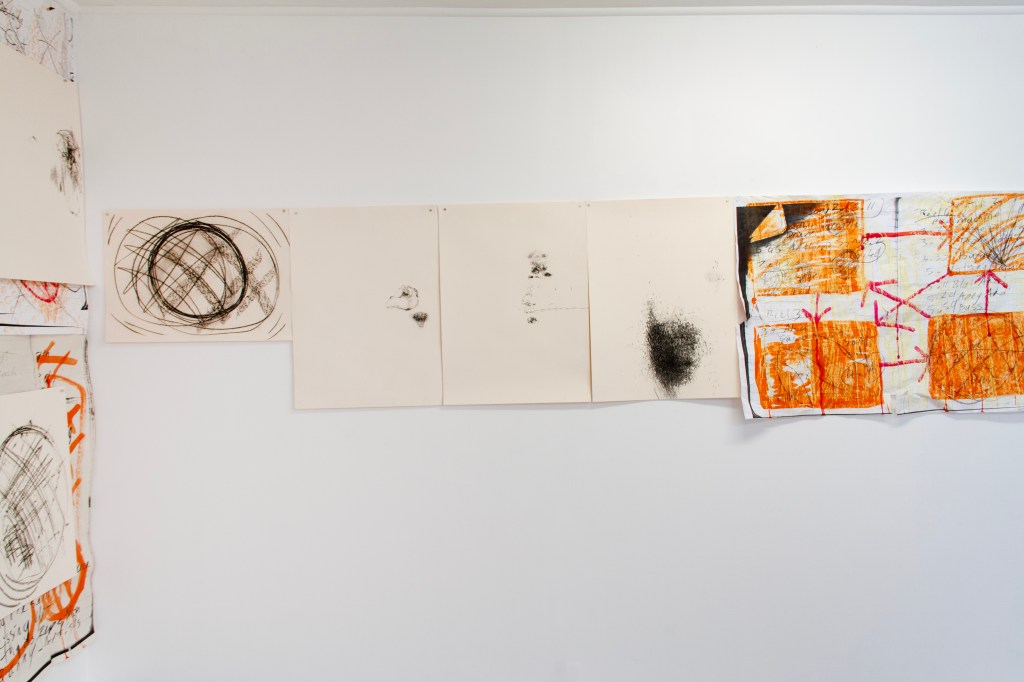
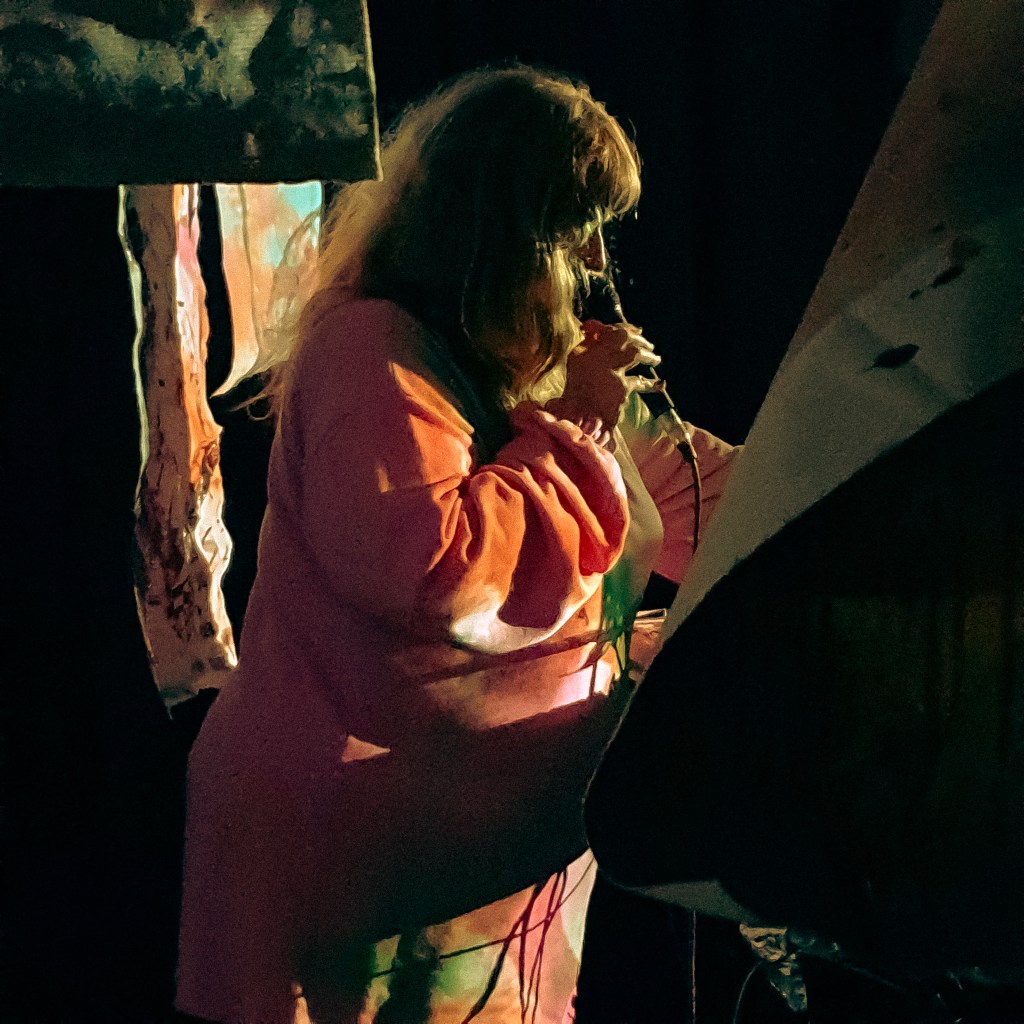
Stepdown is delighted to present Waves Between, an exhibition by Tāmaki Makaurau-based artist Beth Dawson, also known as Ducklingmonster. In this exhibition, Beth generates an audio-visual celebration of continuous interconnectedness through drawings, performance, collaboration, and recording.
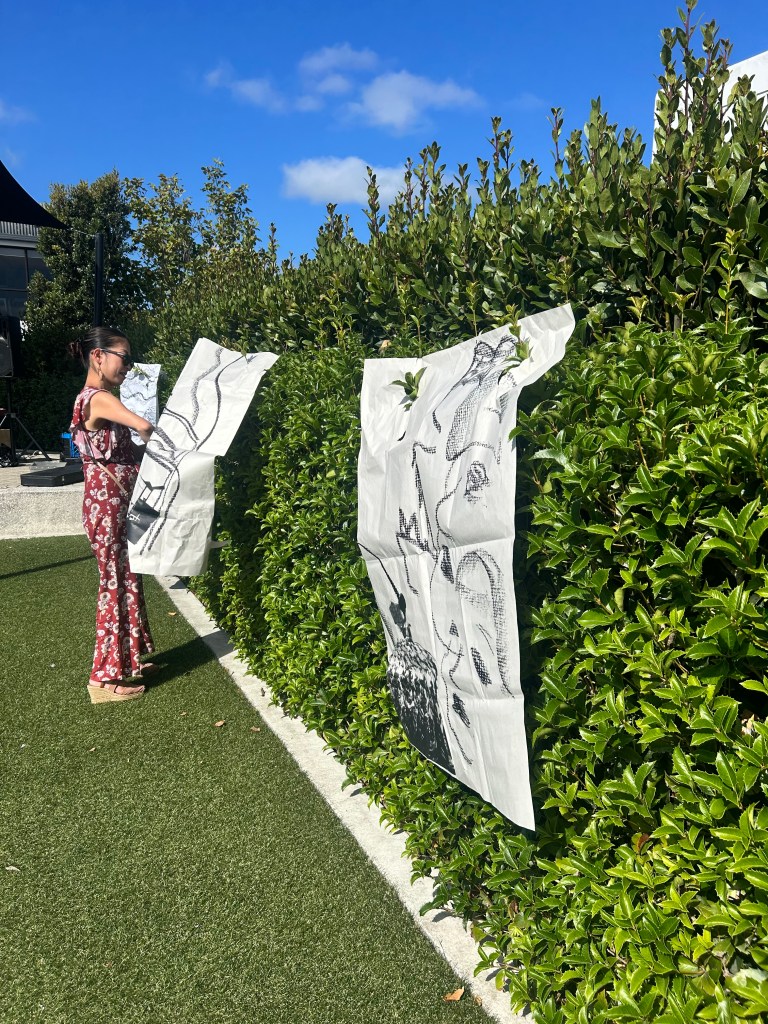
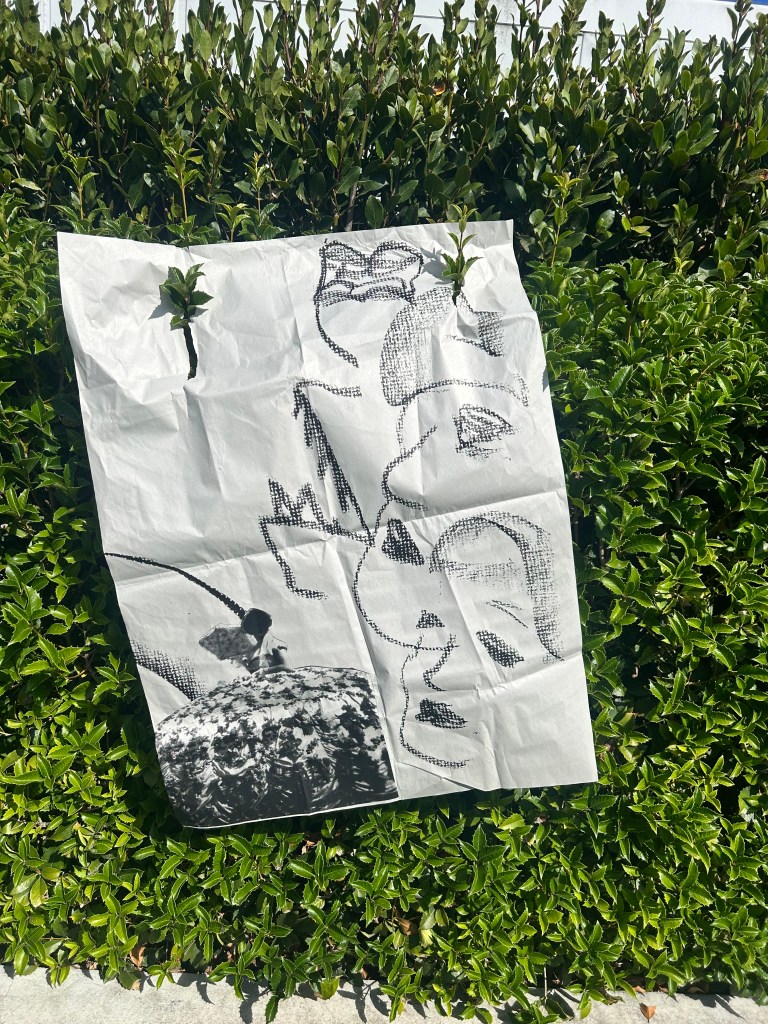
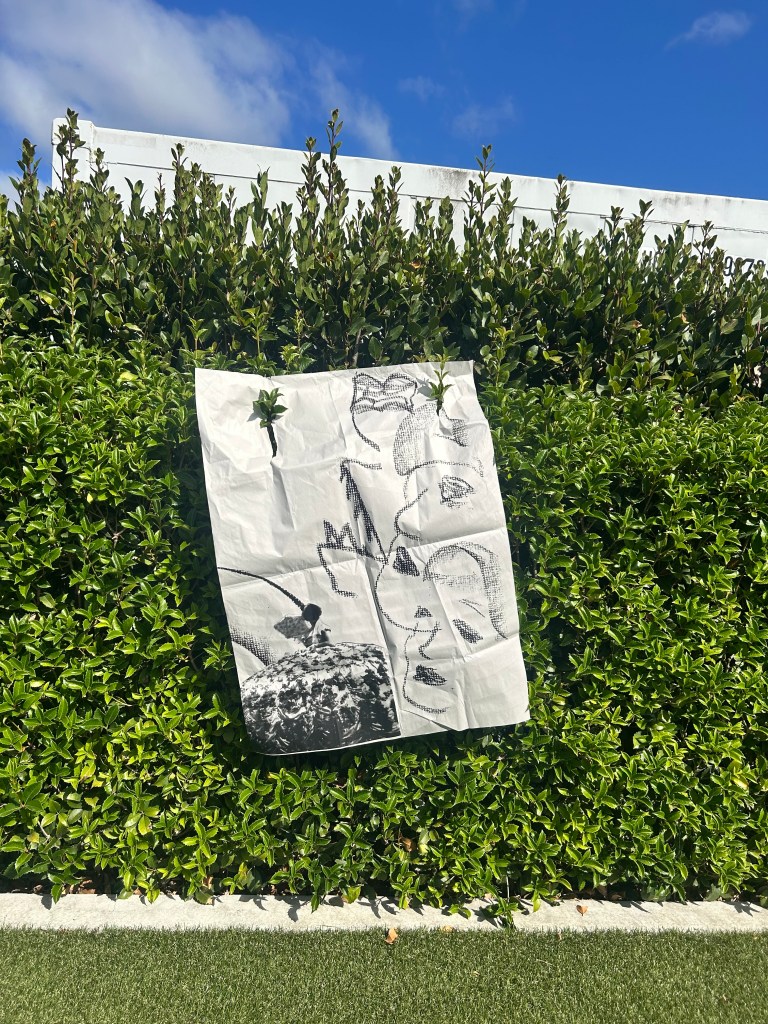
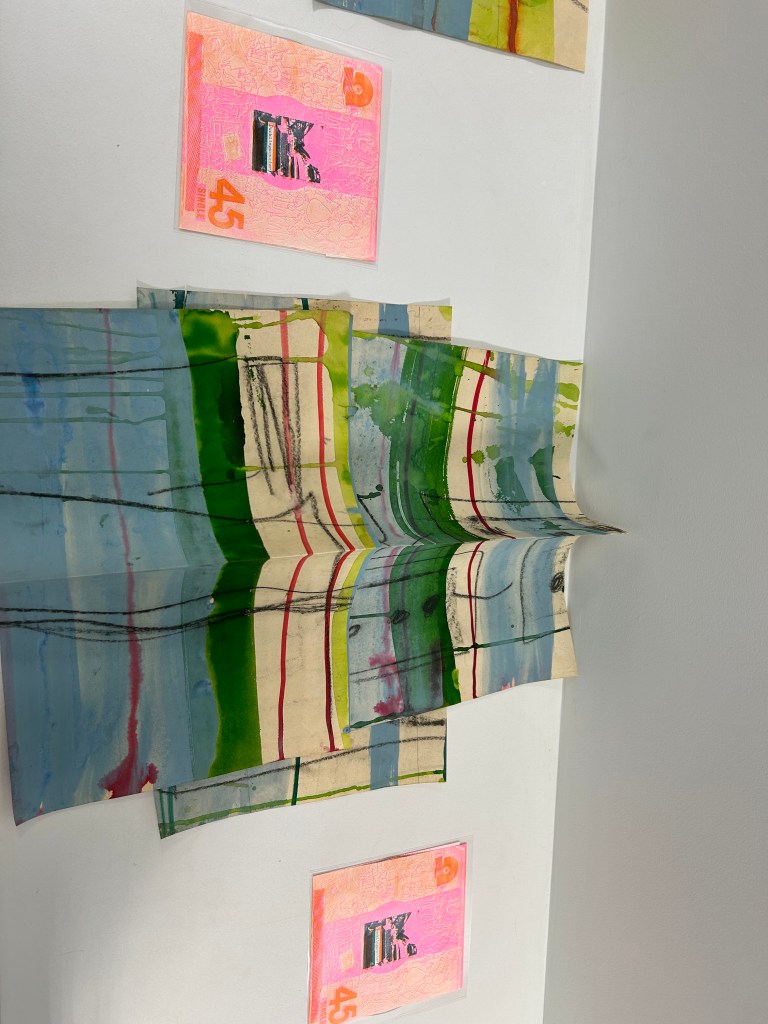
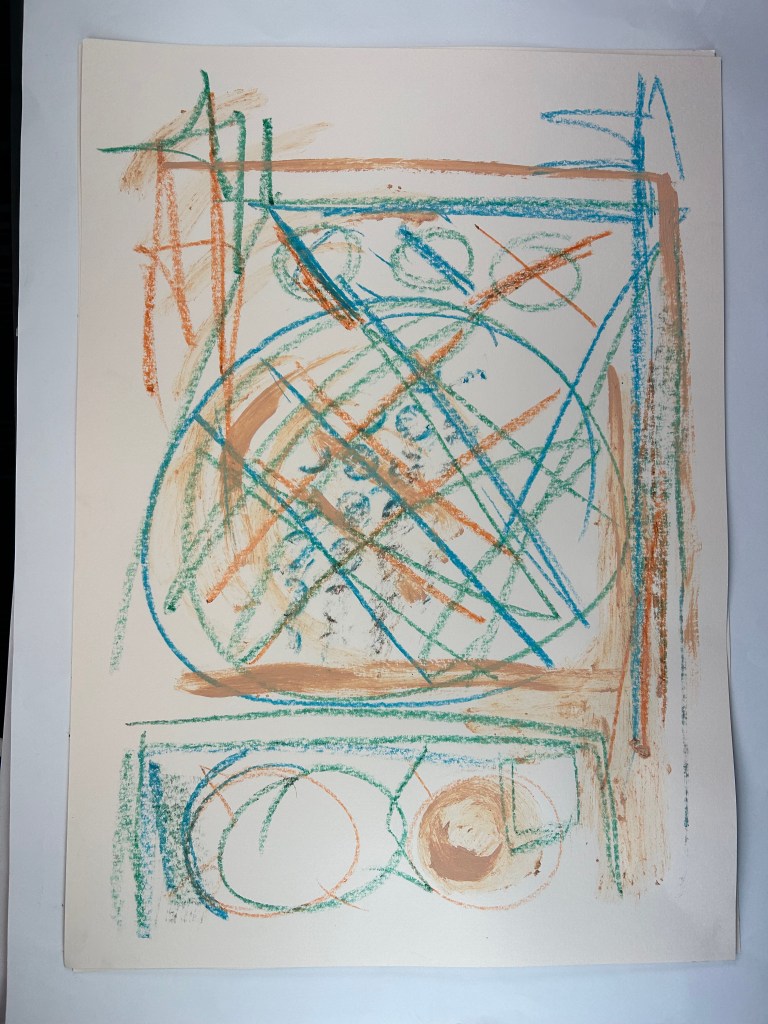
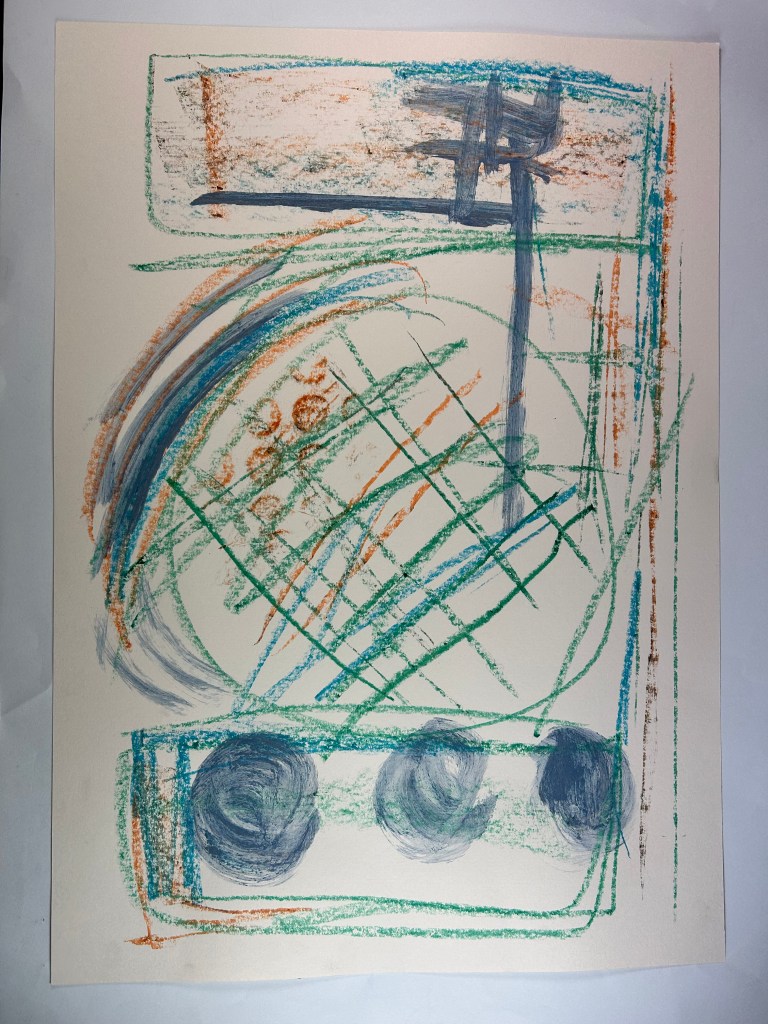
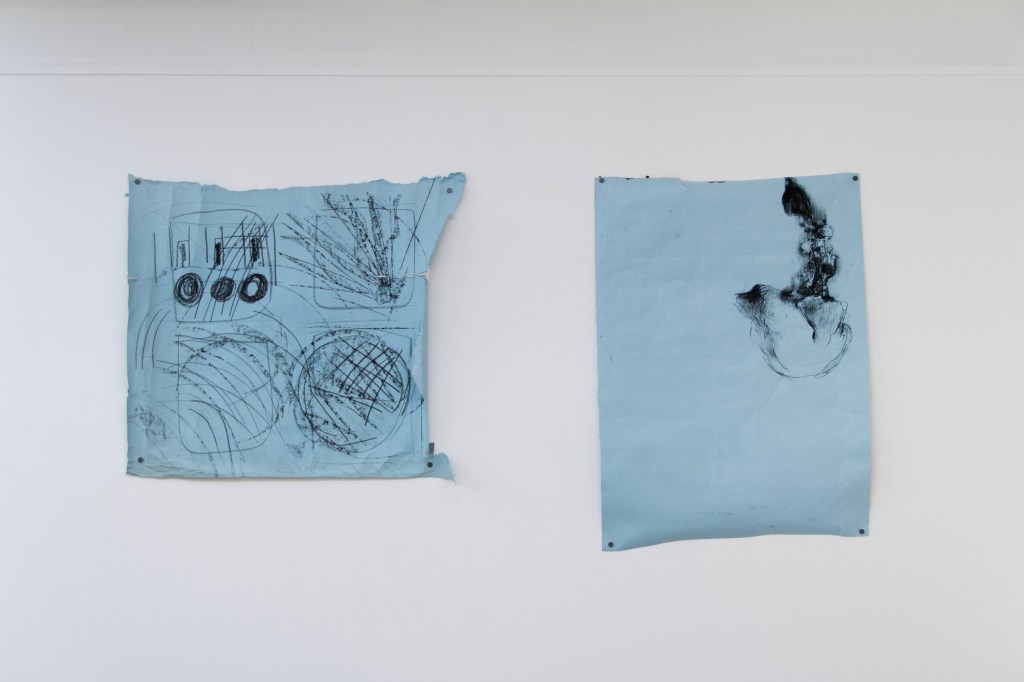
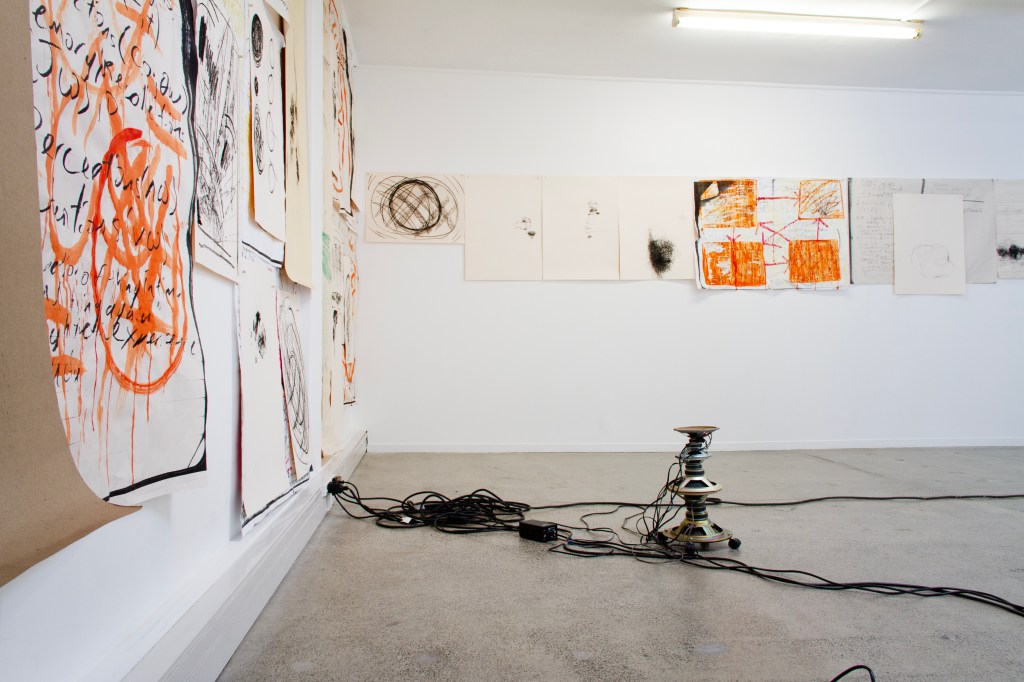
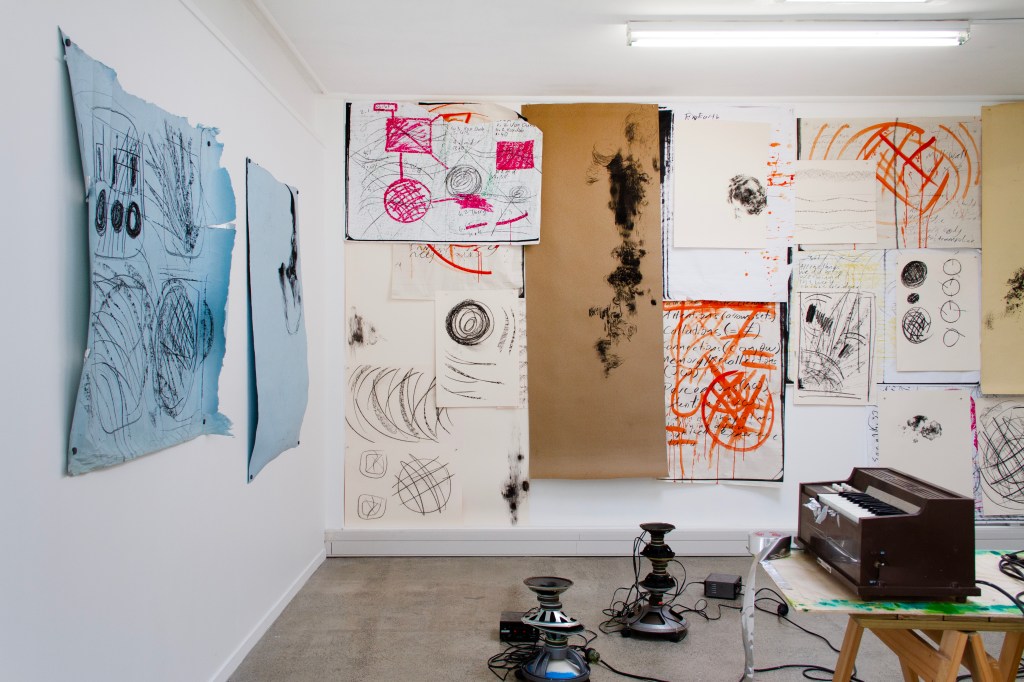
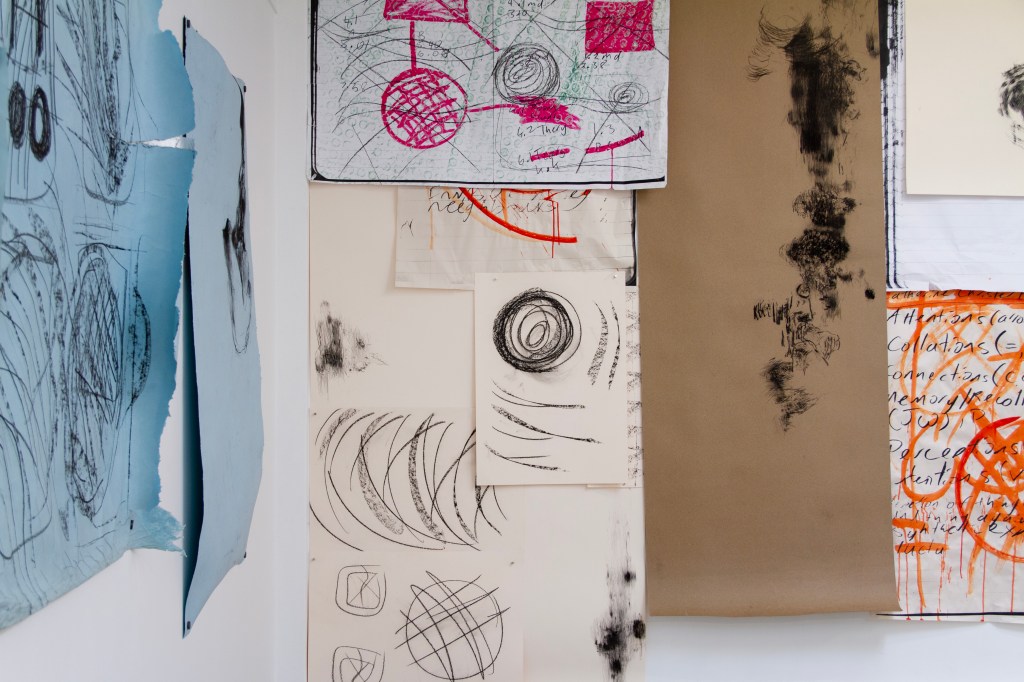
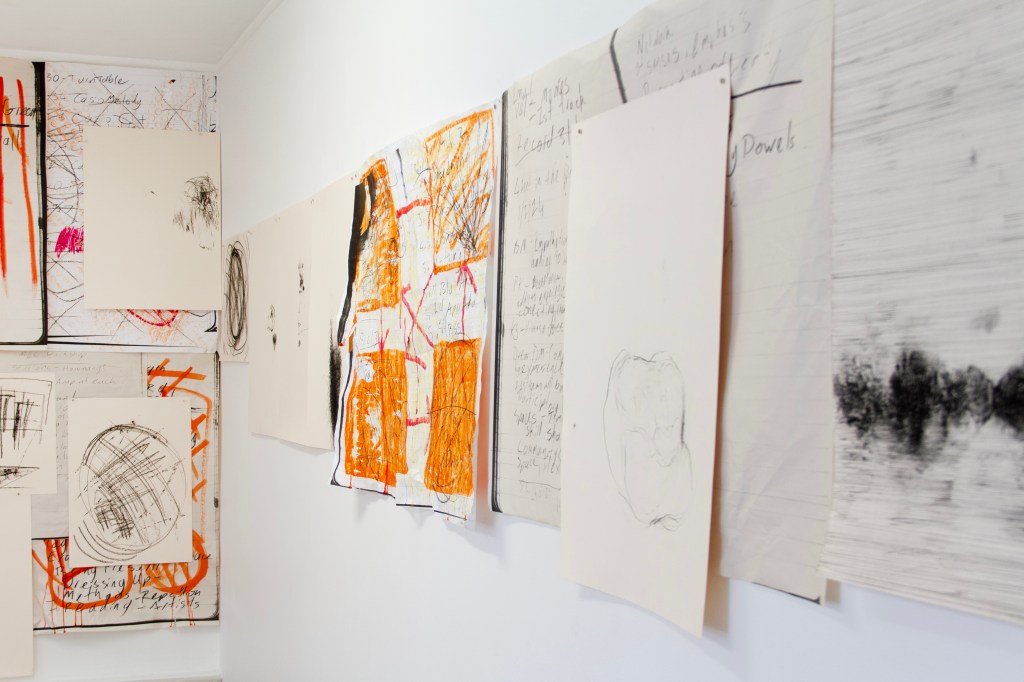
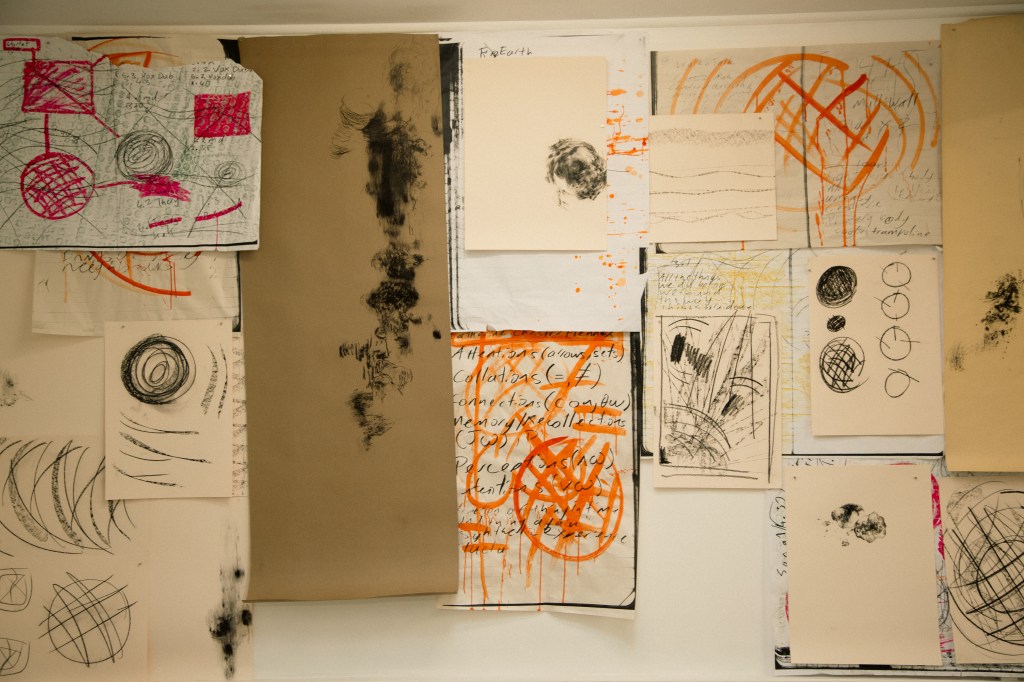
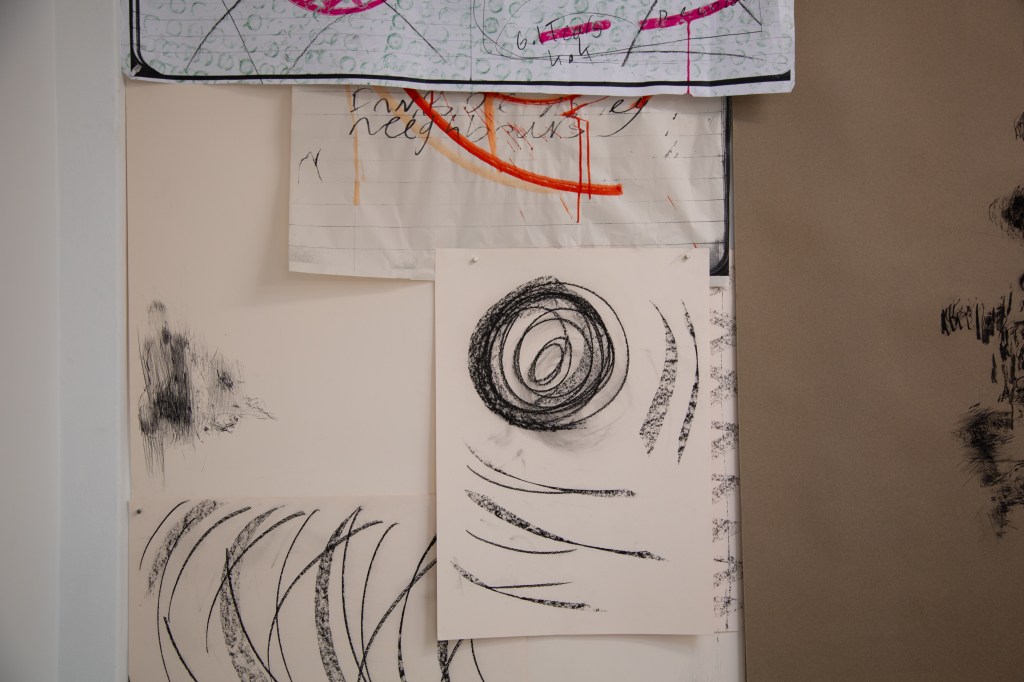
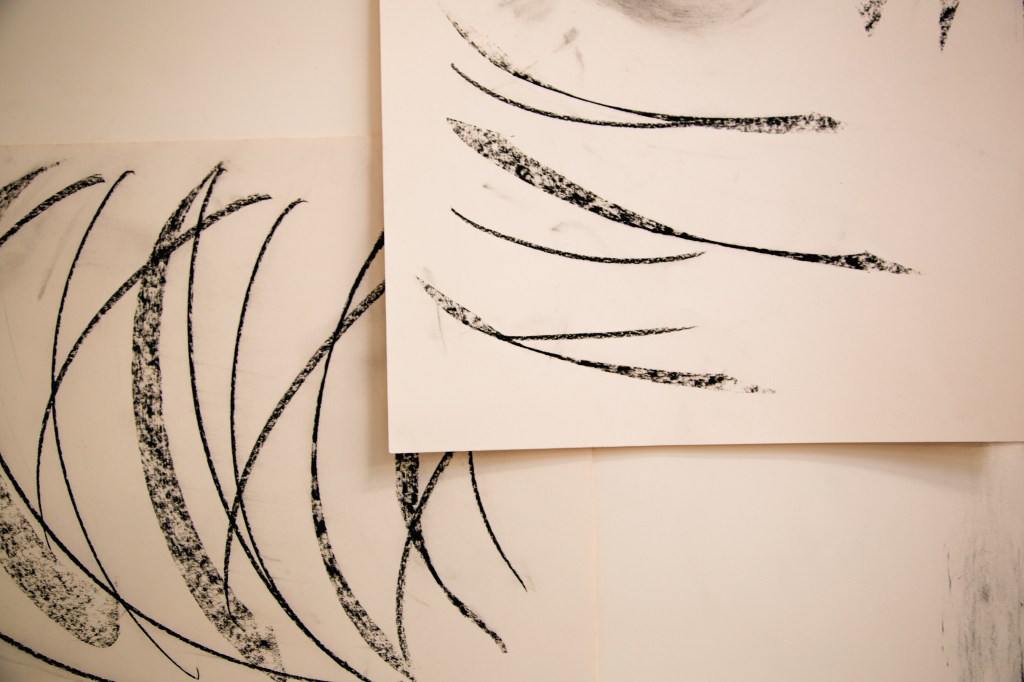
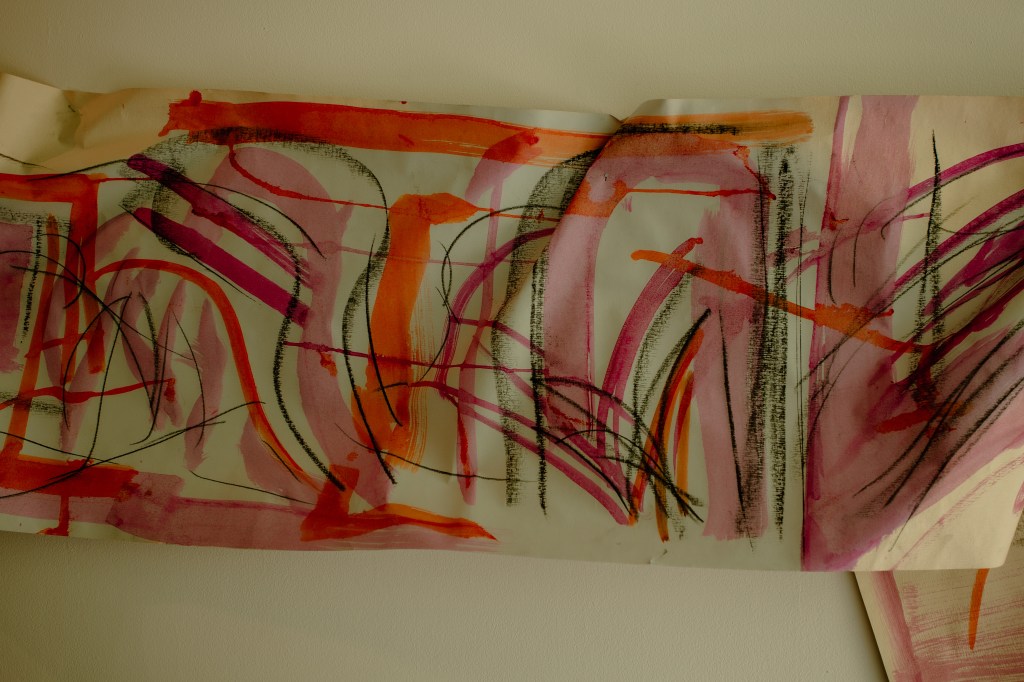
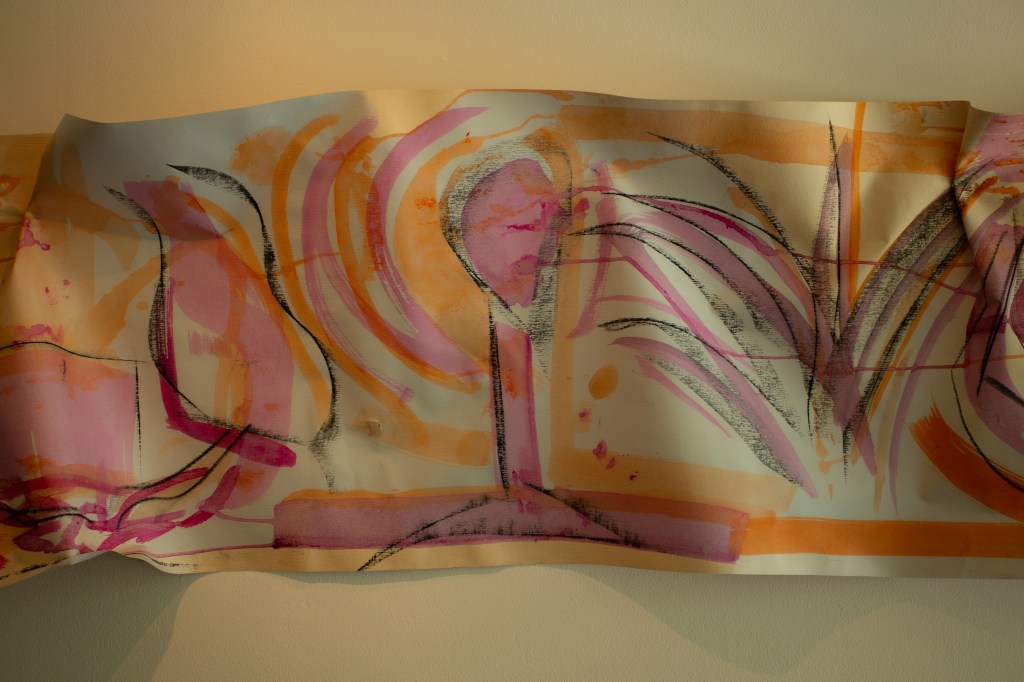
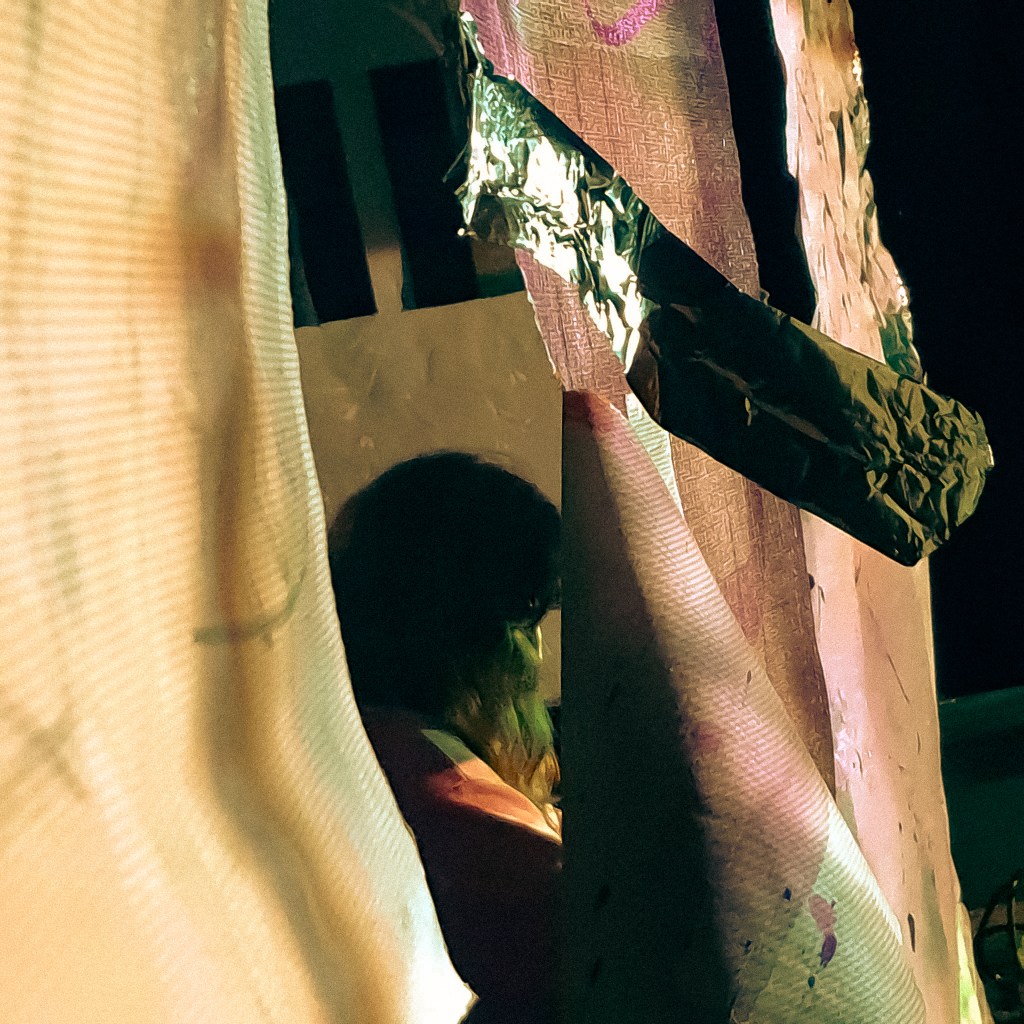
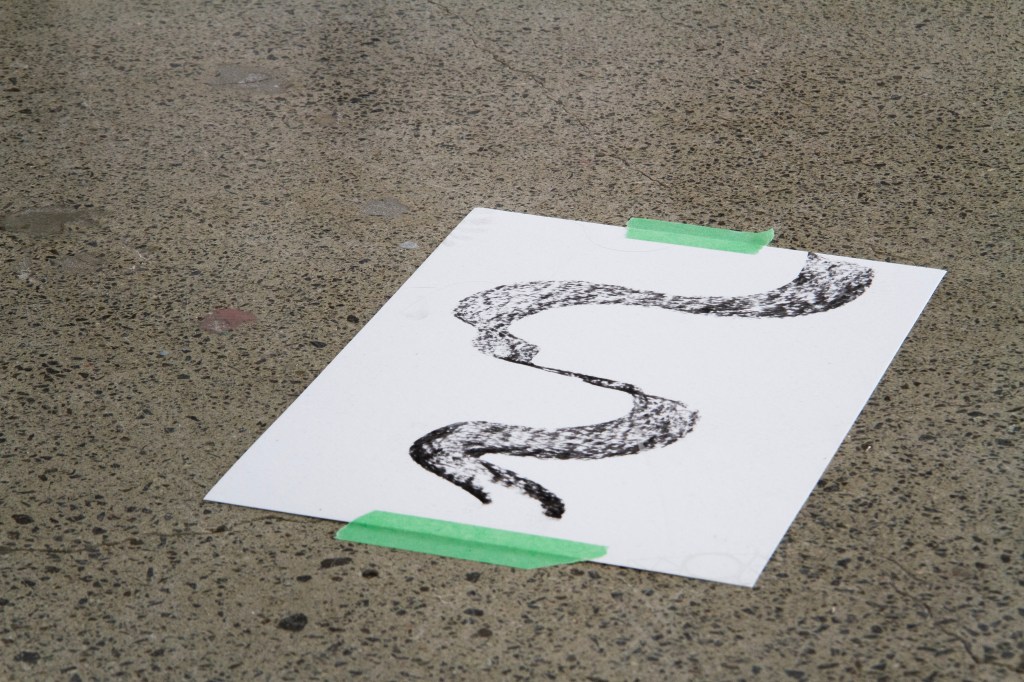
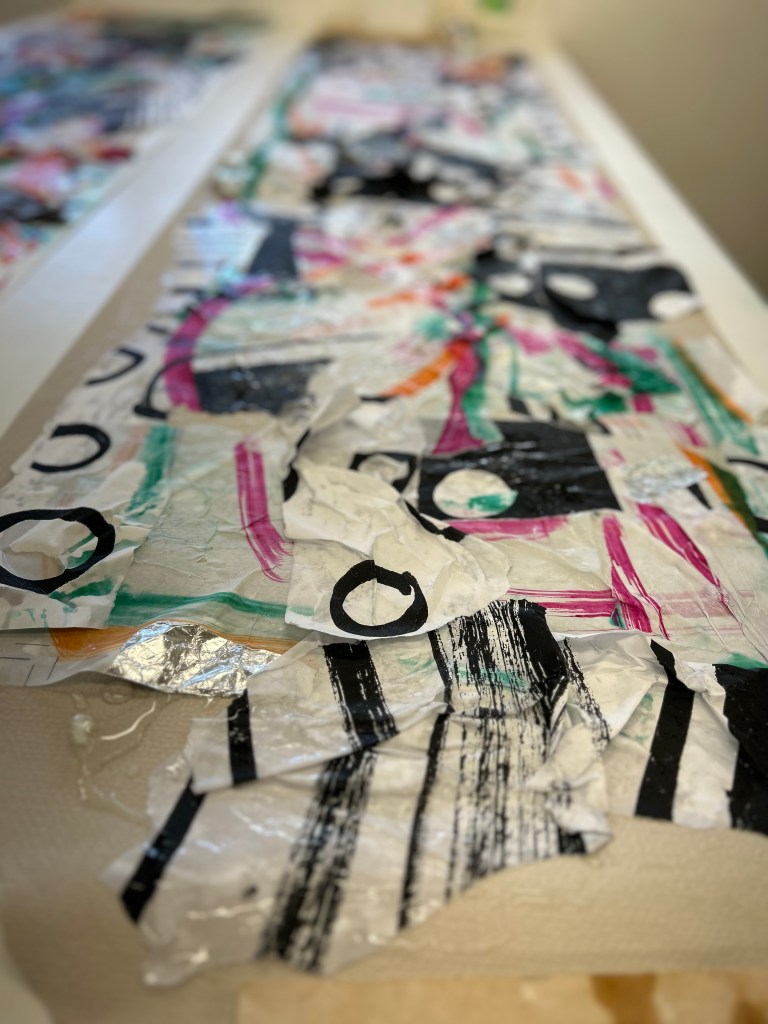
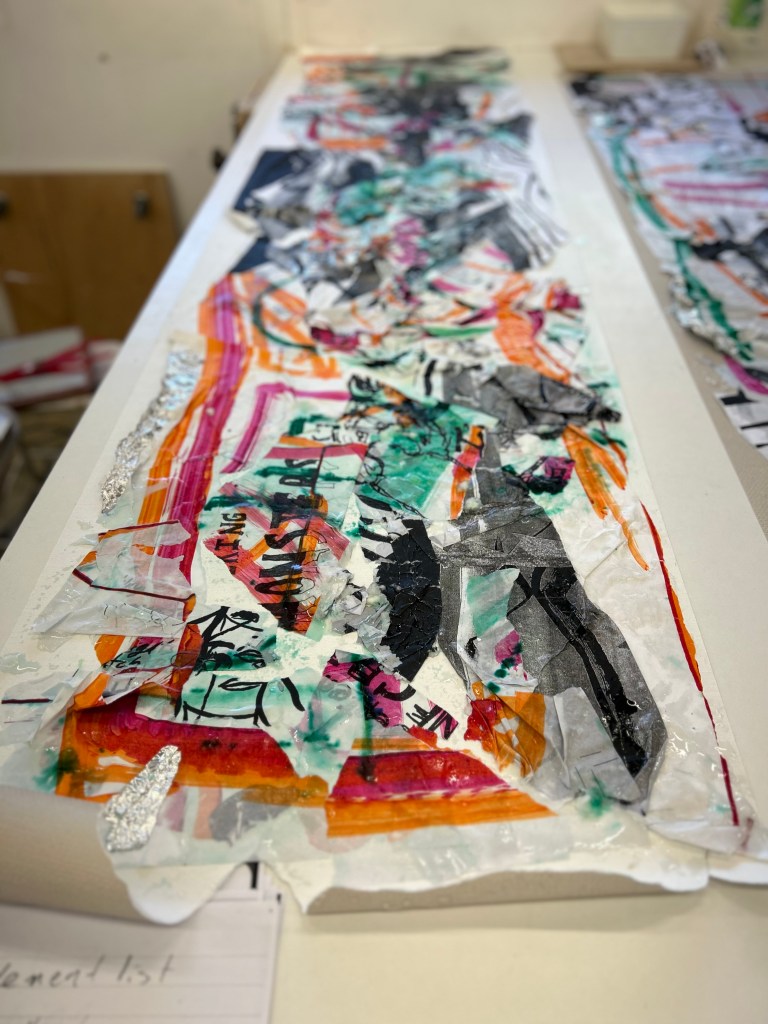
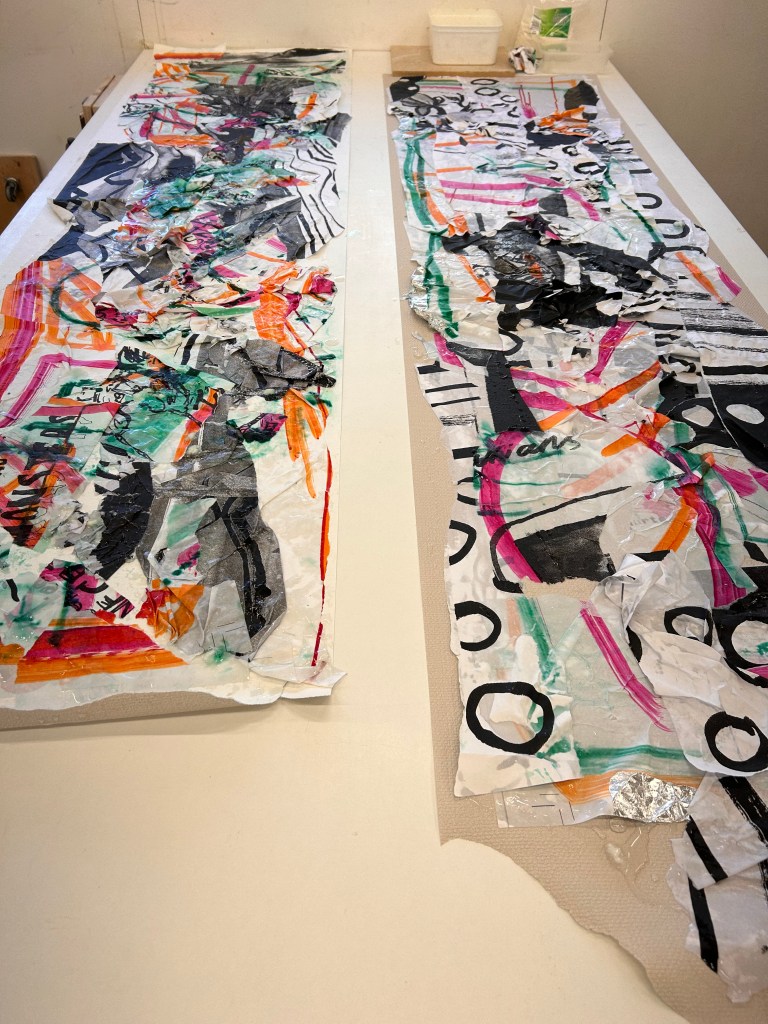
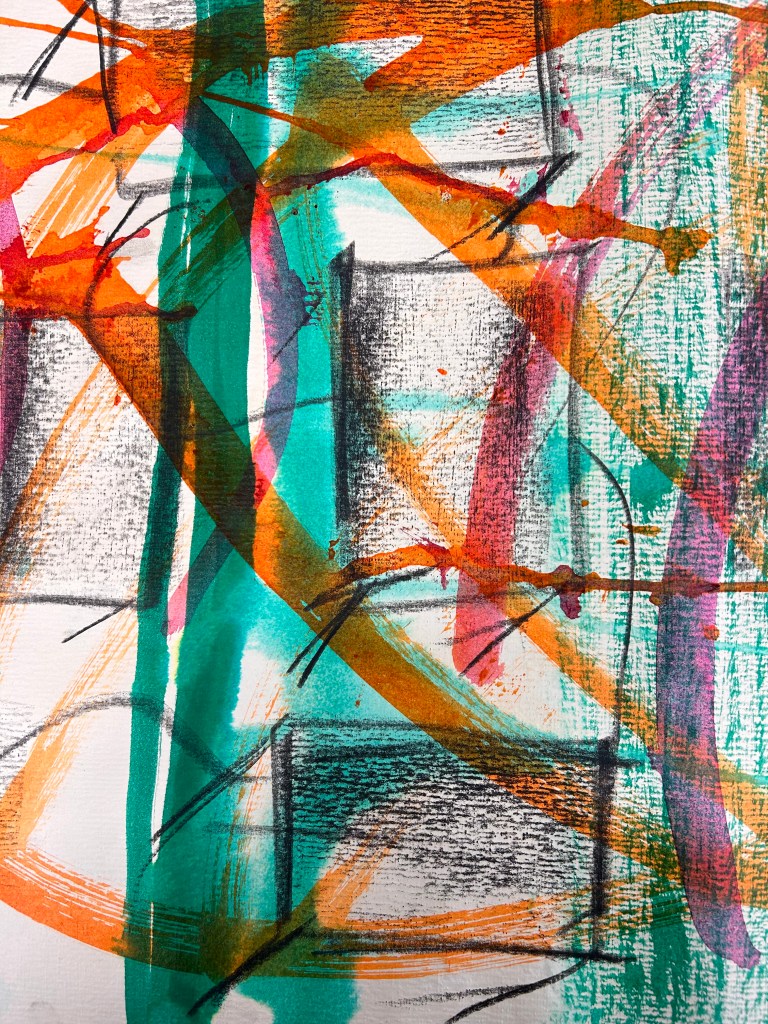
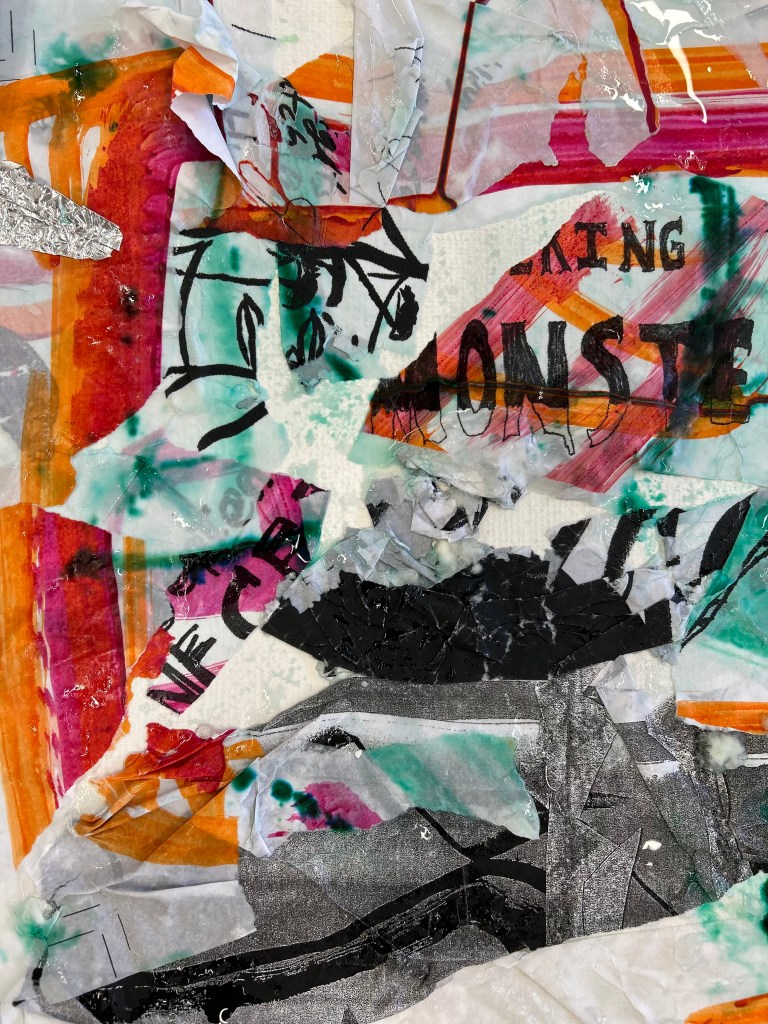
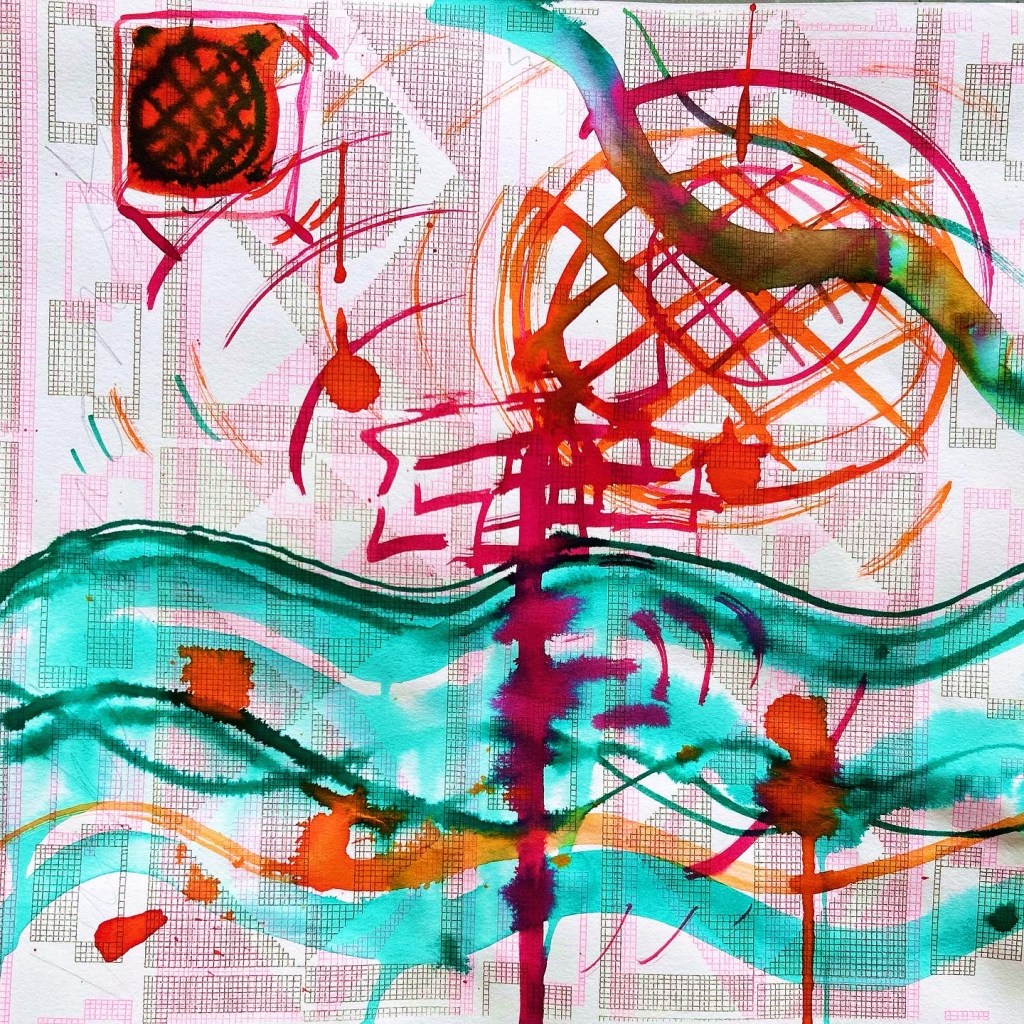
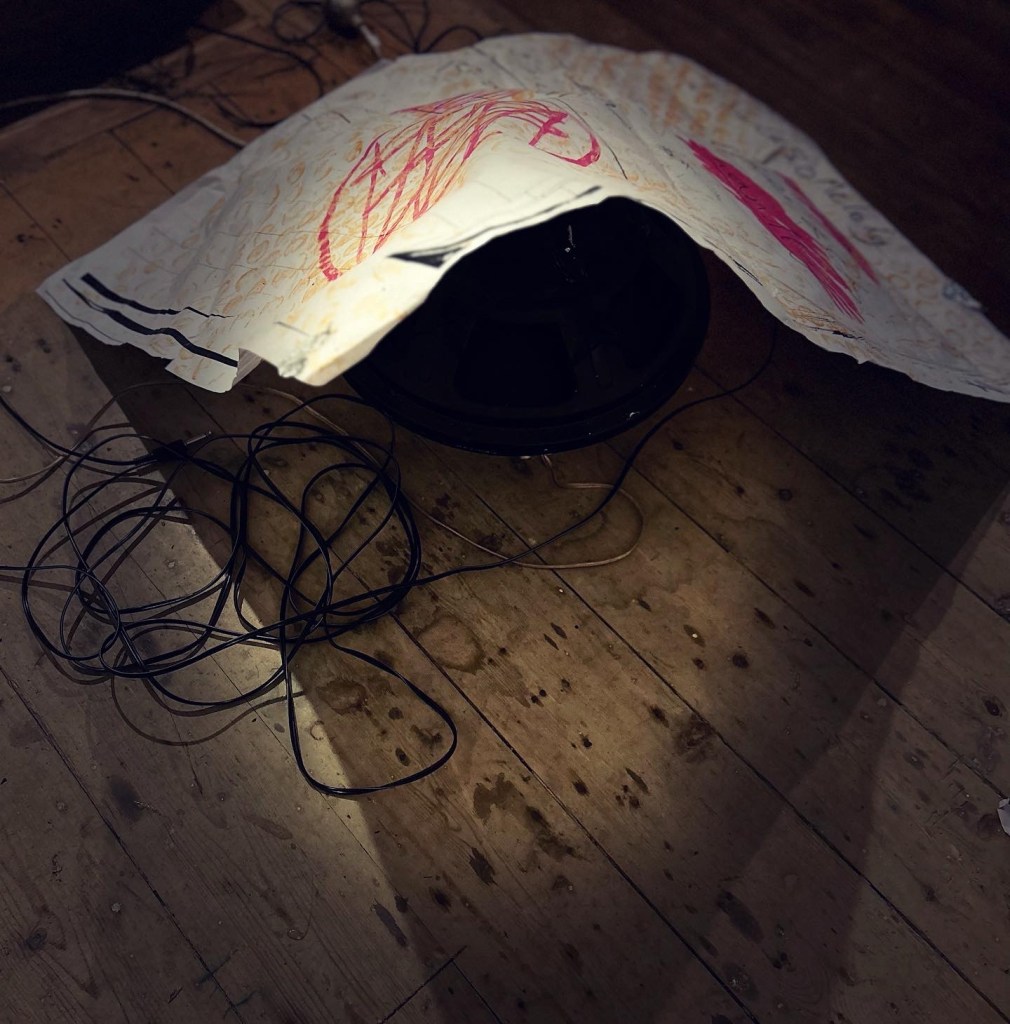
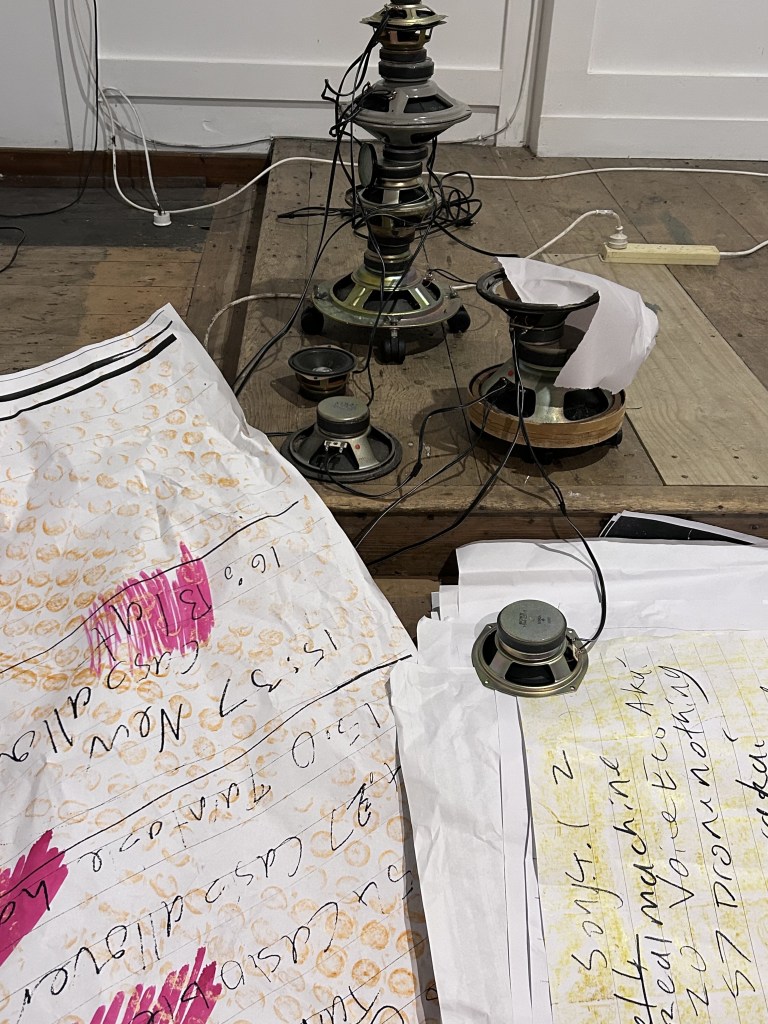
With radical attentiveness carried in listening and drawing, encounters reverberate across the artist’s noise-table. Quick gestures worked in tinted cellulose glue, beeswax crayon, and saturated ink express a relationship to the lively moments of voice and distortion in Ducklingmonster’s improvised sound performances. The material layers of Waves Between invite contemplation of the waves between electromagnetic bodies and fields in the permeable membrane of Stepdown.
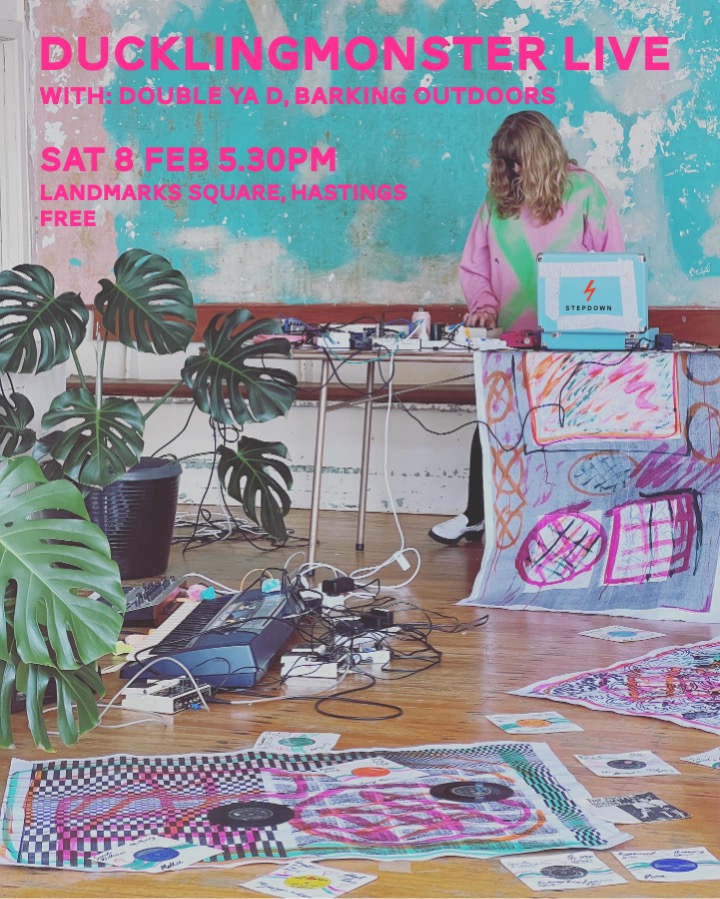
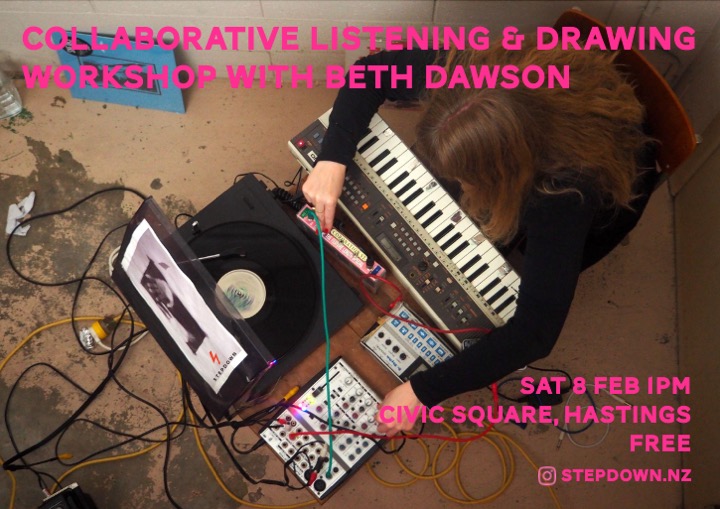
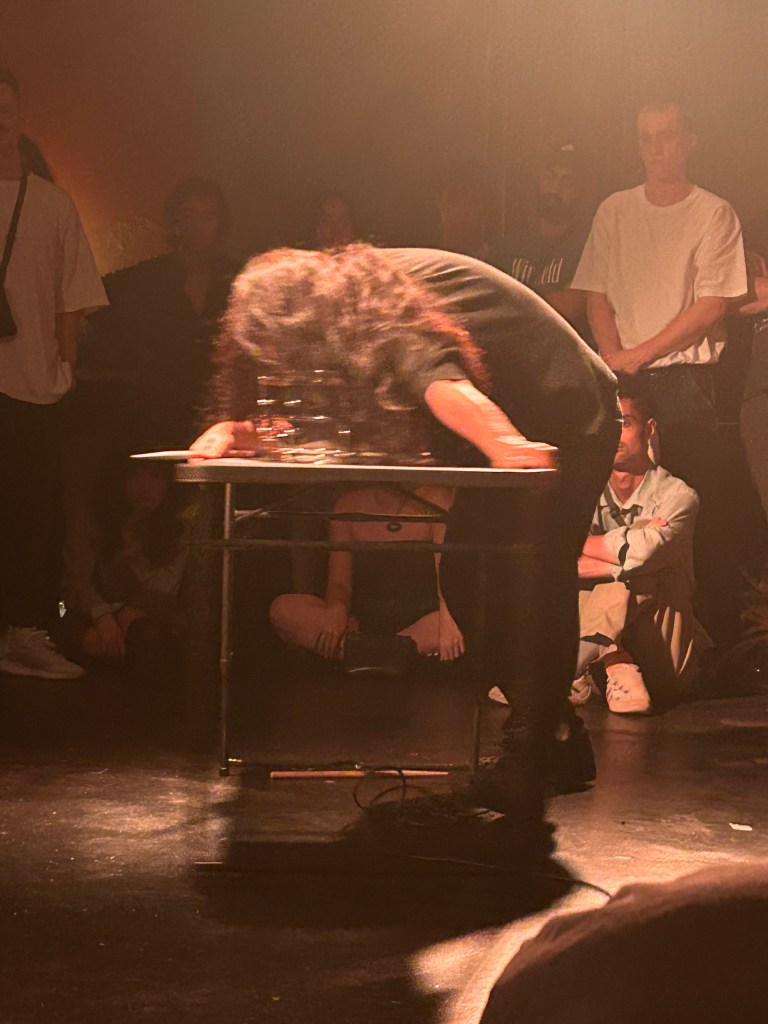
Waves Between will include an opening celebration, a Ducklingmonster live performance, and a collaborative listening and drawing workshop.
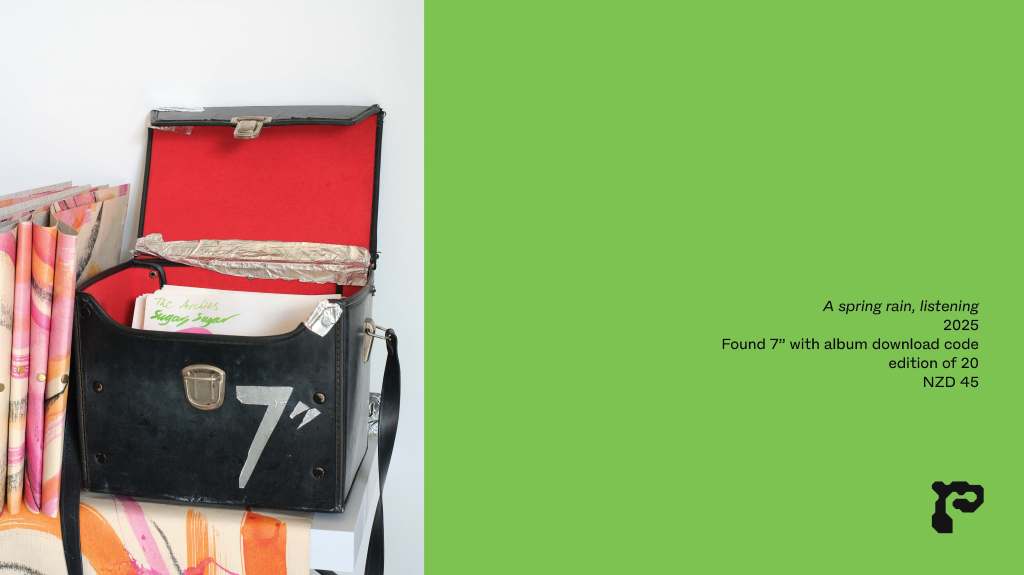
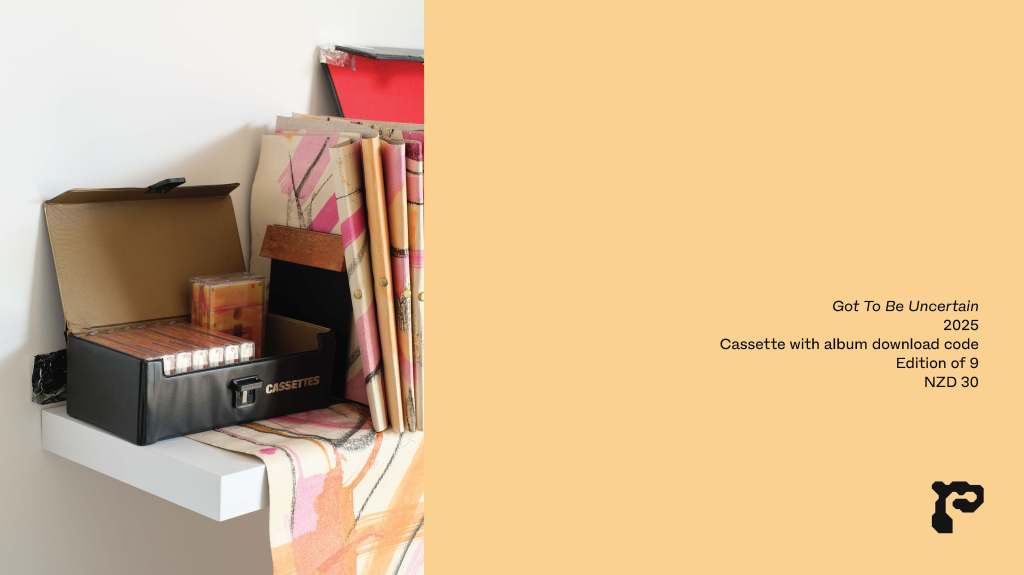
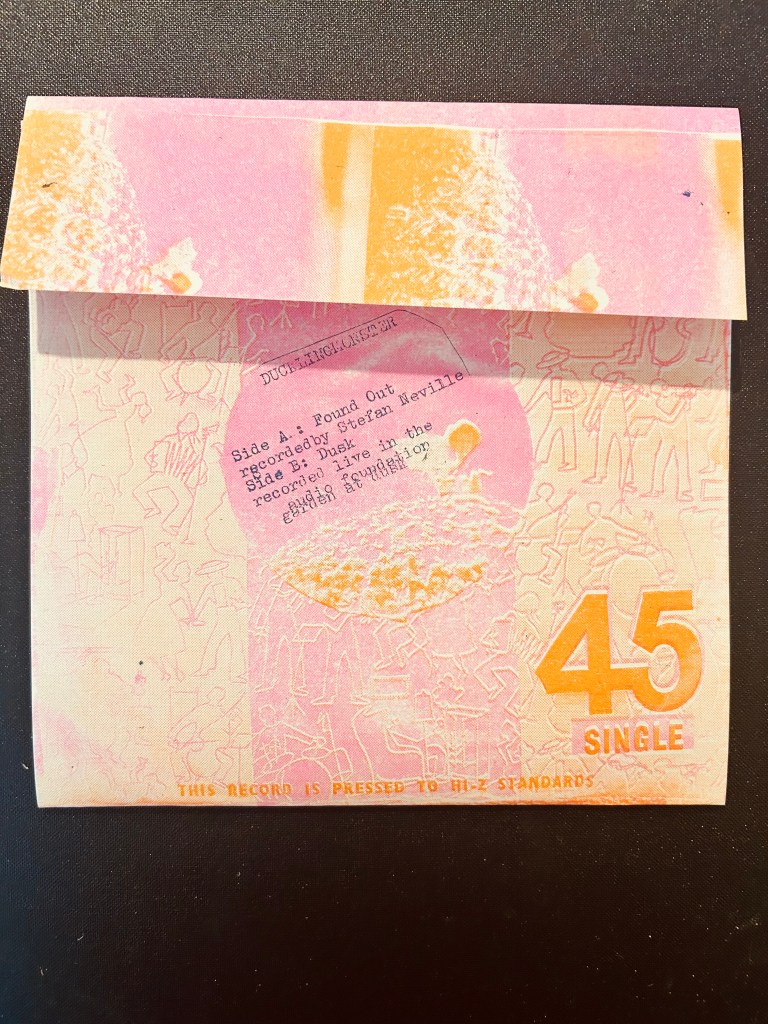
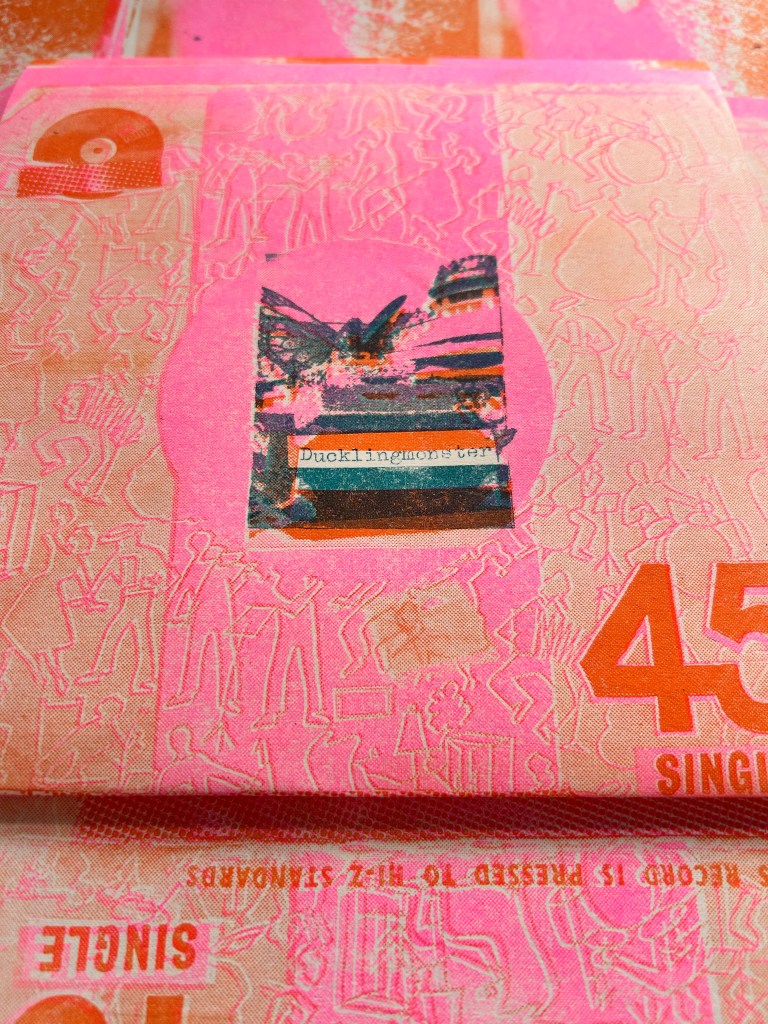
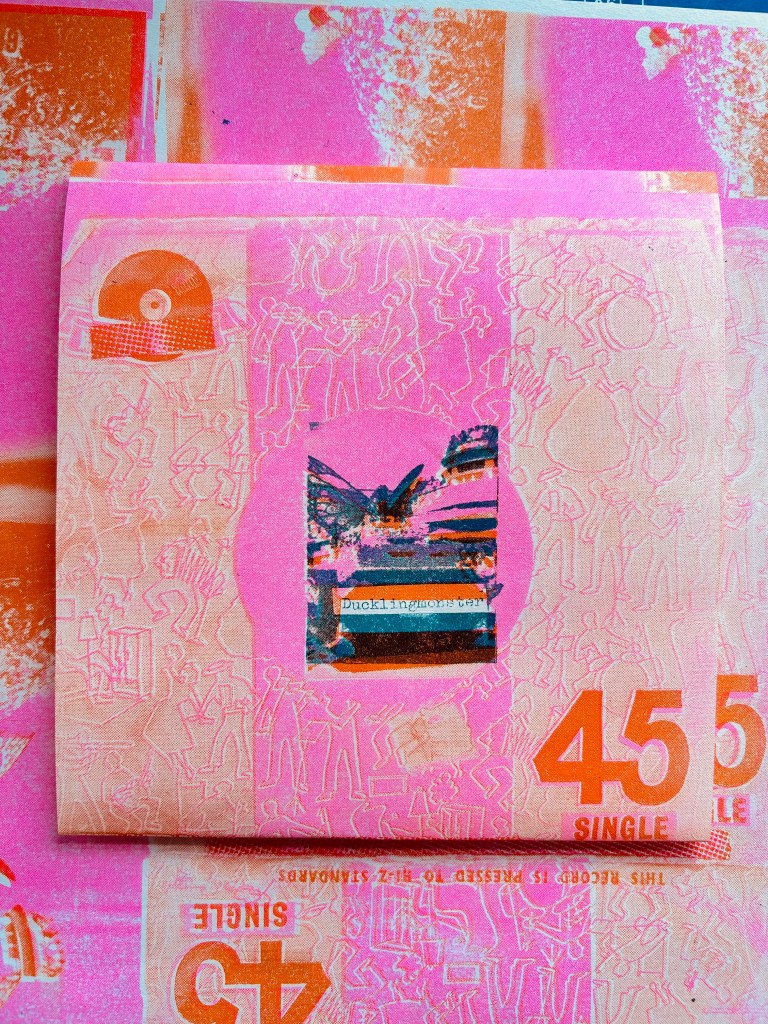
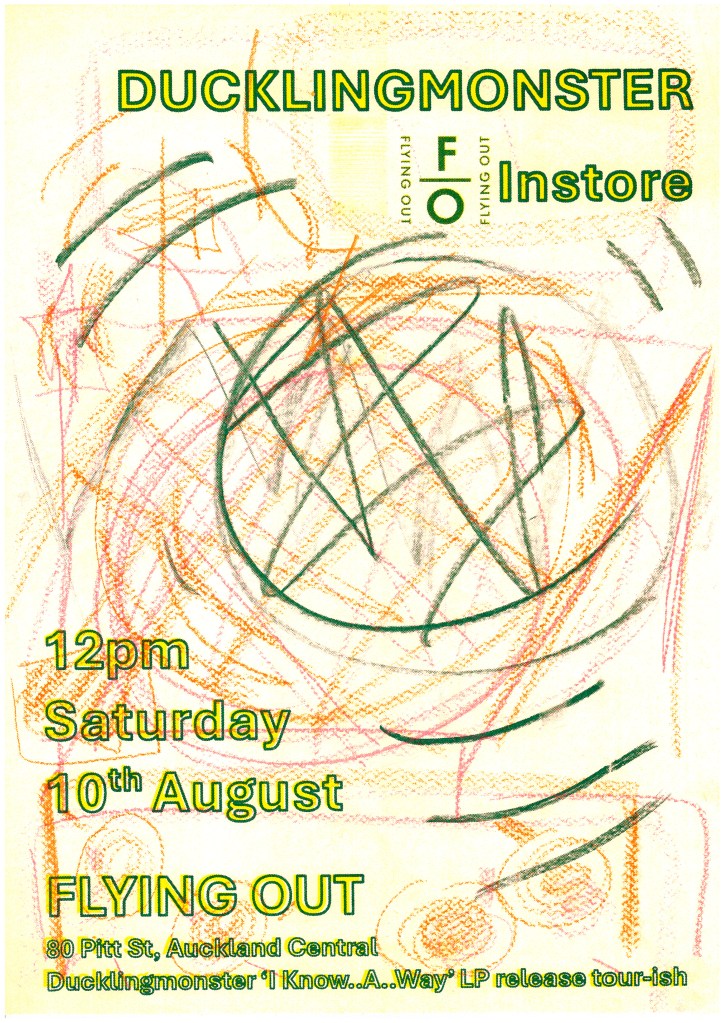
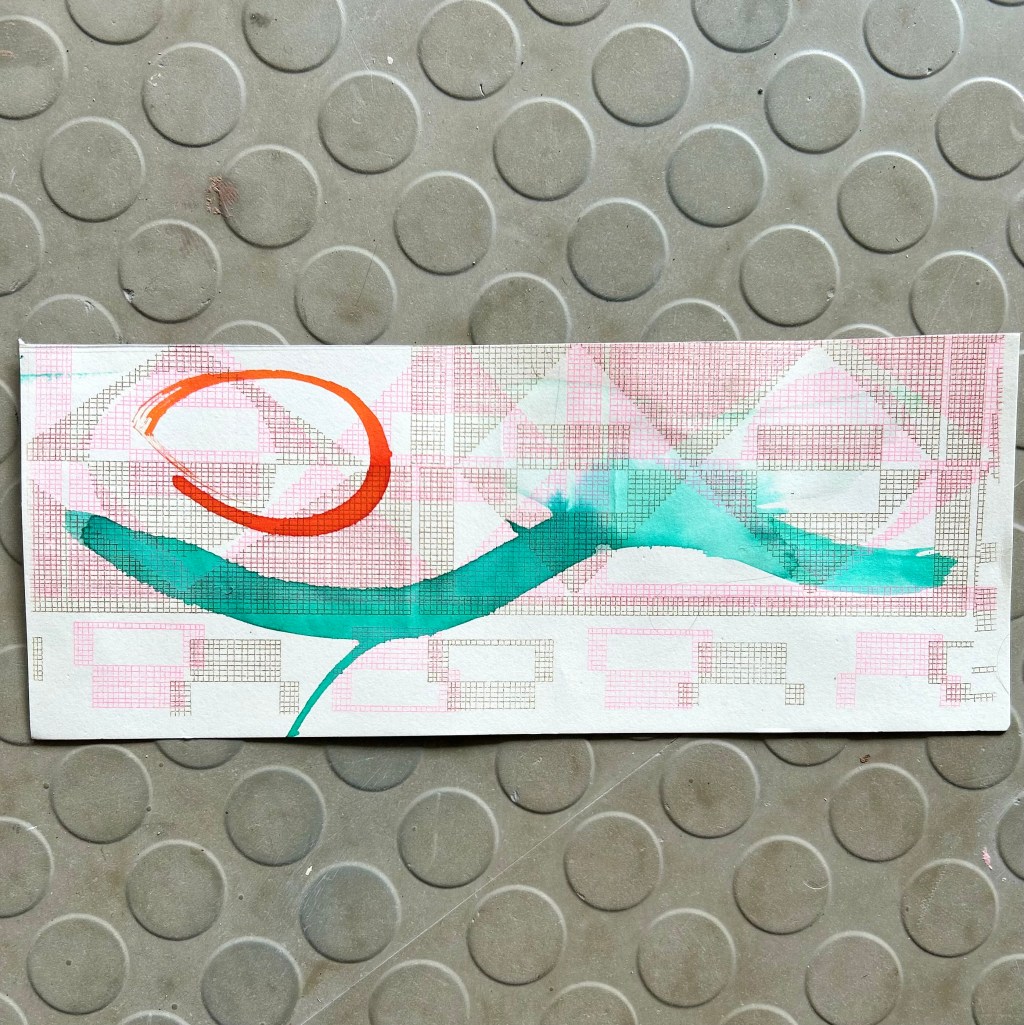
A limited edition 7″ lathe with unique risograph covers by Ducklingmonster will be released on the occasion of this exhibition.
Opening Celebration: 5.30pm-, Friday7 February
Collaborative listening and drawing workshop with Beth Dawson Satuday 8 February Time and venue TBD
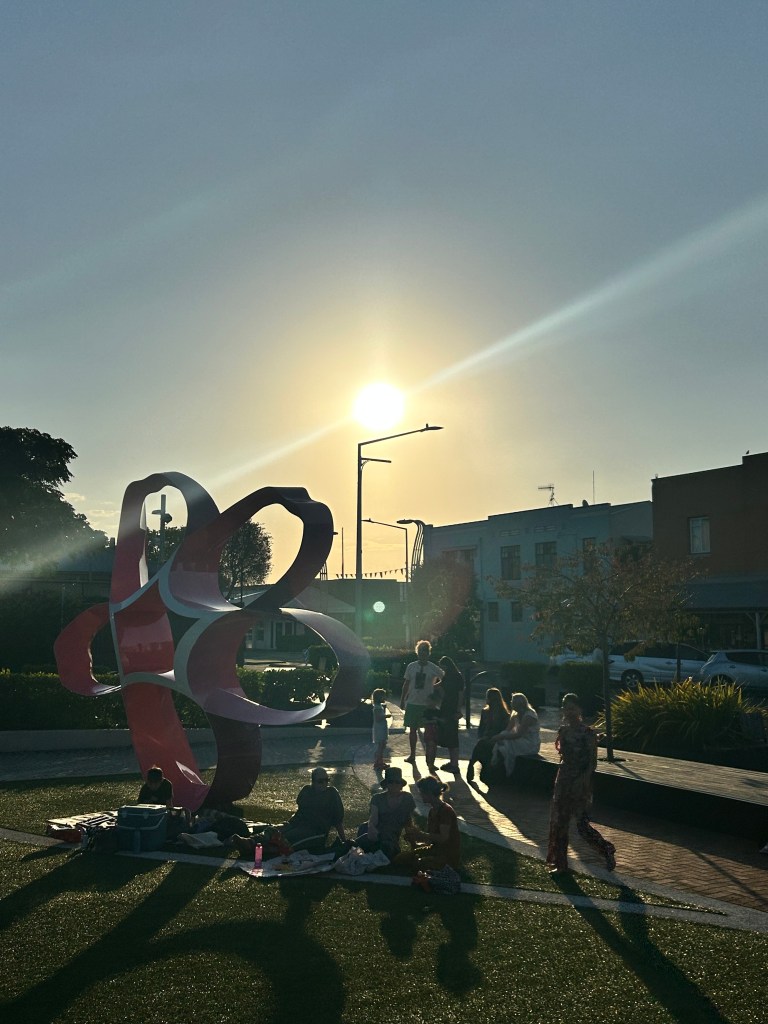
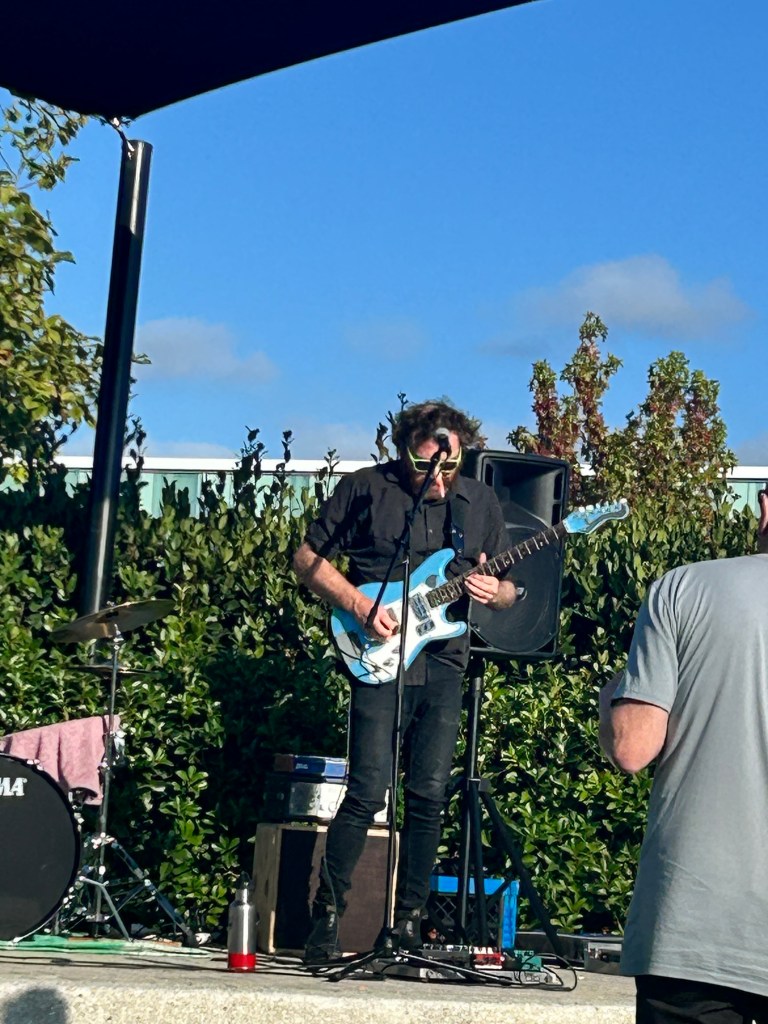
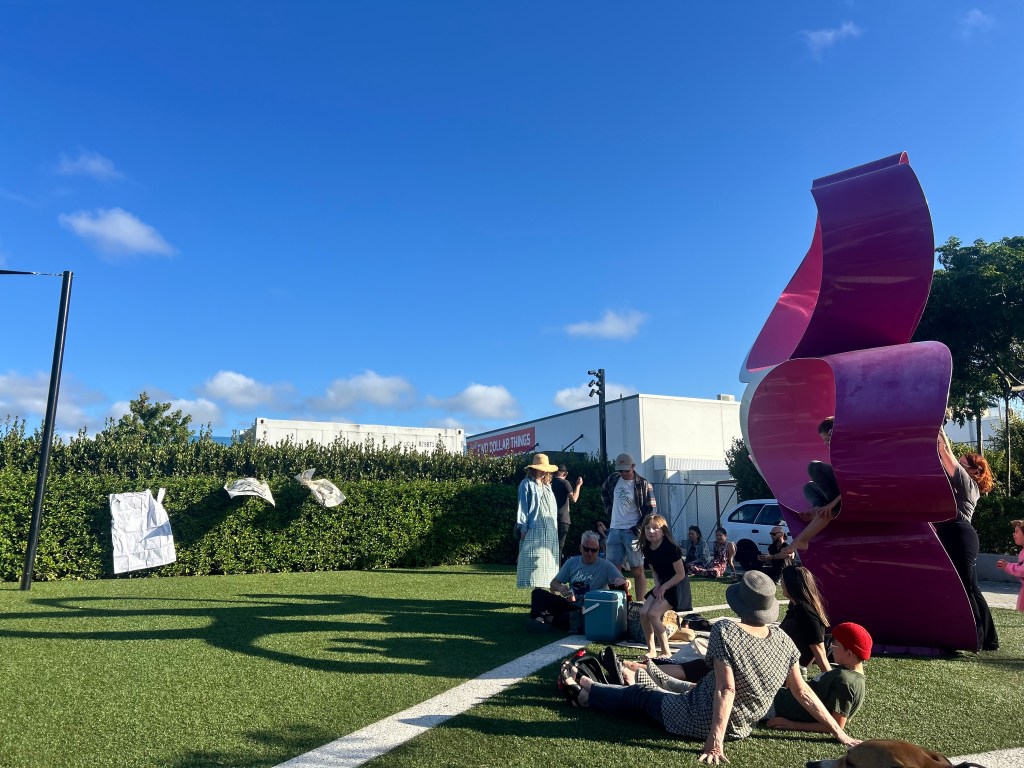
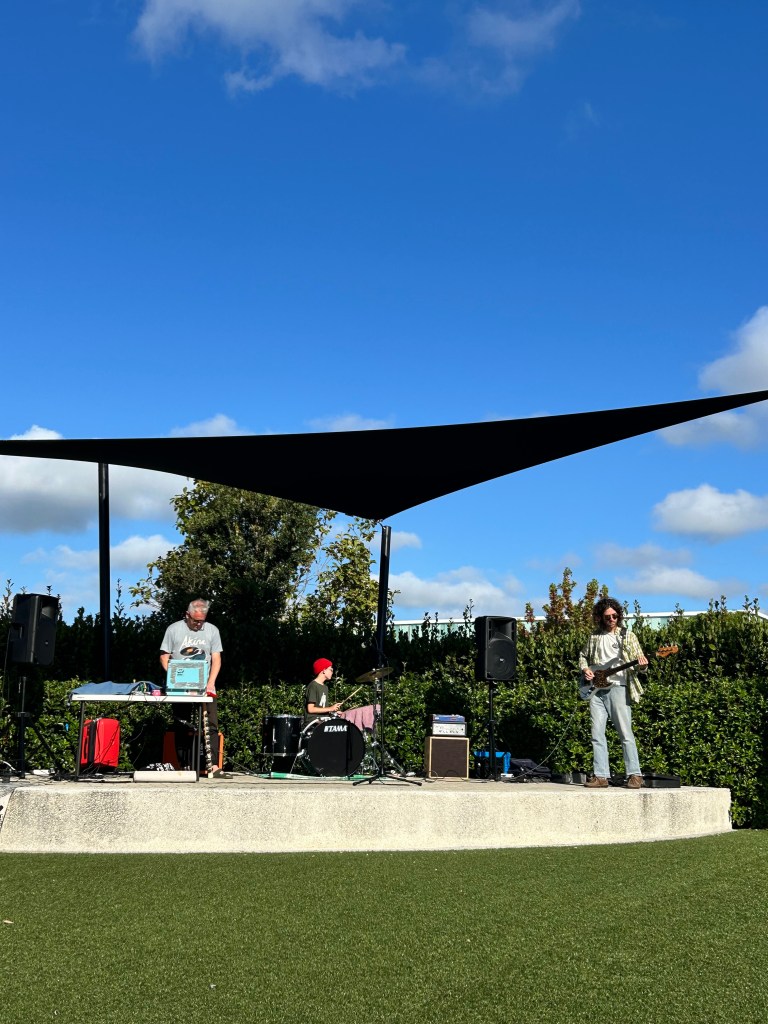
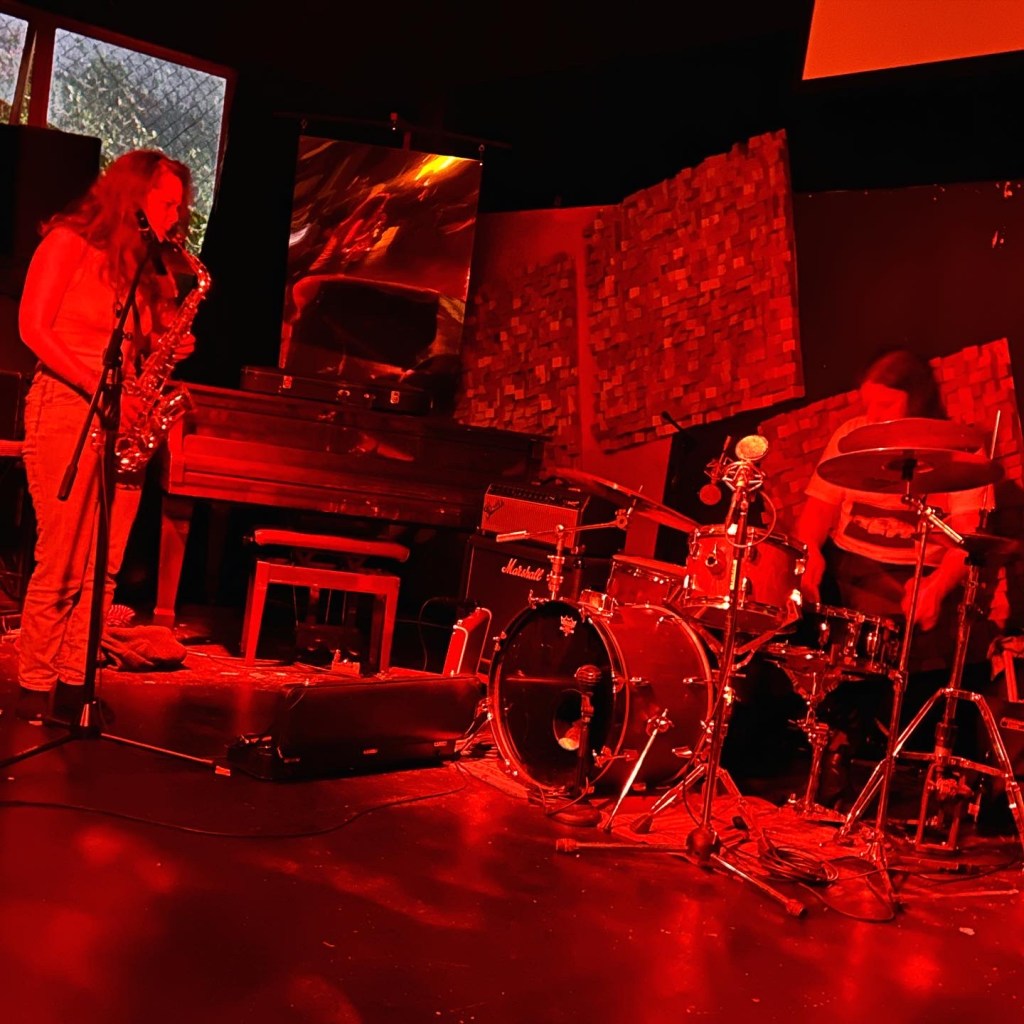
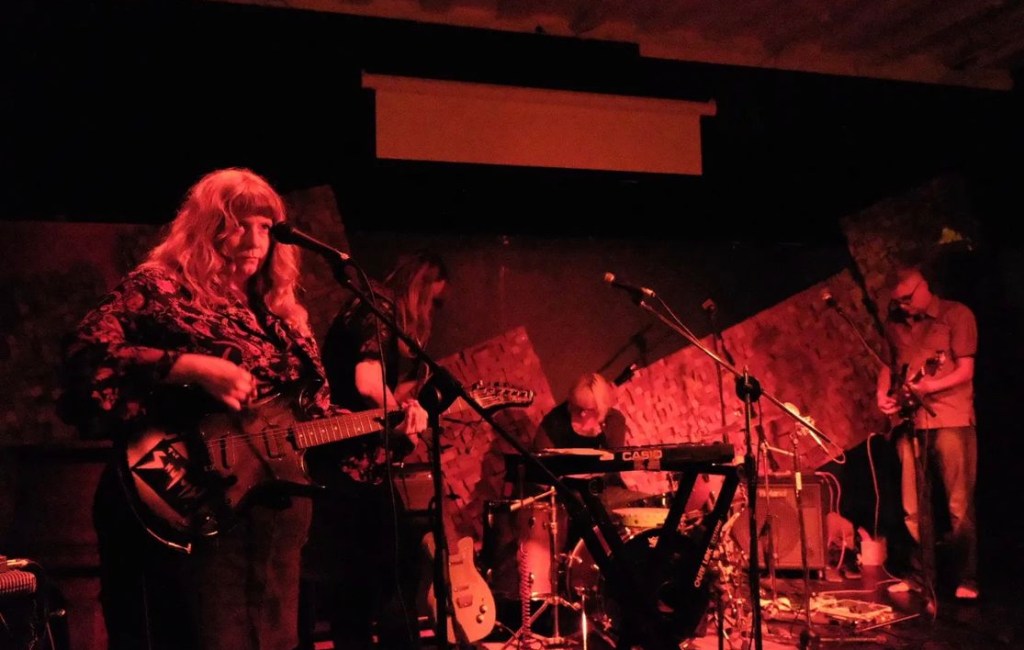
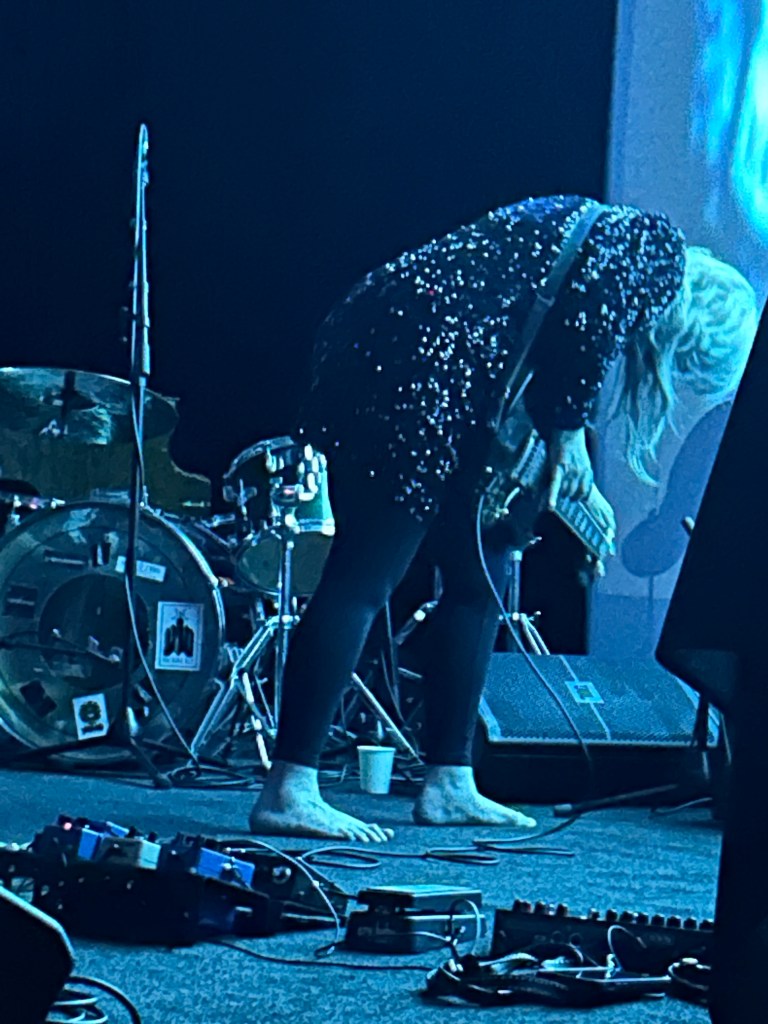
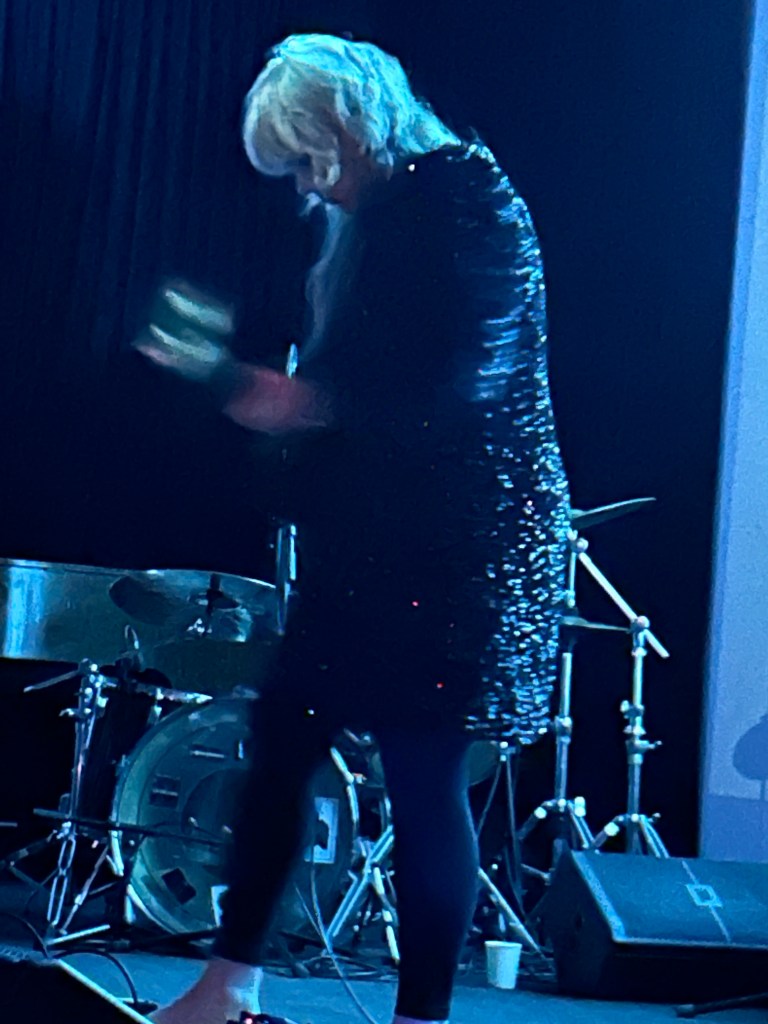
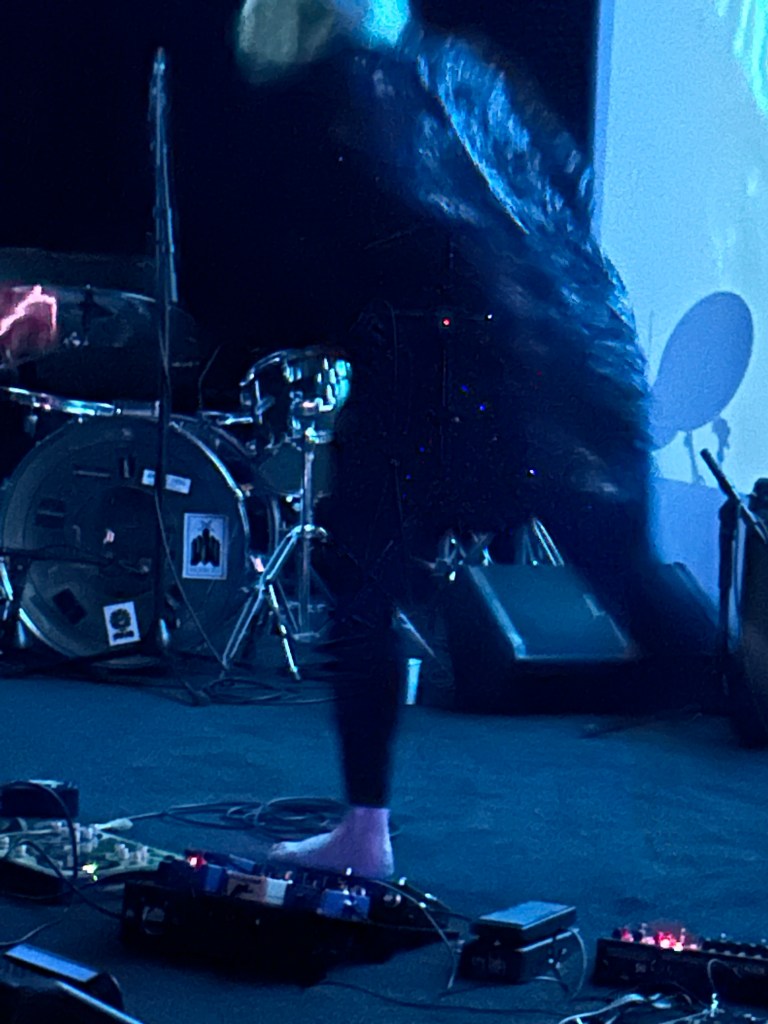
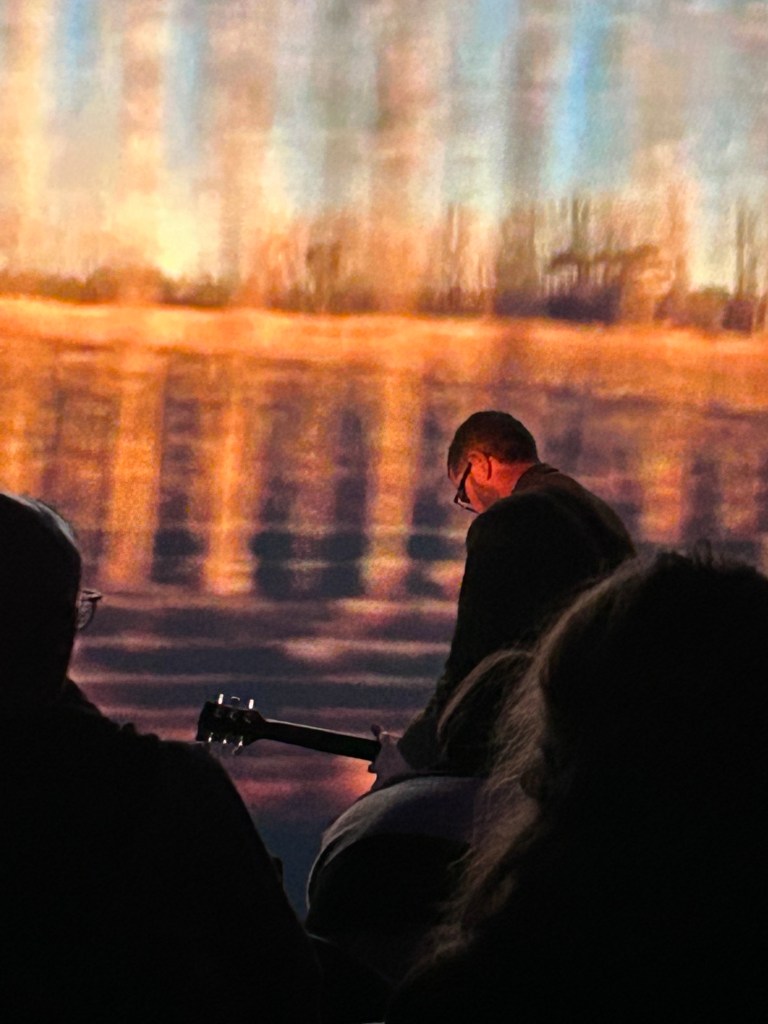
Ducklingmonster Live Performance With: Double Ya D, Barking Outdoors 5.30pm-, Saturday 8 February at Landmarks Square (103 Warren Street North, Hastings CBD) Free admission. No booking required.
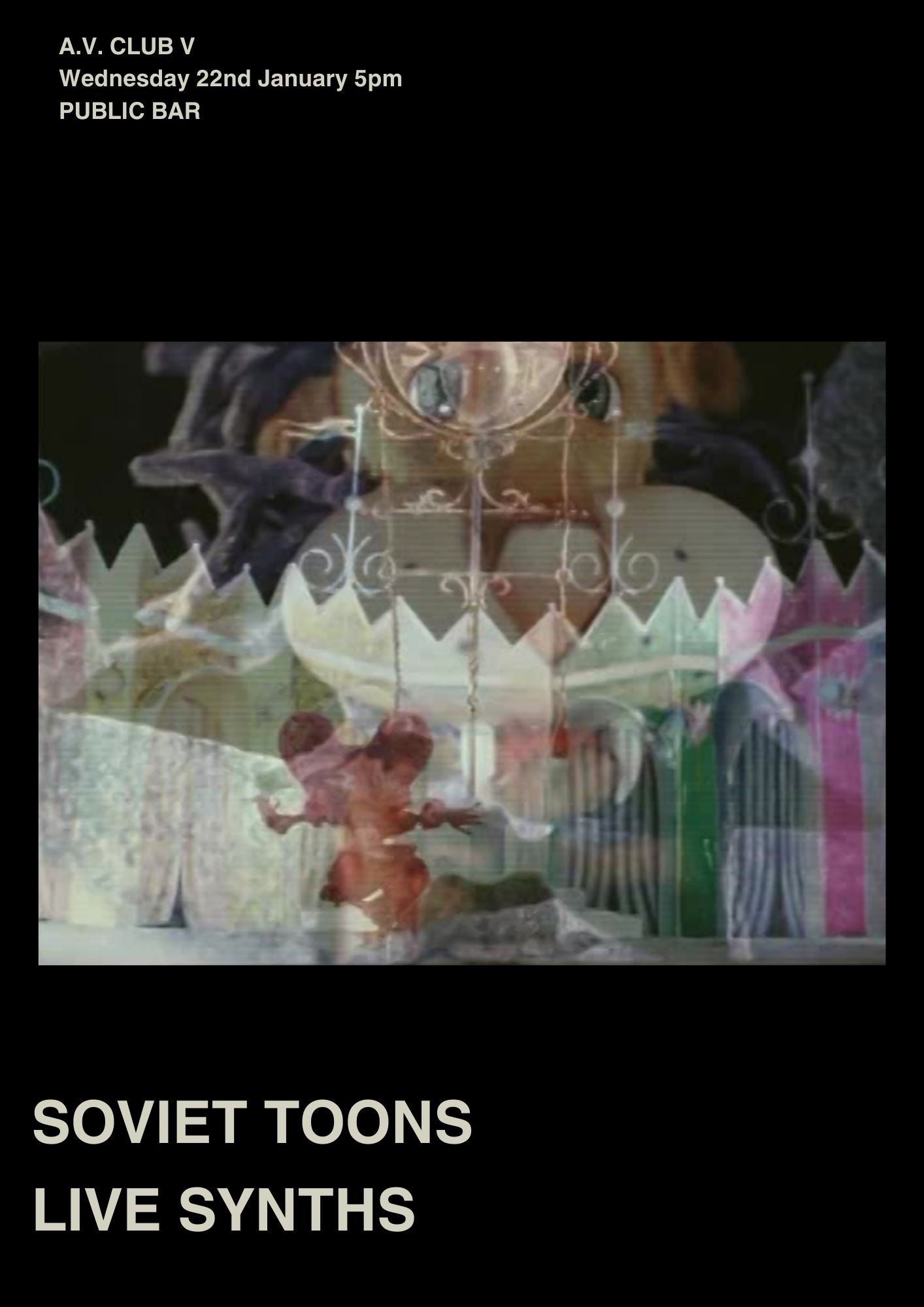
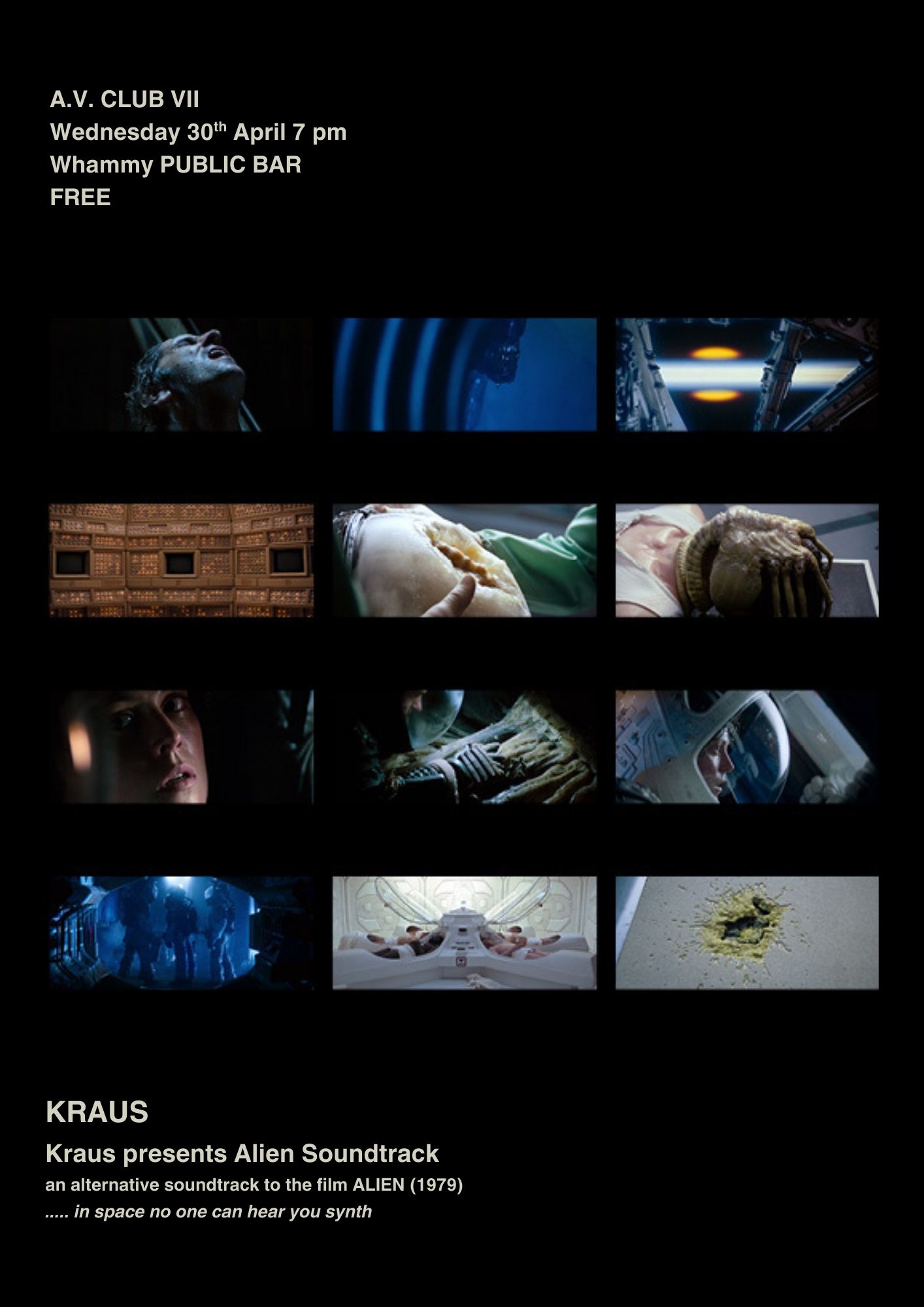
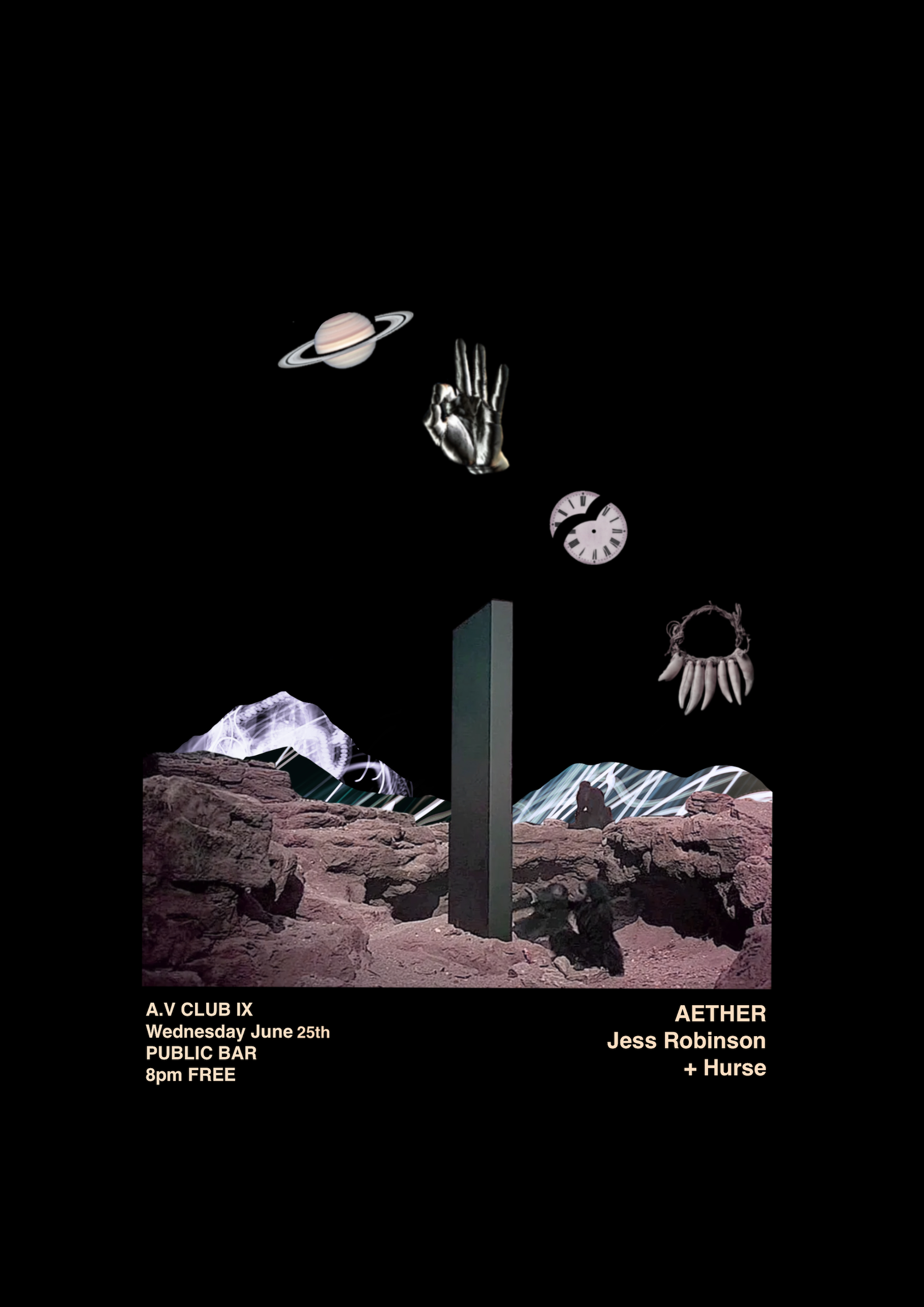
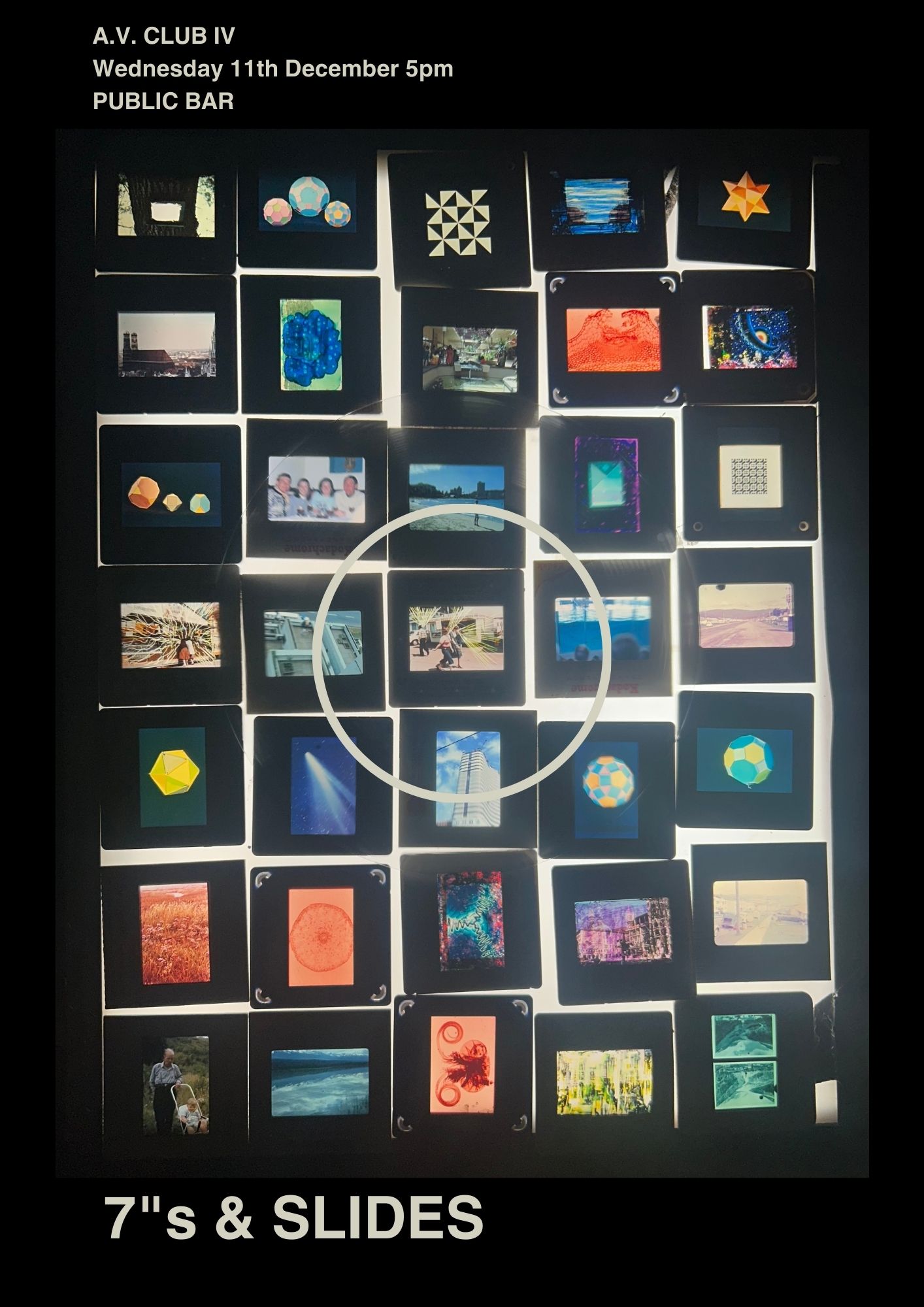
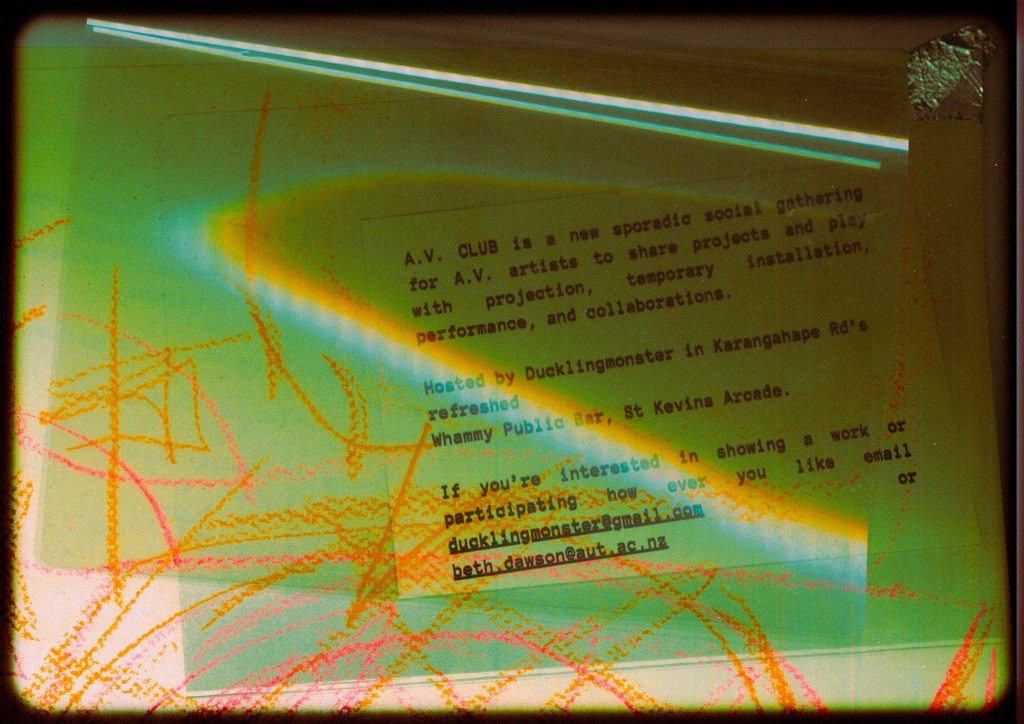
A.V. CLUB
Karangahape Portal
70 denier of texxture
“Texxture is the kind of texture that is dense with offered information about how, substantively, historically, materially, it came into being. A brick or metalwork pot that still bears the scars and uneven sheen of its making would exemplify texxture in this sense.”
Sedgwick et al., Touching Feeling.
Rebel Press visit
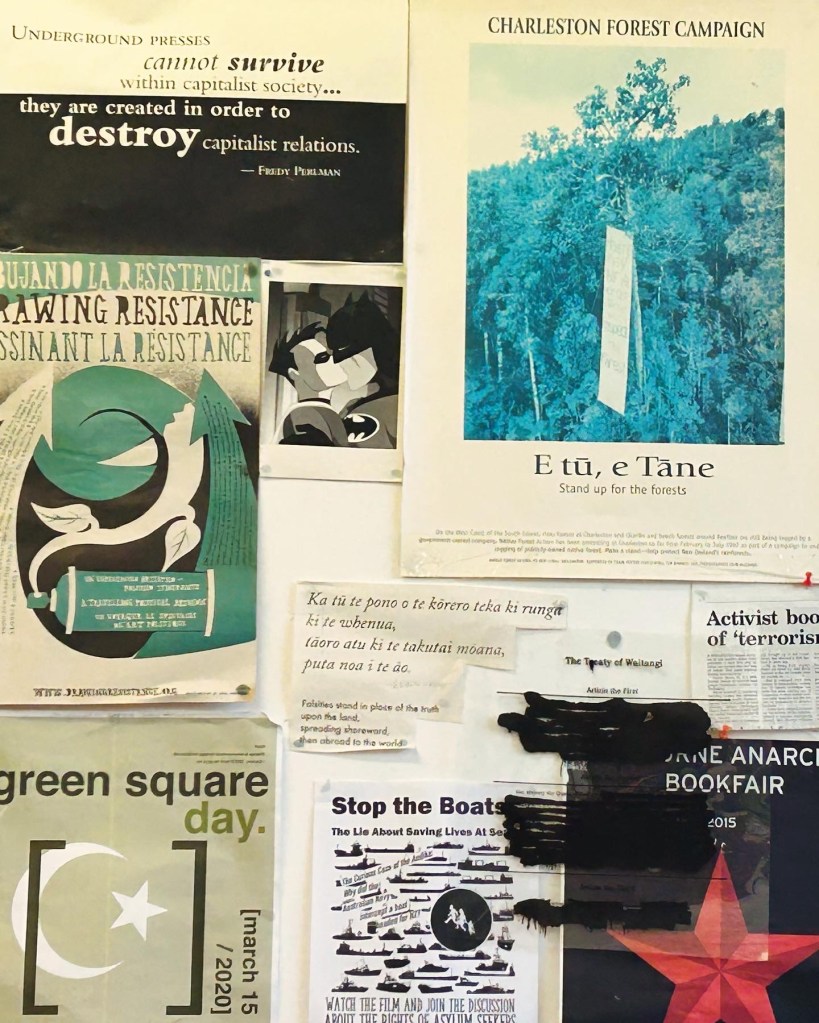
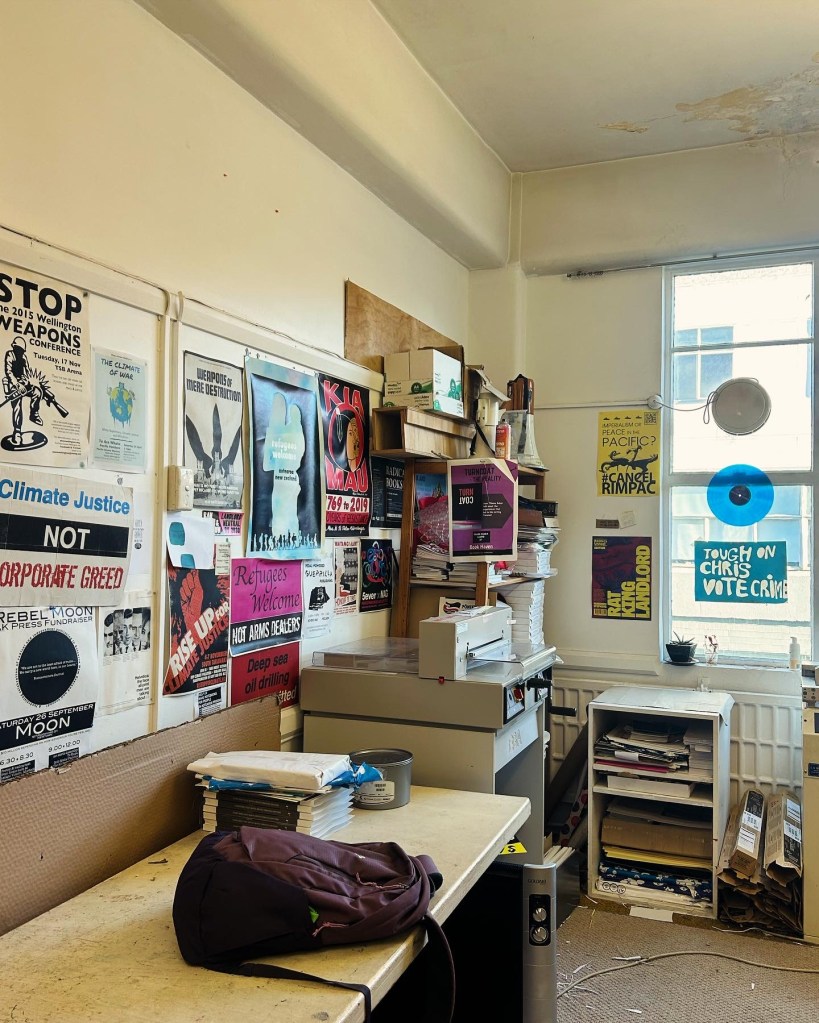
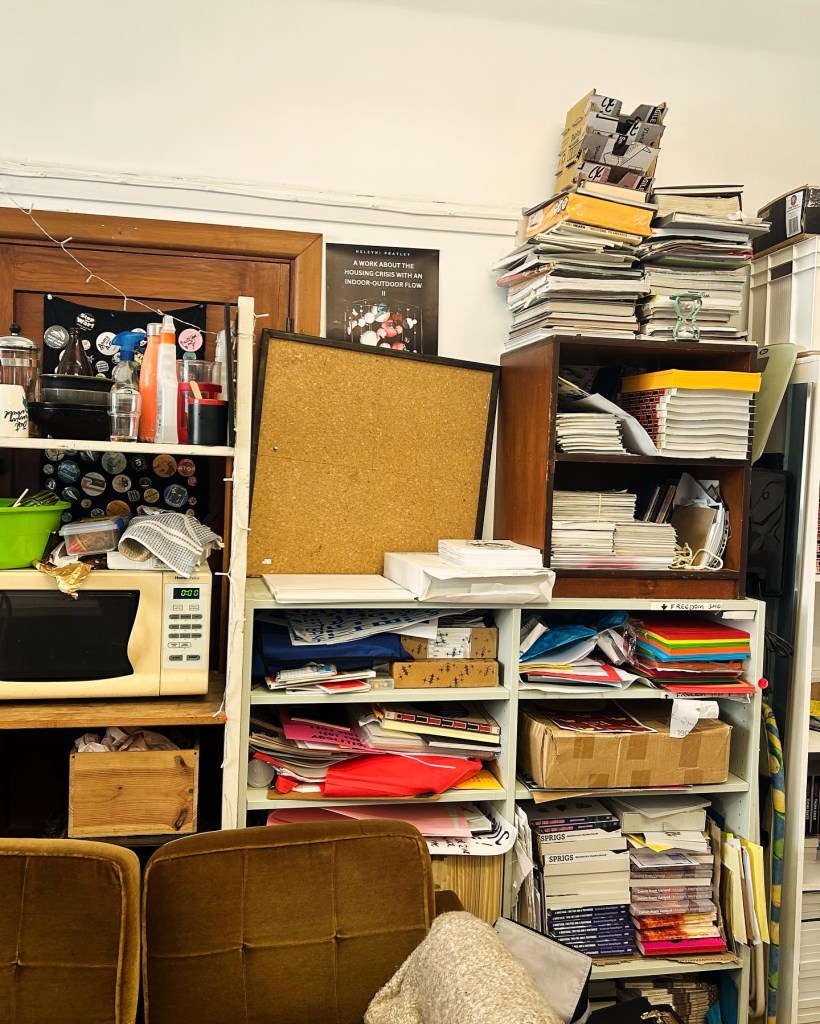
Rebel Press is a radical left, non-hierarchical, consensus-based, collective that provides book publishing and printing facilities, and a creative working space for freelance community organisers, activists and researchers as available. We also aim to promote and support DIY publishing projects and events such as Zinefest.Rebel Press has evolved from its long term iteration as an anarchist publishing collective into a wider radical left community printing and publishing space.
Beth Dawson, Charlotte Parallel and val smith Invisible Neighbours
10 April – 4 May 2024
Invisible Neighbours Beth Dawson, Charlotte Parallel and val smith
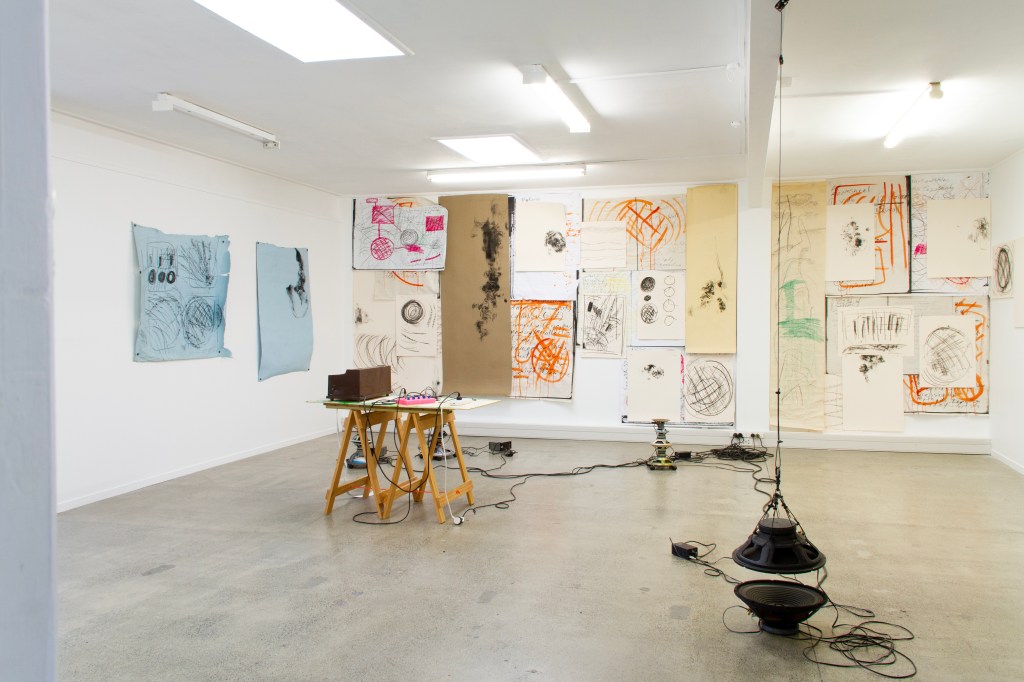
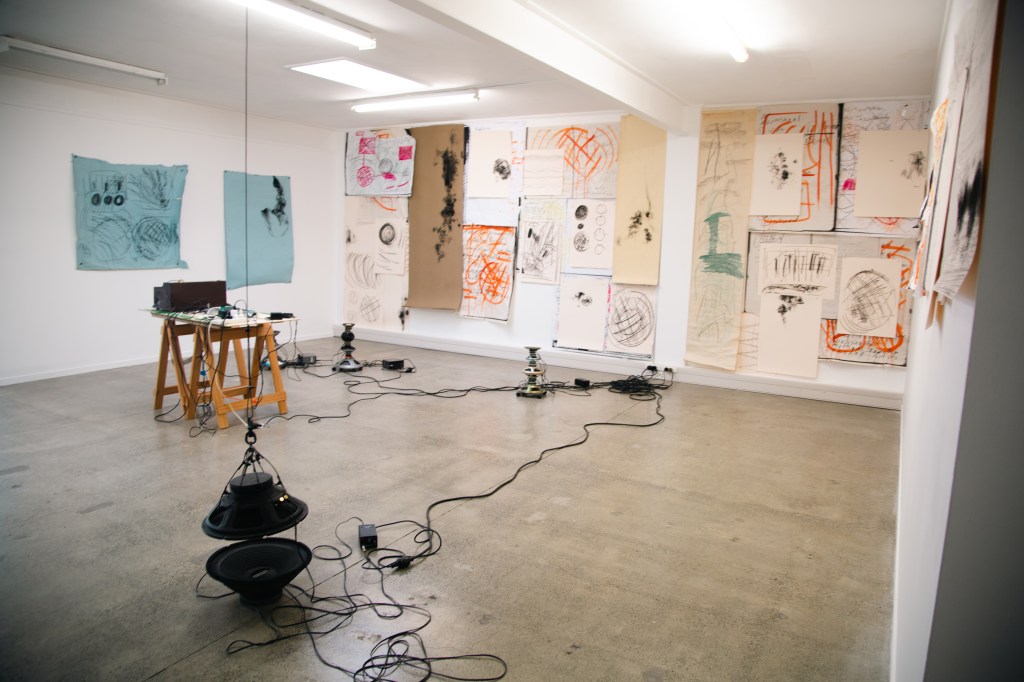
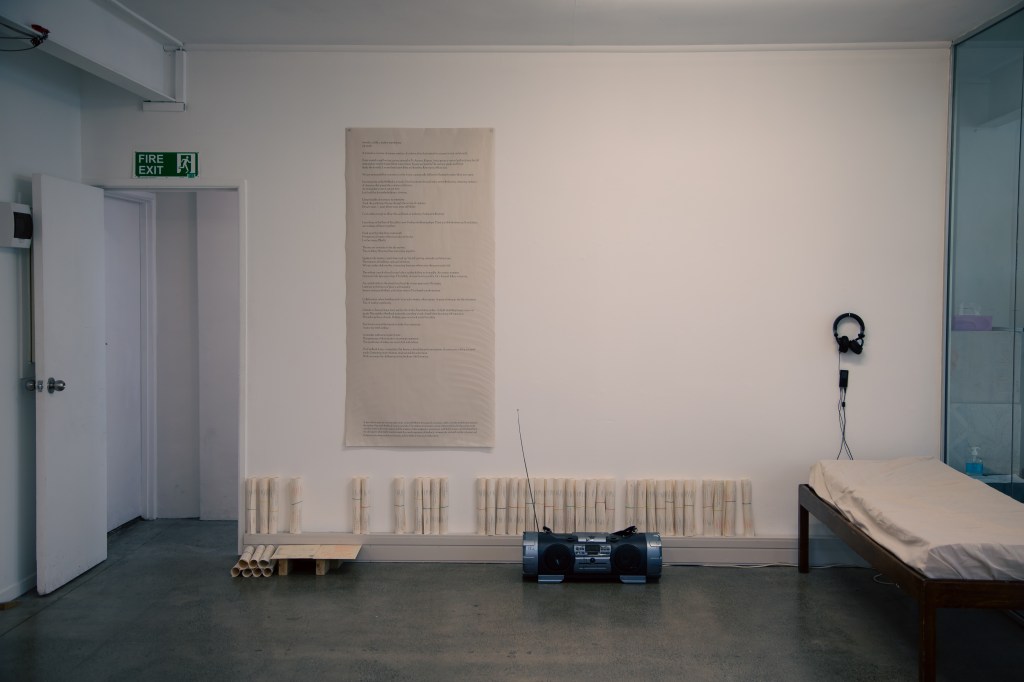
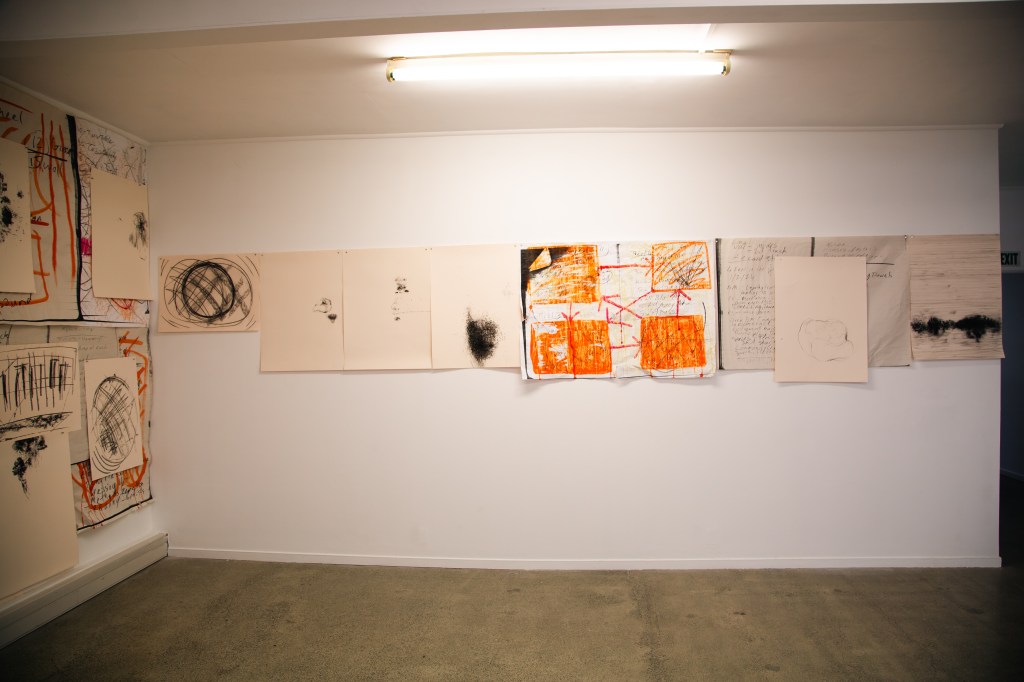
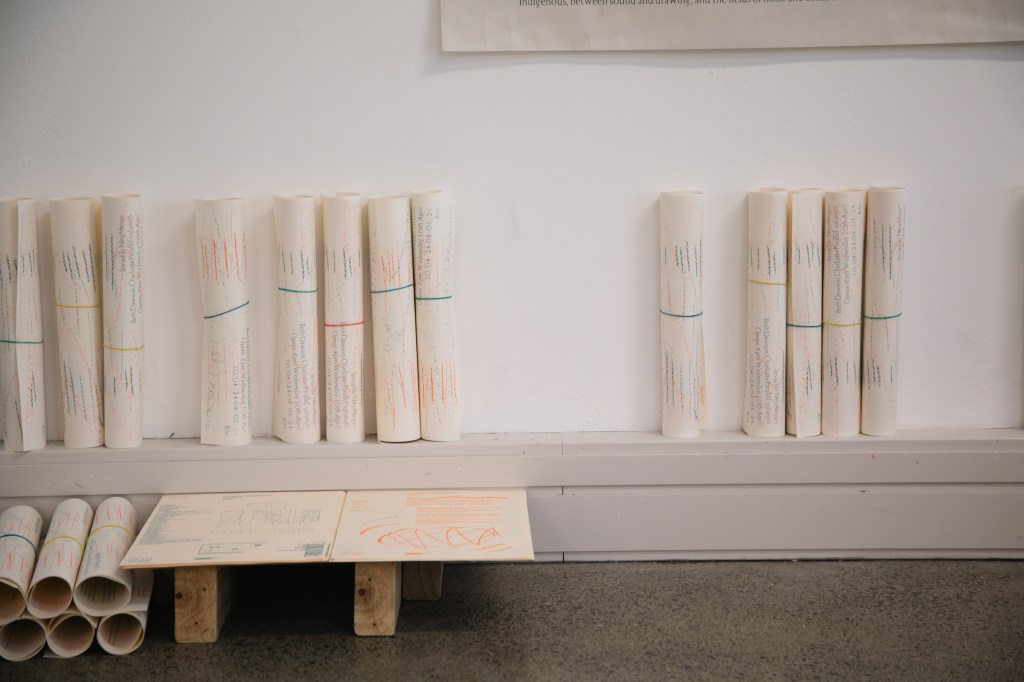
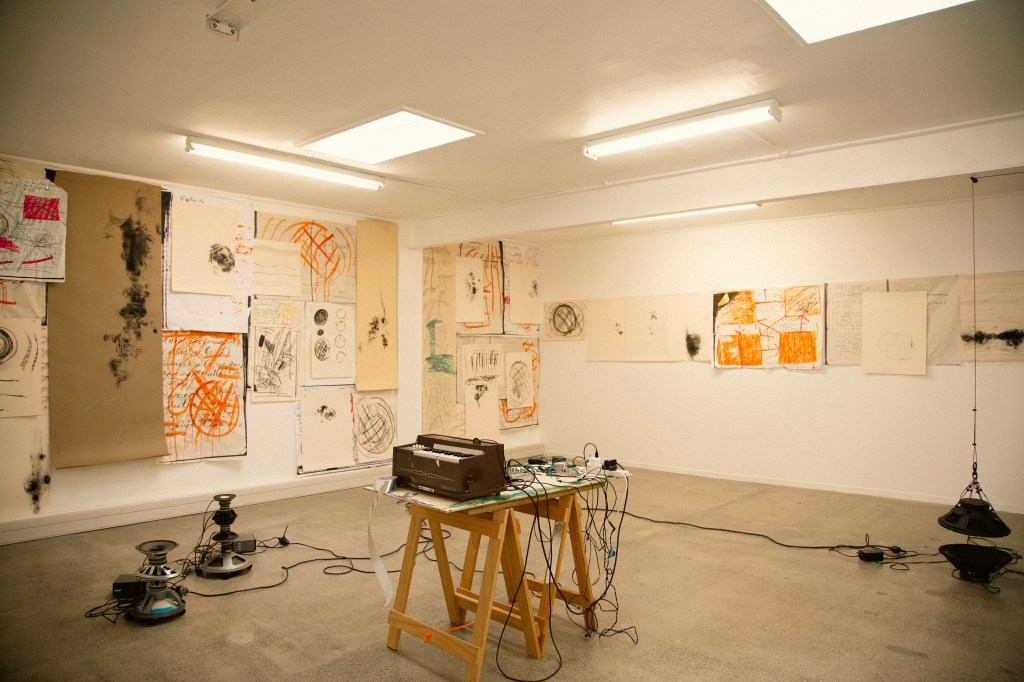
Invisible Neighbours is an installation of drawings, text and sound objects that focus on the generative nature of feedback. As a collaboration the artists are working with feedback as a sonic material that they create and respond to, through drawing, electromagnetism, pedals, amps, keyboard, bodies, conversations and listening to special places.
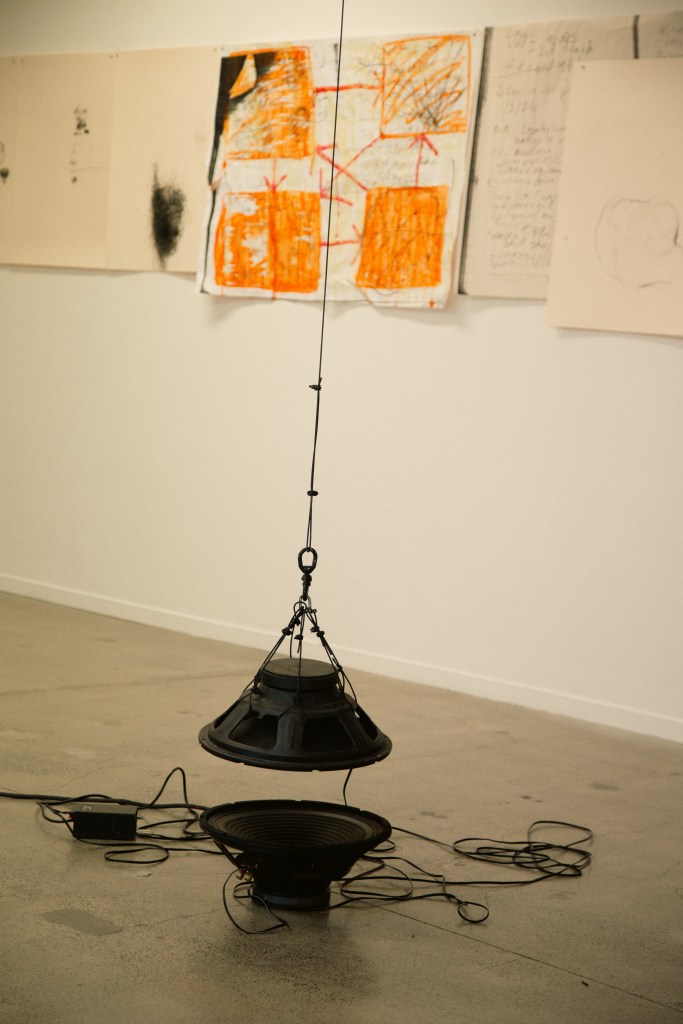
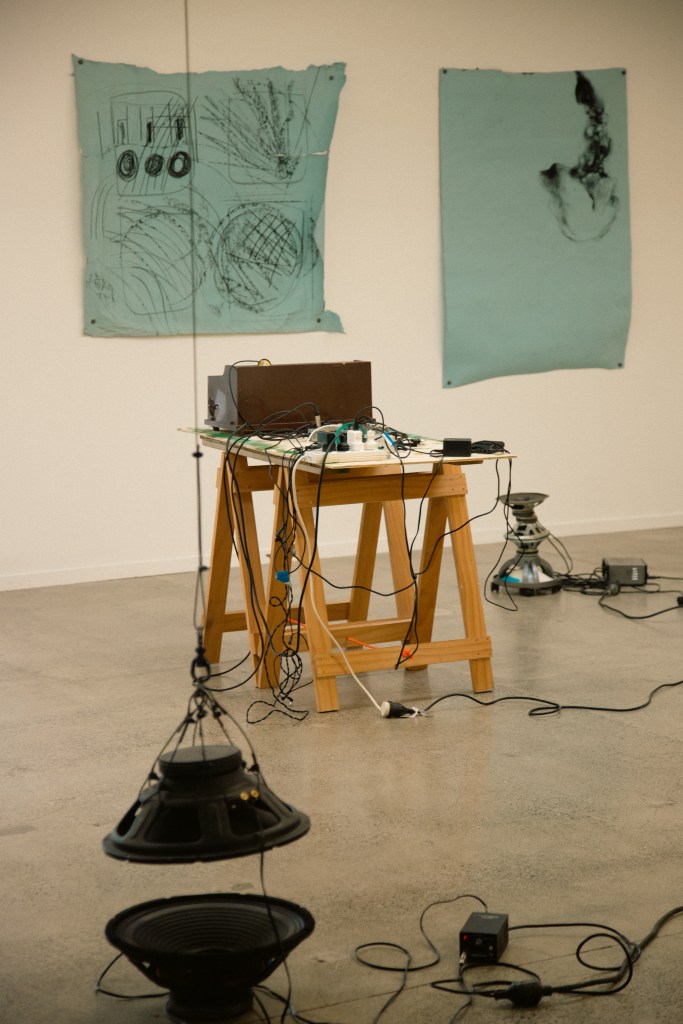
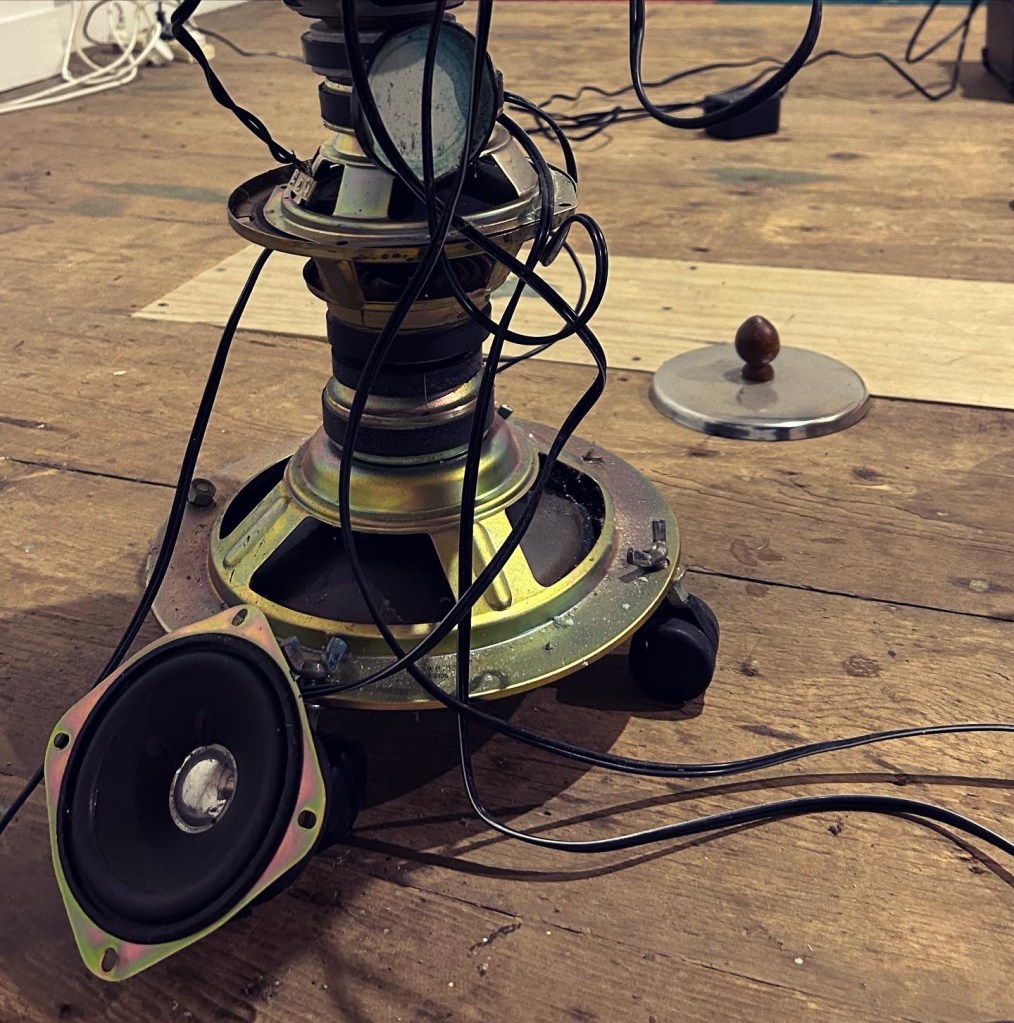
Speakers, like twisters, reach down and up. Yet still, spitting asteroids in all directions. The exteriors of buildings, one such direction. Wirings under table another, connecting drawings where once they previously laid.
The wafting crunch of touch to ear hole; a sudden folding to re-amplify. An oceanic moment. Summons little laps against legs. This lullaby of noise haunts so softly. Or, a feminist killjoy conjuring1.
An eyelash sticks to the sound, touching like a tissue paper zine. No staples. Listening to the forces of place, a soft mapping. Sensors recharge all efforts, and incline time to Tiriti-based transformations.
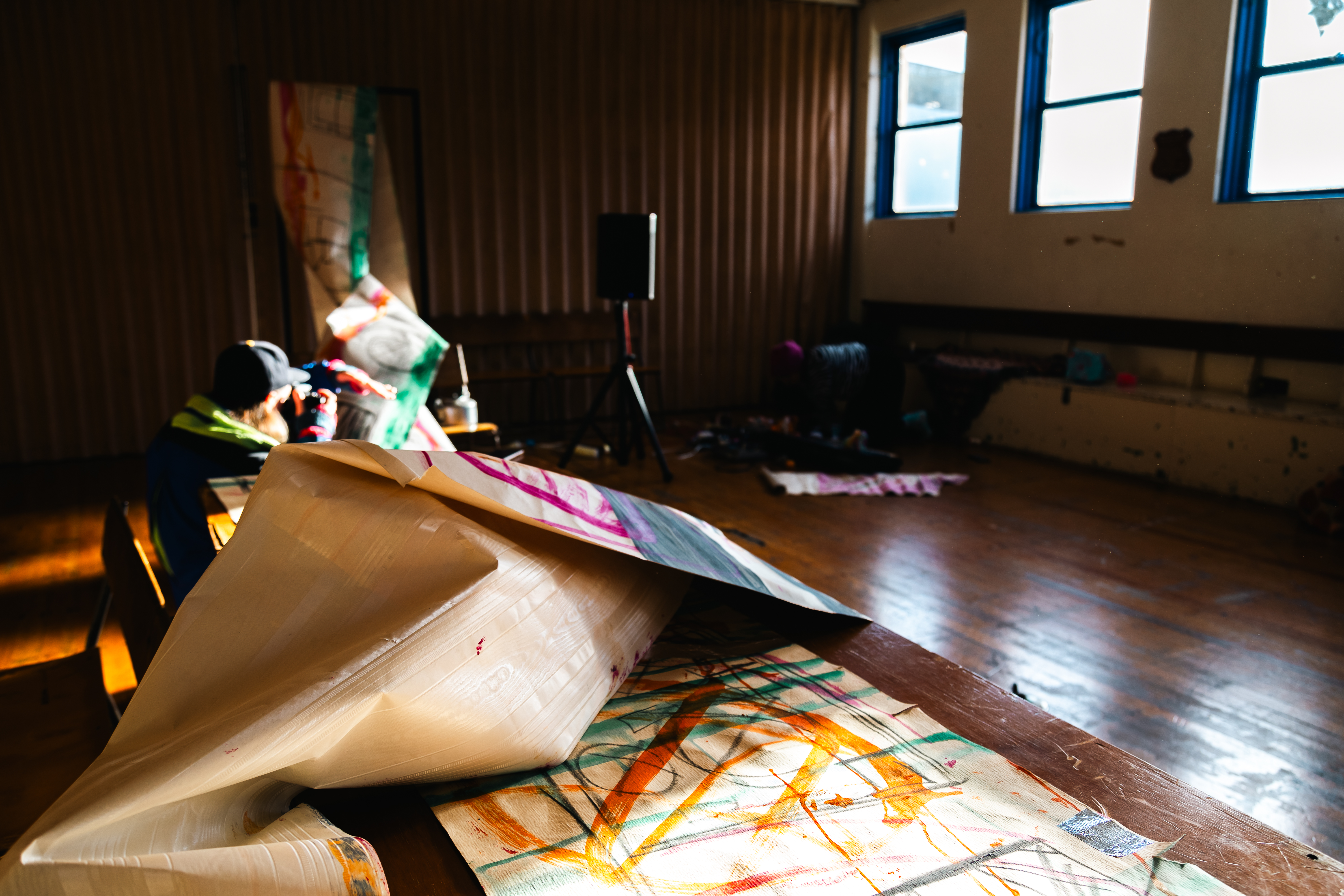
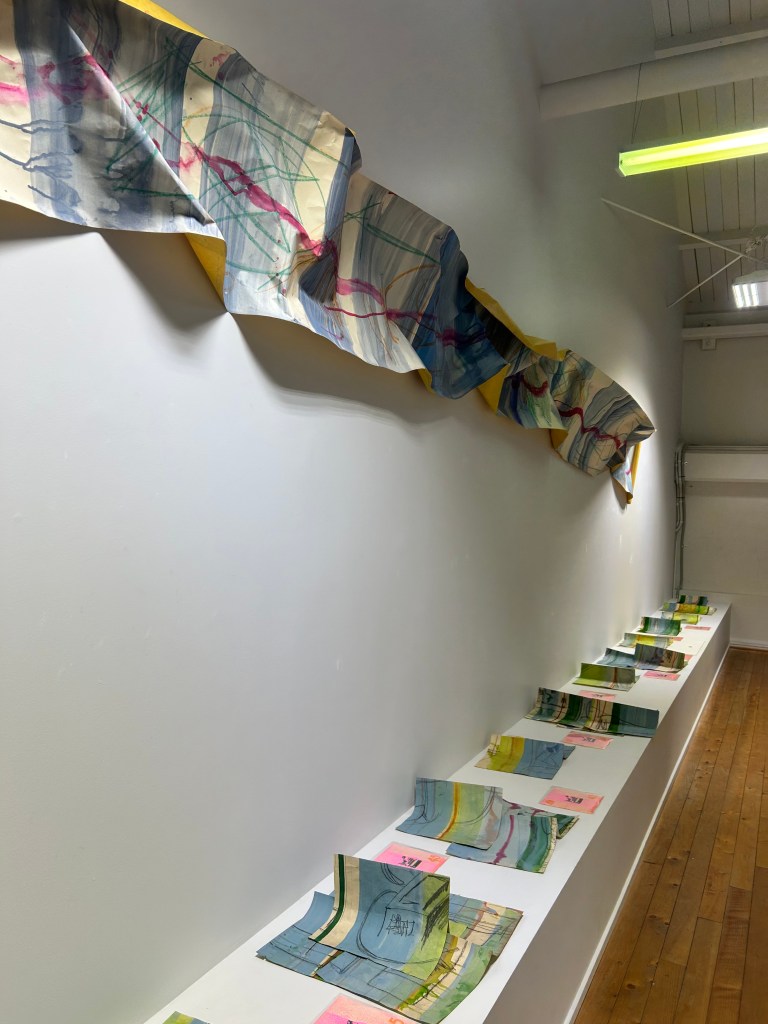
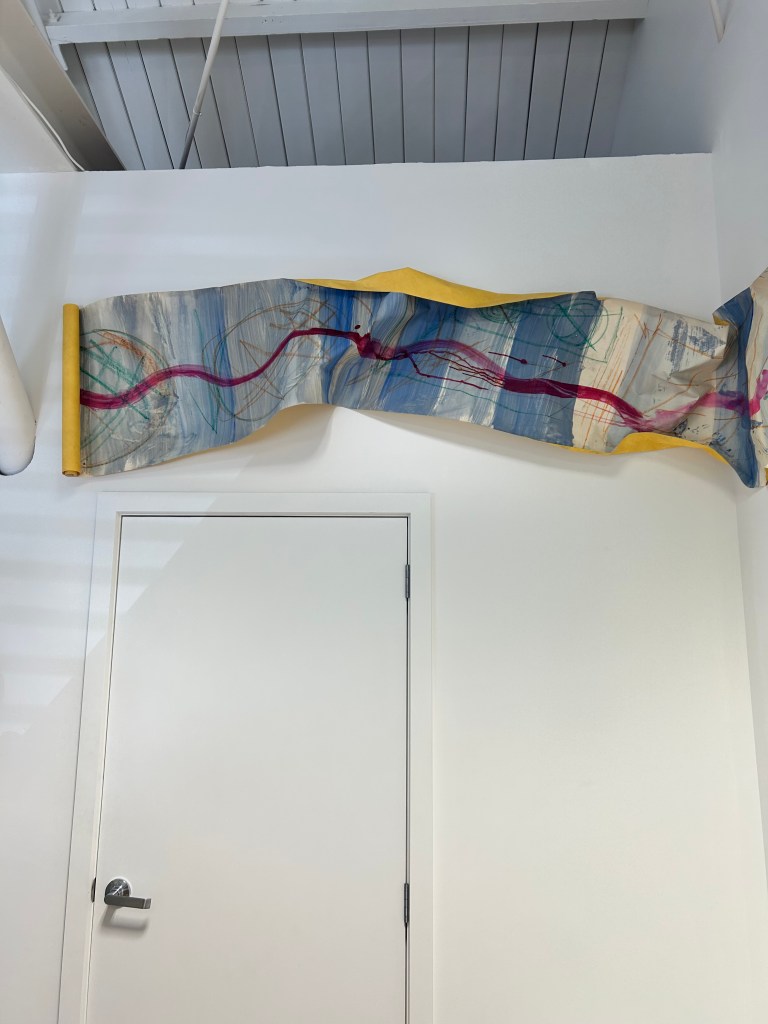
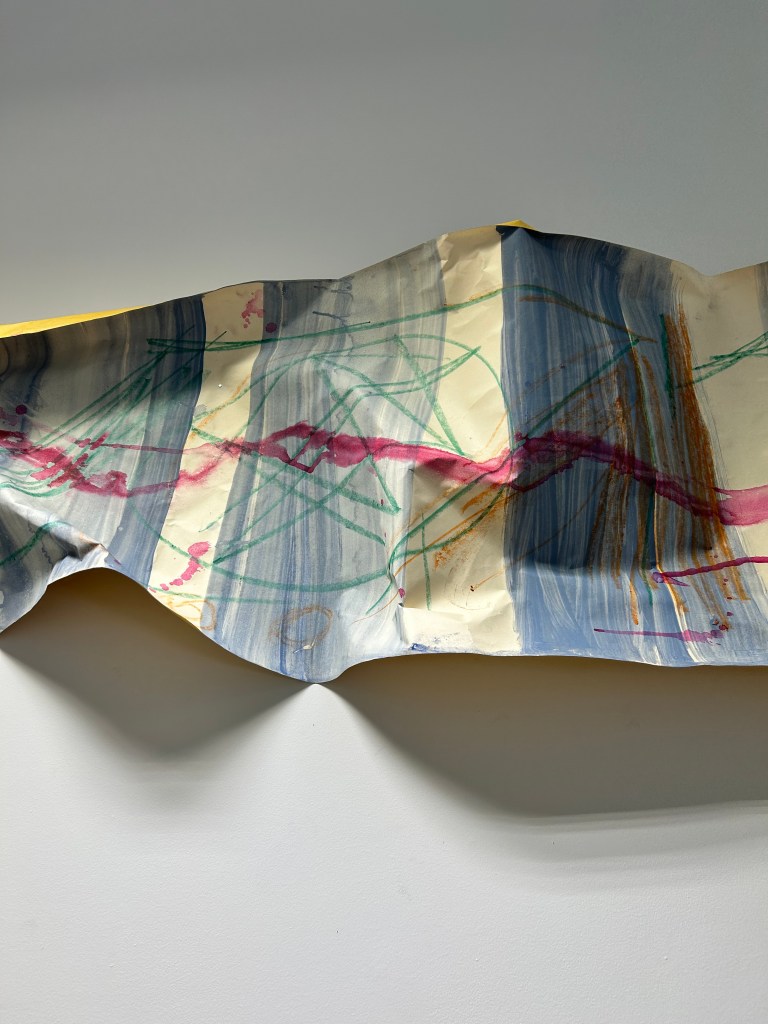
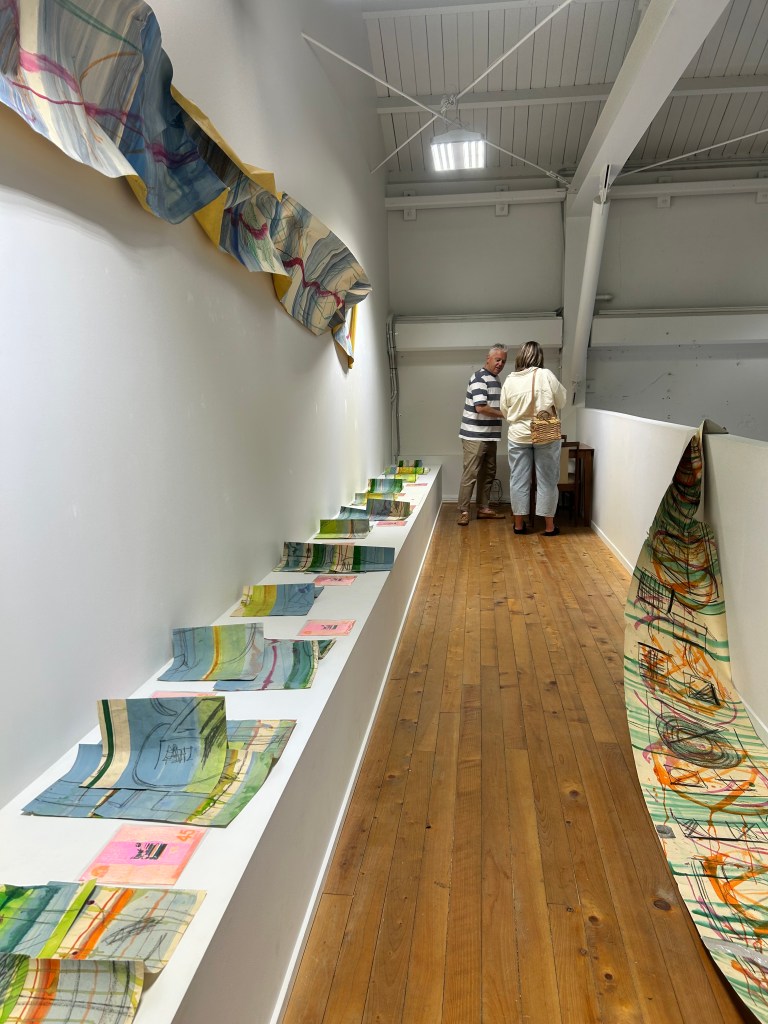
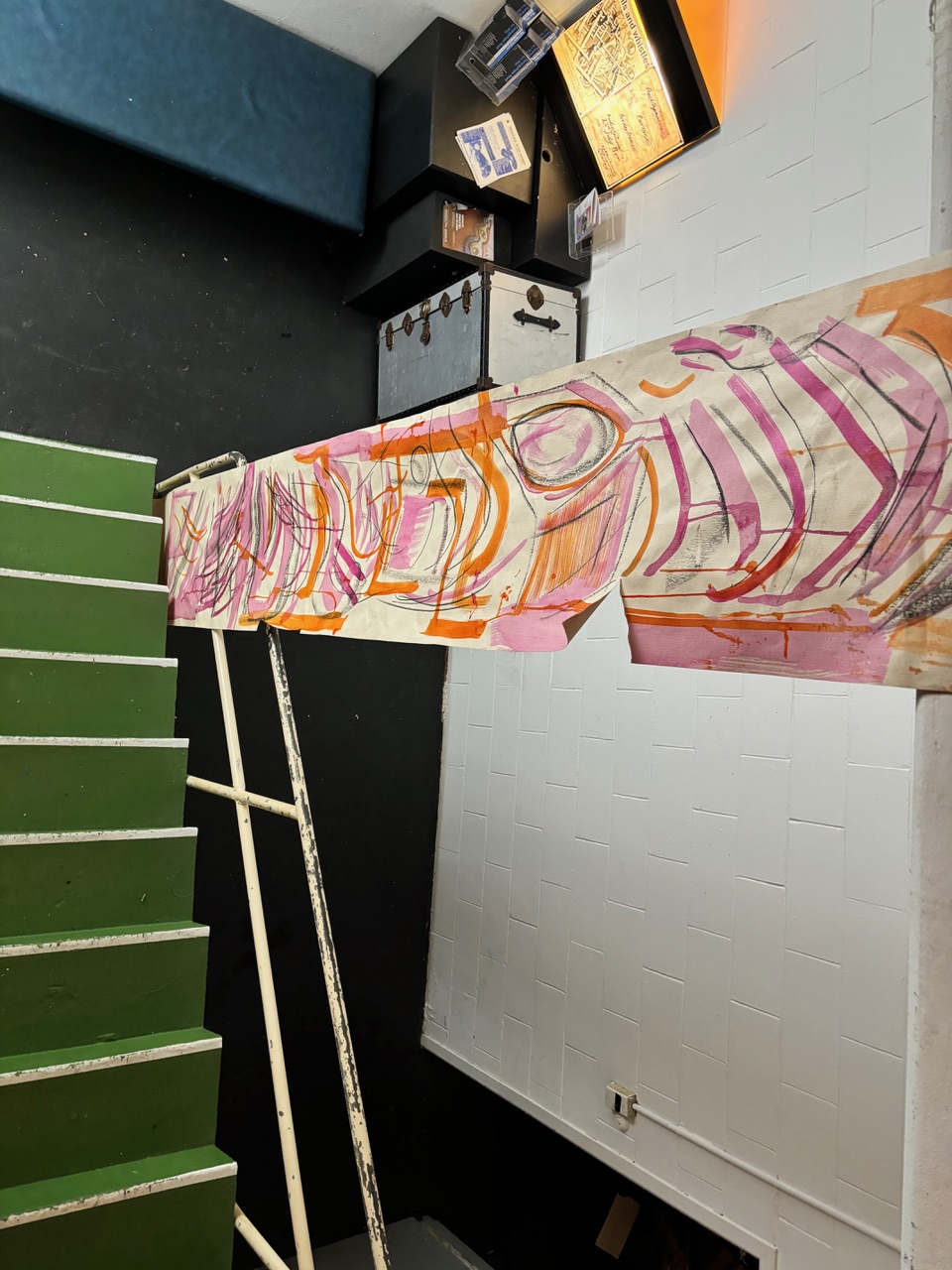
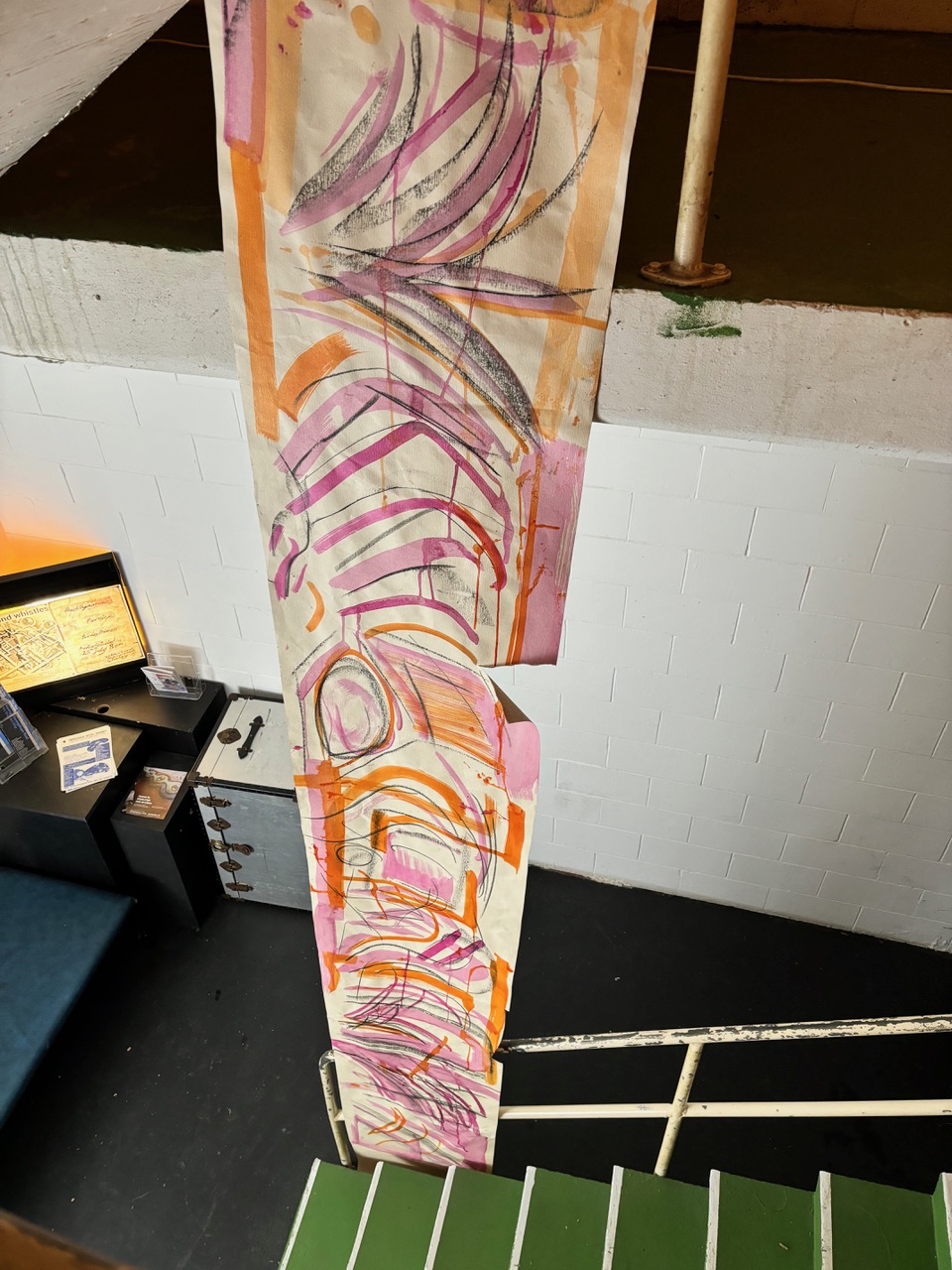
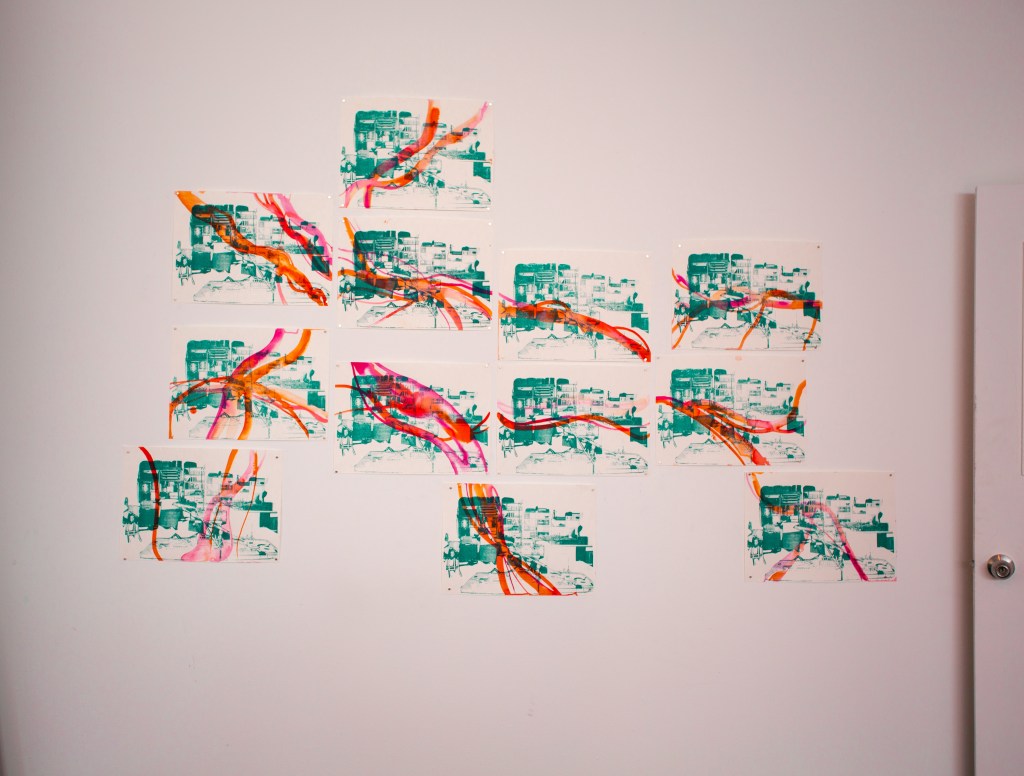
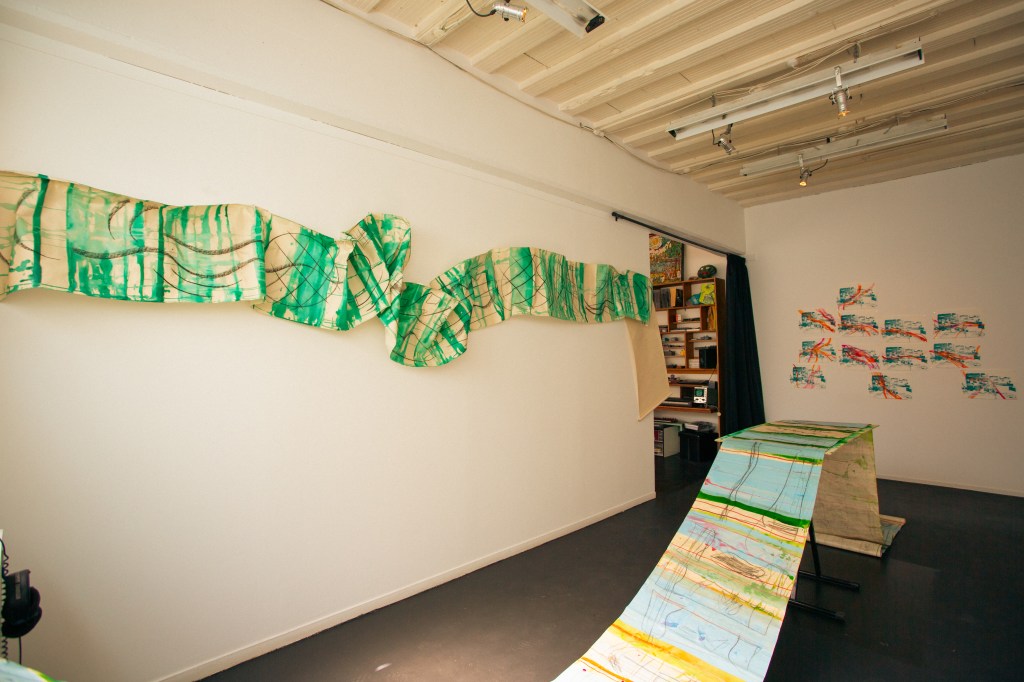
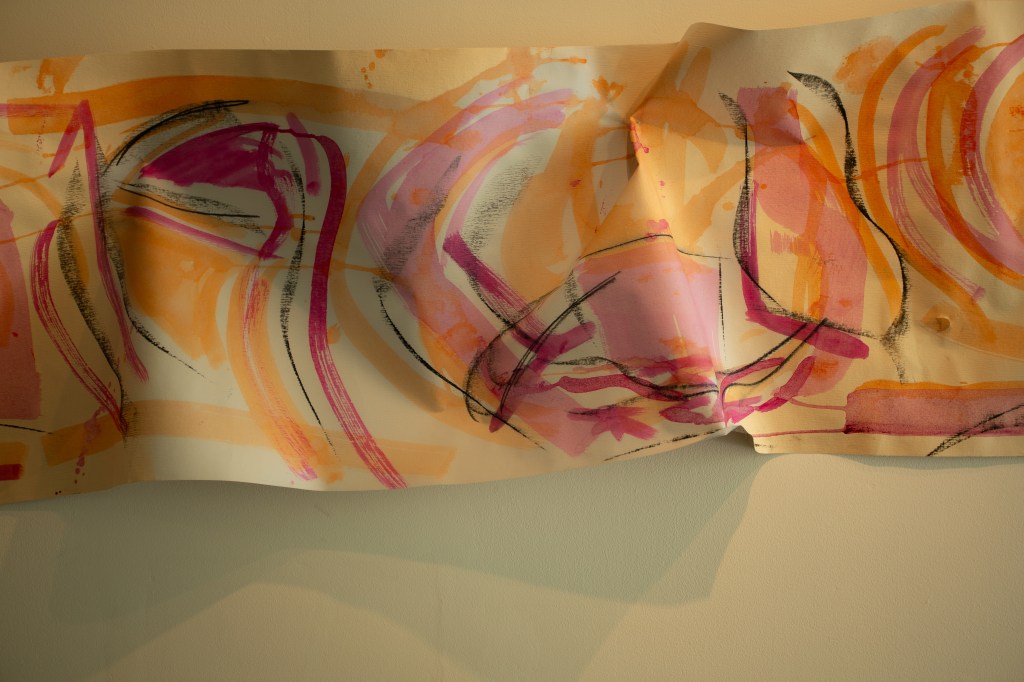
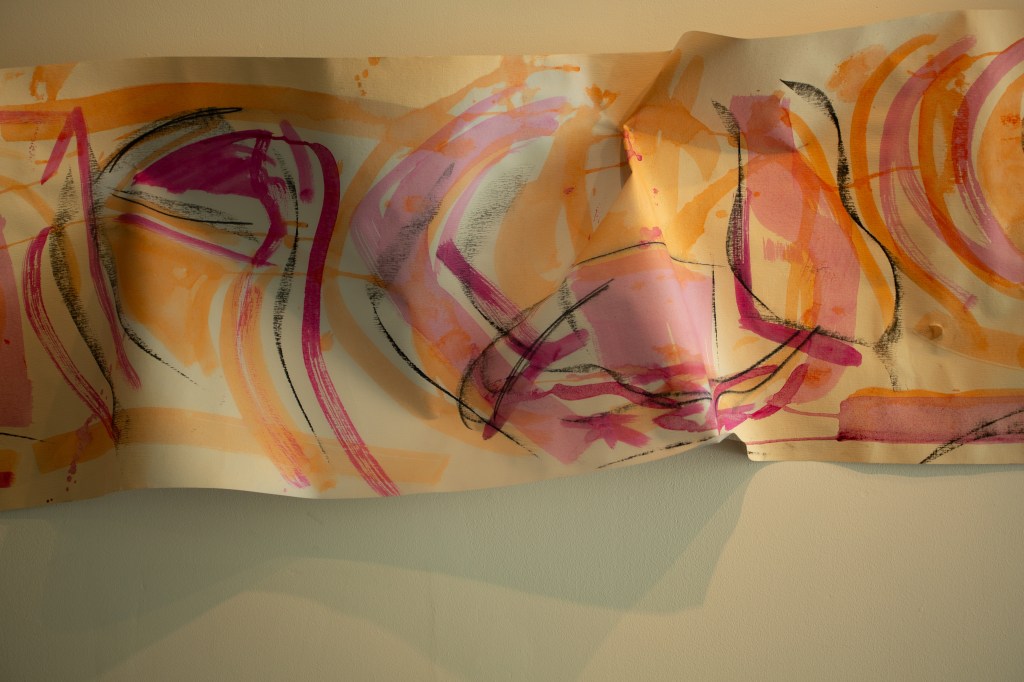
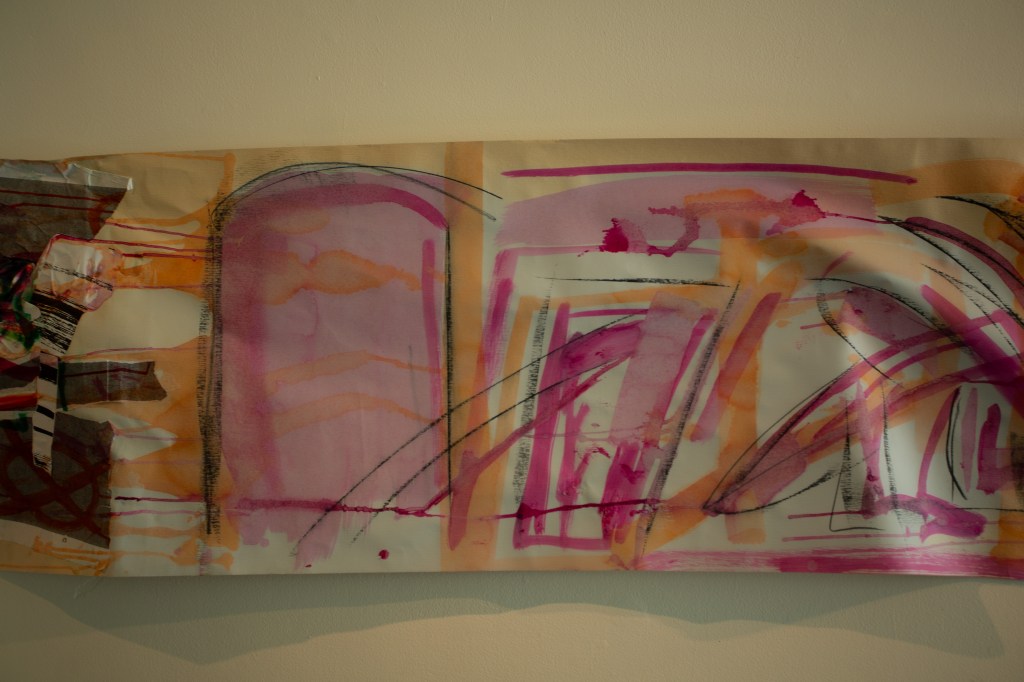
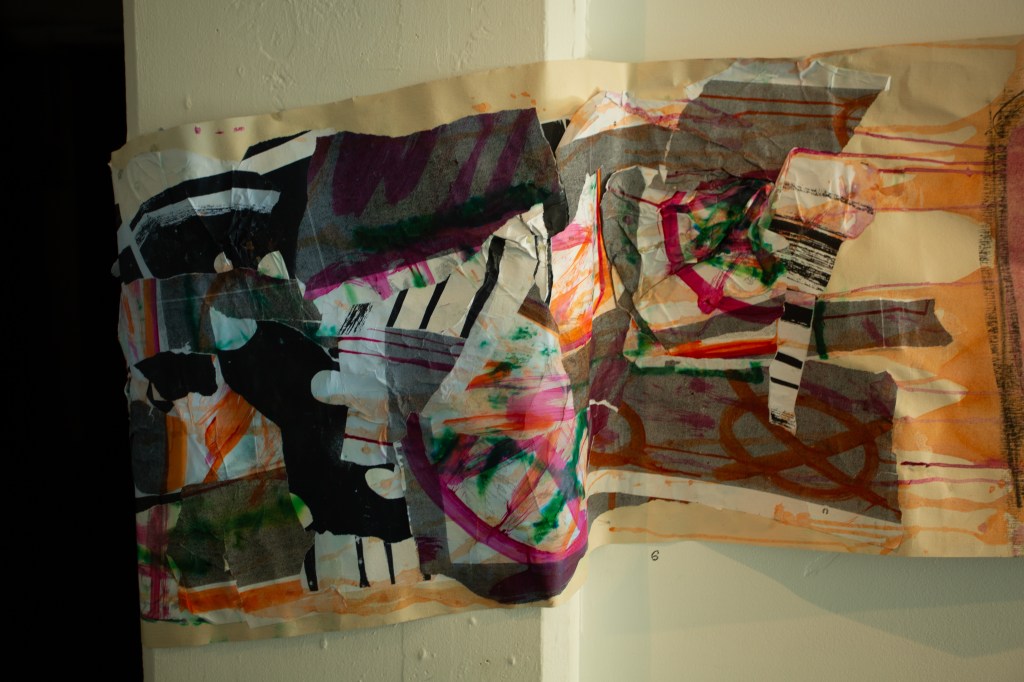
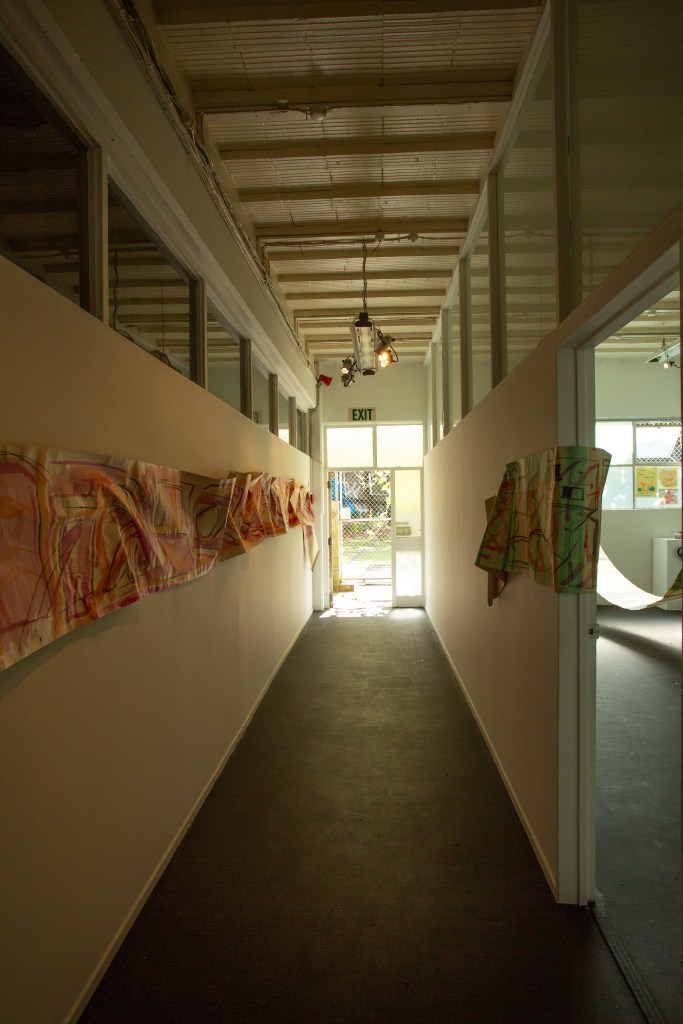
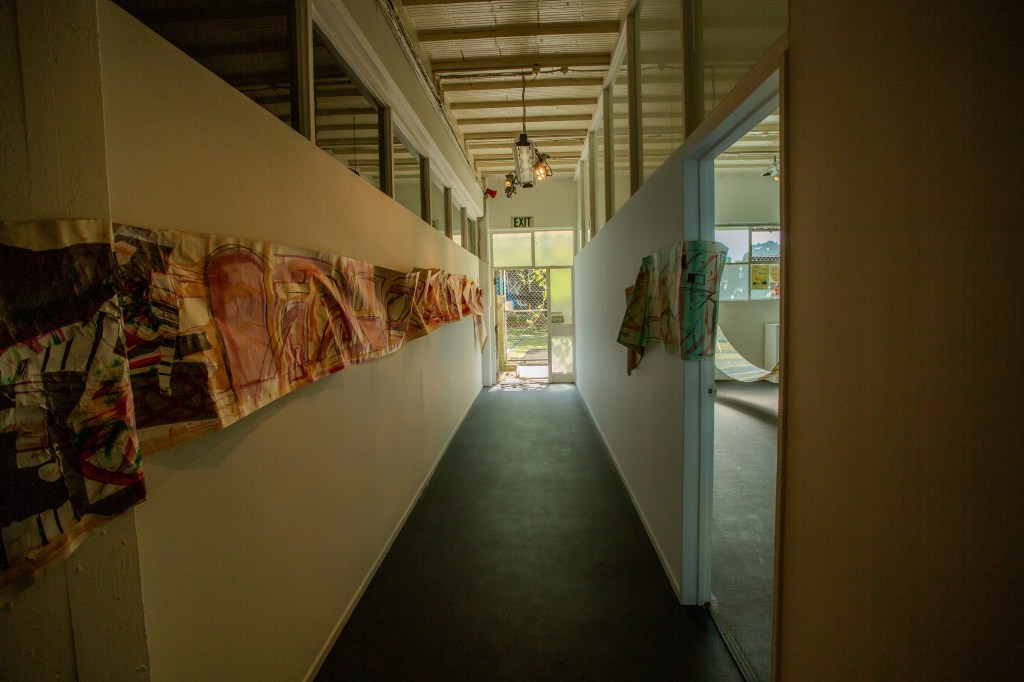
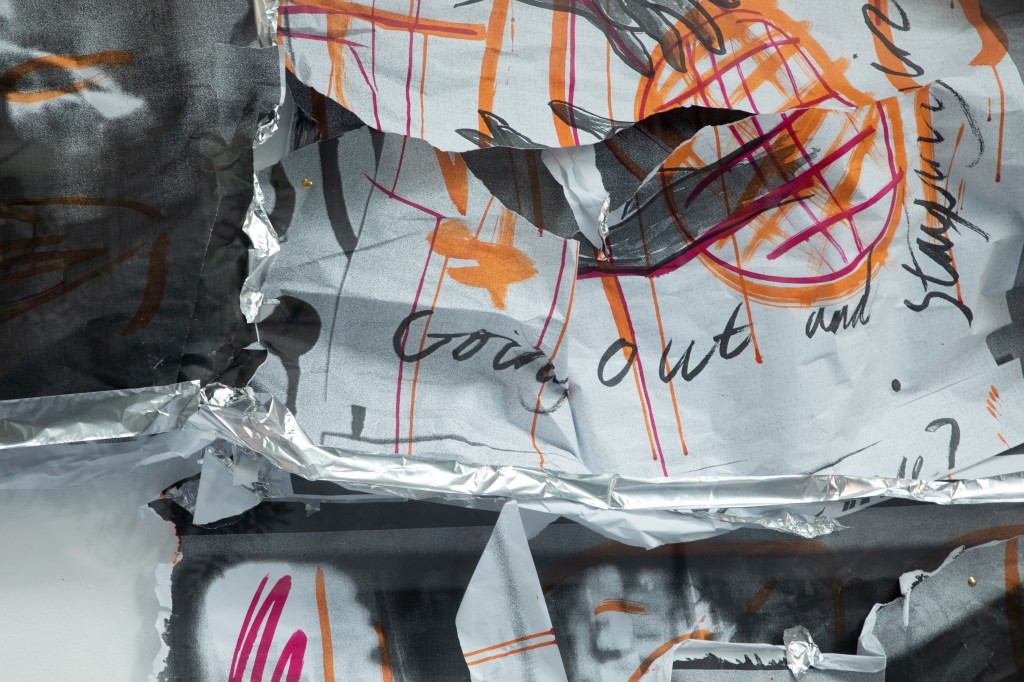
Drawn while watching my video series Going Out and Staying In , ‘Dream Stream’ is a shifting exploration of interior spaces bringing together the liminal space of the Audio Foundation corridor between the projection room, gallery and garden with the online video site and the apartment interior of the documented performance. The warm duotone of orange and pink abstracts the mise-en-scēne of the apartment interior such the arch window frames and the table-top lamp etc. Across this ink, the charcoal drawing notates the performance score with my symbols for the electronic musical devices such as the diagonal lines intersected to represent the levels on my mixer or the imagined direction lines of the sound waves. Stretched and scrunched down the length of the corridor beginning with a paper-mache tail in the projection room and ending with a falling curl at the door to the garden the drawing travels with the viewer/audience through the transitional space.
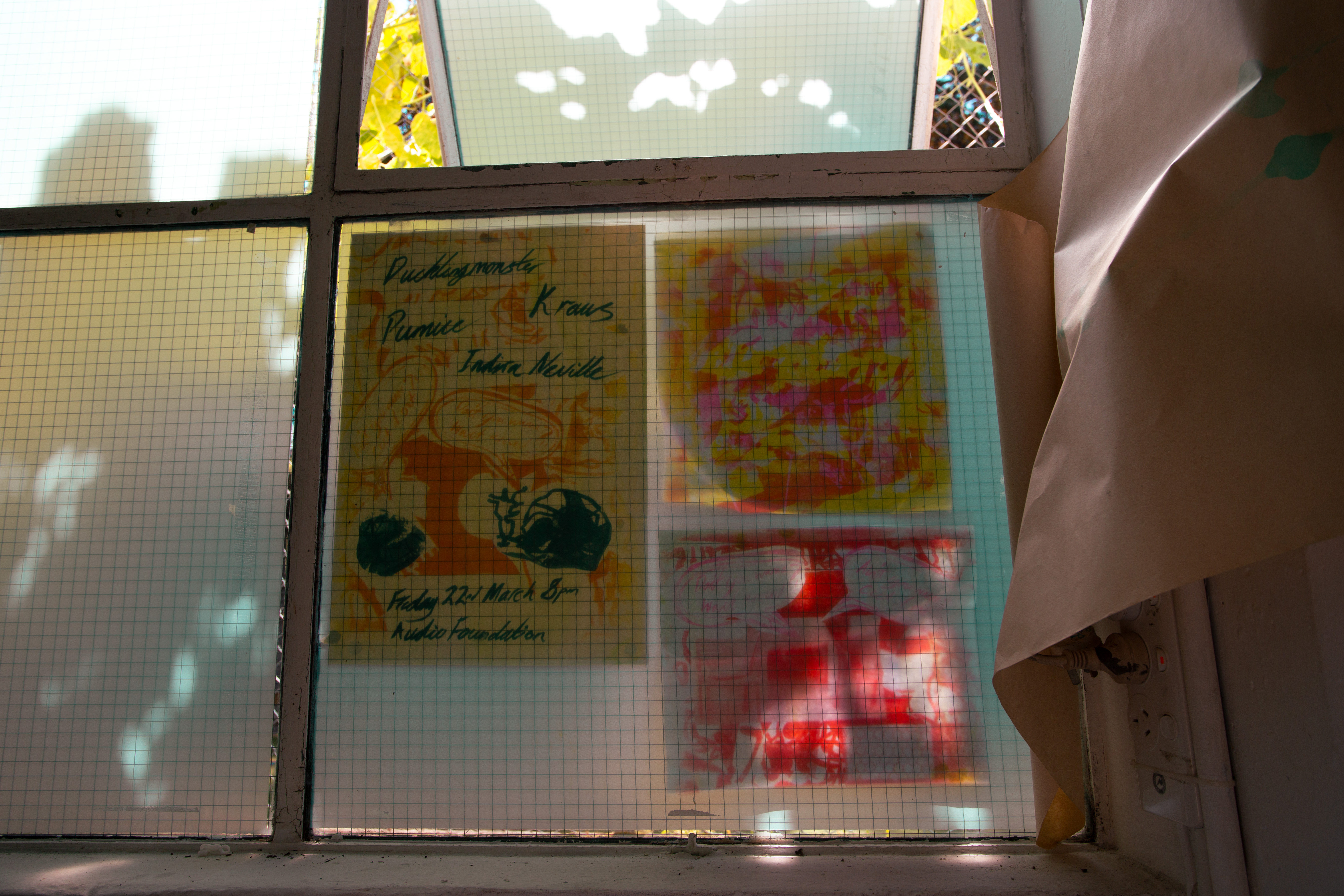
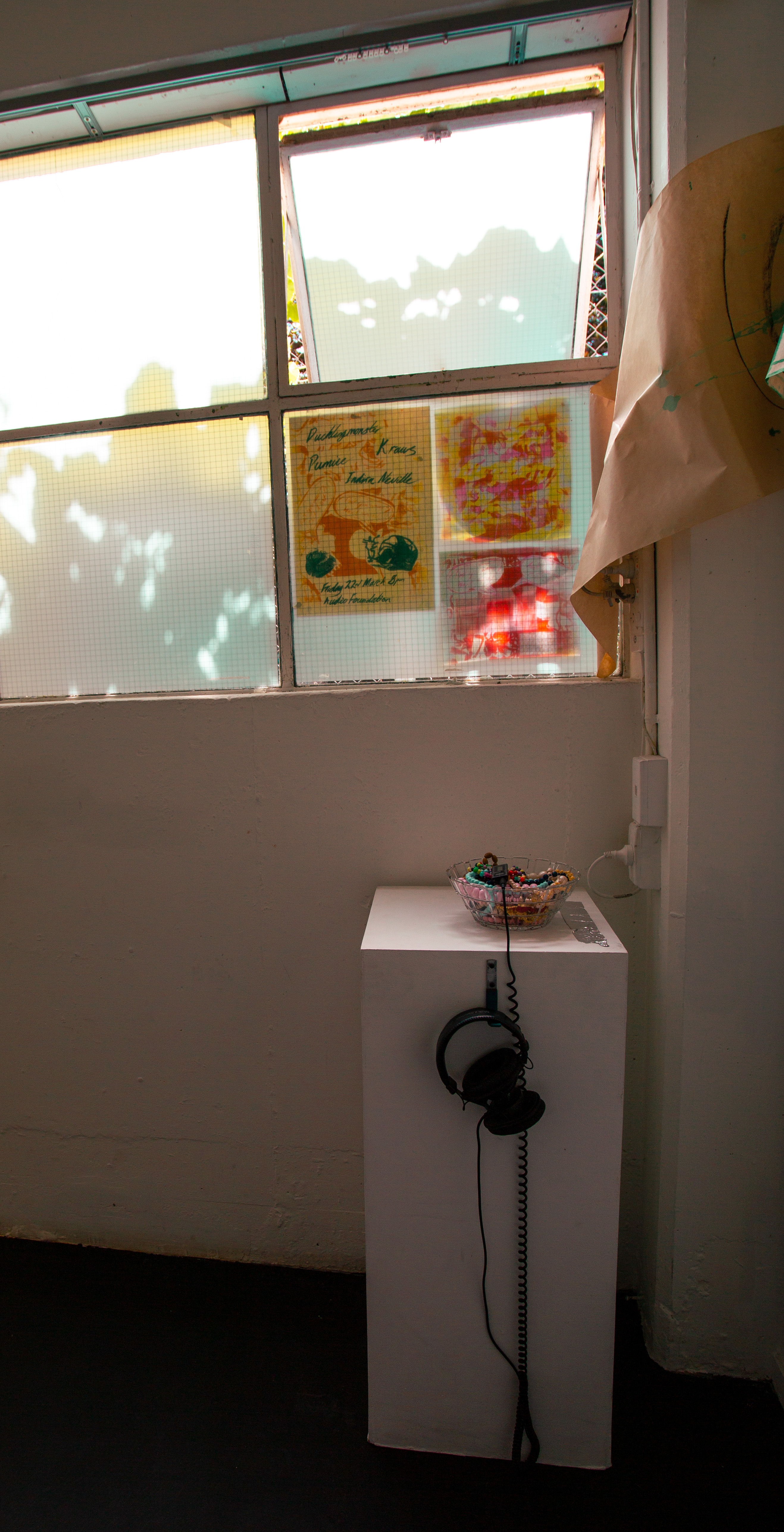
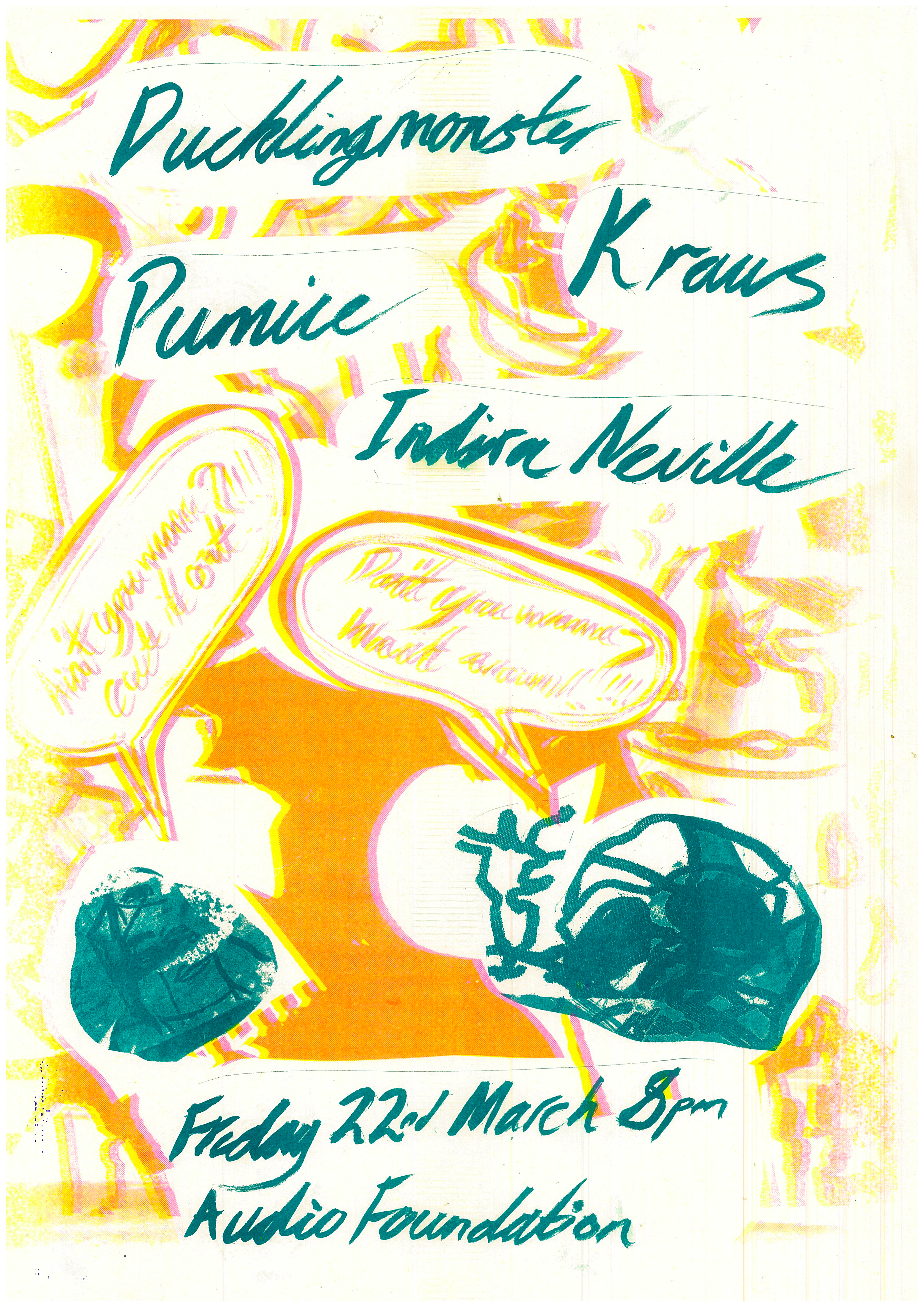
Performance night for Ain’t you wanna cut it out? Don’t you wanna wait around? (Audio Foundation 22 March)
Photos by Indira NevillePhotos by Liz Mathews
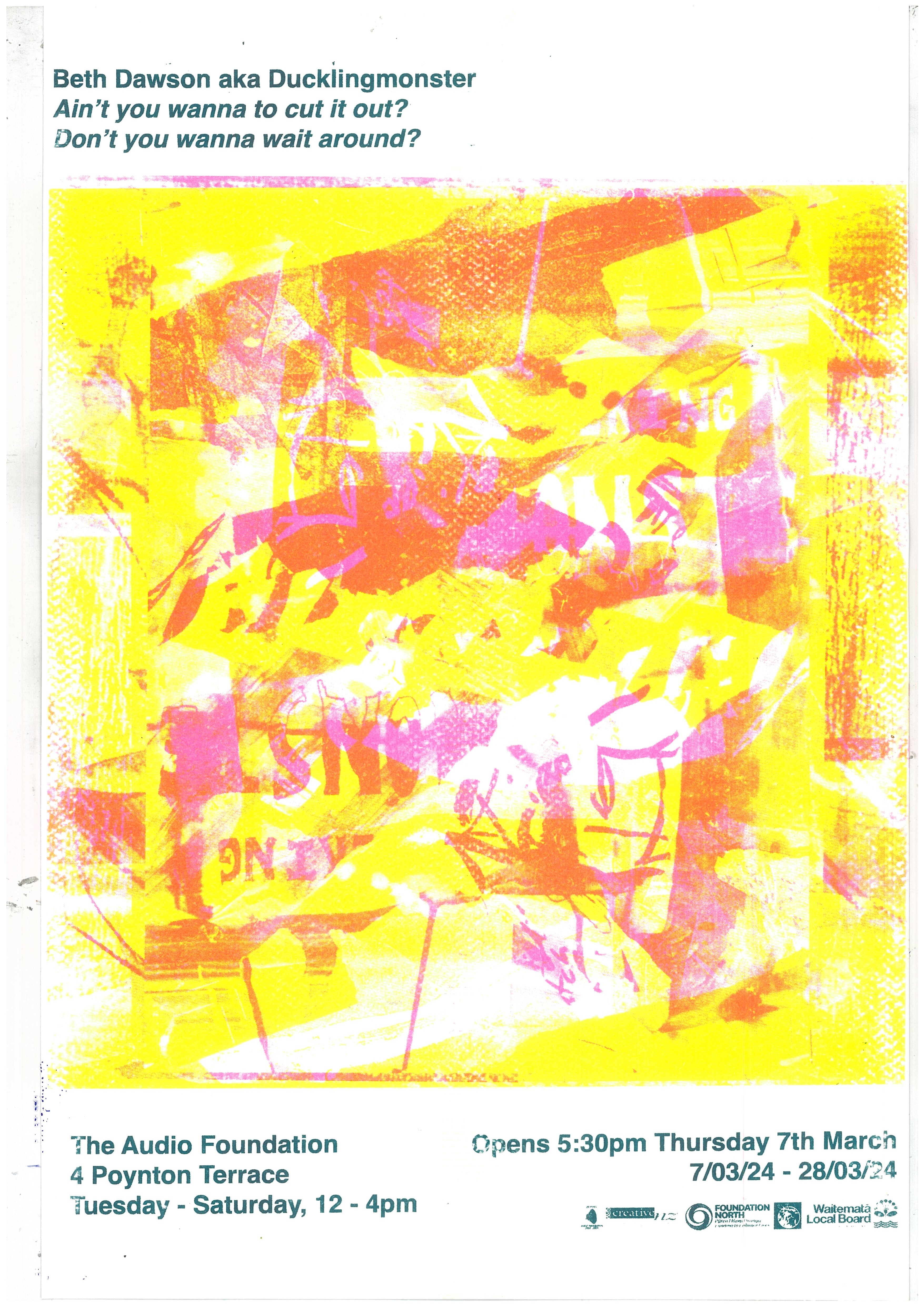
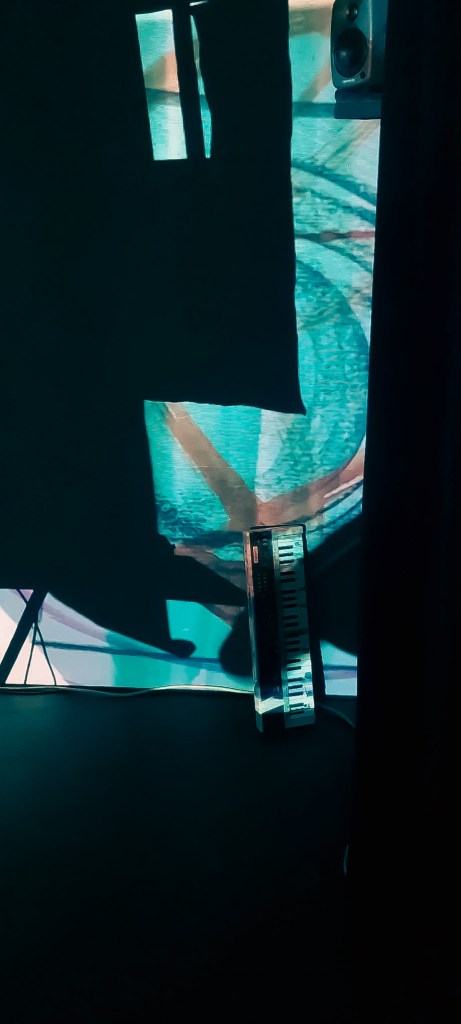
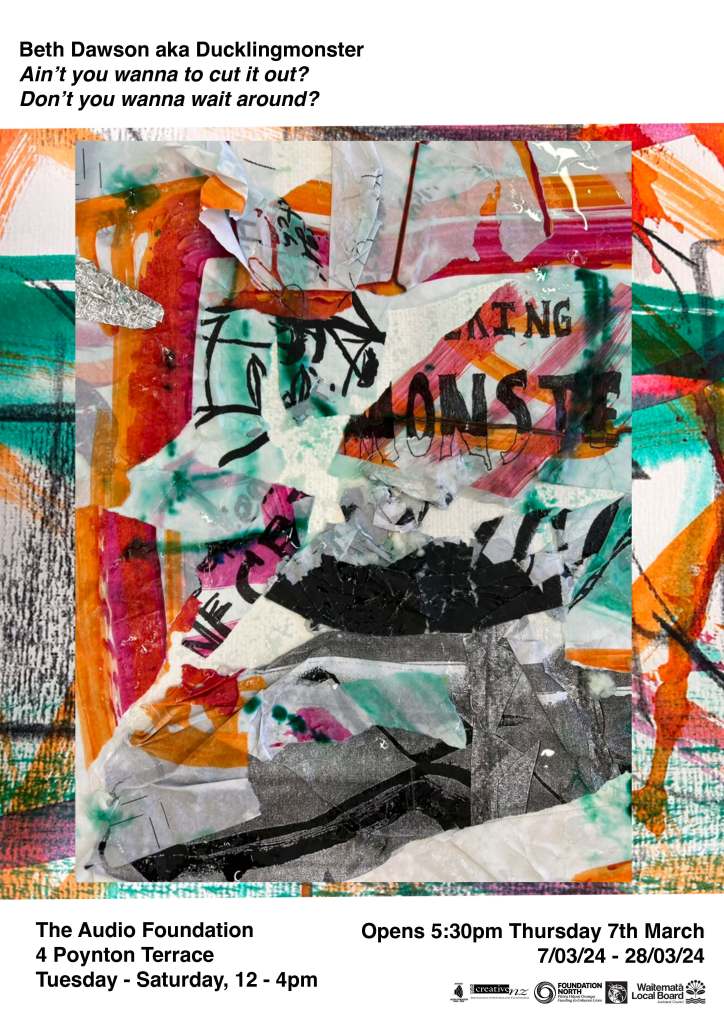
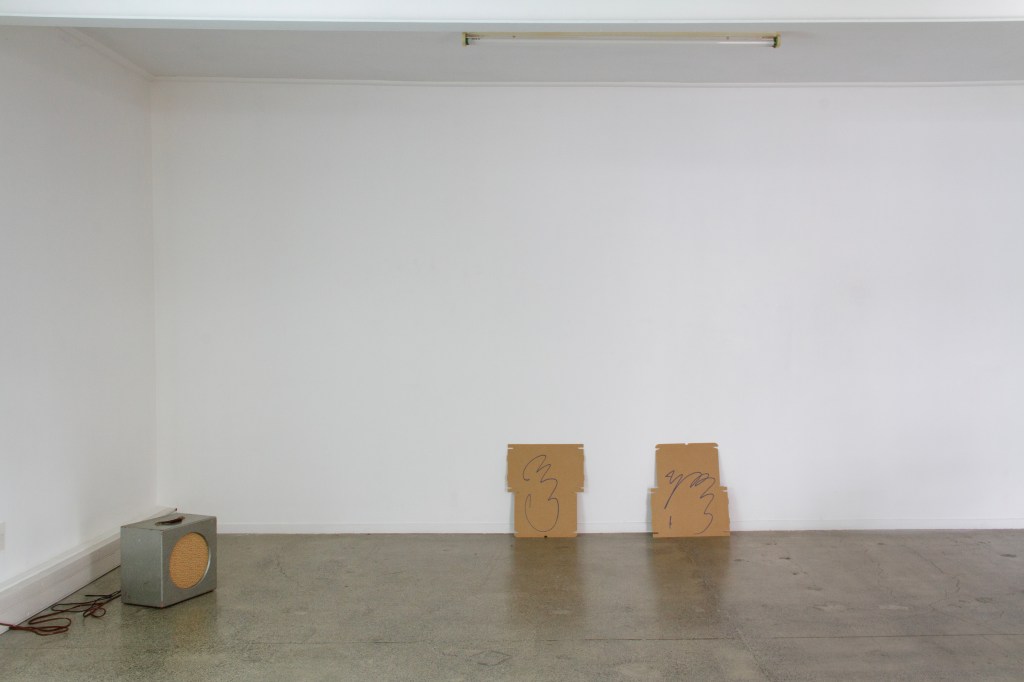
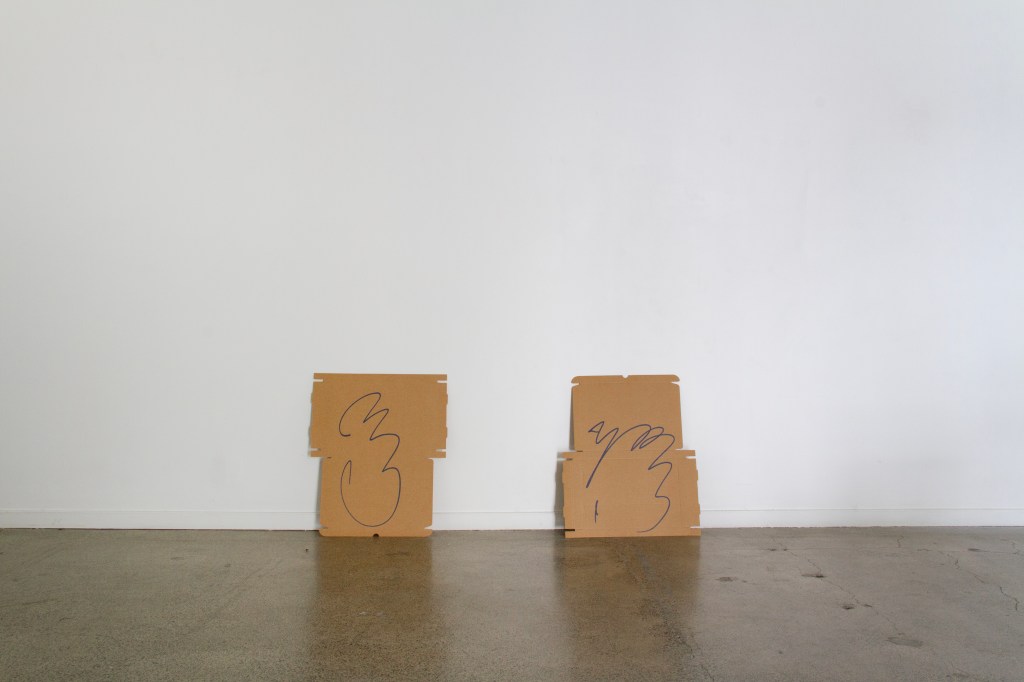
Ain’t you wanna cut it out? Don’t you wanna wait around? (Audio Foundation 7/3/2024-30/3/2024)
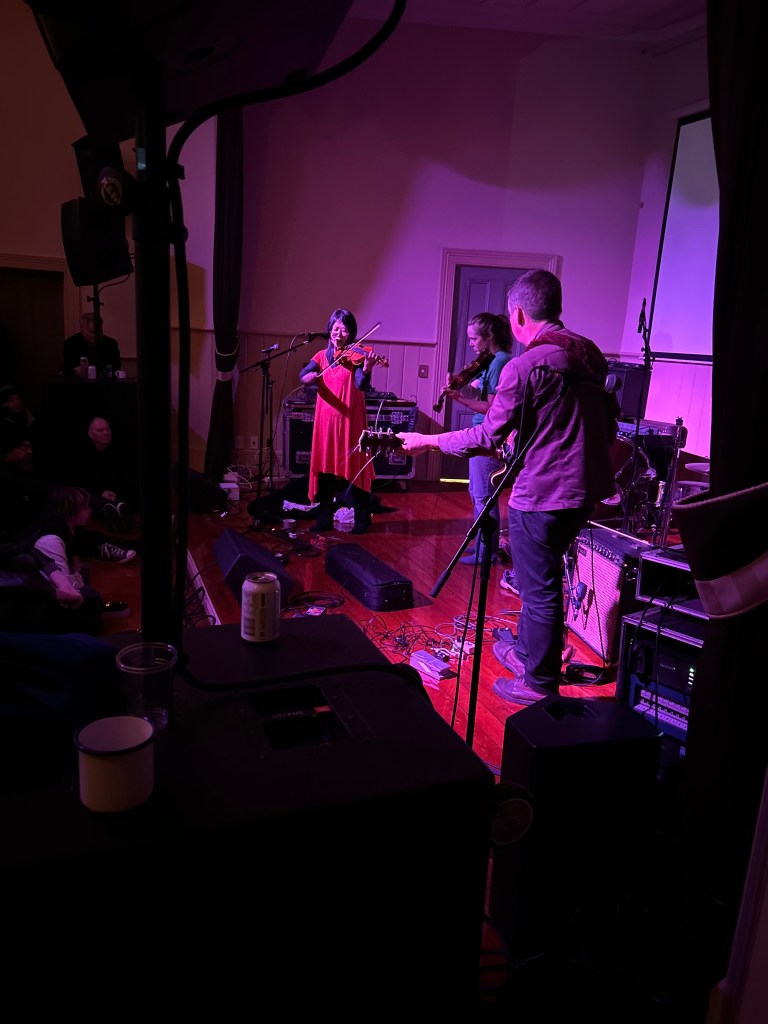
“Please join us to celebrate the opening of Ain’t you wanna cut it out? Don’t you wanna wait around?, a new exhibition by stalwart of sonic arts landscape, Beth Dawson (aka Ducklingmonster), which unfurls across the gathering spaces of the Audio Foundation.
In this exhibition, Ducklingmonster’s expanded actions of drawing, sound and video spill into moments of performance and improvisation, densely layering materials and media drawn from overlapping spaces of labour and leisure.
Opens: Thursday 7 March, 5.30pm, with refreshments by Liberty Breweries Hours: 12 – 4pm, Tuesday – Saturday Closes: Saturday 30 March
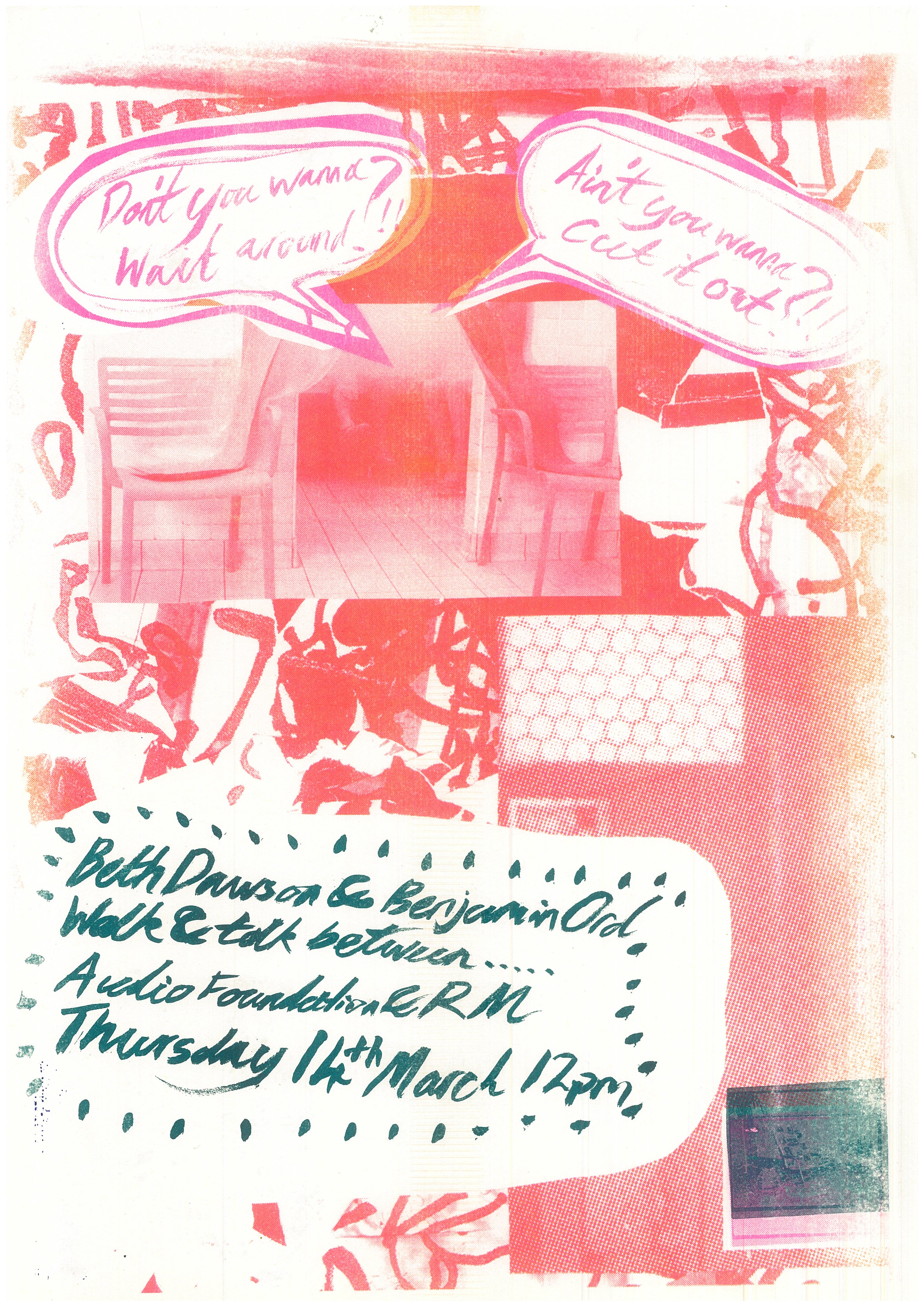
Special events Artist walk and conversation with Benjamin Ord Thursday 14 March, 12pm beginning @ Audio Foundation ending @ RM
Live performances by Ducklingmonster, Kraus, Pumice and Indira Neville Friday 22 March, 8pm @ Audio Foundation” Exhibition press release
“A Dance But No Figure is an exhibition featuring work by Benjamin Ord, Salome Tanuvasa, and Uniform.
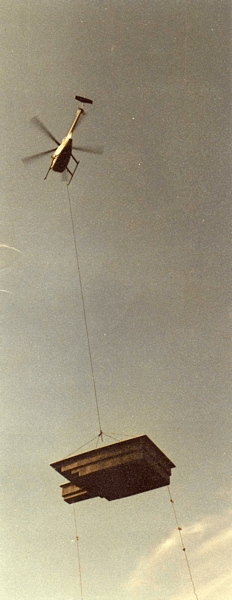
Featuring a new film combining Super 8 and 4K digital footage by Benjamin Ord, Bathing Solo (1,2,3) re-stages a three part dance solo inside a steam room, allowing the heat and humidity inside the bathhouse to damage the film and obscure the view of the dance. The film probes the limits of the camera’s ability to capture a live body, where the fleeting, impermanent nature of steam stands in opposition to the camera’s ability to capture it. In evoking what is seen and unseen, choreographic form is both obscured by and embedded within the materiality of the film itself. As it moves fluidly through temporal states of past, present and future, the film is simultaneously a document, performance and score. Through the film’s live projection in the gallery, the viewer witnesses a solo dance performance of partially erased choreography.
During the opening night of the exhibition Uniform collective perform a live sound performance in response to the film. The recording of this spontaneous act is then installed into the exhibition space and left as an intermittent looping presence over the duration of the exhibition. Salome Tanuvasa simultaneously performs the making of a series of gestural drawings that respond to the audience as they are submerged in the soundscape of Uniform’s performance and the visual field of the film. These drawings act as recordings of liveness which are then abandoned and left to remain in the space for the following weeks of the exhibition. The live event and choreography is rematerialised across several forms that hold space as both objects and scores for future iterations.
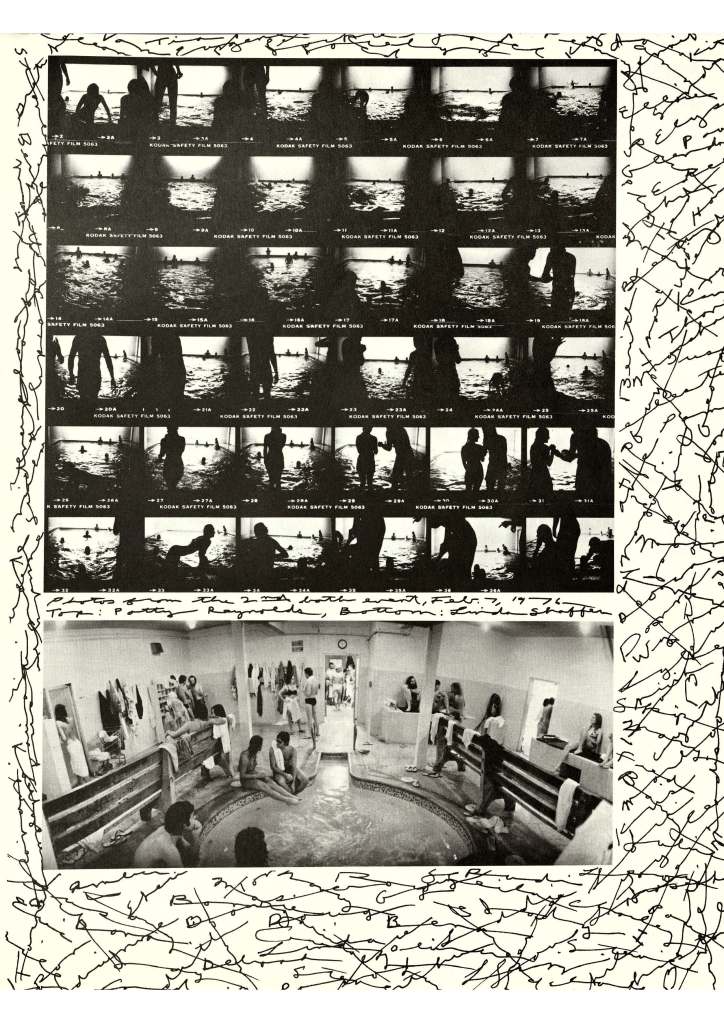
Stemming from research into the global resurgence of public bathing, the exhibition explores ideas of communal embodiment inherent to these radical democratic practices of anti-competition, anti-hierarchy, and anti-privatisation. In taking choreography as a tool for self-enactment, where the creative act relates to a group rather as opposed to the self-contained individual, the exhibition aims to consider art making as an activity rather than a finality or production line. In perpetual slippages between abstraction and representation, the internal and external, body and object, A Dance But No Figure stages art works which are continually lost, held and reformed in subtle gestures towards futurity.” Exhibition press release
1. material made of a network of wire or thread. “mesh for fishing nets”
2. an interlaced structure. “cell fragments which agglutinate and form intricate meshes”
verb
1. (of the teeth of a gearwheel) be engaged with another gearwheel. “one gear meshes with the input gear”
2. COMPUTING represent a geometric object as a set of finite elements. “choosing the icon allows you to automatically mesh your design”
That’s one of the things that “queer” can refer to: the open mesh of possibilities, gaps, overlaps, dissonances and resonances, lapses and excesses of meaning when the constituent elements of anyone’s gender, of anyone’s sexuality aren’t made (or can’t bemade) to signify monolithi cally. The experimental linguistic, epistemological, representational, political adventures attaching to the very many of us who may at times be moved to describe ourselves as (among many other possibilities) pushy femmes, radical faeries, fantasists, drags, clones, leatherfolk, ladies in tuxe does, feminist women or feminist men, masturbators, bulldaggers, divas, Snap! queens, butch bottoms, storytellers, transsexuals, aunties, wanna bes, lesbian-identified men or lesbians who sleep with men, or … people able to relish, learn from, or identify with such.
Sedgwick, Eve Kosofsky. Tendencies. Durham: Duke University Press, 1993. Accessed February 15, 2024. ProQuest Ebook Central.
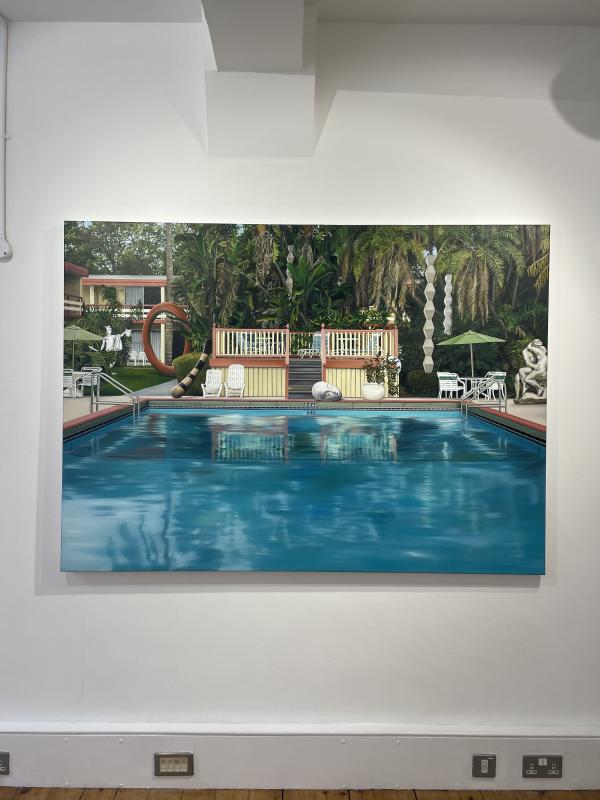
Leisure — I am at leisure. That’s like the whole and entire point of a swimming pool, kind of. I mean you can swim laps but even they are actually un-productive. ANTI-productive. Like, you’re not going anywhere. Really, swimming laps is just the protestant work ethic expressing itself. Enjoyment always has to be a little bit unpleasant. No, no — the swimming pool is about dead time. I think dead time is a good thing.. But I guess I would say that, because I am here. Trapped inside an Alina Grassman painting, Bestiary (Room 8)
‘Rather than dematerialise, dance rematerialises. Dance like energy, never disappears; it is simply transformed…The ephemeral does not equal unmateriality’
1 Muñoz, J. (2009) Cruising Utopia: The Then and There of Queer Futurity. p81
Muñoz goes on to cite dance critic Marcia Siegel’s claim that dance exists as a perpetual vanishing point, but as he points out ‘… a vanishing point signals a return, the promise of the next performance, of continuation.’
The exhibition format is a mode of utopia that draws on a perpetual loop of ephemerality
Artworks can be formed through a continual process of remaking, re-enlivening, re-contextualising, and re-staging. [Even if their central material form has disappeared.]
The ephemeral act of performance can be taken as the source material, and whatever form the artwork takes, becomes a mode of rematerialisation of that which has supposedly been lost.
The idea of form is always held lightly, objects are only a pause to allow something new to happen, they resist finitude and have the sense that they could always morph into something else on another day.
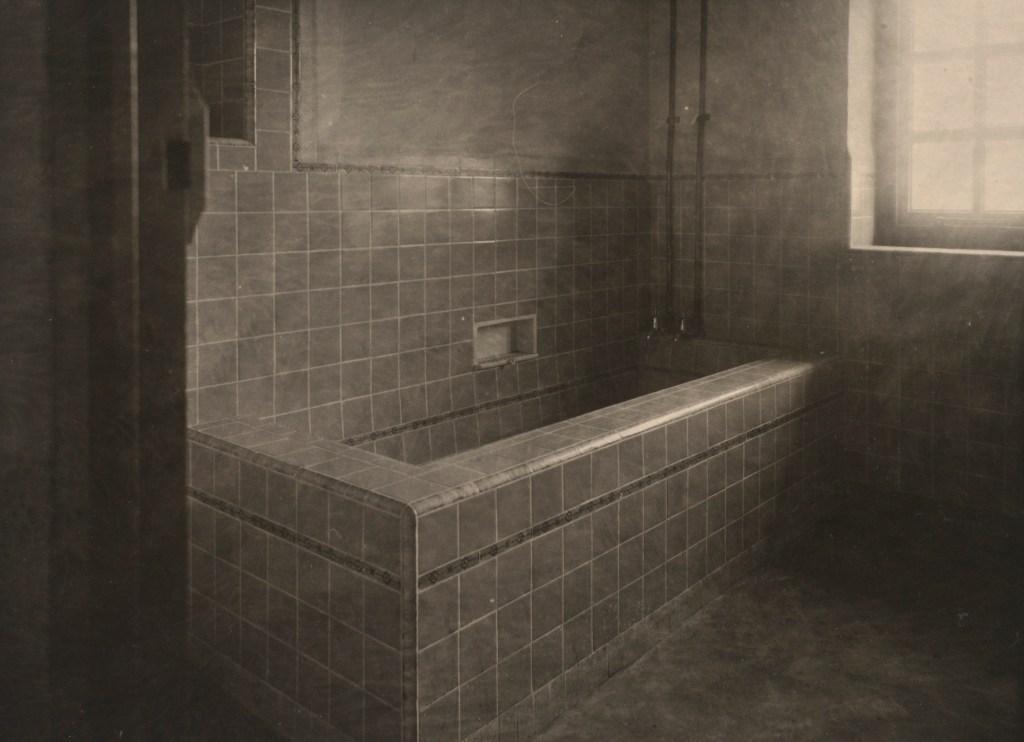
Name Wilkinson House – The Bath Production J.W. Chapman-Taylor; 1920s; Taranaki Classification gelatin silver prints, black-and-white prints Materials silver, photographic gelatin, photographic paper Registration Number O.002474/1
Sound Steam
Sound hitting walls
Steam hitting walls and turning into drips of water
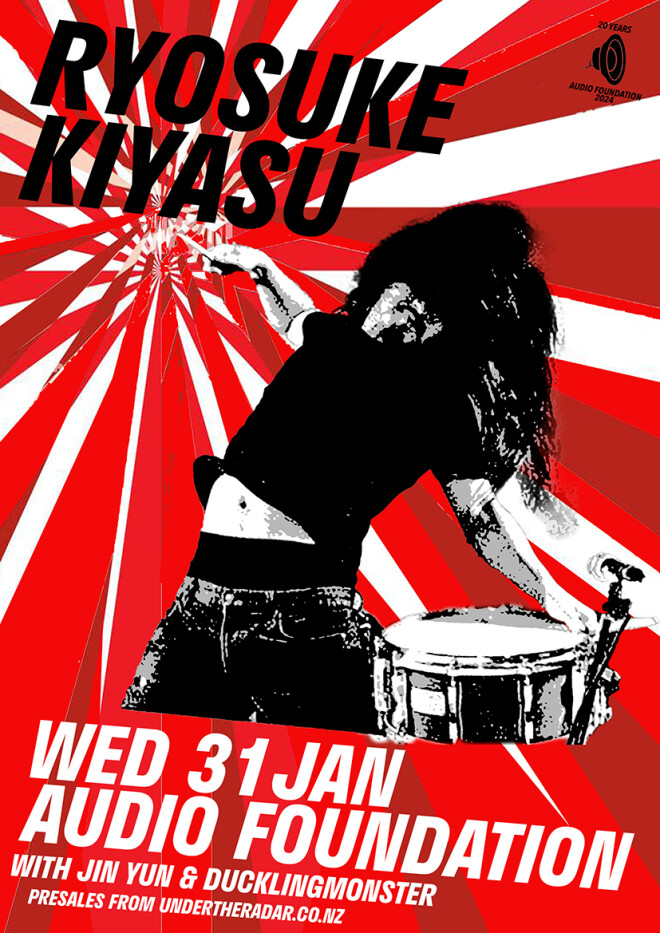
“Ryosuke Kiyasu has captivated the world with his solo performances. Using only a snare drum, he viscerally explores the sonic complexities of a single instrument.
Kiyasu has been active as a snare drum soloist since 2003 and is also known as a drummer in SETE STAR SEPT, Kiyasu Orchestra and Keiji Haino’s band Fushitsusha.
His solo performances have been featured on BBC News and VICE Magazine, and he garnered over 23 millon views on his 2018 performance in Berlin. He has released more than 200 albums, both solo and with his band.”
“Tāmaki Makaurau based Jin Sik Yun is a Korean Kwaenggwari (Korean flat gong) player with a healthy disregard for convention. With a deep connection to their cultural heritage and fondness for the experimental, Yun transforms the shrill beats of the Kwaenggwari into a contemporary sonic experience. They hope to captivate audiences with the mesmerizing resonance of this age-old Korean gong.”
Contemporary field recording tries to acknowledge that if I go in the field, I’m also in that field as a recordist, and my presence will change that field. I make decisions as to what microphone to use, as to where and how I walk, where I go and, implicitly or explicitly, I’m in the recording with my body and all my decisions. And of course, because it’s not really there as an authentic recording but rather there is an acknowledgment that there is a composition going on, there is a recomposing of the authentic world going on, and maybe there is no authentic world. So there can’t be a consensus of how it is experienced. Is, then, listening in science just ignoring that component and thinking, well, if I have the best of what is currently available andconsidered the best, I will reach the real world?” Salomé Voegelin
Barney, Anna, andBarney, Anna, and Salomé Voegelin. “Collaboration and Consensus in Listening.” Leonardo Music Journal 28, no. 1 (2018): 82-87. muse.jhu.edu/article/711556.. “Collaboration and Consensus in Listening.” Leonardo Music Journal 28, no. 1 (2018): 82-87. muse.jhu.edu/article/711556.
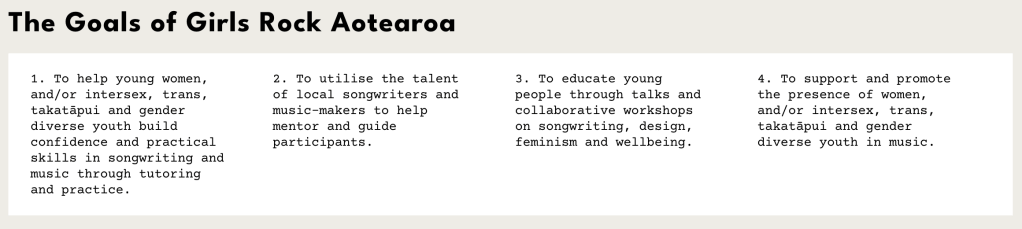
I was invited to facilitate two workshops introducing experimental electronic music and the work we do with the Audio Foundation’s Musical Electronics Library at the To The Front (formerly Girls Rock Aotearoa) programme.
The workshop began with a short talk followed by a series of improvisation exercises. I had set up six noise tables that each had an amp, mixer, and three or four M.E.L devices. I wanted to introduce feminist art strategies of using distortion and collage to disrupt dominant cultural narratives. Employing tropes of horror film (double images, shadow, slowed dialogue, distorted faces, sinister trees) I edited a free domain 1960s teen talent beauty pageant film into a 10 min clip. I gave each noise table a visual cue card as a score for the film.
The attendees improvised on the M.E.L devices with the cue cards while watching the film. I recorded each workshop and set the live score to the film.
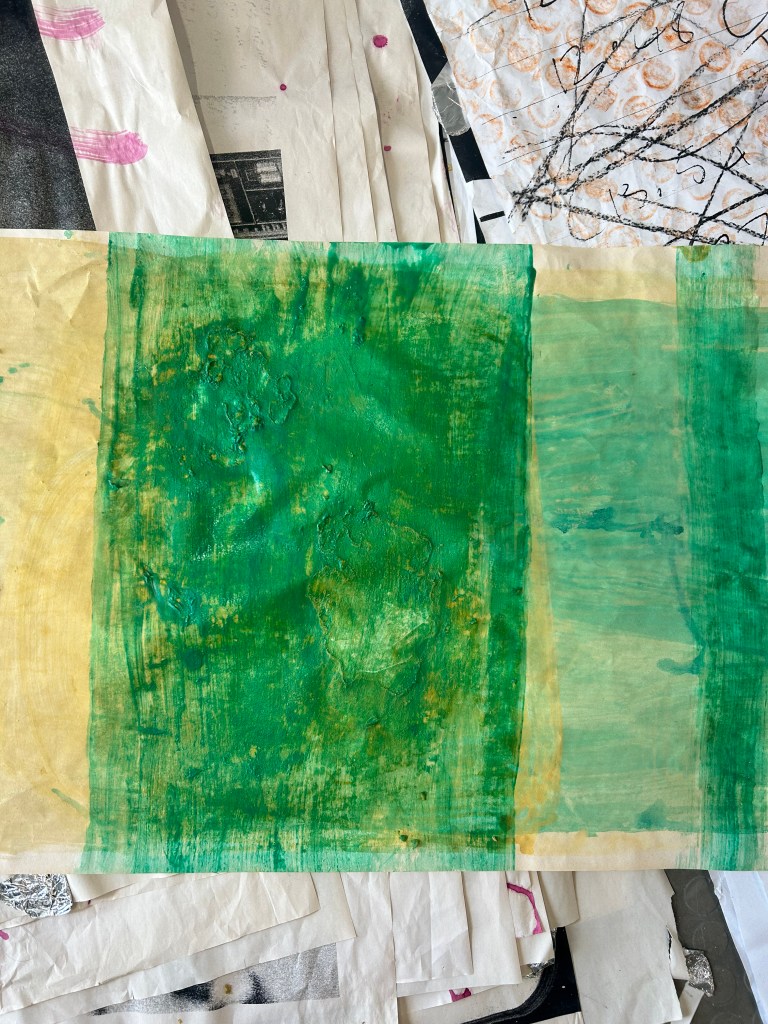
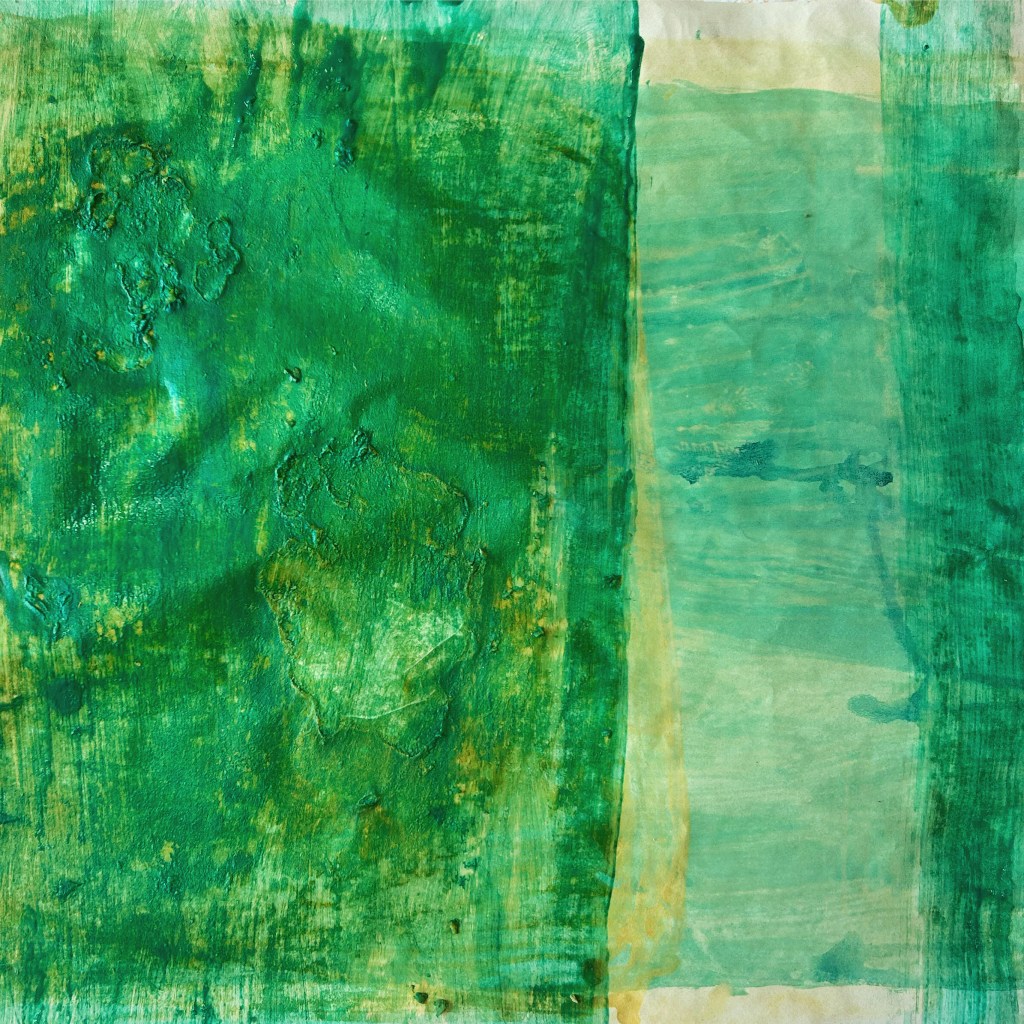
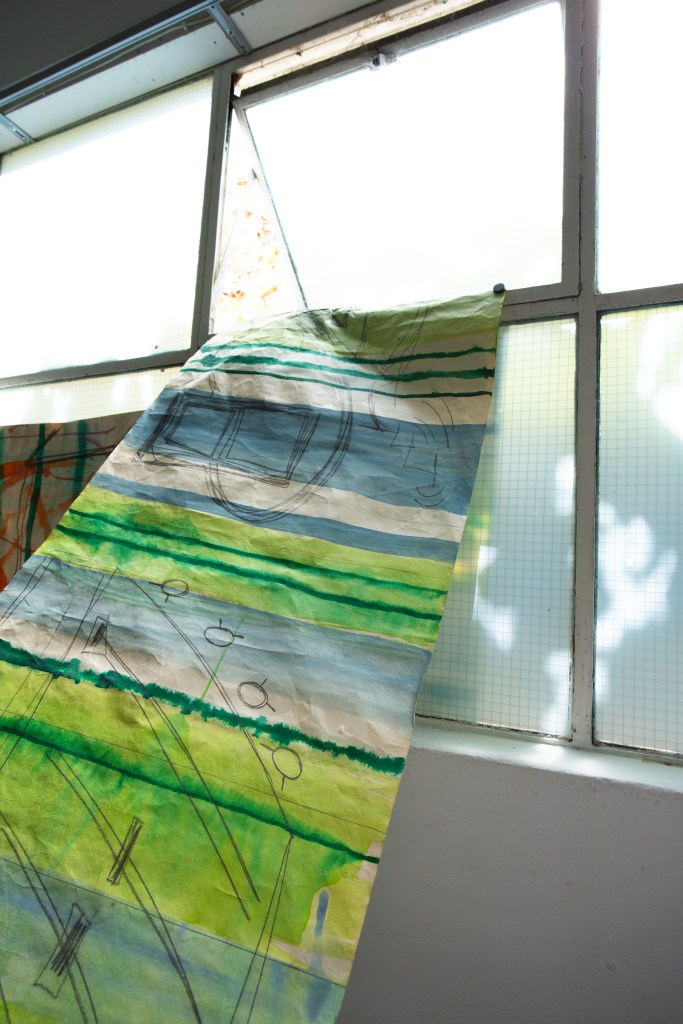
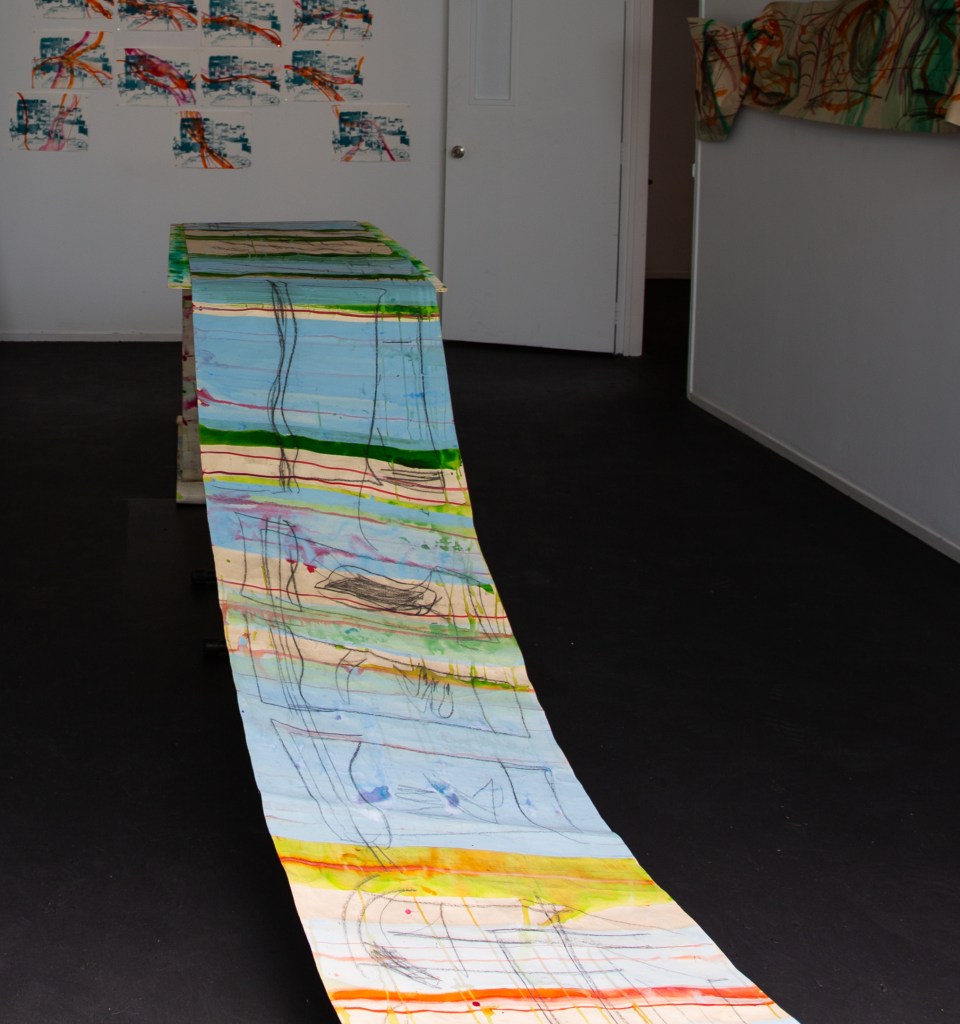
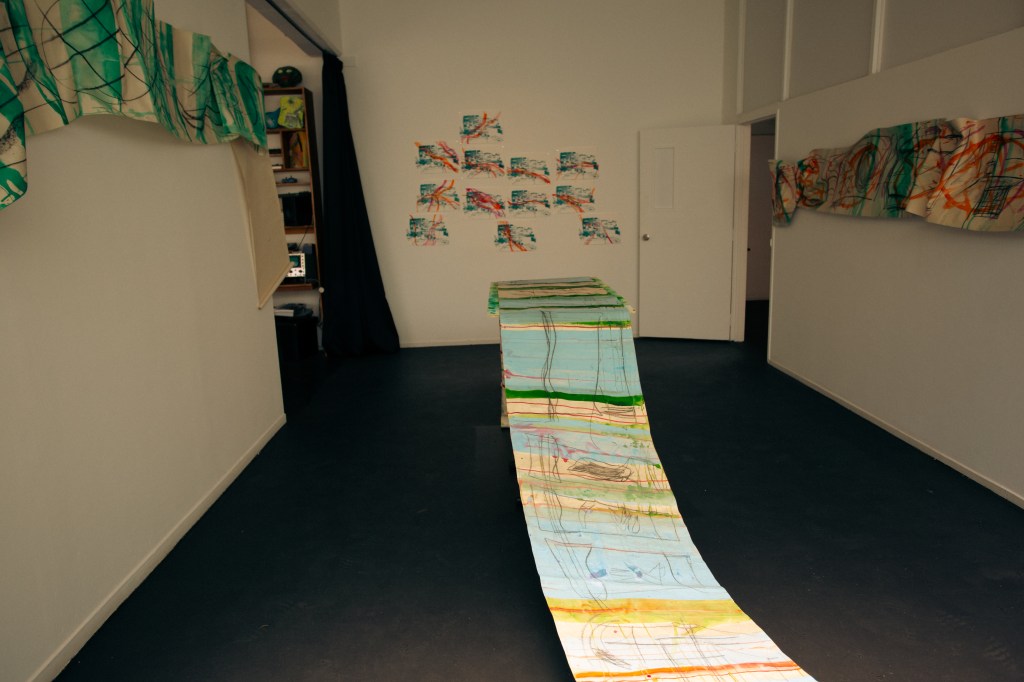
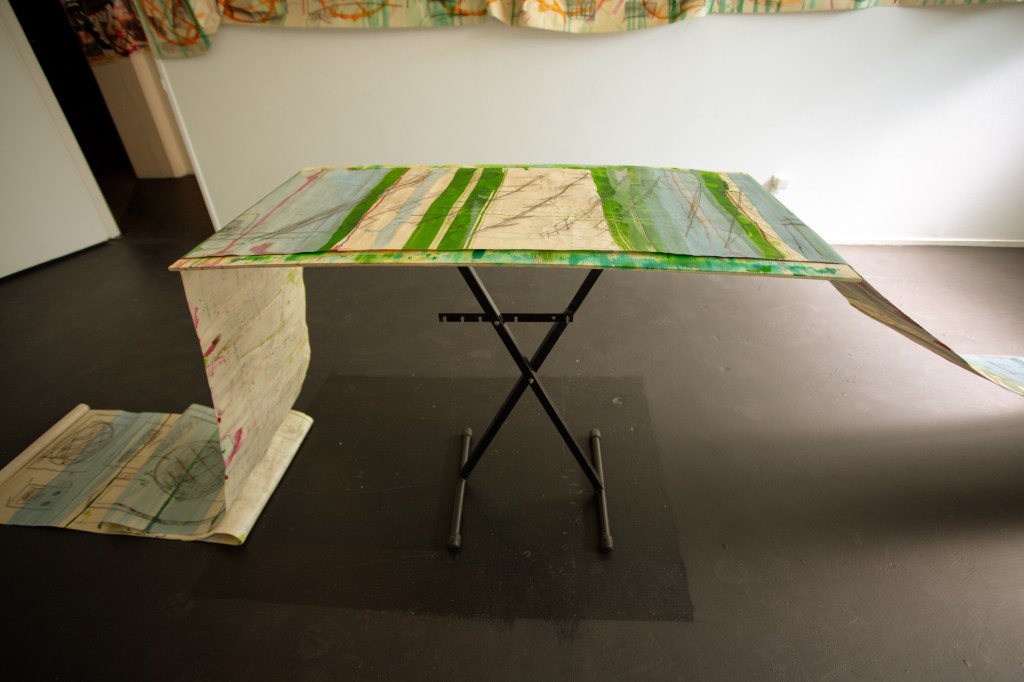
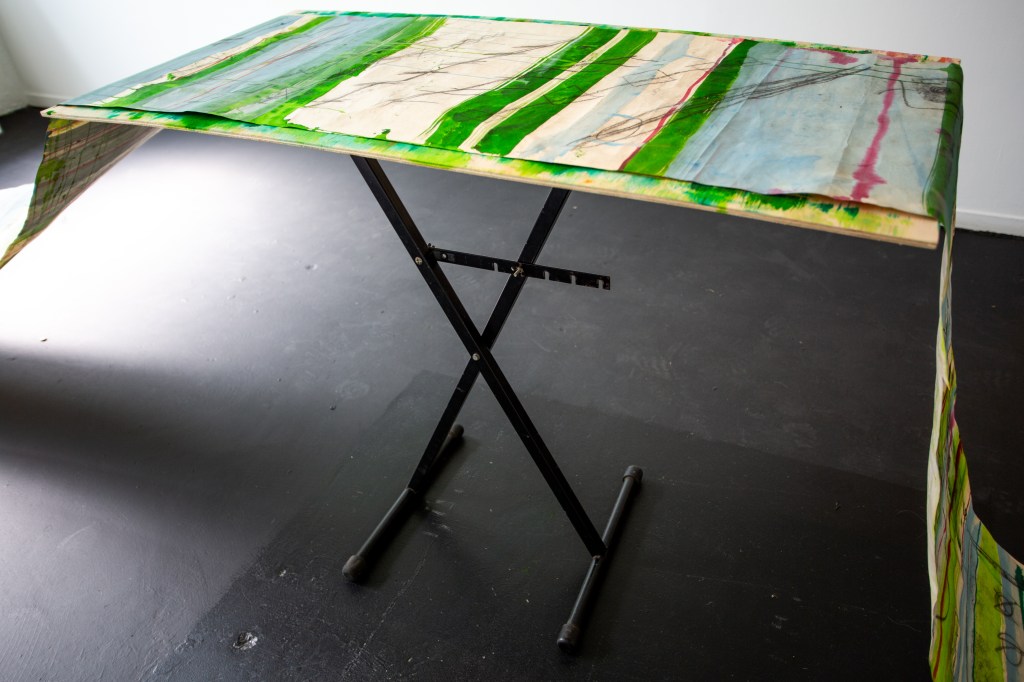
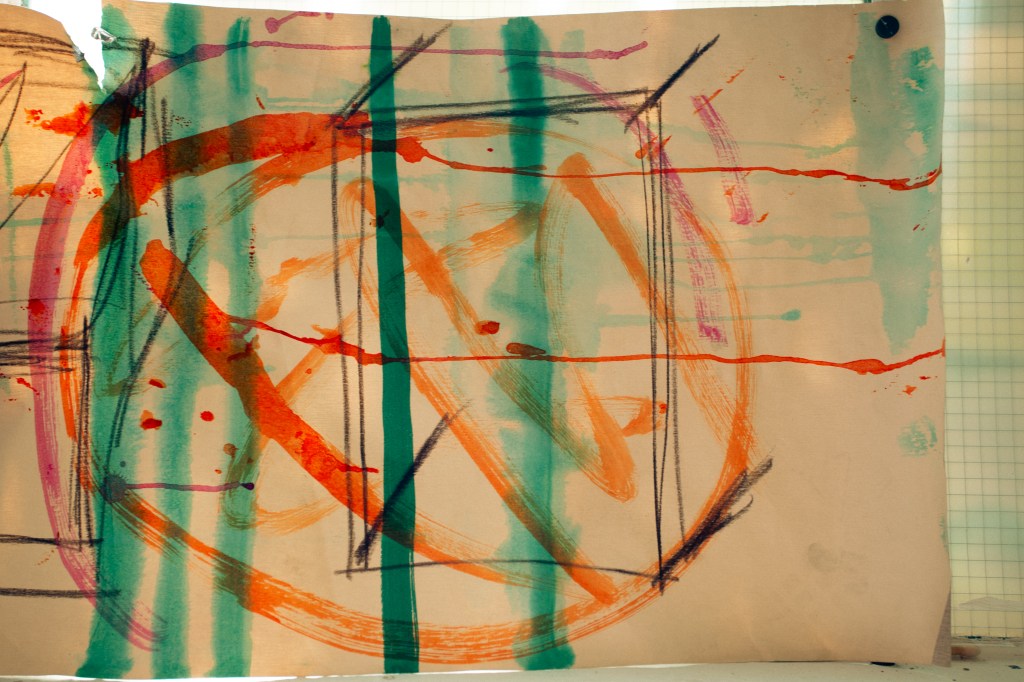
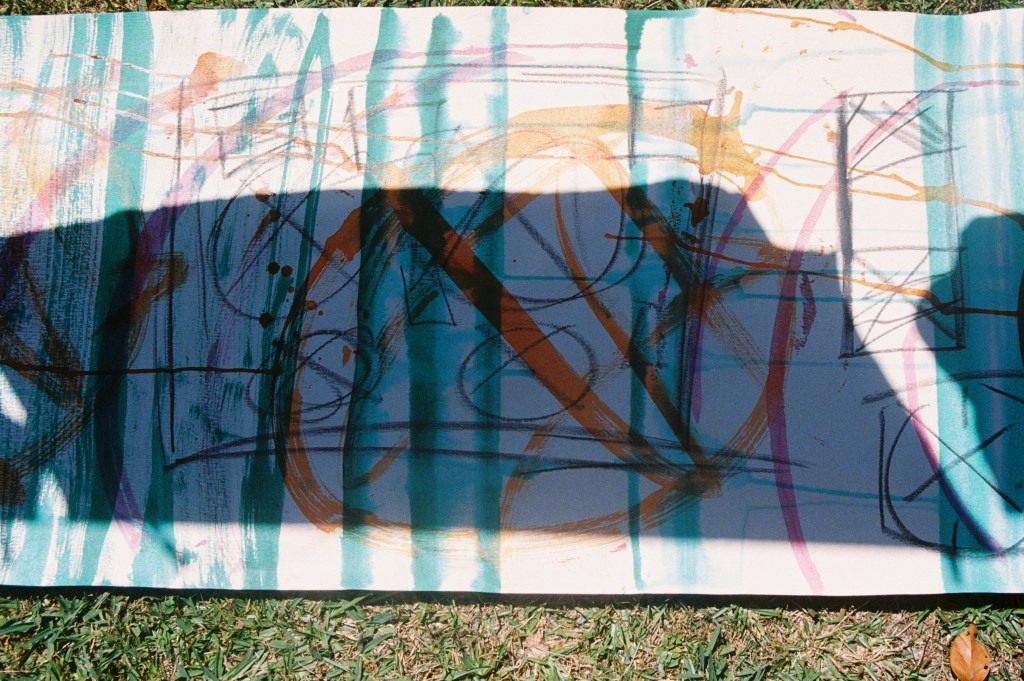
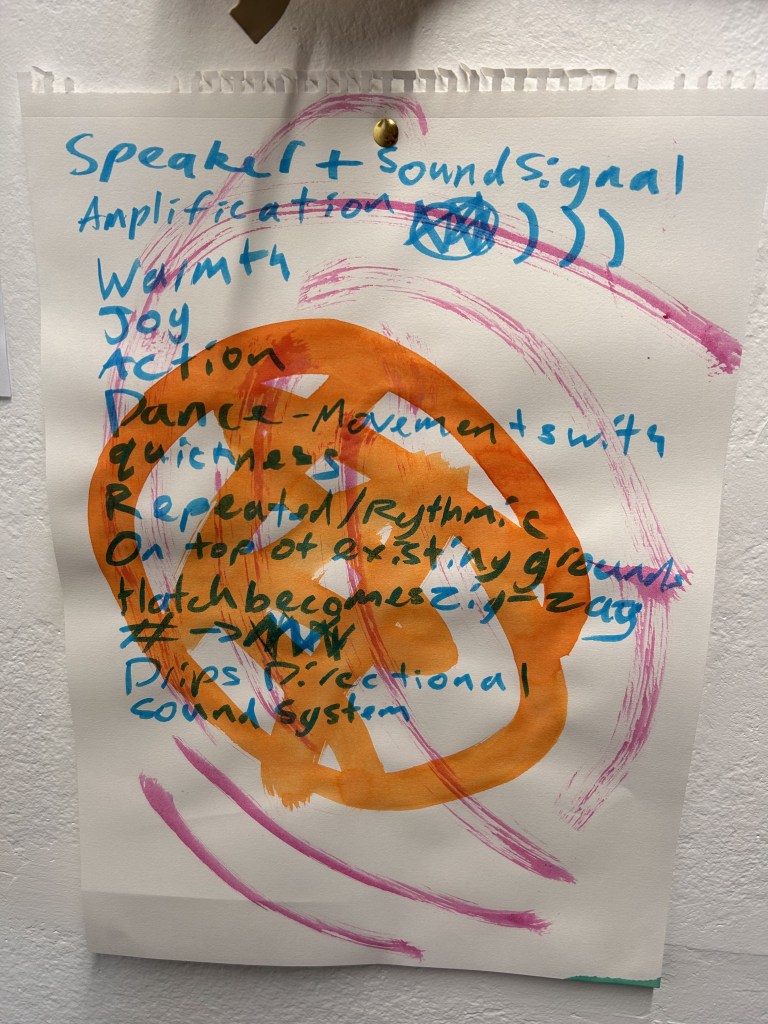
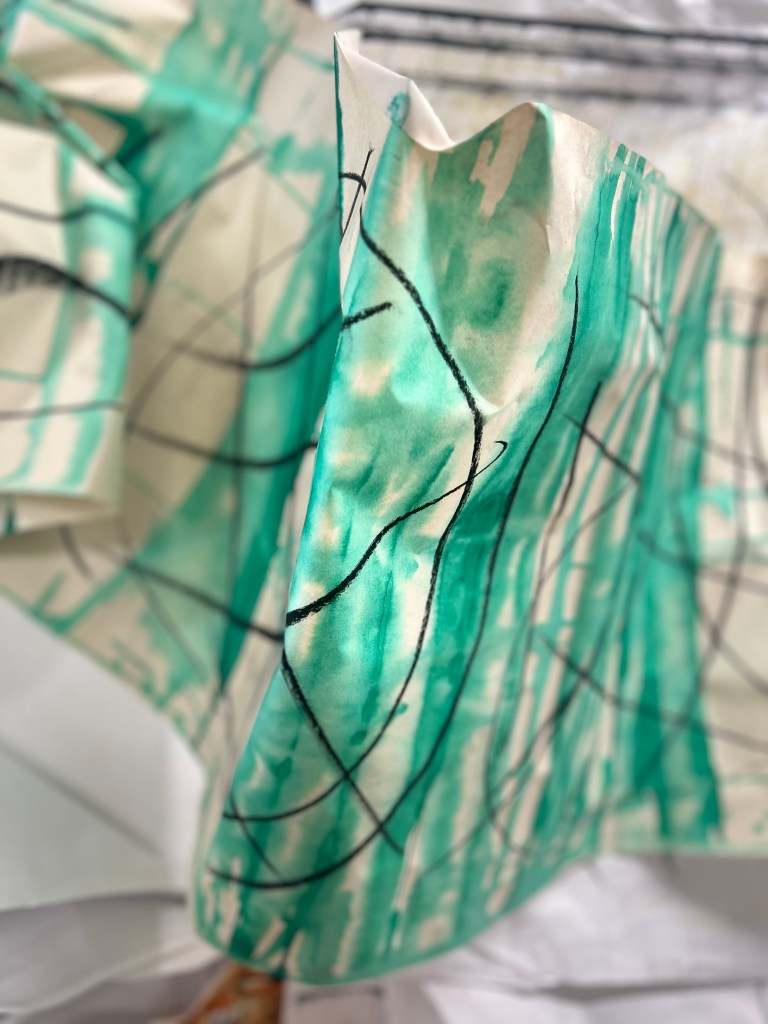
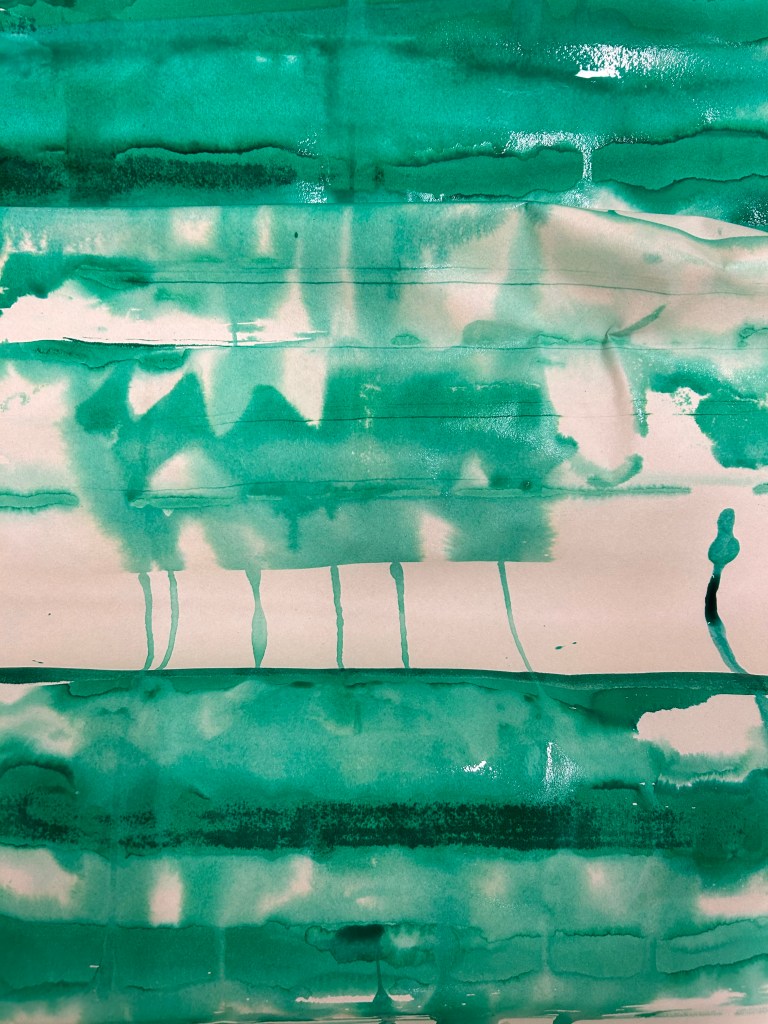
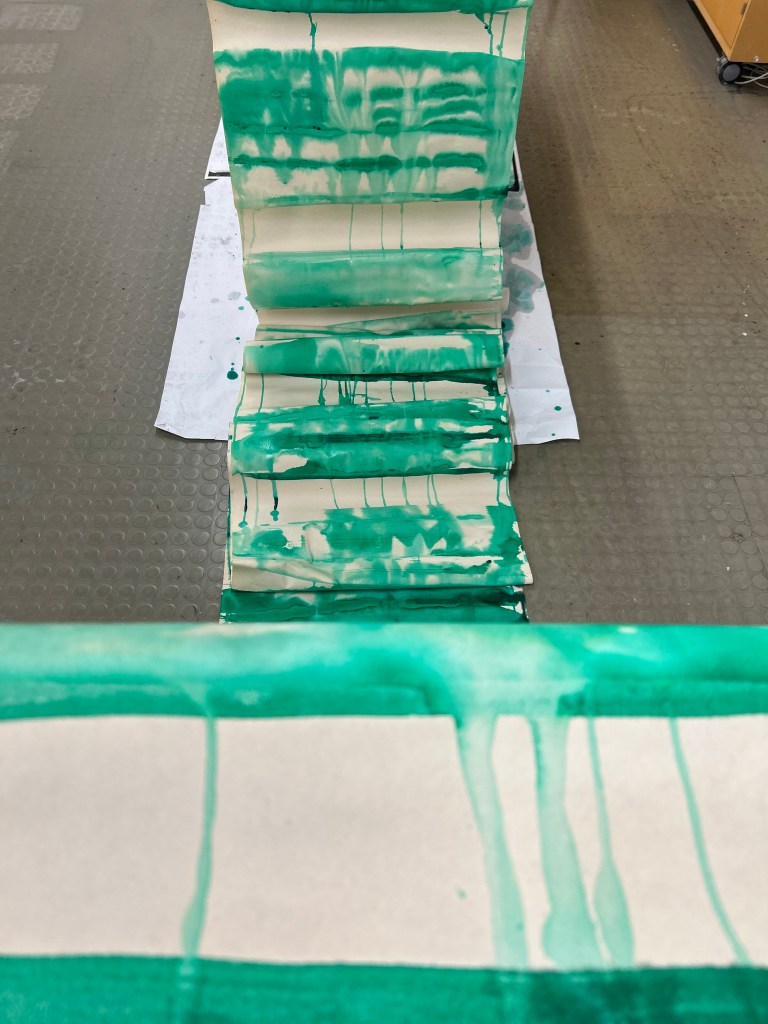
Library stamp ink, wallpaper, water saturation. Progressed across the table, water stripes then ink applied, progressed across the table to spool while wet. Ink drips and saturation brings different directional physical forces into play with my brush strokes. Waveform. Timeline. Film-reel.
Performance 29/11/23, Hollywood Avondale, pre-screening live set by Ducklingmonster and Rachel Shearer followed by a screening of Sisters With Transistors
Postgrad Mini-Symposium
Pieces collected after the paper piece experiment at the mini-symposium
Generative actions of noise and mark making are traces of proximity. These embodied input actions are a feedback loop with the output of a sound or a drawing.
Audio feedback (also known as acoustic feedback, simply as feedback) is a positive feedback situation that may occur when an acoustic path exists between an audio input (for example, a microphone or guitar pickup) and an audio output (for example, a loudspeaker).
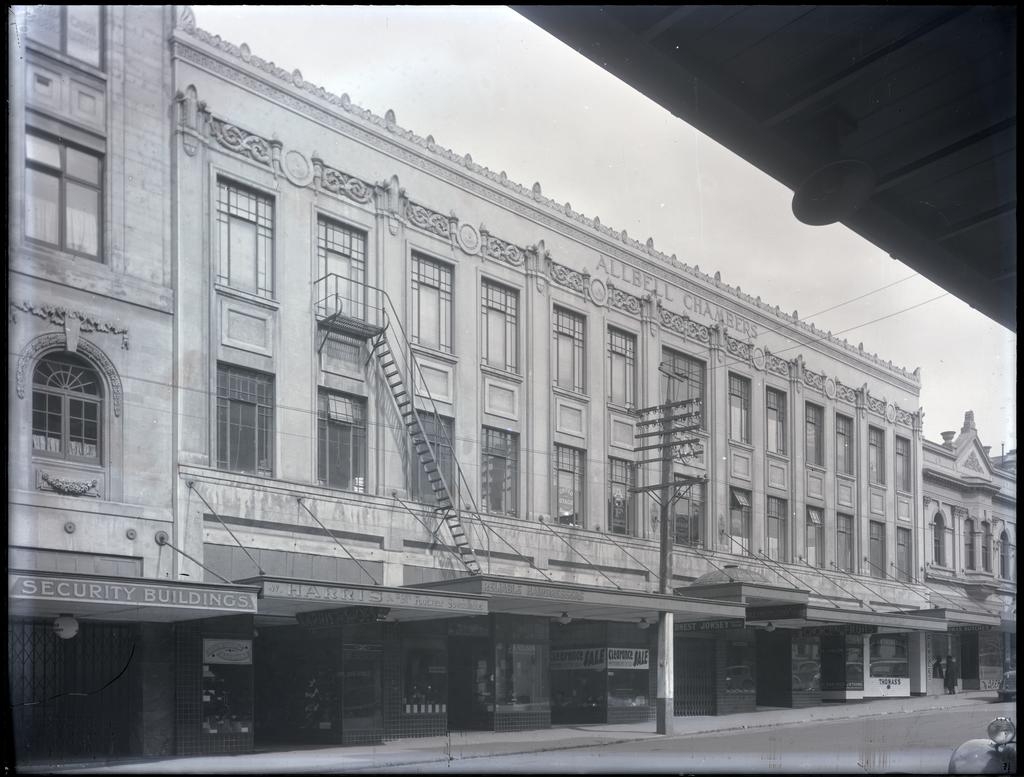
Collaboration with Charlotte Paralell towards show a RM . Being in Dunedin afforded me time to collaborate in person with Charlotte. We first meet up in person at her studio at Allbell Chambers, an only-in-Dunedin artist-run initiative located in a center city historic building where the residents have constructed studios of different configurations. Charlotte’s studio is large and light-filled with windows that over-look one of the main streets, this aspect is similar to my own home-studio on K Rd. Here we discuss our aims for the show, our shared reading of Salomé Voegelin, and show each other the initial sound-expressed drawing we have both been making. What we notice is a building network of feedback between sound and image and moments of configuration. One of the phrases I think of for this is invisible neighbourliness. Over the next couple of days I come to Charlotte’s studio and make field recordings and crayon rubbings.
Our second meet-up is at Charlotte’s home which is located in the Anteroom, an artist-run project space located in an ex-Masonic Lodge. A.R.I in historic buildings that once housed civic social clubs has been a theme of my Dunedin trip that has me thinking about access and use of buildings. The size of Anteroom allows us to chalk the plan outline of the exhibition space at Rm. In the main room of the Anteroom, we set up amps, effects pedals, keyboard, mixers, and the speaker-stack instruments that Charlotte has been building. Over an hour we make loud noise moving and playing with the squeals of feedback, low hums and matching frequencies to the keyboard’s scale. I made a field recording of fifteen minutes of our sound.
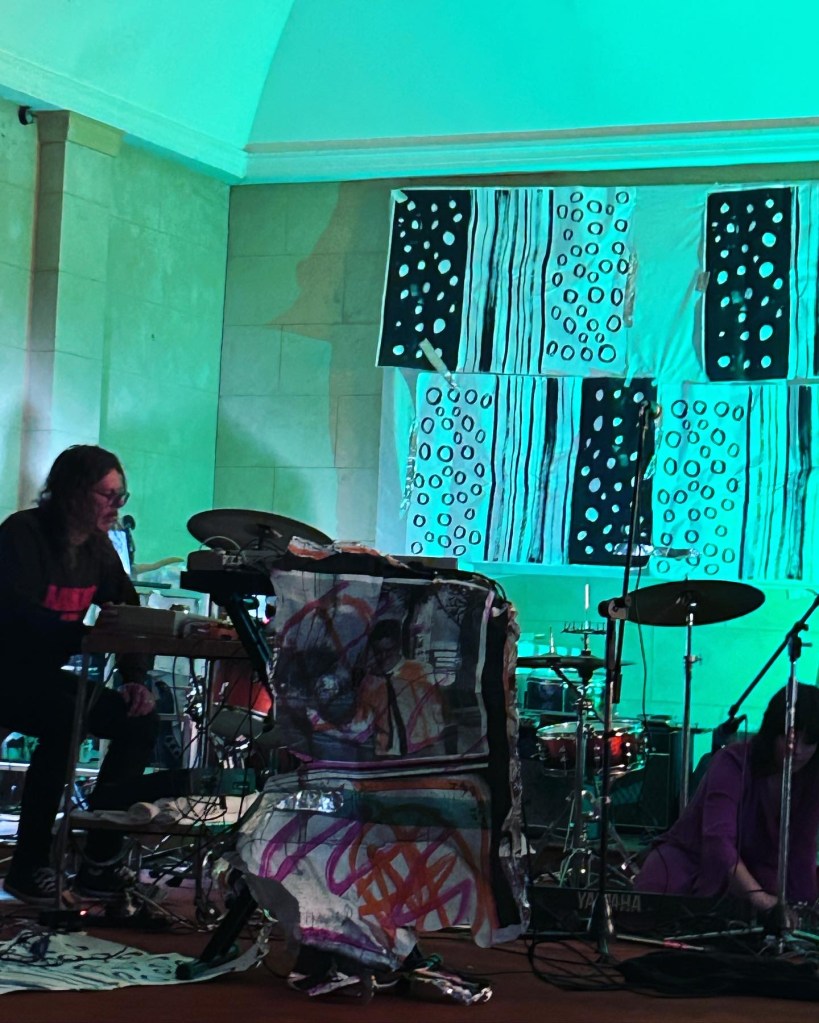
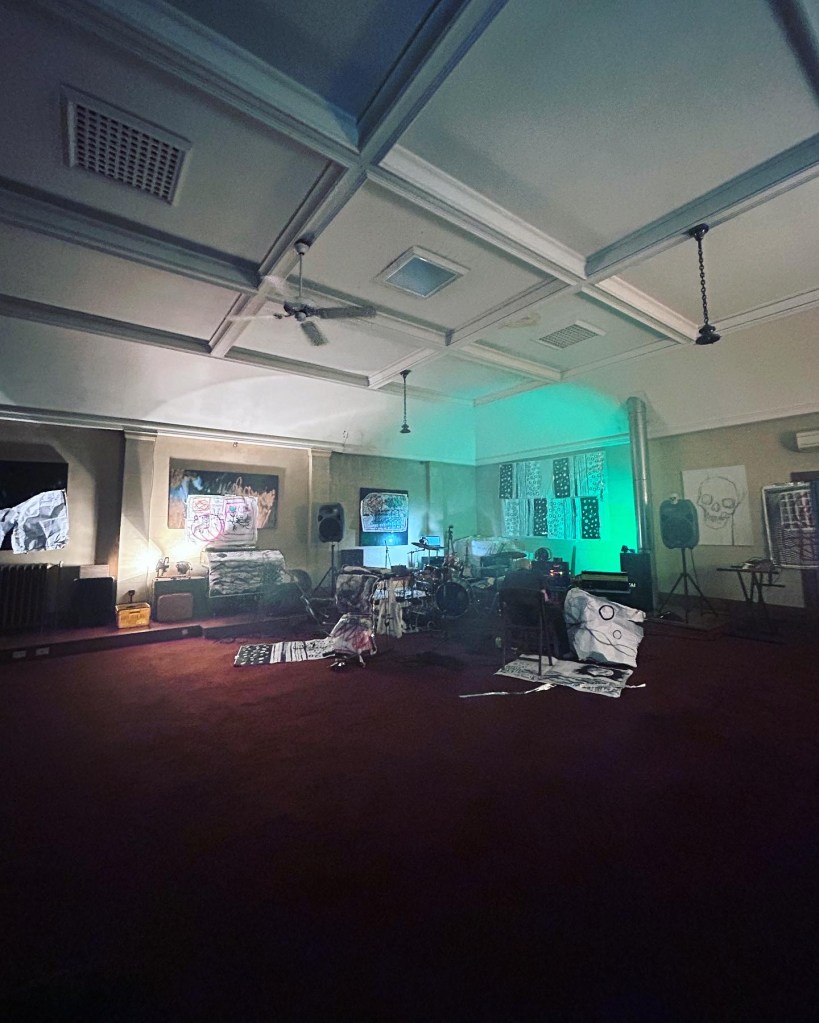
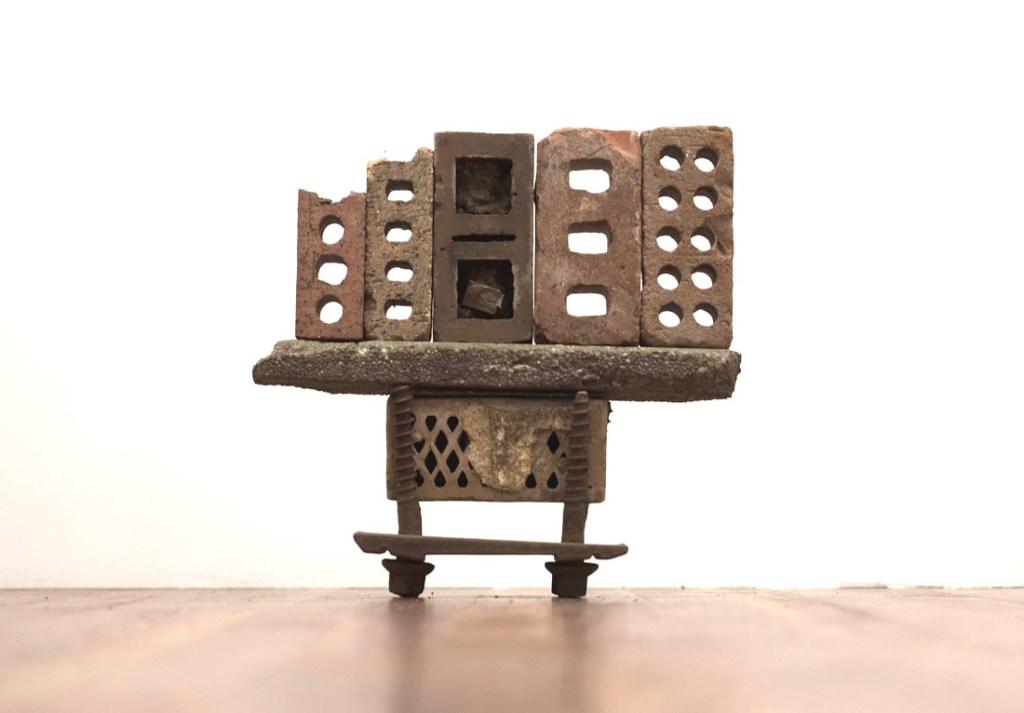
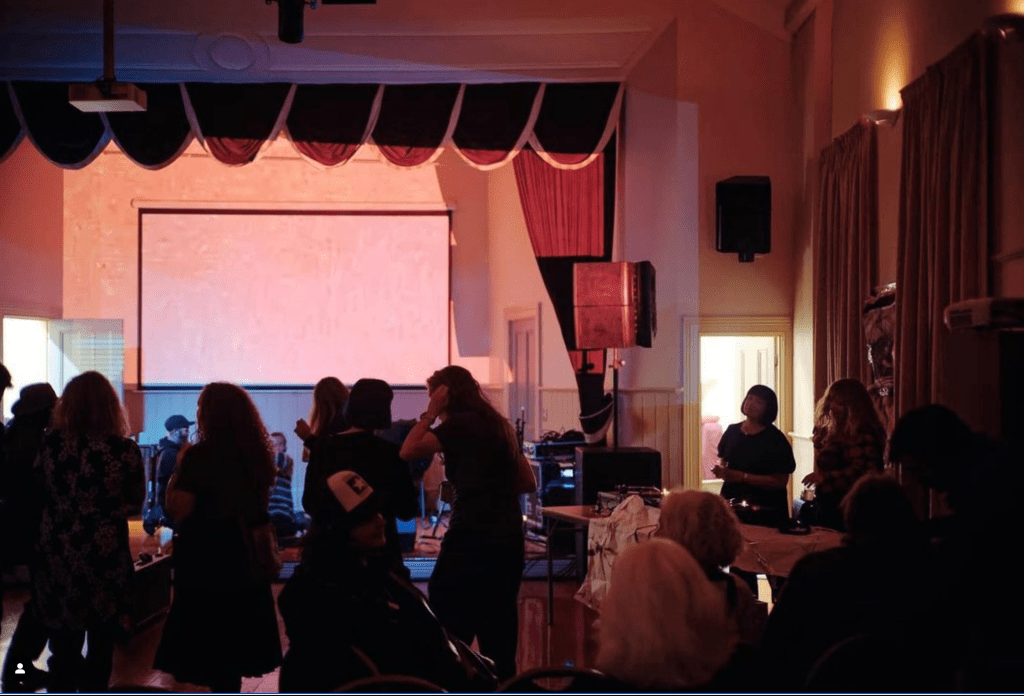
I performed with my band The Futurians at the Lodge Māori, Ravensbourne, Dunedin on Saturday 4th November. This social space venue and home to 4-6 (nicknamed the fraternity) is a former Masonic Lodge converted into accommodation with the grand hall utilised to host live performances and a recording studio. One of our hosts, Brendan John Philip (https://brendanjonphilip.nz/), is an old bandmate and flatmate and we had decided to collaborate once again for this night by adorning the hall space. The lodge holds a bygone men’s club opulence of thick wool carpets, concrete faux marble walls, and art-deco lighting fixtures; lean back and you’ll smell the ghost breaths of muldoonism. Treading along a trip-wire of camp rock n roll machismo, the current residents have embellished the space with heavy metal sound sculptures by Dene Barnes (https://lsdfunraiser.bandcamp.com/) constructed of railroad and wharf detritus, and large-scale paintings by Brendan John Philip.
Dene Barnes, Harbourside Redevelopment 1, brick, mortar and steel, 2022
The paintings hung on the surrounding walls punctuated by pillars, are rich gloss black fields with explosions of metallic spray paint and strong colour.
Brendan Jon Philip, ‘The Roses of Heliogabalus ‘ mixed media on board, 2022
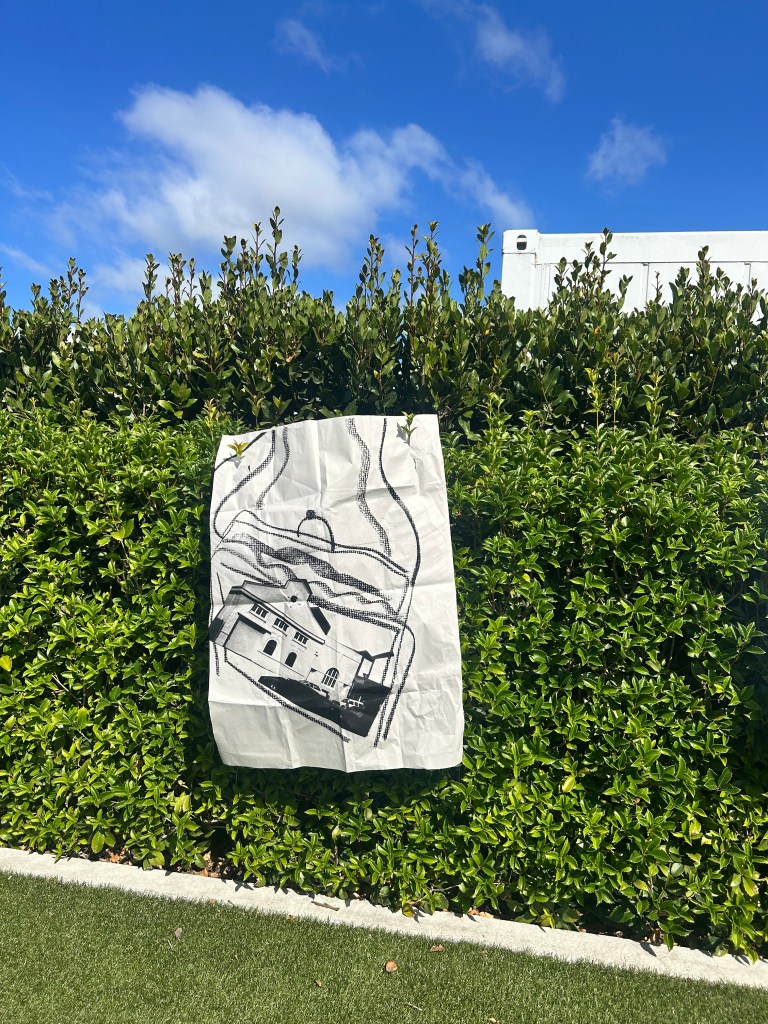
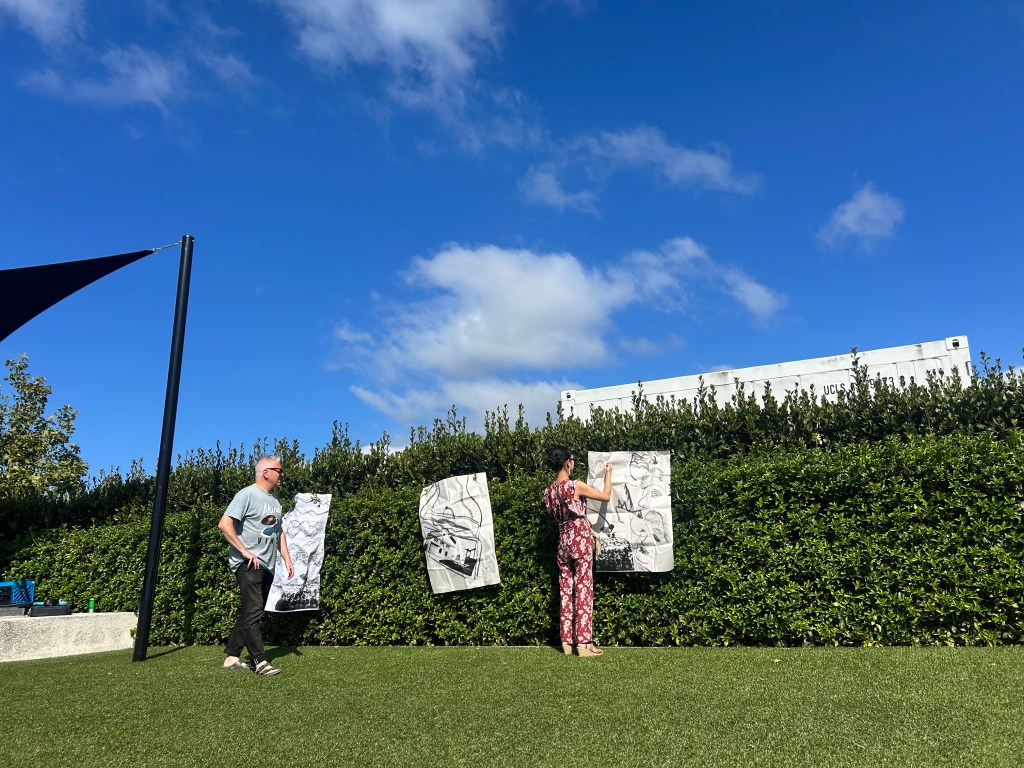
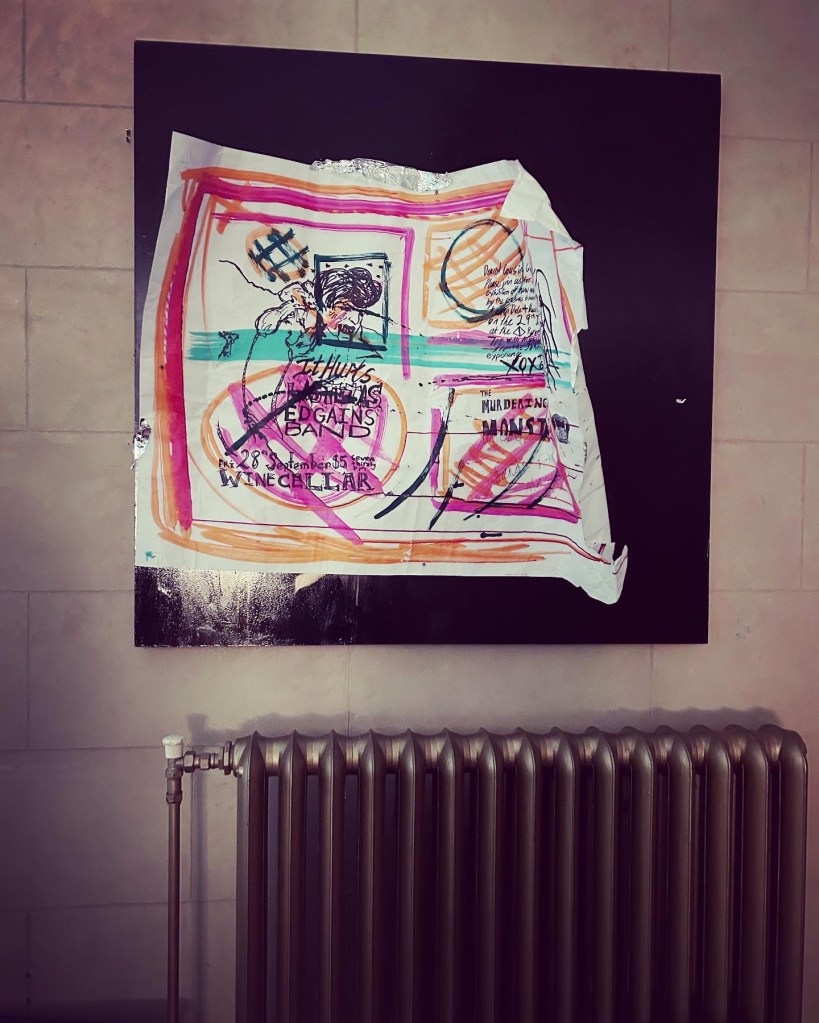
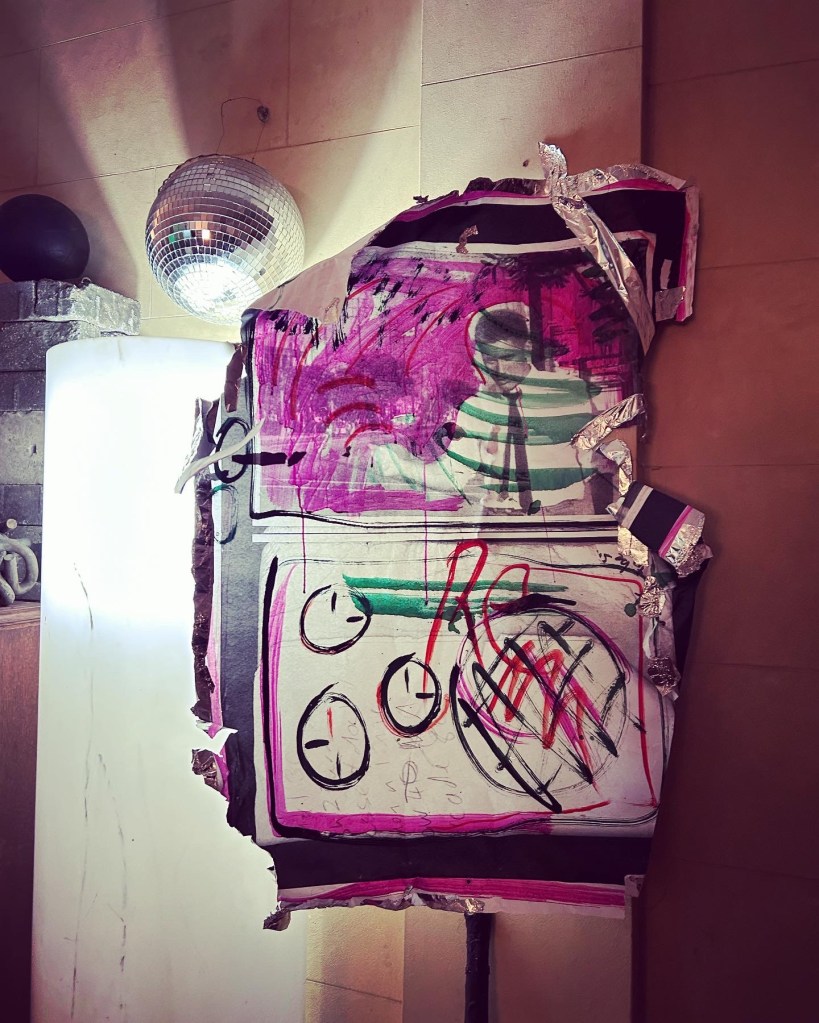
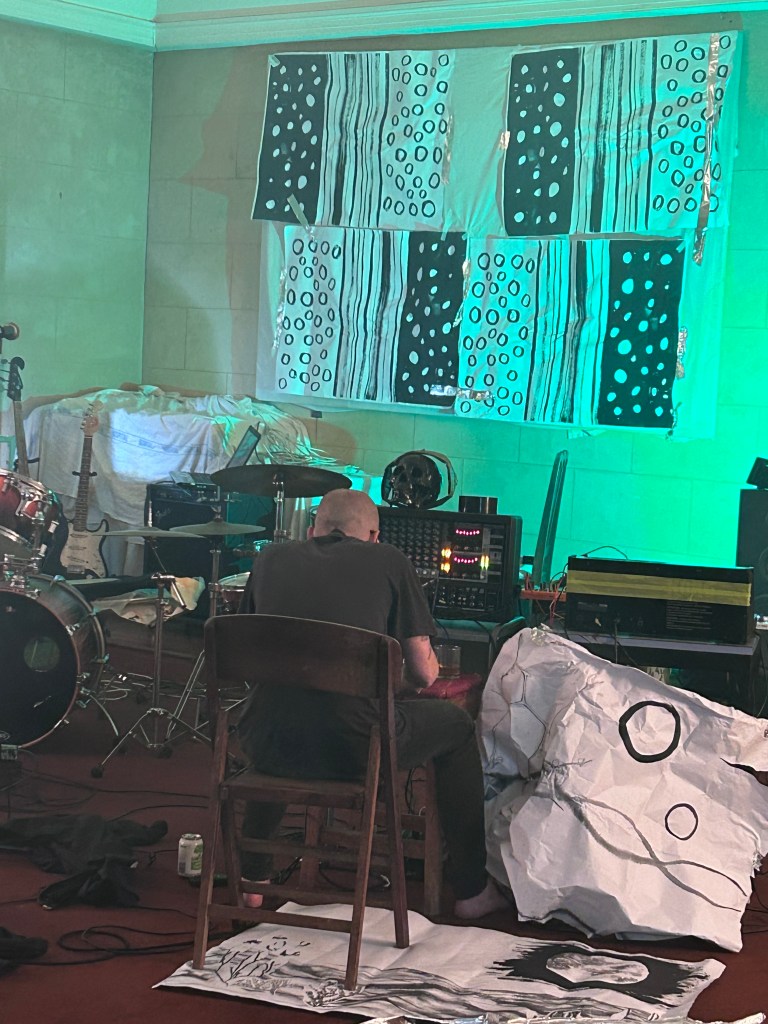
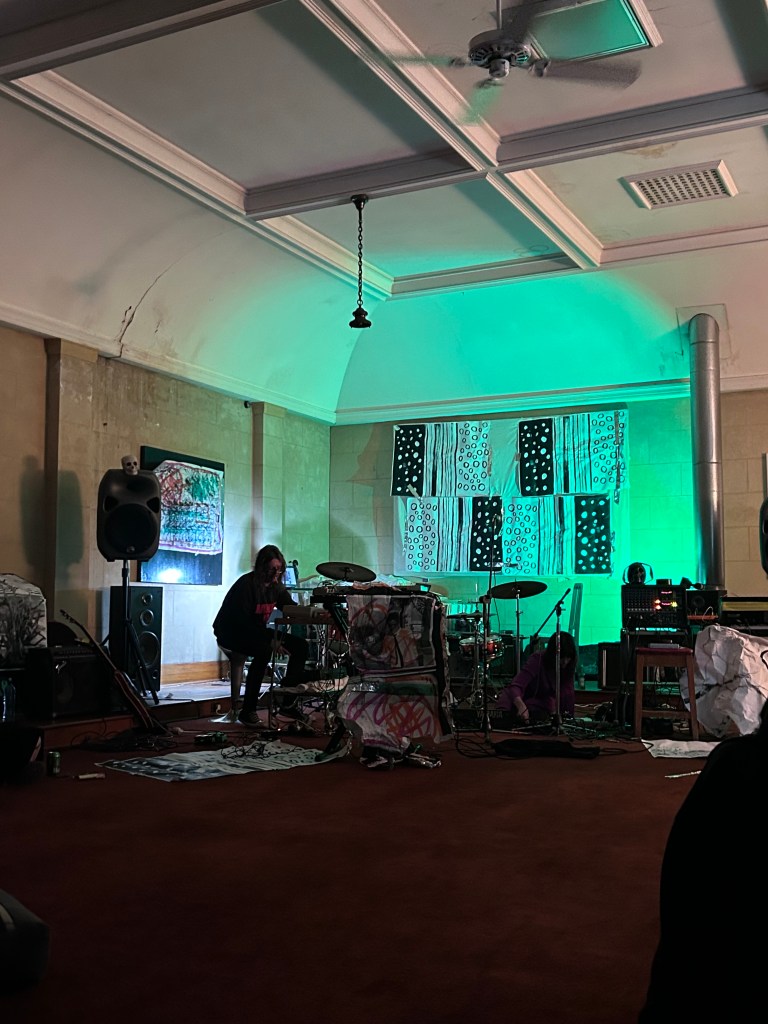
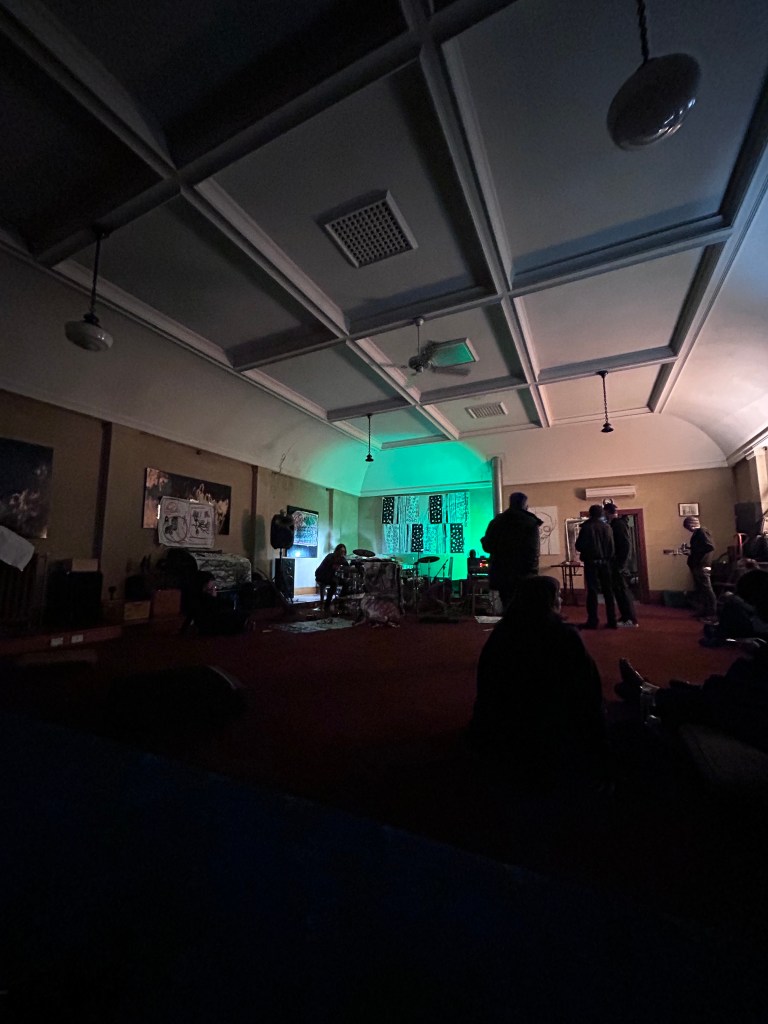
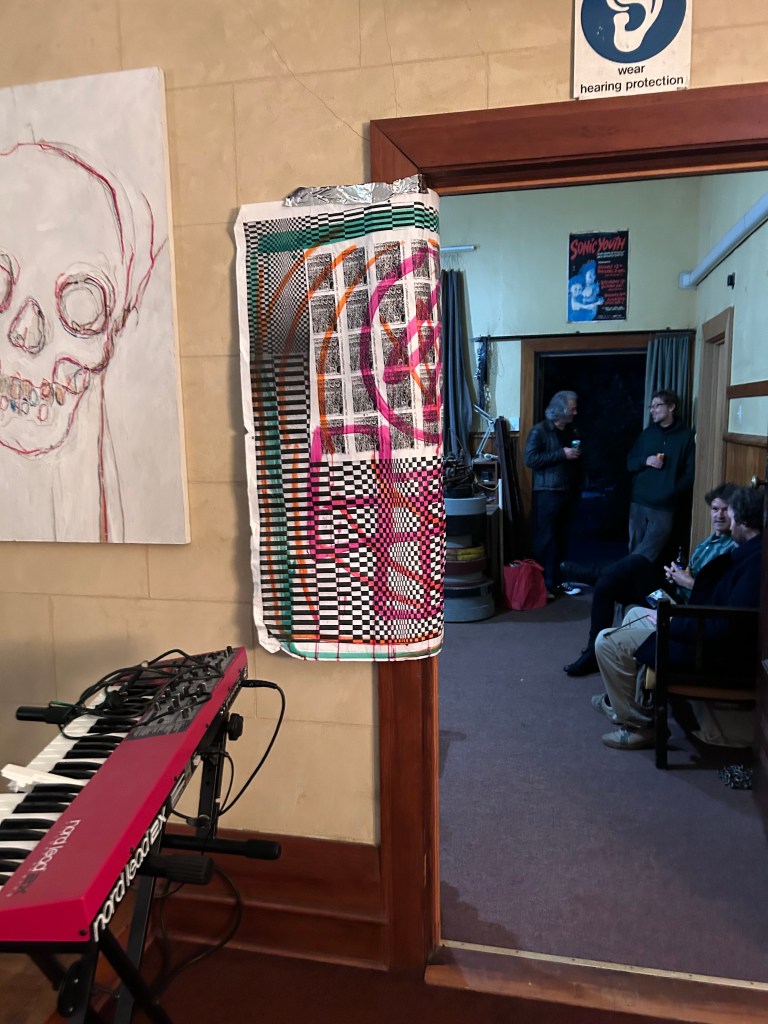
I brought in A0 blowups of old band posters and illustrations of late-night T.V. splashed with vivid pink and green ink. In a pastiche of veiling rituals that may have been part of the lodge’s shrouded history, we taped my A0s directly on top of Brendan’s paintings. Further torn pages were taped to the floor and various instrument stands. The overall look was makeshift and while at odds with the quasi-cult of the surrounding architecture echoed the perfomrances of improvised noise rock and dance floor shenanigans.
Uniform Mobile Disco – Show 4, Lines of Flight 2023, Port Chalmers Town Hall
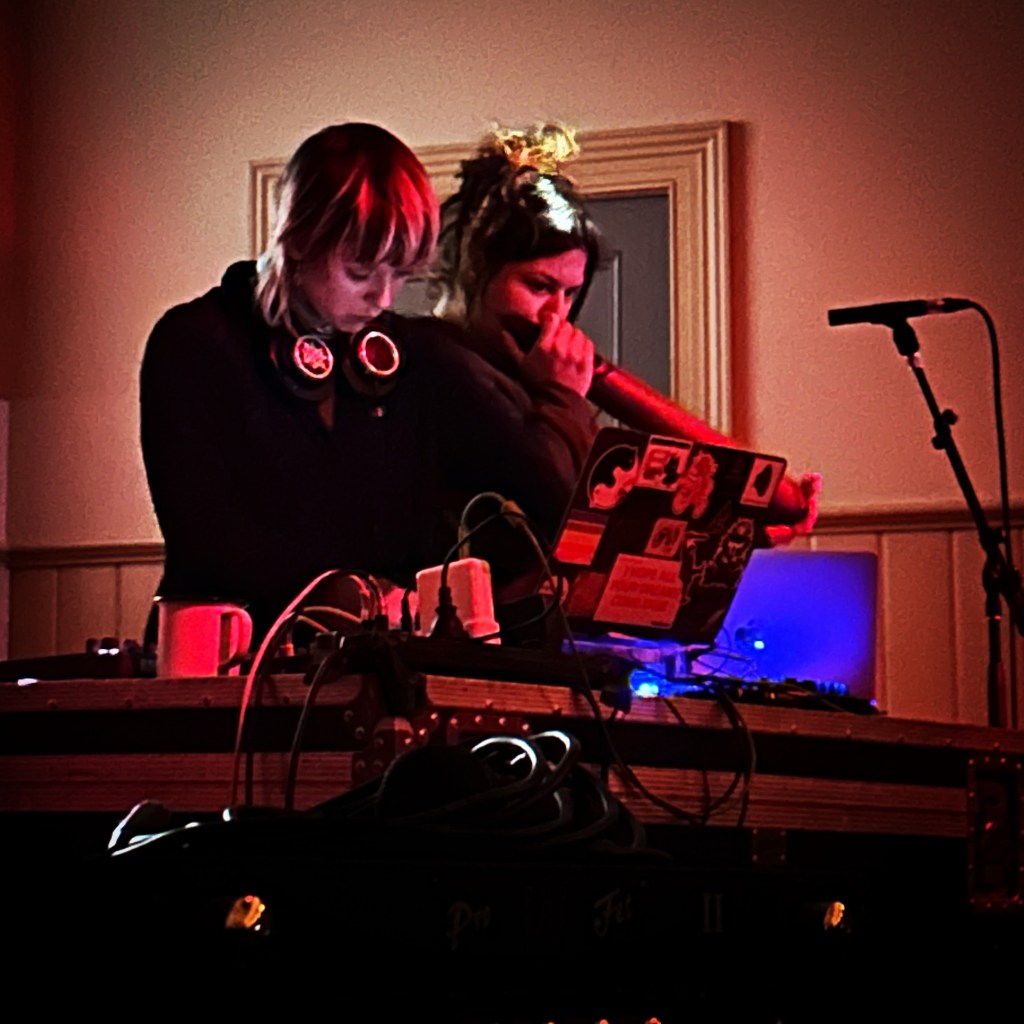
One of the actions of Uniform collective is the sound system Uniform Mobile Disco which involves members of Uniform, in this formation Kiran Dass, Grans Remedy, and Ducklingmonster, djing vinyl records with installation elements of the film and a tricked-out DJ booth.
Uniform Mobile Disco at Lines of Flight 2023, Port Chalmers Town Hall. Photo by Fraser Thompson
Lines of Flight has a twenty-year tradition of bringing together experimental sound and moving image. For the 2023 festival performers were given the opportunity to work with the “in-house” live projection artist Beth Hilton or provide a video for projection. Projection has always been a part of Uniforms output so we decided to provide a work. The film I made for live projection used Prelinger Archive found footage of vinyl production. I chose this footage to reference the industry manufacture of music and the material production of sound objects. In a similar way that I would compose using found sound samples, I abstracted the footage to moments of saturated colour. For the projection, I requested that Beth alter the aspect ratio so that while the earlier videos had been confined to the screen behind the performers on the stage the shifting light and colour of our video spilled out over the surfaces of the hall and the gathered audience. I was happy with how this produced an atmosphere of end of night blow-out and altered the space into a more night clubeque room.
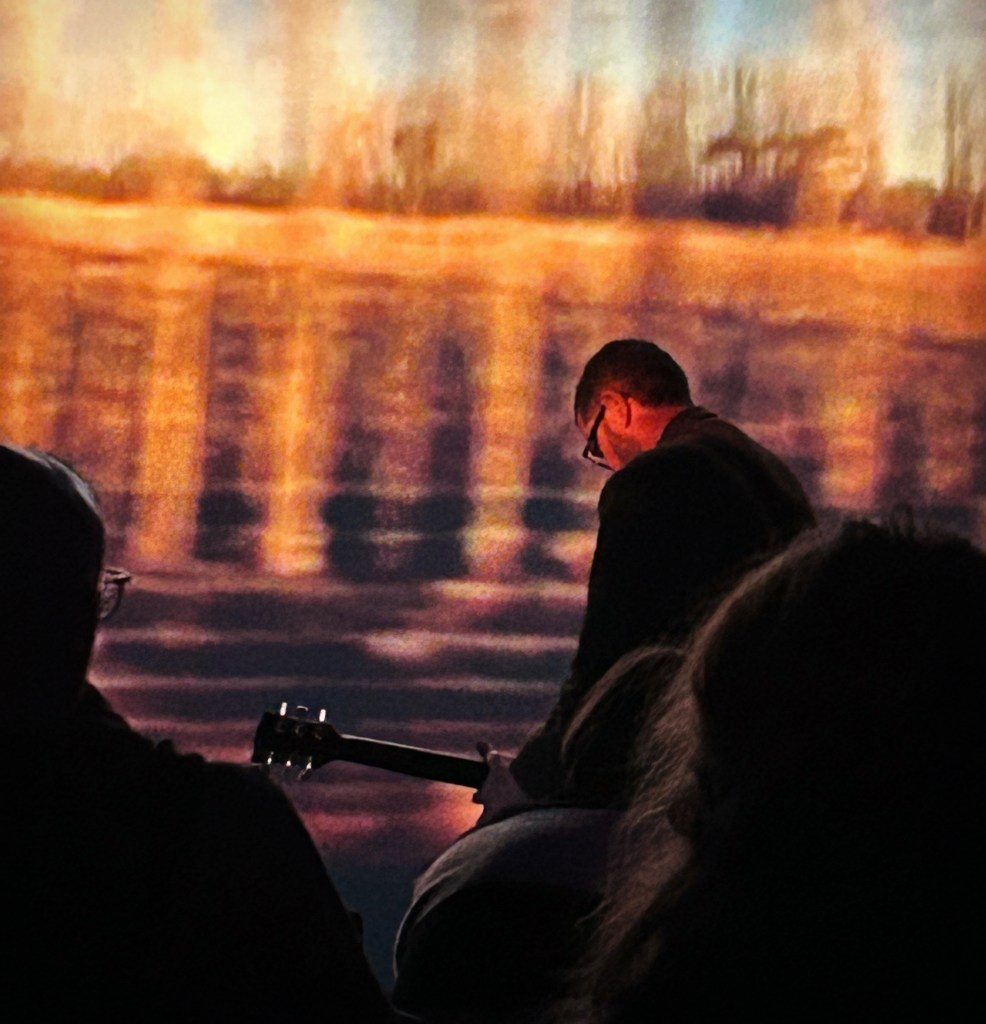
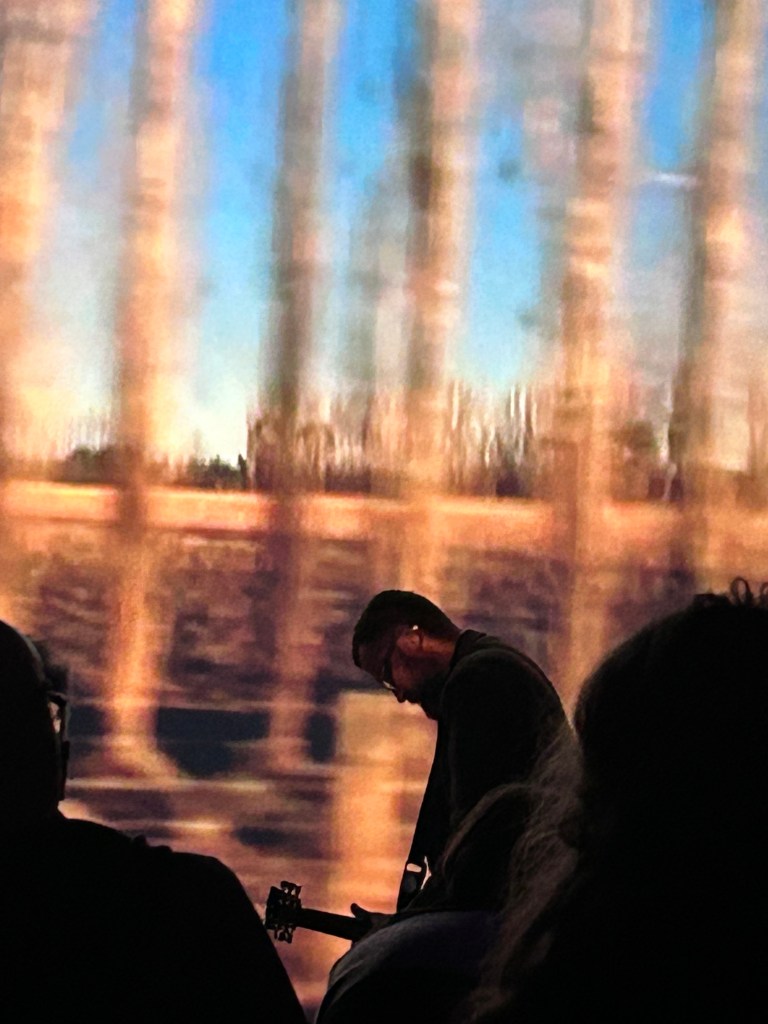
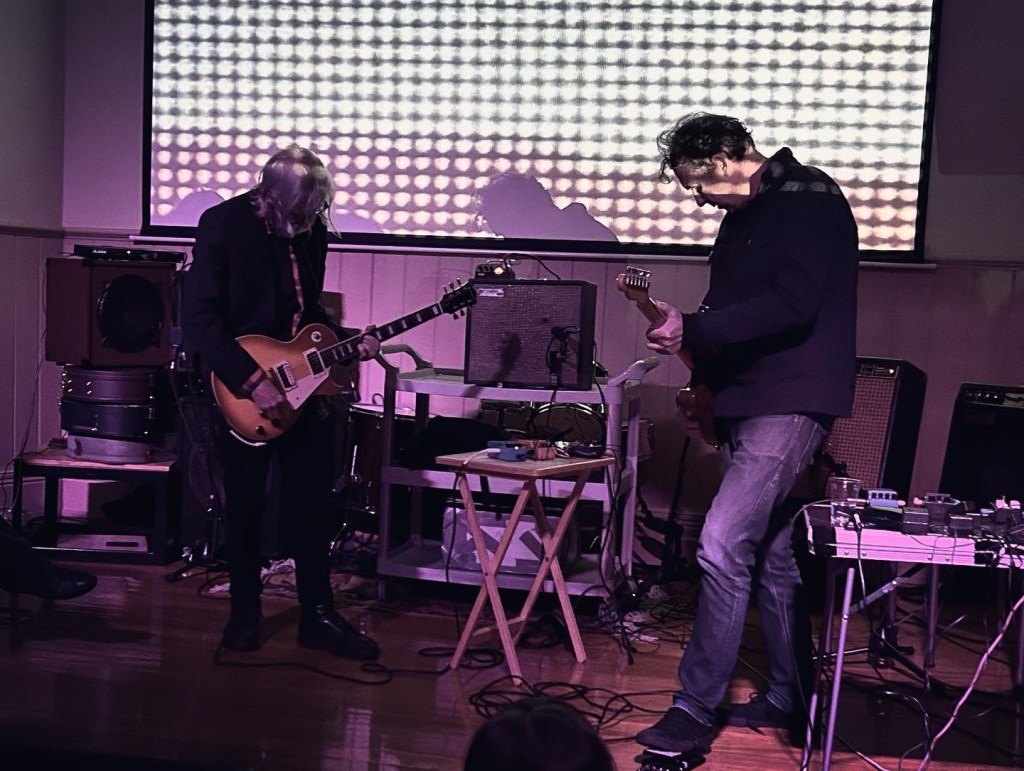
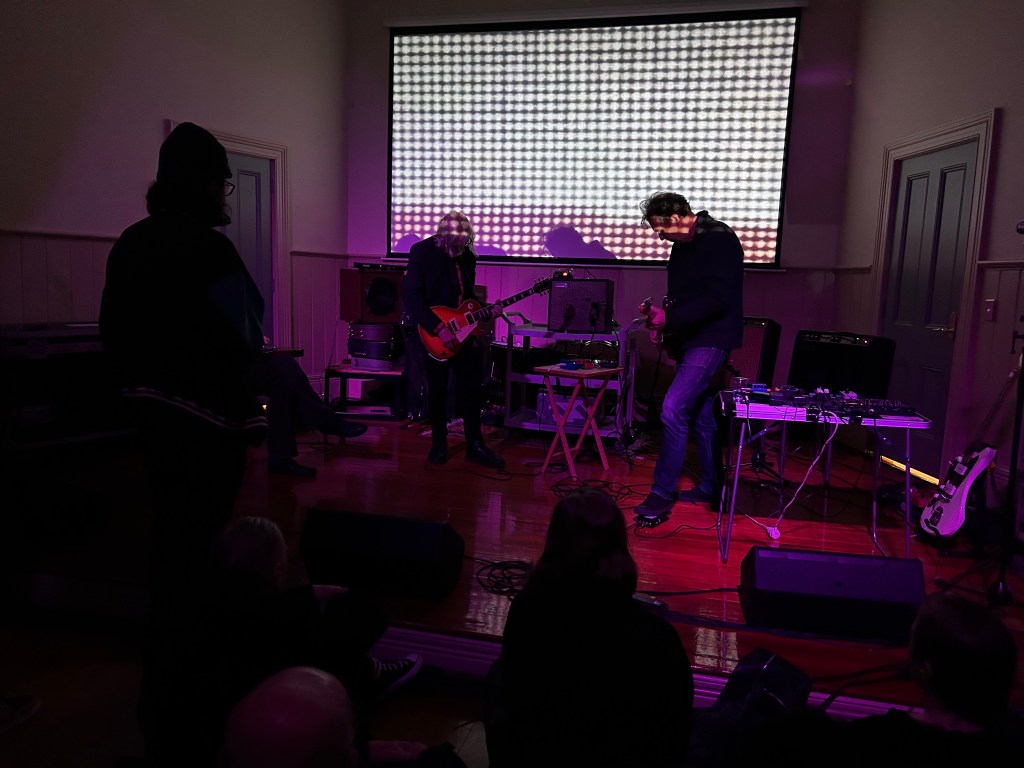
A live expanded cinema iteration of Kim Pieter’s film The Golden Field. The simplicity of guitar distortion noise and shot from the car window film somehow creates tones of sublime.
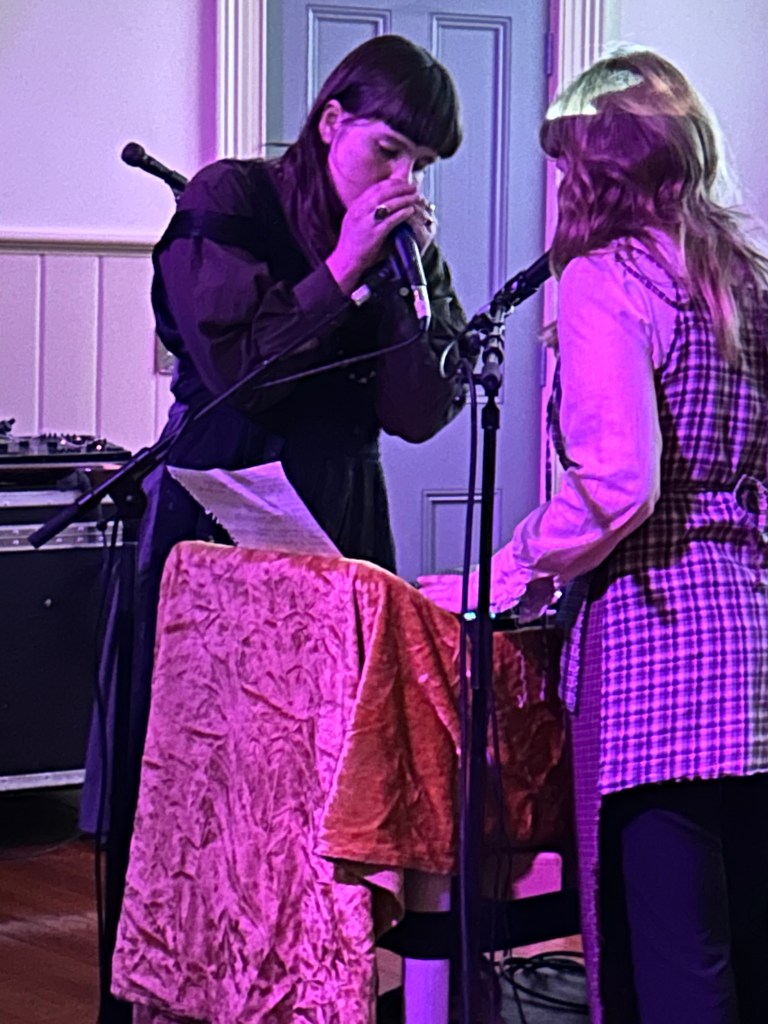
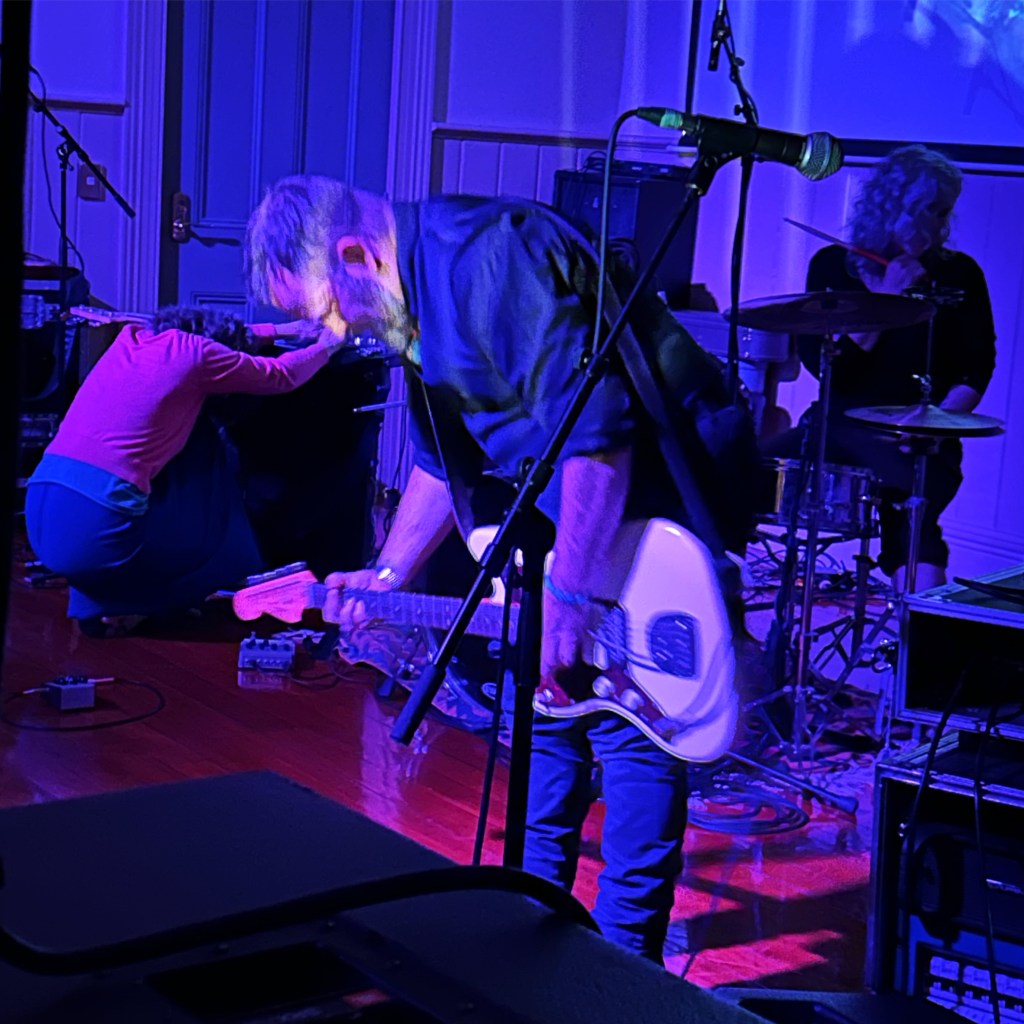
OV Pain, Hōhā, Children’s Letters to God & Hayley Theyers, Sunset Temples, A Dream is Like a Magic Cloak, Abigail Aroha Jensen & Tash van Schaardenburg, Surface of the Earth, Seymor Glass, Fleshbug
“Go on then, begin again and…. again.” St Paul St Gallery, Frontbox
“Go on then, begin again and…. again.”
“There were moments when, well, there were moments when…”
Past, Present, and the Future The Shangri-Las1
To begin with…
My work, Going Out and StayingIn, consisted of two online performance actions streamed in real-time and recorded. These were fragmented into a series of videos and still frames. The Audio Foundation, Tāmaki Makaurau, and the Pyramid Club, Te Whanganui-a-Tara, facilitated the two online audio-visual performances. These organisations are not-for-profit centres for the Aotearoa experimental music and sonic arts community. The performances took place over an hour in the shifting light of dusk on 22nd October 2021 and 27th November 2021. As a performer, online events in place of live events proposed a means of participating in a community I was physically distanced from. I staged the online performance inviting viewers into the interior of my home studio with exterior views through the windows to the street scene outside.
Beginning again and again is a natural thing even when there is a series.
Beginning again and again and again explaining composition and time is a natural thing. Gertrude Stein
Here now…
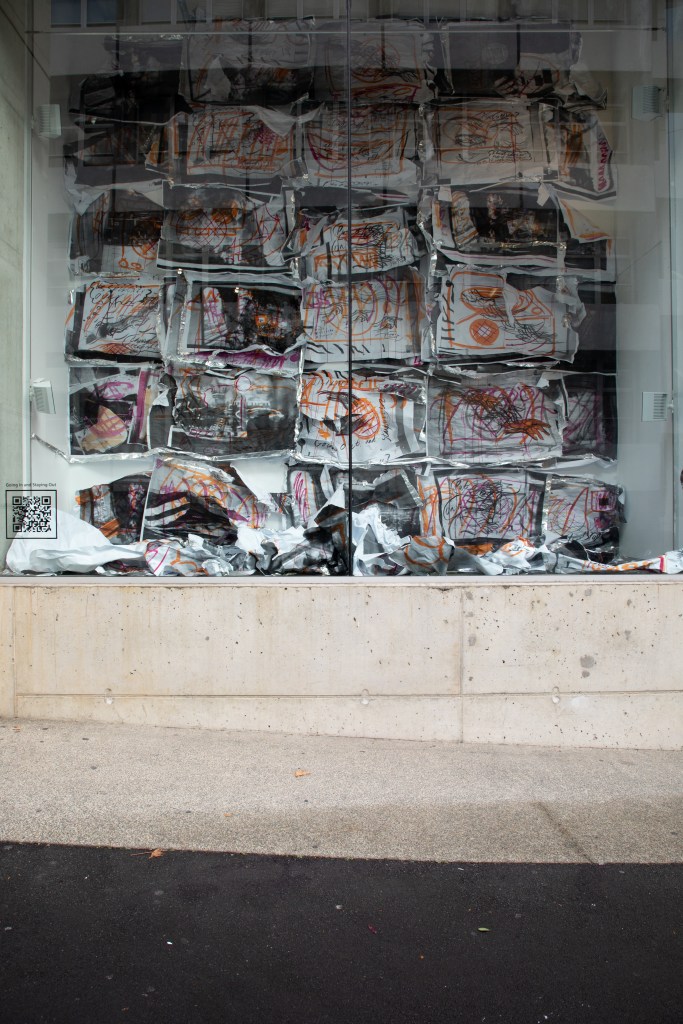
So, I arrive at composition in the wake of performance. To elevate process, I work and rework ephemera. What remains of the performance, still frames, are made present again in my poster-forms and ink drawings. I have been processing my materials through shifting means (drawing, folding, photocopying, scaling, saturating, nailing, 3ripping, crumpling, pinning) all the while deconstructing and reconstructing responding with trace to dwelling. I share the now softened and torn pages that have become embodied with my touch.
“I’m putting everything around you, over by you Now I’m hiding your, your present from you Now I’m hiding your, your present from you Now I’m hiding, now I’m hiding Where you see where it is, but don’t know where it is”
‘Now I’m Hiding Your Present From You’ Arthur Russell
Grey Gardens
20x speedup of the whole performance. Data mash of glitched image and sound once pace is changed.
Little Edie: Your room is terribly dirty; it’s got to be cleaned.
Big Edie: Not tonight Geraldine.
Little Edie: It’s a horrible smell. I can hardly sit here.
Big Edie: I love that smell. I strive on it. It makes me feel good.
Little Edie: We have to hang the portraits and clean the room.
Big Edie: No! Pull the chair out! He wants to look at it. I’m not ashamed of anything. Where my body is is a very precious place. It’s concentrated (sic) ground“
The representation of domestic space gone awry in film documentary is wonderfully represented in the film Grey Gardens where when the camera is invited into the Beale’s bedroom come lounge come kitchen we witness the previous exchange.
Film critic John David Rhodes picks up on Big Edie’s, I would conjecture W.A.S.P camp intentional, word slip of “concentrated” for “consecrated” and he uses it to discuss domestic space in film:
“This concentrated story of life in a house also tells us something further about the symbiotic relationship that obtains between domestic space and cinematic space. Since cinema, in many of its dominant forms, is occupied with representing the lives of humans, and, since humans live, for the most part, in houses, the representation of domestic space is one of the many necessarily assumed burdens of the art form. Human habitation is, perforce, one of the persistent themes and preoccupations of cinema”[1]
Through lens based experiments with installation in the actions of Being At The Table & Being In The Garden I was able to explore a relationship between domestic and cinematic space. The material archive signals a perspective of queerness I feel in relation to the conventions of domestic space that do not map easily on to my identity as I play at these odd self-directed art-making rituals. Looking at the archive to identify a “being” there is a complexity of taking up space and finding moments of reflection on care.
[1] John David Rhodes, “‘Concentrated Ground’: ‘Grey Gardens’ and the Cinema of the Domestic,” Framework: The Journal of Cinema and Media 47, no. 1 (2006): 83–105, http://www.jstor.org/stable/41552449.
Creative stuttering is what makes language grow from the middle, like grass; it is what makes language a rhizome instead of a tree, what puts language in a state of perpetual disequilibrium. …”
Gilles Deleuze, ‘‘He Stuttered,’’ trans. Constantin V. Boundas, Gilles Deleuze and the Theater of Philosophy, ed. Constantin V. Boundas and Dorthea Olkowski (New York: Routledge, 1994), 27
She has to keep saying it because they keep doing it. But it is she who is heard as repeating herself, as if she is stuck on the same point. A complaint is heard as a broken record. Maybe we need to enact how we are heard; we might need to break their record. I think back to those scratches on the surface, how diversity work often feels like scratching the surface, complaint too; we can recall the description of a complaint as “a little bird scratching away at something.” Sometimes a scratch, a superficial mark on the surface of something, can be sufficient to stop it from working. Scratches can tell us how things are working.
Going Out & StayingIn (A0 frame in studio corridor install)
future unsketched
St Paul St Gallery 3 connectors install
queer is very much a category in the process of formation…It is not simply that queer has yet to solidify and take on a more consistent profile, but rather its definitional indeterminacy, its elasticity, is one of its constituent characteristics.”
Annamarie Jagose, Queer Theory: An Introduction (New York: New York University Press, 1996).
Haptic Feedback
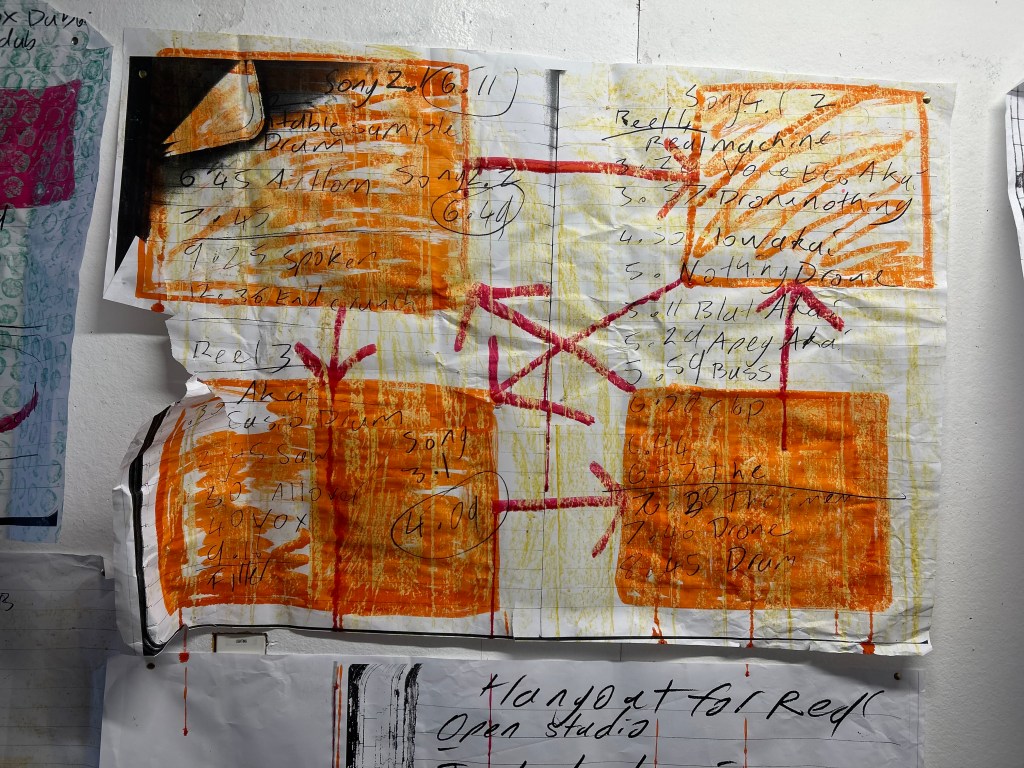
ink drawings of a selection of my personal comic lexicon of objects “snake/leads”, “lady hands”, “fuzz boxes/spaceships”, “beads” and connotating gesture and sound movement “radiating”, “drips” and “surface lines”. Within my work, these drawings sit between comics for friends to read, a musical score and a schematic for laying my noise table
Mobile disco in frames of silver screen
“Queer subcultures produce alternative temporalities by allowing their participants to believe that their futures can be imagined according to logics that lie outside of the conventional forward-moving narratives of birth, marriage, reproduction, and death.” – Judith Halberstam
Halberstam, Judith. “What’s That Smell? Queer Temporalities and Subcultural Lives.” International Journal of Cultural Studies 6, no. 3 (2003): 313–33.
New studio install
The move to the new studio space provided an installation moment
In my research action and archive fold into each other enlivened by reworking and inhabiting the materials. With this work, I am amplifying the process not as a means to an end and as distinct from progress wherein flat ontological hierarchy the importance is placed on the imagined future moment (Gross and Ostovich, Time and Trace). Processing the materials through shifting means (drawing, folding, photocopying, scaling, saturating, ripping, crumpling, pinning) all the while deconstructing and reconstructing responding to a dwelling.
The large comic panel frames that formed the below work are now placed in the corridor transitional space of the entrance and sidewall of the studio. This install necessitates walking past the images on the wall before they can be viewed at distance as a whole. In these large comics, each frame informs its neighbours. The body’s movement impacts the “reading” of the frames. Reading the space.
Wall pages
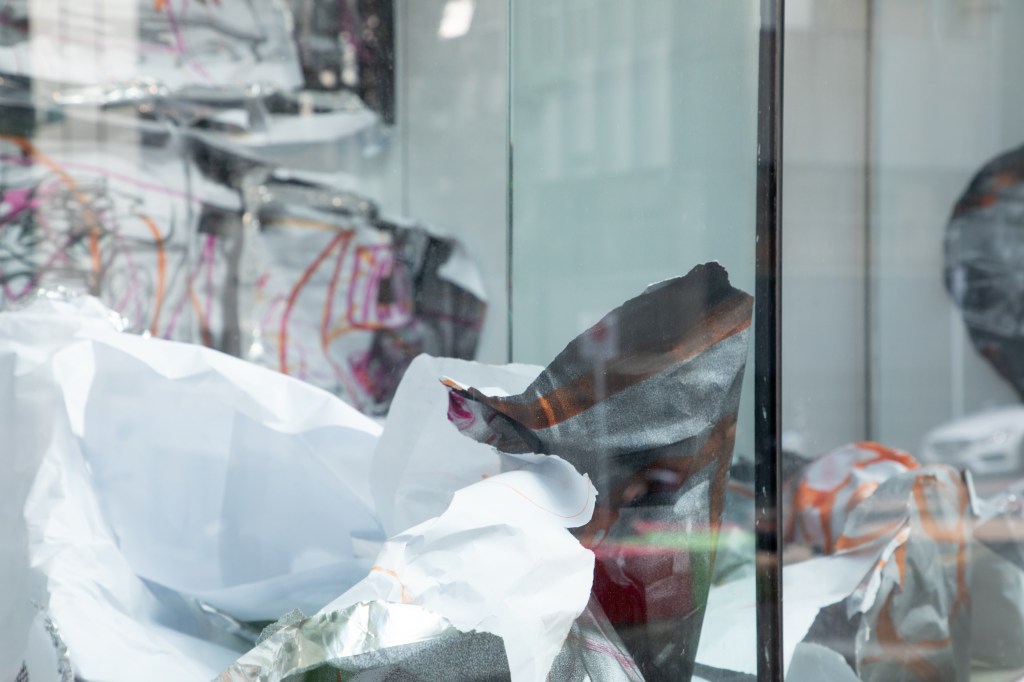
My installations are actions of temporary dwelling as a queer utopia that priorities adaptable materiality such as the photocopy poster and manipulated sonic feedback that is organic in distorted repetition. These actions of layering across mediums, painting in the printed photocopy, then sculpting the photocopies attached to the wall and projecting moving images over them present linear object relationships in flux. I can see the image as it was while how it is now. Past, present, future. The trace is emphasised. The crumpled and torn sheets loosely pinned to the wall reject refined fixedness and confront private ownership of the space.
actions of assertive potentiality / melted fruju
The engagement in audio-visual installations facilitates occupation both in the sense of activities or work and in embodying the taking up of space. The audio-visual occupation is an action of assertive potentiality.
I was invited to perform at the Pyramid Club, Te Whanganui-a-Tara | Wellington.
Pyramid Club “an artist-run organisation and venue dedicated to experimental practice, Pyramid Club provides a physical and conceptual space for artists whose work falls outside the scope of commercial performance venues.”https://www.pyramidclub.org.nz/about
This event was part of their Portals series, where live in-person performance is programmed with online streamed performance. The online performance is assisted by the in-house producer/sound engineer at the physical venue and played through the club’s PA system with a projection from the video call. The online and in-person performances are streamed live on the Pyramid Club’s Switch channel. The Portals series creates a reciprocal relationship of mediated and physical performance spaces that I was interested in exploring.
I have worked with the Pyramid Club community for several years, having been involved in their earlier project space iterations of Happy and Freds while living in Wellington from 2006-2010. My yearly performance schedule has usually included a live date at the Pyramid Club. I was last there for the ‘Sisters in Sound presents Inverted Audio: A Sound Symposium’ in 2019 “, a one-day symposium featuring practitioners working in exciting and diverse areas of sound”. I presented a talk and film about collective approaches to art and organised a DIY artist-run venue for this event. This symposium provided a fruitful opportunity to engage in dialogue with other women and gender-diverse artists who experiment with sound, from taonga pūoro in music therapy to DIY spaces to sound design for gaming. Similarly, the Portals series proposed an exciting approach to communicating within the experimental sound community. I was thrilled with the prospect of being included within a community I was physically distanced from.
I had initially planned to develop the abundance beads in bowls work; however, I abandoned this plan after technical issues with video streaming. Though the audio percussive elements are essential, the bowl and bead work require the visual aspects of the choreographed hand gesture and saturation of the colours of the plastic beads to be fully realised.
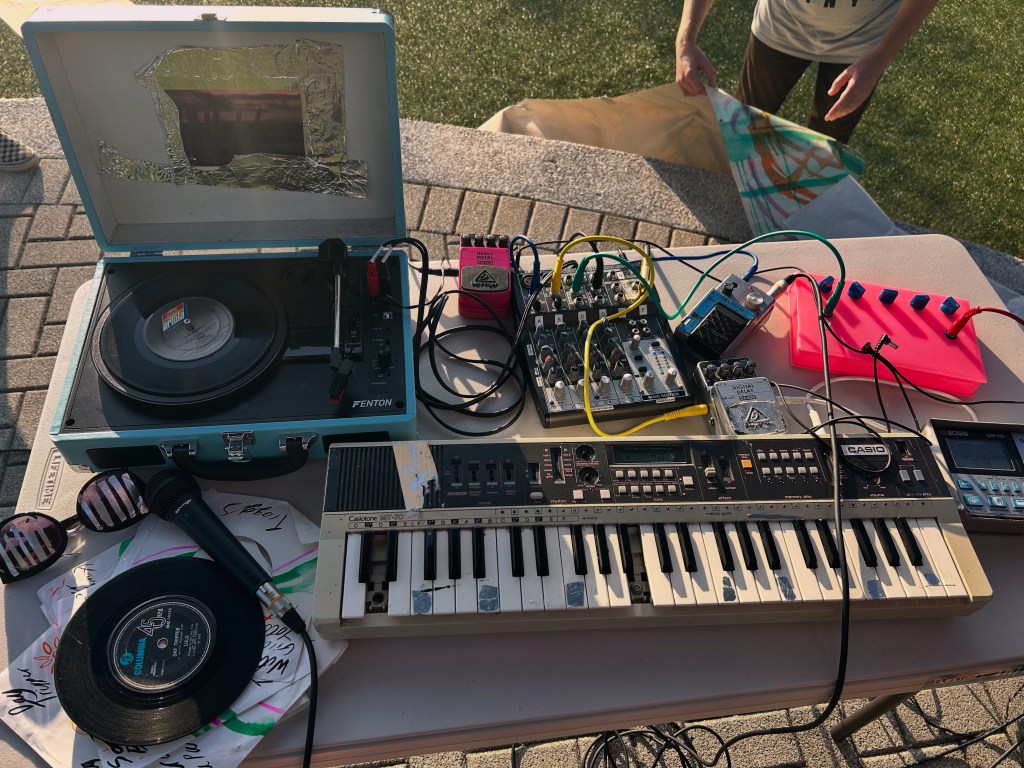
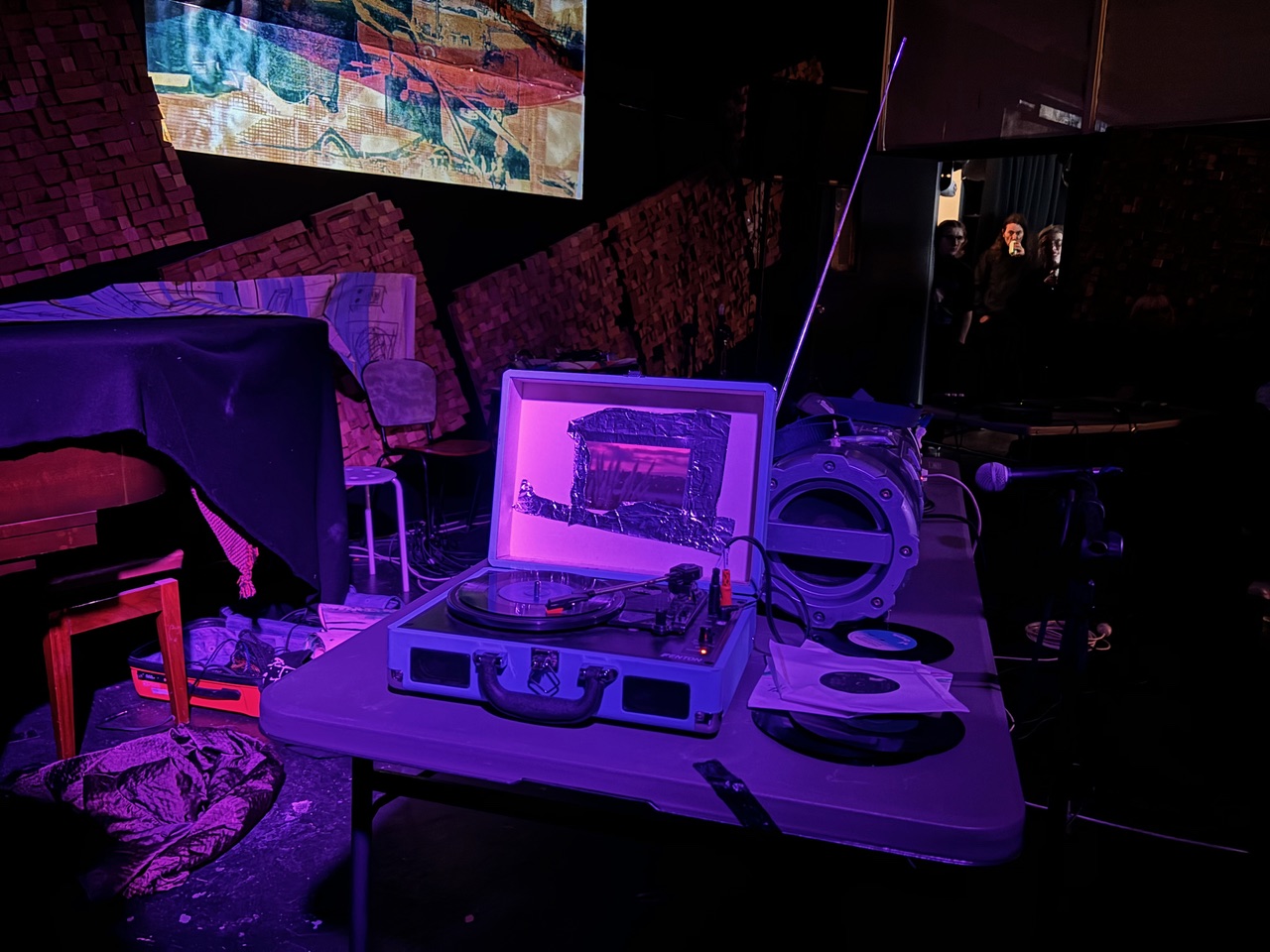
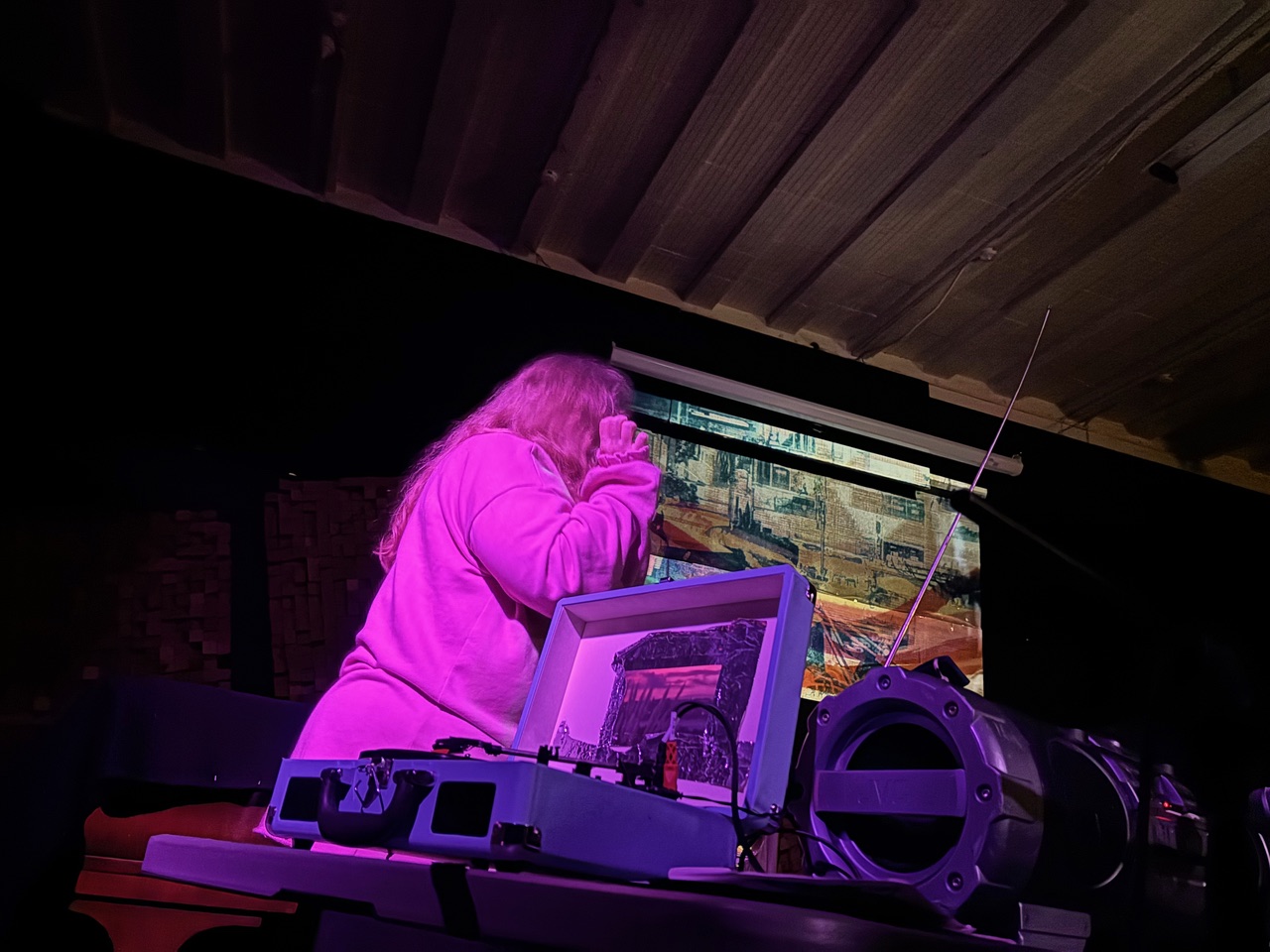
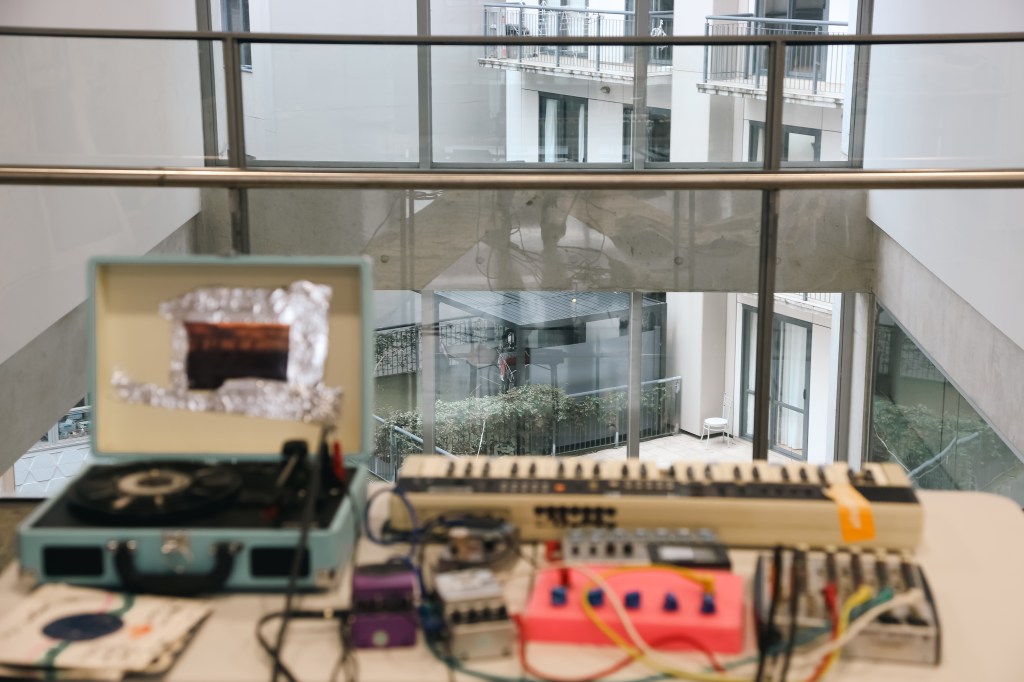
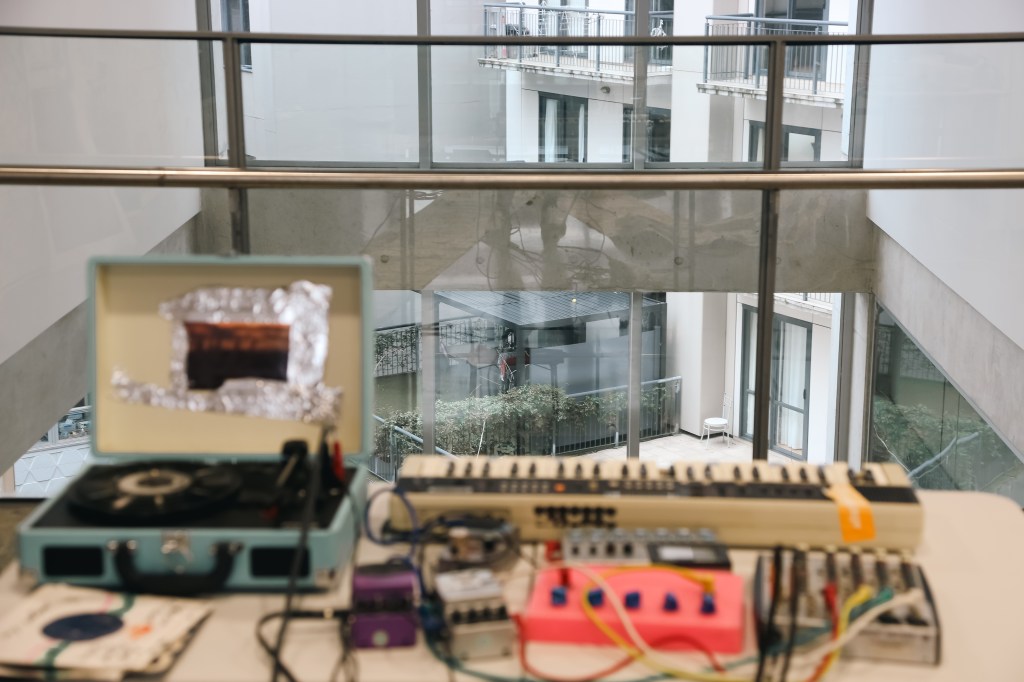
On the night of the performance, I quickly turned my focus to the assembled table of audio equipment. Here I had a turntable with a 7″ record of Nancy&lee Ladybird, a boom box, a delay pedal, two distortion pedals, an electronic shruti box, an mpk player synthesiser and a ten channel sound mixer.
I wanted to create a sonic performance that worked with elements of voice and spatiality drone. I mesh and layer their individual tones by running the sound produced by the shruti box, synthesiser, and turntable through the sound mixer and out of the boombox. The room microphone transmitted the sound from the boombox sitting in my studio with the windows open. The static fuzz of the distortion pedals brings the sounds in contact with one another. I can physically change how the frequencies are emphasized in the harmonic palette by changing the pedal levels.
The shruti box is an instrument from the Indian Subcontinent that is traditionally used to provide a harmonic drone that accompanies an Indian Classical practice or to tune the voice. The electronic shruti box I used was gifted to the Musical Electronics Library by the Rythm School Of Indian Music. As part of the M.E.L collection, library members may borrow it to experiment within their own practices. I have found it provides a sustained soft bed structure to my listening and playing. I have used it twice in a live gallery setting to accompany Sriwhana Spong’s instruments. I am also alert to how it functions as an uncanny valley of the human voice. To my ear, the warm-toned drone and voice of the electronic shruti have the capacity to fill and define a listening space.
Earlier in the week, I had listened to the conversation ‘City Arts & Lectures presents Rebecca Solnit & Brit Marling’, at one point, Solnit articulates violence against the voice within patriarchy: “it’s specifically violence against the voice, and we so often talk about voices like it’s just the capacity to make a noise which we share with animals and squeak toys and blenders and washing machines, but what it really is is not something inherent in yourself because we often say like oh she was voiceless and almost nobody is truly voiceless people often don’t use their voice because they know the punishment for it or the refusal to hear and believe would make it pointless or worse than pointless to speak and so I wanted3 to write also about that voicelessness honestly because that was part of my experience of violence against women.”
With my performance, I wanted to evoke the noise of voice rendered voiceless through abstraction from language and operating in the communication technology of the Zoom video call. I sampled my own voice and played that as a sustained note on the synthesiser. In the past, I have used the delay to build my single shouting voice into a choir of electronic voices in chant. With the synthesiser, I developed my sampled voice in different tones and gave it the strength of sustained sound.
Playing the 7″ at half speed was another means of playing with the human voice. Dropping the ‘Ladybird’ song in and out of the mix, I imagined the experience of hearing a half tuned radio that plays music on the edge of your listening. The cadence of the slowed voices seemed to add gravitas to the song’s kitsch romantic country lyrics and, recontextualised in my performance, suggest a context of communications transmission
“I’ve been where the eagle flies Rode his wings ‘cross autumn skies Kissed the sun, touched the moon But he left me much too soon His lady bird He left his lady bird
Lady bird come on down I’m here waiting on the ground“
Thesis Critique
I have been researching urban temporary dwelling and utopias. For this research, I locate utopias as spaces of potentialities for collective optimism.
I staged an online performance inviting viewers into the interior of my studio with exterior views through the windows to the street scene outside.
Dwelling in utopias as spaces of process, such as the online performance, enables my queer feminist elevating and valuing of that which is:
Temporary
Collective
Amateur
Improvised
Stills
Live Stream Performance: Audio Foundation ‘Live Stream In Yr Dreams: Ducklingmonster’ 22/10/21
..I started thinking about an essay by Eve Kosofsky Sedgwick, the late goddess of queer theory. ‘Paranoid Reading and Reparative Reading, or, you’re So Paranoid Your Probably Think This Essay Is About You’.
A reparative reading isn’t lodged in the need to predict and prepare for disaster. It might be engaged in resistance or concerned with producing some other relaity alothogether.
(on a reading by Eileen Myles) It felt reparative, listening to that; it fet like my imaginative ability to frame utopias and then to move purposefully towards them might have been restored, at least for a minute, at least in those book-clad walls.
(on a play by Richard Porter) The question was what happen now, how to live on alongside loss and rage, how not to be destroyed by what are manifestly destructive forces. It felt like the room got bigger as he talked, until we were all sitting in an enormous space, a cathedral of potential, in which the future was yet unsketched.
Laing, Olivia. Funny Weather: Art in an Emergency. Picador, 2020.
Live Stream Performance: Pyramid Club ‘Portals series’ 27/11/2021
Wardrobe and Kitchen Sink Garden bordersDaily process
Thus, potentialities have a temporality that is not in the present but, more nearly, in the horizon, which we can understand as futurity. Potentiality is and is not presence, and its ontology cannot be reduced to presentness.
….It is something like a trace or potential that exists or lingers after a performance.
Lion, the witch, and the wardrobe. Closeted. Interior soft aesthetics. Liminal spaces.
But the wardrobe, the nursery? They are the most liminal of spaces; the place you go before and after you put away those childish things. They are the place you go before and after you grow up, like Wendy, like Susan and Peter, before and after the magic slips through your fingers. And they are still left to us; in fact, I feel they can only be truly appreciated when we are grown. They are many, and varied, and everywhere: parking lots and lobbies and stairwells, anywhere you go on your way to somewhere else. But while these mundane spaces can be uncanny or unsetting—especially during a pandemic—I am looking still for the very particular kind of secret door or false wall or grandfather clock that you step into and watch the old world fall away. The liminal space, as it relates to children’s literature, is a truly transitional place into magic, a hushed, dusty hallway between the ordinary and the extraordinary.
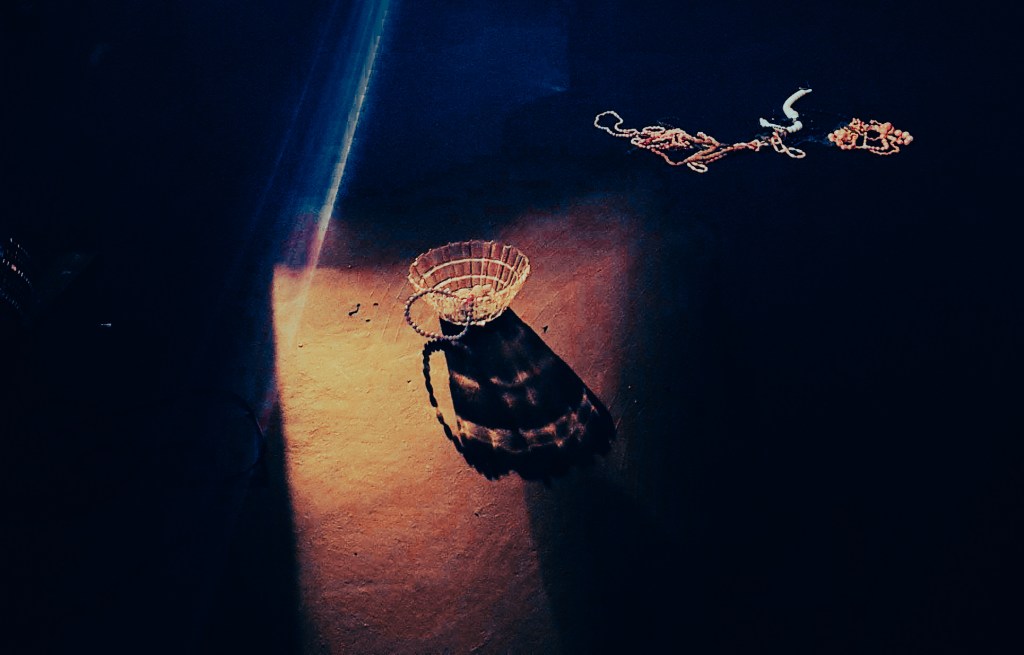
Playing with gesture in object relationship with a bowl of necklaces. The performance of getting ready to “go out” when we are “staying in”. Sound is a close percussive of the bowl and beads with a room sound of a slow organ melody. Elements of time echo in the sound and image. I placed a slide over the camera to give a frame and colour filter that heightens the fantasy of the film image. Sense of overflowing. When things overflow they change. Abundance.
The lure of the work is its performative dimension, which I would describe as a doing as dwelling, which is to say that I am particularly interested in the way in which the images dwell in potentiality, aestheticizing that moment, transmitting the power of its ideality.
What is happening to the “liveness” of the performance event when it is a live-stream?
Live sounds really have a different quality….They have a presence, and this presence is intact” Cage
The live-stream video performance erodes the binary of “live” and “mediated” presented by Cage. See Auslander.
Presence now is always complicated and layered, a thing of degrees, and in these strange times one can feel closer to a person, sometimes, when they are further away than when they are fully and simply before us” Etchells, T ‘On Performance and Technology’
Still Frame
Wallpaper, pencil, chalked interior house paint, ink. Formica dining table, river rock, brass ruler, prism light. Representational painting of a film still. Film still time. The screen of wallpaper is cut to the widescreen aspect ratio of 16:9.
One nets a landscape in a grid of formal rhythms. In a landscape or garden one discerns messages from within. All my films, poems, paintings play more or less between inner and outer events.” –
Joanna Margaret Paul, Cantrills Filmnotes nos. 47, 48, August 1985.
Always becoming, never arriving. Life is at a standstill – only ideas flash past. In such confusion I find myself running after them: Hey! Stop! Stop! But they escape, leaving me staring at a grey English spring.”
Derek Jarman Modern Garden
Rollout
Durational process. A section of wallpaper lining paper is rolled out across the length of the formica dining table each day. Pencil lines mark out the rolling paper. The painted with bands of water, interior chalked house paint (grey blue) and concentrated ink (green, orange, red)
My Ghost’s Hands in the Machine
comic pages towards a publication
Move to home studio Karangahape Rd due to Covid-19
Residue
“…signal a refusal of mastery and an insistence on process and becoming.” Muñoz, José Esteban. Cruising Utopia : The Then and There of Queer Futurity
residue
Pronunciation /ˈrɛzɪdjuː/
noun
1A small amount of something that remains after the main part has gone or been taken or used.‘the fine residue left after the sorting of tea’
1.1A substance that remains after a process such as combustion or evaporation.‘the ash was a residue from coal-fired power stations’
1.2Law The part of an estate that is left after the payment of charges, debts, and bequests.‘the residue of the estate was divided equally among the cousins’
Wall-pages
I have been making a case for a hermeneutics of residue that looks to understand the wake of performance. What is left? What remains? Ephemera remain. They are absent and they are present, disrupting a predictable metaphysics of presence. The actual act is only a stage in the game; it is a moment, pure and simple. There is a deductive element to performance that has everything to do with its conditions of possibility, and there is much that follows.” Muñoz, José Esteban. Cruising Utopia : The Then and There of Queer Futurity, New York University Press, 2009. ProQuest Ebook Central, http://ebookcentral.proquest.com/lib/aut/detail.action?docID=865693.
The celebration of an aesthetics of amateurism are reminiscent of punk rock’s aesthetics. The performances of amateurism, in both punk and Kelsey’s example of queer performance, signal a refusal of mastery and an insistence on process and becoming. Again, such performances do not disappear but instead remain and, like performatives in J. L. Austin, do things in the future. 16 In Kelsey’s example, the short, squat singer of “Indian Summer” is loved decades after his performance, and that one audience member’s testimonial stands as one of the things that remains after the performance. The performance, in its incompleteness, lingers and persists, drawing together the community of interlocutors. Utopian performativity is often fueled by the past. The past, or at least narratives of the past, enable utopian imaginings of another time and place that is not yet here but nonetheless functions as a doing for futurity, a conjuring of both future and past to critique presentness.”
For this installation, I used a narrative framework. The protagonist is listening with a window open, falls asleep, and waking is disorientated, forgetting that the window has been left open. Through this narrative, I sought to articulate the experience of the subconscious and conscious becoming entwined with the city. Here I also grew a metaphor of the wall of thorns for the ecosystem of the city. The city in thorns drew on my engagement with the debate around fairy-tales from feminist writers and academics in the 1970s and 80s.[1] In particular, I was thinking of Angela Carter’s translation of Charles Perrault’s “La Belle Au Bois Dormant” (Sleeping Beauty)[2] and the potential of appropriating fairy-tales to critique dominant cultural constructions. In looking at the city, throughout her novels and translations, Carter uses the literary forms of magical realism and gothic feminism to construct the city as a place in which textual and extratextual realities mingle. In my work, the narrative framework is mostly keenly articulated in the eight-page risograph comic. In a landscape orientated wallpaper cover, film stills of windows are reproduced in teal ink with text and hand-drawn elements overlayed in gold ink. Here there is a meeting of the documented city space in the film stills and the imagined city in the text and drawing. The comic acted as a programme to invite the Talk Week audience into reading my work. Arriving at the foyer audience is taken into the private contemplative experience of reading a comic in the public space of the installation.
[1] “Feminism and Fairy Tales | The Oxford Companion to Fairy Tales – Credo Reference.”
Talk Week Introduction: This work contemplates facades and interiors with a narrative strand of listening with the street-facing window open, falling asleep and later waking disorientated wondering if you’ve left the window open. There is an exploration of pages signifying reading (interior) and pages as wallpaper (facades).
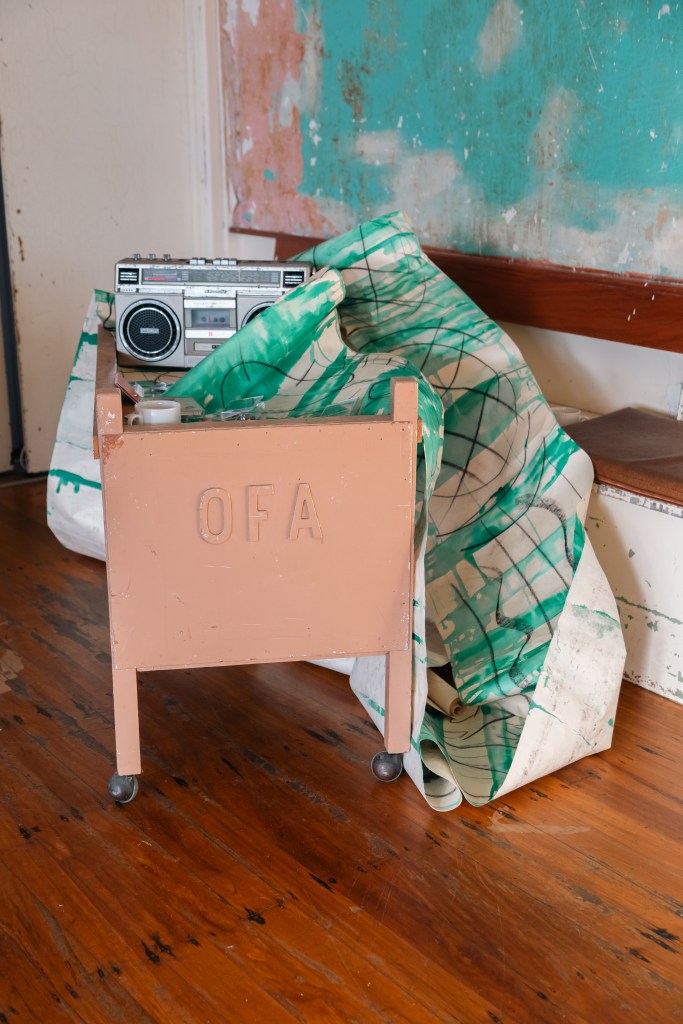
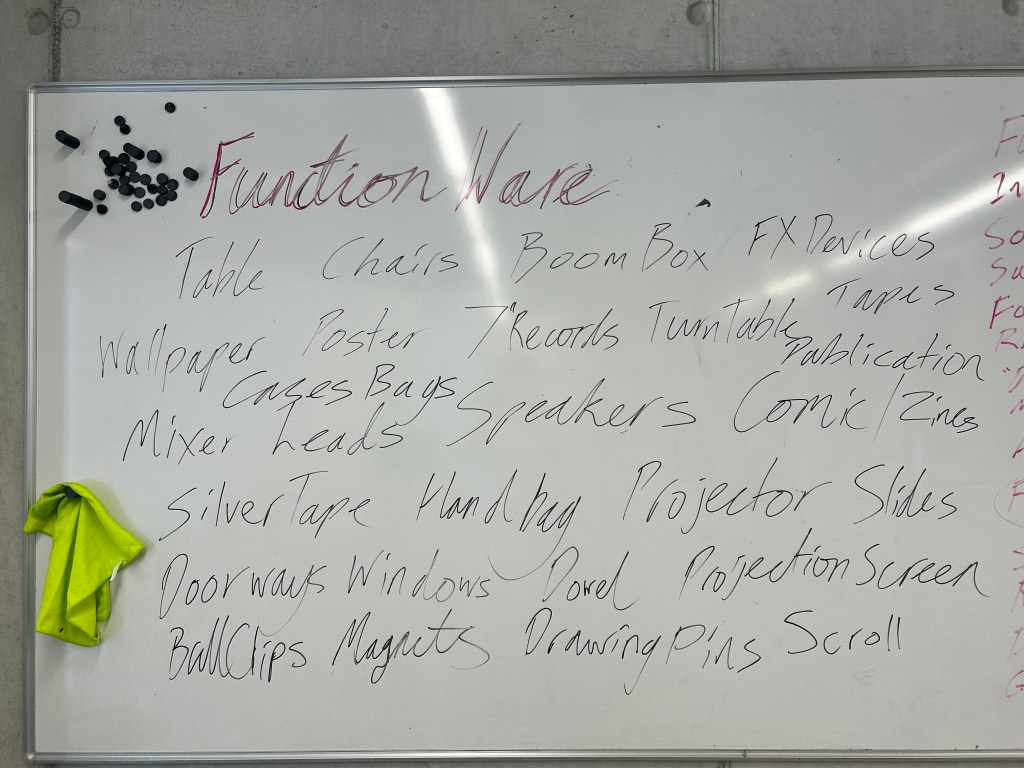
The sculptural repetition of layering and hanging these images created the appearance of animated frames moving throughout the space. The wallpaper and paper had a cohesion that confidently demarcated the area of the installation. I felt that people situated within this defined space experienced being folded into an animation. The functional objects of the trolleys holding the tools used to construct the installation illustrates my presence in the making and also places the audience “behind the scenes” of the artwork. With these installation decisions I was seeking to express a social occupancy.
Screen window rip two interior/exterior viewsPeek-a-boo viewsAV Trolley functional objects and process corner with repeats of page works and unfolding elements with text playRisograph Programme Comic
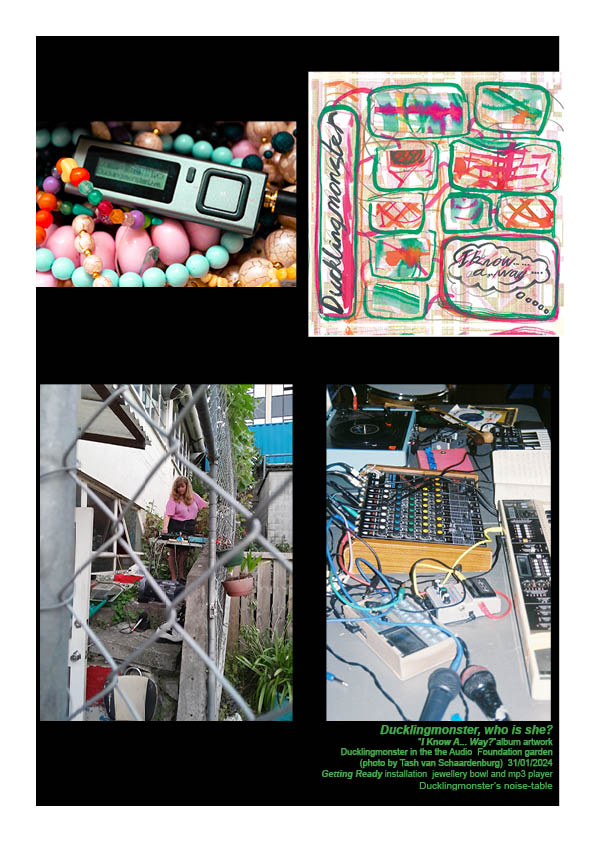
I utilize a humour strategy and play for thinking through ideas. This play process is a form of drawing that implies lightness and temporality. I use pieces of painted wallpaper and masking tape with pencil notations as toys that I shift and sculpt into narratives playing on interior decorating arrangements. In a similar way, Amy Sillman uses playful zines and films as a concurrent way into her paintings. Vernacular phrases and titles in my workplace it in a social context and opens communication with the viewer, for example, the speech bubbled “I know a way” and the masking tape title “Nana’s flying duck formation”. Like Sillman, in self-publishing comics documenting my performances, I reinforce the subjectivity of my position as author and operator of the objects.
Haunted Music TV Guide / ProgammeComic. With this comic, I repeat images and text I have used before. Drawings are printed over film stills. I am thinking about a publication that lays out a series of events to take place. A programme. It also contains a tracklisting of my AV collaborative work Haunted Music Tv. The text phrases can be read as title lists or as poems. Screens as wall work install. Sorting process of selecting “front” side, screens with window rips, tonal, tape and drawing relationshipsDene Barnes sends me the artwork that he has been printing with Point Publications. This tape uses audio and images from my studio b work.
Wall-Note-Paper
Wall-Note-Paper installation using layering to explore wall and texture
Composition
Layering wall. Attempt at weaving screens. Idea of film transitions and strobing. Repeat as compositional mode. Visual rhythm.
My compositions are made through improvisations with a set of motifs drawn from film noir and golden era horror and romance comics, found footage home movies, and the first-person field recording samples. I use a method of selection that evaluates these prosaic and popular culture artefacts for atmospheres of nostalgia laced melodrama. These motifs have what Sontag called a Camp sensibility where there is rich exaggeration and artifice
To perceive Camp in objects and persons is to understand Being-as-Playing-a-Role. It is the farthest extension, in sensibility, of the metaphor of life as theater.Sontag
Fade to grey. Using chalk grey furniture paint as material reference and function as gain ratio for projection screens and the popularity of grey for house paint in areas such as Ponsonby during gentrification. Exploring paint colour and concepts of specularity.
Underside rehang
Underside rehang with black ink notation Wall note-paper (used)
Artspace install. Laying out groupings before placing on wall and wires
Photo credit Sam Harnett
Performance at Artspace. Photo credit Pat Kraus
A3 to A0 page blowups with paint layers in comic panel wall composition. Both pages have a narrative of women listening and using technology. L: Lint Listening R: My Pedals Kiss Me Deadly Work slug/work chrysalis
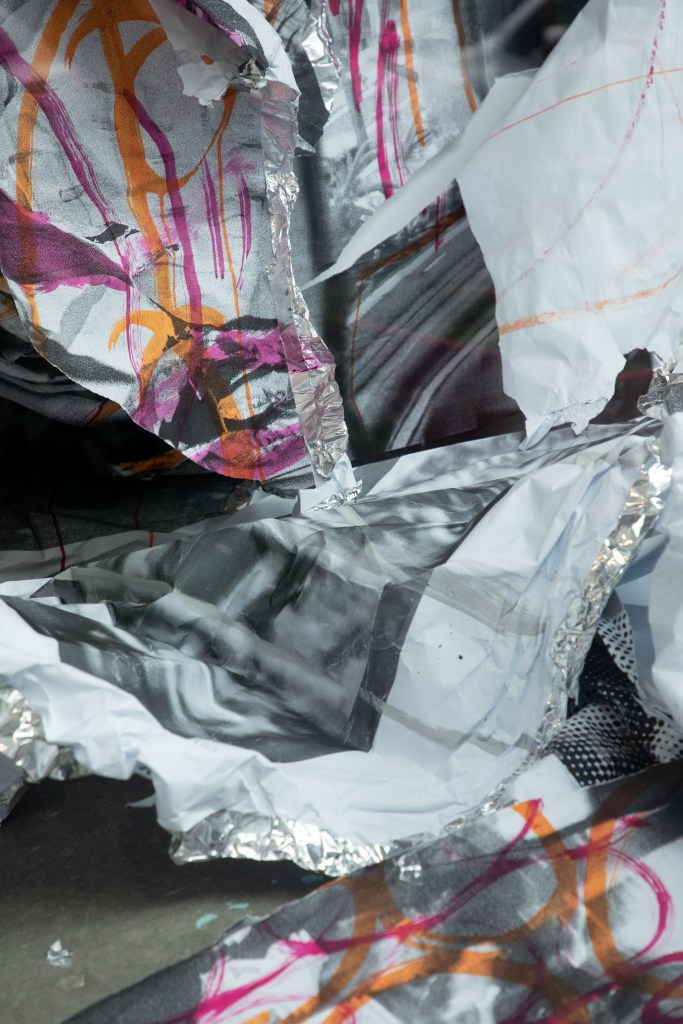
I apply this repetition composition process through works I call blow-ups, named in reference to Michelangelo Antonio’s pop-art film about the ambiguity of perception within a city neighbourhood. To make a blow-up, I start with an A4 ink drawing traced from a film-still, this drawing is photocopied to an A0 scale (400%) multiple times, on the multiples I paint and foil-tape layers following the lines of the original drawing, I roughly roll the papers then unfurling them pin them to the wall; lastly, I cast a bright light on the layers creating further traces of shadow. Being in the continuous presence of the process, I identify where materials take emphasis, for example, the ink in the line photocopied or the paper in the crumpled rolled work. This form of engagement composes physical material in a poetic rhythm.
Drawings separated and rehung. Emphasis on height on wall and 3D relationship to the wall surface. Paper and foil tape textures of crumpled and torn. Shadow emphasis using strong light from OHP. Adding a projected shadow layer. Lint is Listening. Working with some details. Repeat drawing with layering photocopy of pencil and ink with ink then paint. Corner experiment of foil tape and paper on wall.Artspace deinstall. Floor work with folds and shadows of the fall.
Day comic process work
day comic activity of repetition and delay processes using a narrative reference to film noir and Joan Crawford. Melodrama
Temporal Contexts
Through repetition I explore the temporal contexts of my work. Gertrude Stein conceptualises a continuous present where the same elements remain, only the way they are seen and composed changes. In discussing this concept, she reinforces the temporal composition using the poetic rhythmic device of repetition.
“Beginning again and again is a natural thing even when there is a series. Beginning again and again and again explaining composition and time is a natural thing.” Stein
Tumbling downScreen structures Interior screen of light fort Handbooks of ideas Home studio setup. Taking a live recording of processed field recordings, synth drones, damaged 7″ along with the sound of Karangahape Road from the open widow
Live sound design
Live sound design setup in dance studio UoA Epsom Campus with Tru Paraha. I improvised sound while Tru and three dancers workshopped a three part piece
Notation
Notations on foil tape Back in studio. “Storage solutions” composition. Tape restrictions Guttering (minor changes to rental)
Installation and performance at Never Projects
Installation and performance at Never Projects
Artist research
On a recommendation from Dieneke I look at Ellen Gallagher. In particular I research her work her large-scale installation “Osedax” (2010) at the New Museum in New York City.
I am interested in how she brings political and a rich narrative world into the work concurrently with an exploration of the materials, processes, and formal structures.
Wallpaper works with first marks. Colour-field ground. Double sided. Four pieces.Ranch Slider (minor changes to rental) Sketchy corner. Using masking tape and pencil to document and produce maquettes. The Puddle (minor changes to rental)Bringing the elements I’ve working on in to play with one another. I take an asemic notation of the films language of light.
Pencil, wallpaper, house paint. Possible score. Notation of movement. Emphasis. Layers at play. Here all the screens are collapsed in flat fields. The composition of “ranch slider””Lounge suite w/ spilt wine (minor changes to rental)
I returned to the work over the next two days thinking about the legal phrasing of the recent tenancy law change “decline if the change is minor“. Making some playful work that would help me inhabit my new/temporary studio space.
Nana Flying Duck Formation (minor changes to rental) Room with a view (minor changes to rental)
Practice Discussion in studio.
Group: Dieneke Jansen, Chris Braddock, Tony Guo, Liam Mooney, Heidi Douglas, Elizabeth Dawson
Piece for live projection. The projection event bringing a play of absence and presence.
From 11 February 2021, tenants can ask to make changes to the rental property and landlords must not decline if the change is minor. Landlords can, however, set reasonable conditions.” https://www.tenancy.govt.nz/law-changes/
Group: Dieneke Jansen, Chris Braddock, Ton Guo, Liam Mooney, Heidi Douglas, Elizabeth Dawson
Need to narrow my focus. Expecting that making work for next weeks discussion will help with this. For next weeks discussion I have the idea of making some elements that come into play in and audio-visual performance.
Reading following this discussion and with a recommendation from Chris Braddock
Barikin, Amelia. “Sound Fossils and Speaking Stones: Towards a Mineral Ontology of Contemporary Art.” In Animism in Art and Performance, edited by Christopher Braddock, 253-275. Cham: Palgrave Macmillan, 2017
Wanting to further investigate the idea’s of trace discussed in the above I read the following philosophical article
Bouton, Christophe.(2020) “The Privilege of the Present: Time and the Trace from Heidegger to Derrida” International Journal of Philosophical Studies, 28:3, (25 May 2020) : 370-389
Past; Present; Trace; Ontological; Primacy of the present; Temporality; Privilege; Presence includes absence; Temporality acted on by ecstases of future, present, and past; Trace participates in beingness (ousia); Repetition; Temporality is ecstatic horizontal; Trace as the simulacrum of presence; Dasein; Derrida; Heidegger
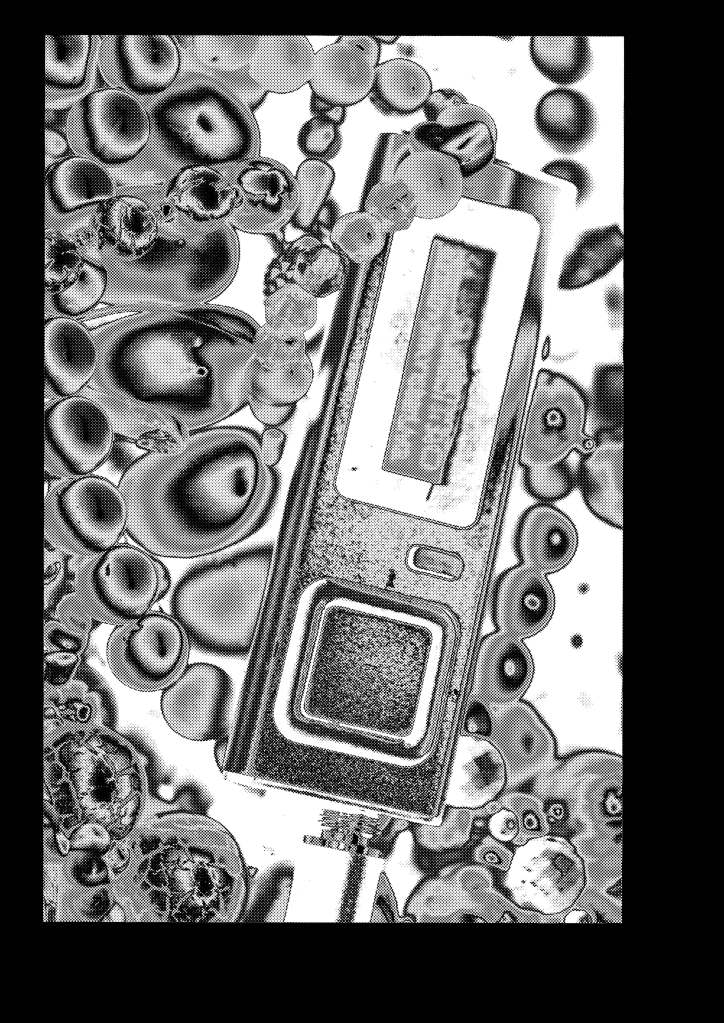
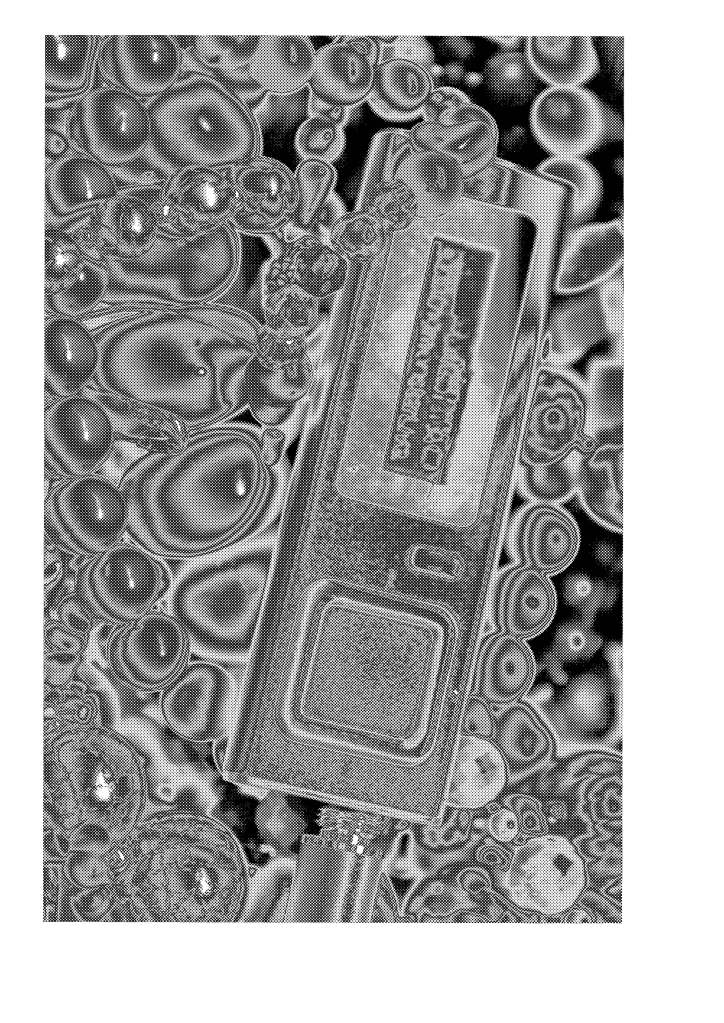
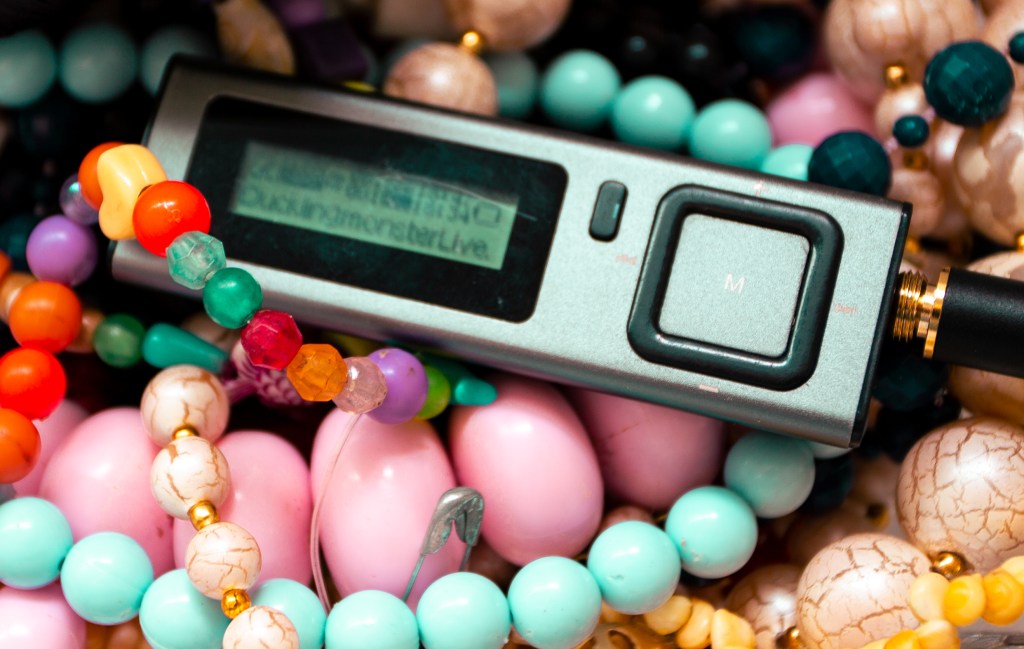















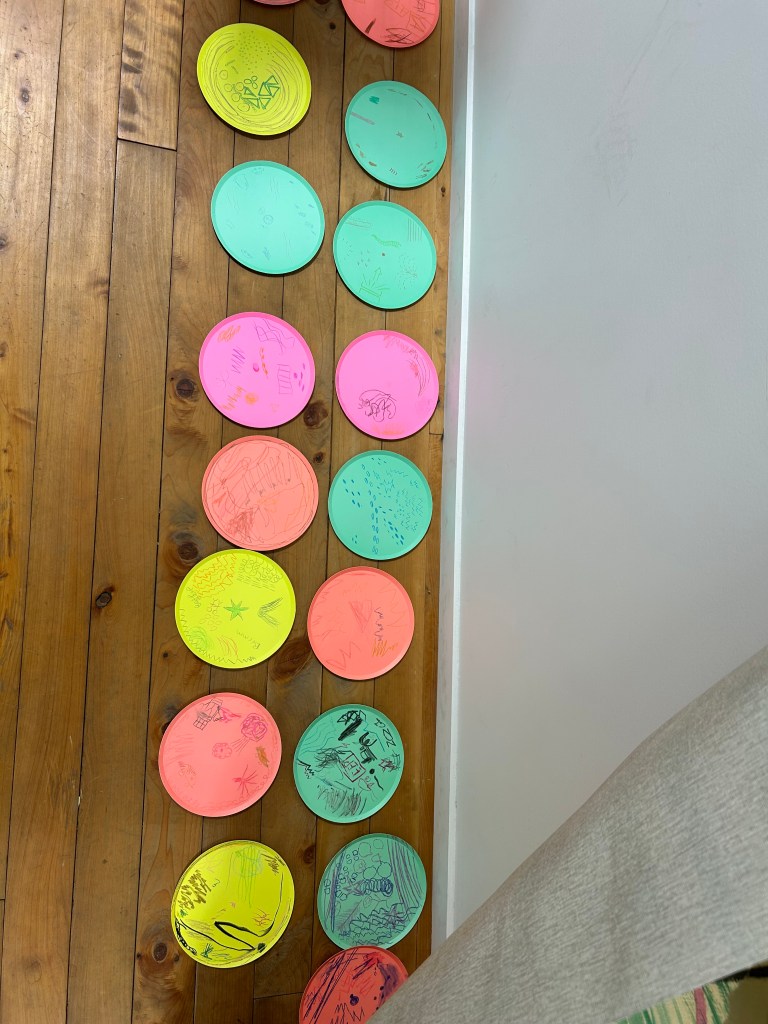
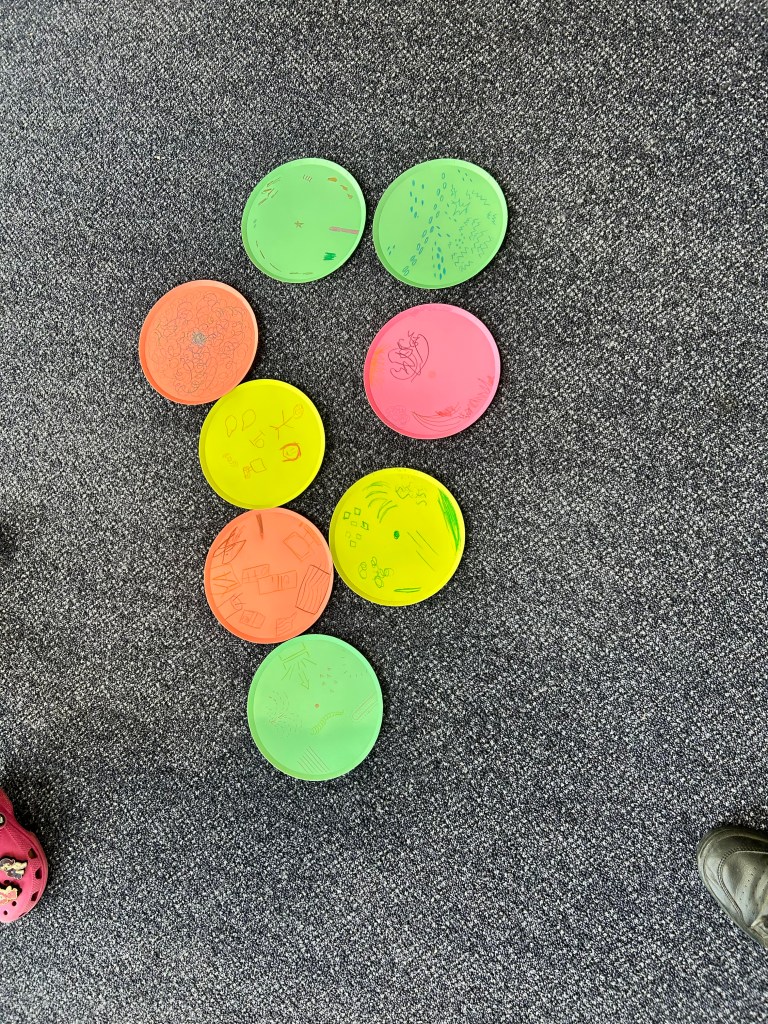
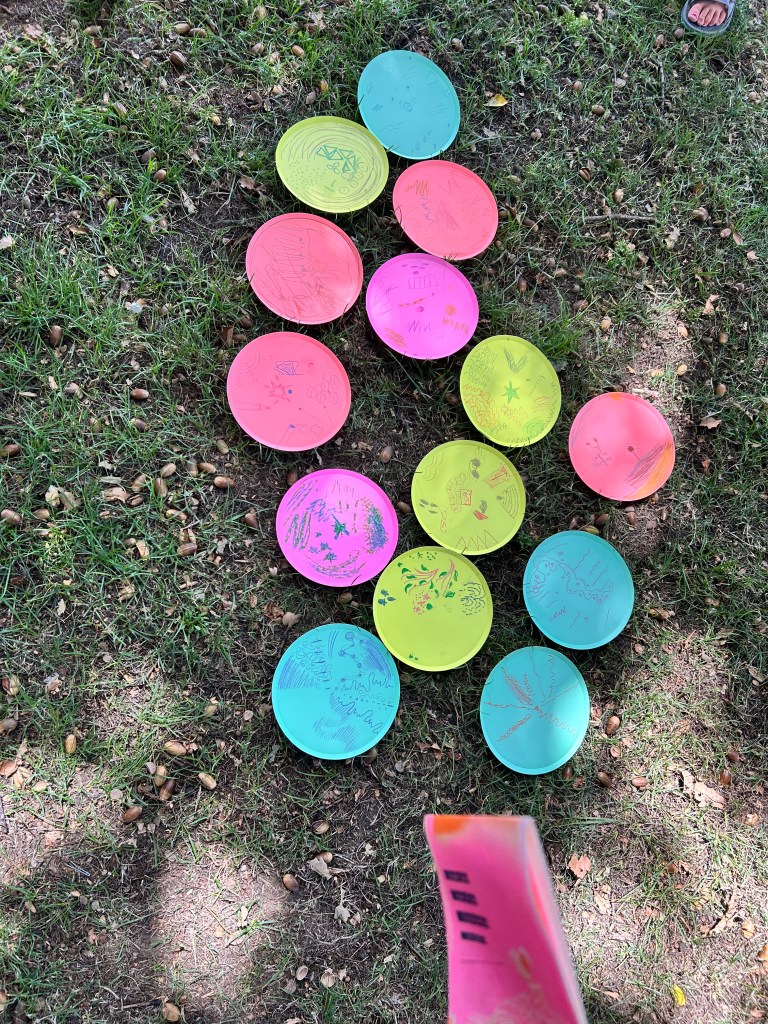
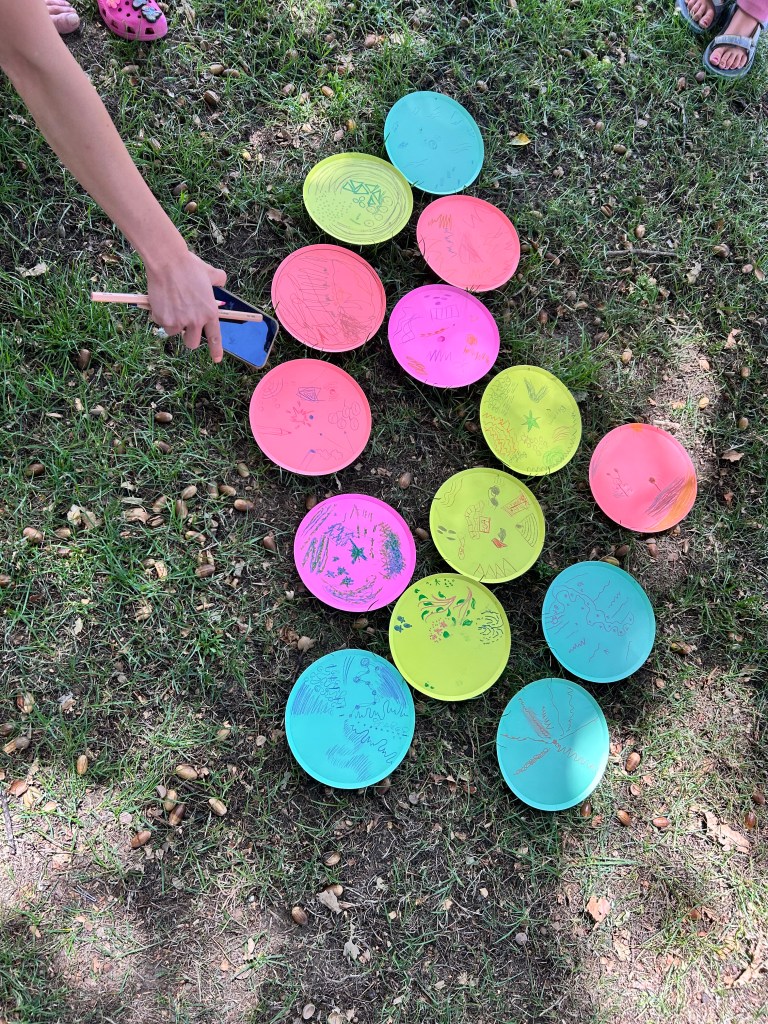

























































































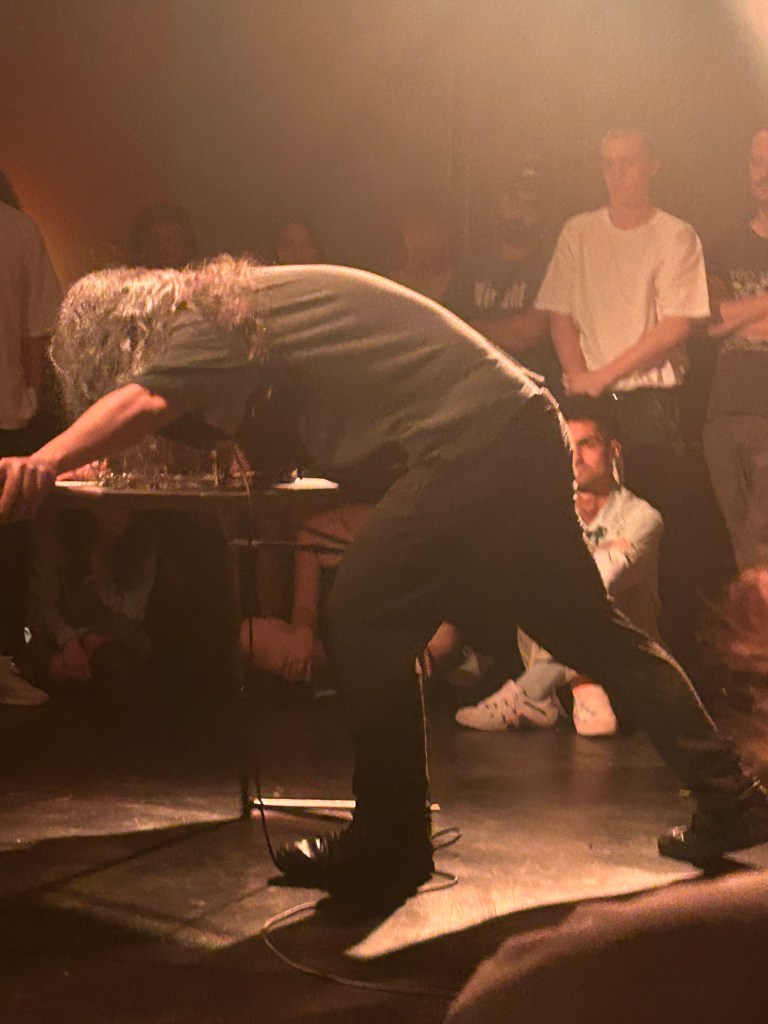
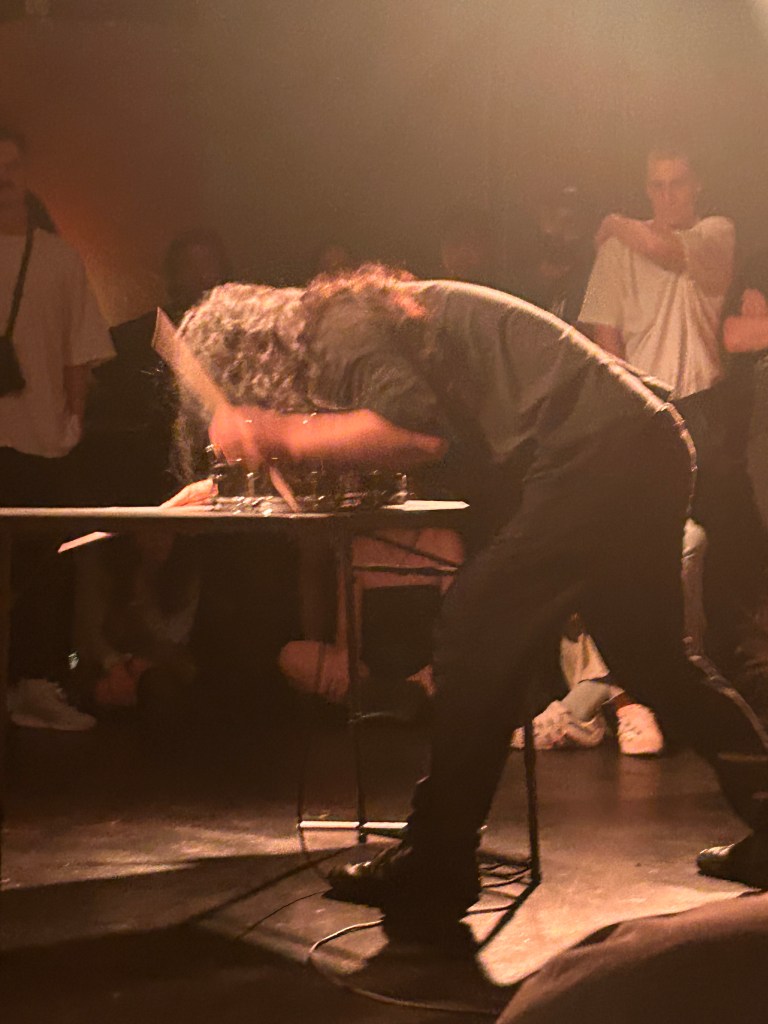
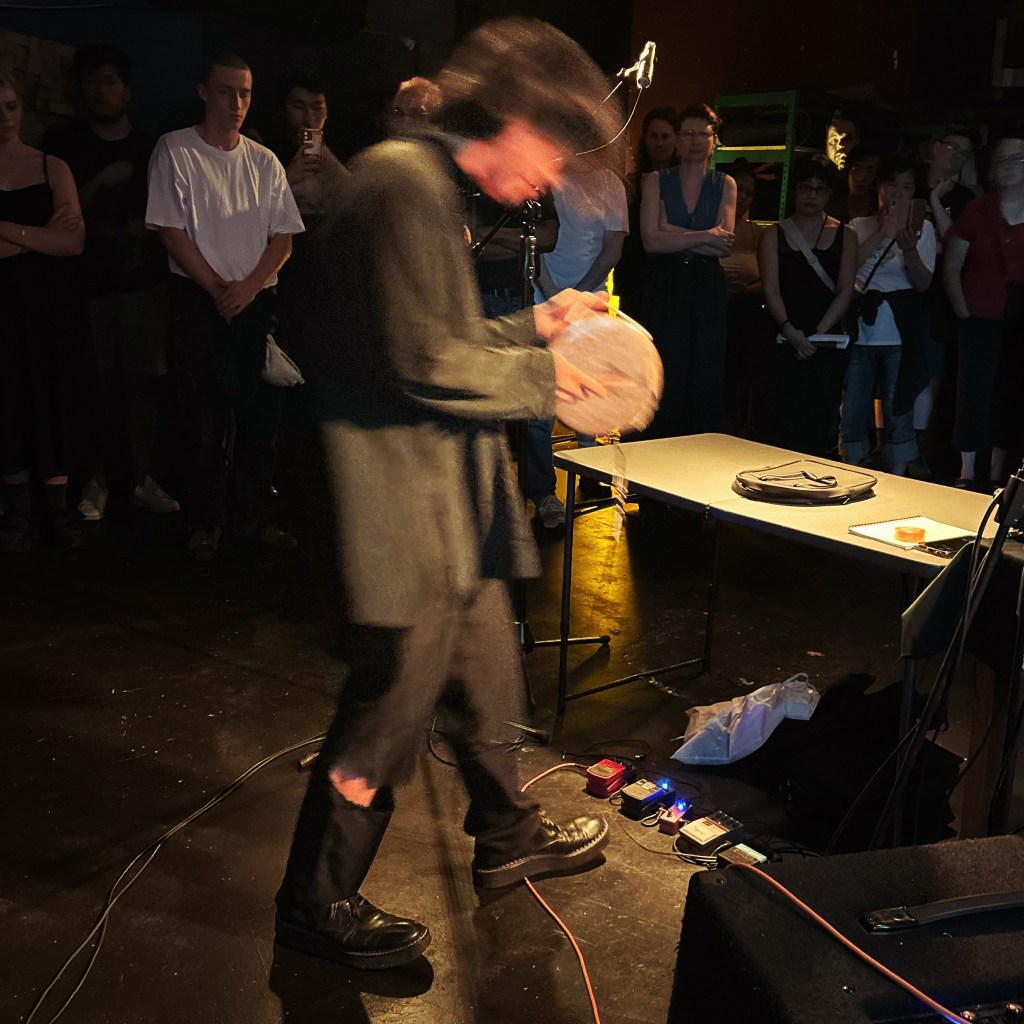
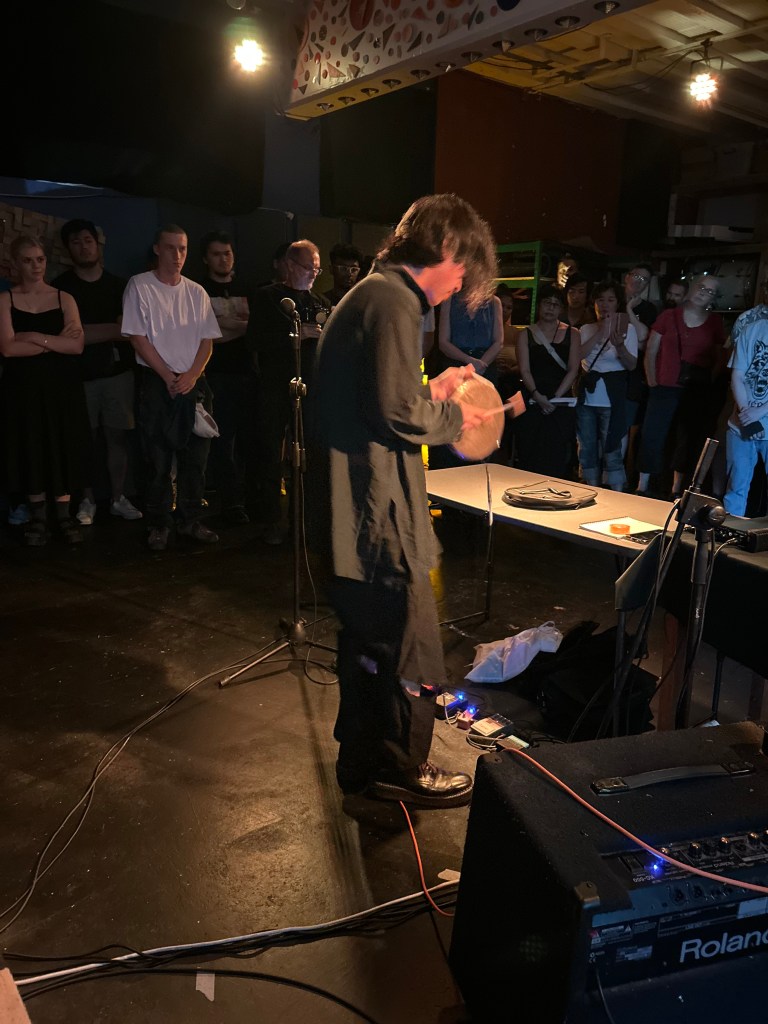









































 Ducklingmonster